The James Webb Space Telescope is not just a machine floating in space. It is the physical embodiment of a question humanity has carried since the moment we first looked up at the night sky: Where did everything come from? Every civilization has told stories about the origin of the universe, but never before have we built an instrument capable of peering so deeply into cosmic history that light itself becomes a time machine. When we speak of James Webb seeing nearly 13 billion years into the past, we are speaking about an extraordinary convergence of physics, engineering, patience, and human longing to understand our origins.
To look at the James Webb Telescope is to look at a bridge between eras. It connects modern humanity to the first stars and galaxies that ignited after the universe was born. It allows us to see not just distant objects, but ancient moments—eras when the cosmos was young, chaotic, and still learning how to shine.
Light as a Messenger from the Past
To understand how the James Webb Telescope can see so far back in time, we must first understand a fundamental truth about the universe: light does not arrive instantly. Light travels at a finite speed, fast beyond everyday comprehension, yet slow enough that distance becomes history. When sunlight reaches Earth, it carries information from eight minutes ago. When we see the nearest stars, we see them as they were years in the past. When we observe distant galaxies, we are looking billions of years backward in time.
This simple but profound reality turns astronomy into archaeology. Every photon collected by a telescope is a message sent long ago, carrying encoded information about its source. The farther the light has traveled, the older the story it tells. The James Webb Space Telescope was designed to collect the faintest and most ancient of these messages, signals that have crossed nearly the entire observable universe.
Seeing 13 billion years into the past does not mean James Webb is magically breaking the limits of time. It means it is sensitive enough to detect extremely old light—light emitted when the universe was less than a billion years old, shortly after the first galaxies formed.
The Afterglow of the Big Bang and the Cosmic Dawn
The universe began in an extremely hot, dense state often referred to as the Big Bang. In its earliest moments, it was opaque, filled with a seething plasma that trapped light. As the universe expanded and cooled, it eventually became transparent, allowing light to travel freely. That ancient radiation still fills the universe today, stretched into microwaves by cosmic expansion.
But after this early transparency, the universe entered a long period of darkness. No stars yet burned. No galaxies yet sparkled. This era, known as the cosmic dark ages, ended when gravity pulled matter together strongly enough to ignite the first stars. These stars transformed the universe. They flooded space with light, forged heavy elements, and began sculpting the cosmic structures we see today.
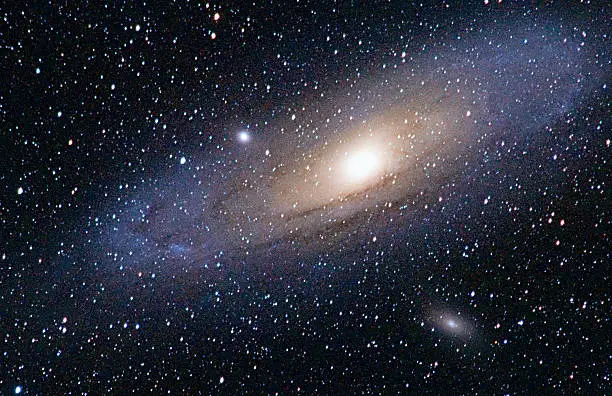
The James Webb Space Telescope was built to observe this cosmic dawn. It was designed to detect the faint glow of the earliest galaxies, whose light has been stretched by the expansion of space into the infrared part of the spectrum. These ancient objects are not just distant; they are time capsules, preserving information about the universe’s earliest chapters.
Why Infrared Vision Is Essential
One of the defining features of the James Webb Space Telescope is that it observes primarily in infrared light. This choice is not arbitrary. As the universe expands, the wavelength of light traveling through it stretches as well. Light that began its journey as visible or ultraviolet radiation billions of years ago arrives at Earth as infrared radiation.
This phenomenon, known as redshift, means that the farther back in time we look, the more stretched the light becomes. The earliest galaxies are so distant that their light is shifted far beyond the visible range. A telescope designed to study the early universe must therefore be able to see infrared light with exceptional sensitivity.
Infrared vision also allows James Webb to peer through cosmic dust. Dust grains scatter and absorb visible light, obscuring regions where stars and planets form. Infrared light, with its longer wavelengths, can pass through dust more easily, revealing hidden structures within galaxies and stellar nurseries. In this way, James Webb not only looks farther back in time but also deeper into the processes that shape the universe.
The Architecture of a Cosmic Eye
The James Webb Space Telescope is a marvel of engineering on a scale rarely attempted. Its primary mirror, composed of multiple precisely shaped segments, was designed to collect faint light from the most distant corners of the cosmos. Each segment works in perfect harmony, forming a single reflective surface capable of extraordinary precision.
The telescope’s size is crucial. A larger mirror collects more light, which is essential when observing extremely faint objects billions of light-years away. Every photon counts. The mirror’s design allows Webb to gather these photons and focus them onto its sensitive instruments, where their information can be analyzed.
Equally critical is Webb’s sunshield, a massive, multilayered structure that protects the telescope from heat and light emitted by the Sun, Earth, and Moon. Infrared observations require extreme cold. Any heat from the telescope itself would overwhelm the faint signals coming from the early universe. By shielding itself and radiating heat away into space, James Webb maintains the frigid conditions needed to detect ancient light.
A Telescope Positioned Between Worlds
James Webb does not orbit Earth like some earlier space telescopes. Instead, it resides far from our planet, positioned in a region of space where gravitational forces and orbital motion create a stable environment. From this vantage point, it can maintain a consistent orientation relative to the Sun, allowing its sunshield to block unwanted heat continuously.
This distant location offers a clear, uninterrupted view of the universe. Free from Earth’s atmosphere and thermal interference, James Webb can observe faint infrared signals with a clarity impossible from the ground. Its position also allows for long, uninterrupted observations, essential for studying extremely distant and dim objects.
In this quiet cosmic outpost, James Webb listens patiently for whispers from the past.
Seeing the First Galaxies Take Shape
One of James Webb’s primary scientific goals is to observe the formation and evolution of the first galaxies. These early galaxies were smaller, more chaotic, and more intense than many of the galaxies we see today. They formed from primordial gas, collapsing under gravity and igniting bursts of star formation.
By detecting the faint infrared glow of these galaxies, James Webb allows astronomers to study their structure, composition, and growth. These observations help answer fundamental questions about how galaxies assemble over time and how the large-scale structure of the universe emerged.
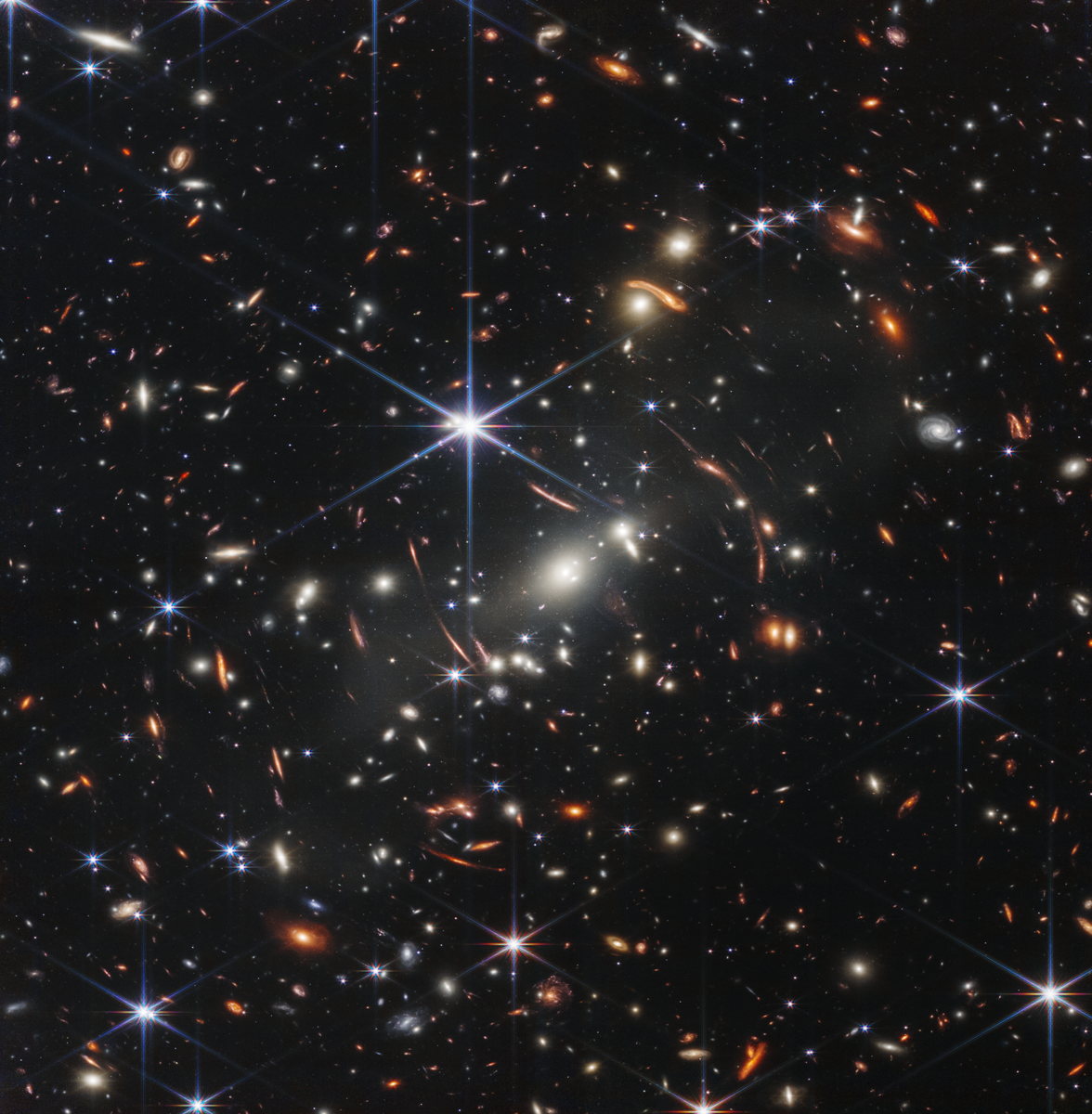
When James Webb captures light from a galaxy that existed 13 billion years ago, it reveals a snapshot of a universe still in its infancy. The shapes, colors, and brightness of these galaxies tell stories about the processes that governed early cosmic evolution.
The Chemistry of the Early Universe
James Webb does more than take pictures. Its instruments can analyze the spectra of distant objects, breaking light into its component wavelengths. This allows scientists to identify the chemical elements present in stars and galaxies, even those that formed near the beginning of time.
The earliest stars were composed almost entirely of hydrogen and helium, the simplest elements created in the aftermath of the Big Bang. Heavier elements formed later, forged in the hearts of stars and spread through space by stellar explosions. By studying the chemical signatures in ancient galaxies, James Webb reveals how quickly the universe enriched itself with complex elements.
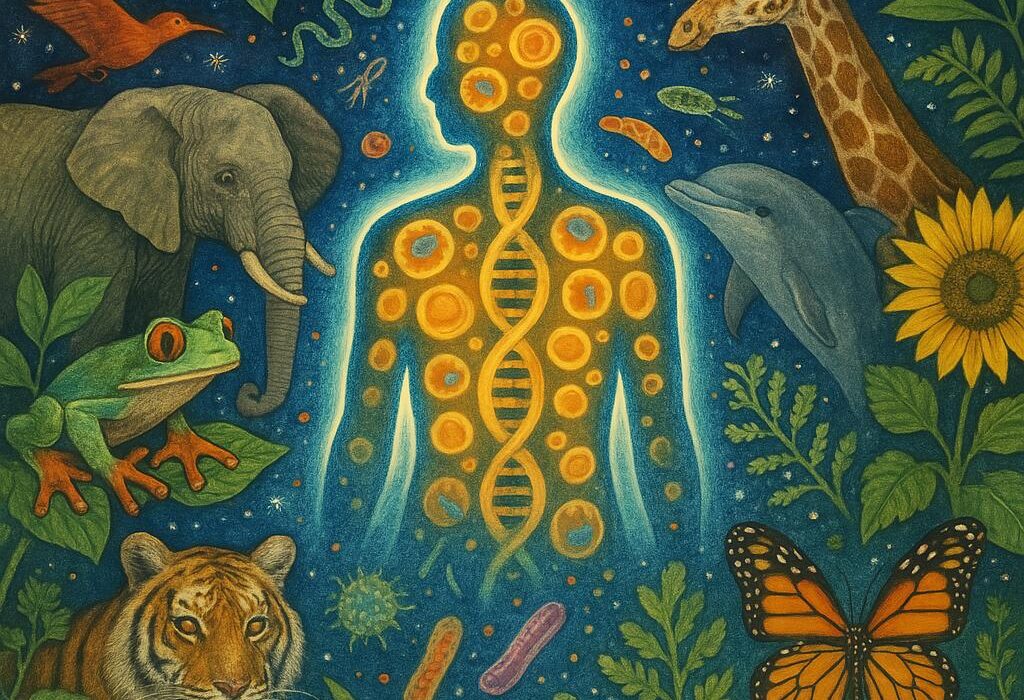
This chemical evolution is deeply connected to our own existence. The carbon in our bodies, the oxygen we breathe, and the iron in our blood all originated in stars. By tracing the appearance of these elements across cosmic time, James Webb helps us understand how the universe became capable of producing life.
Time Travel Without Motion
When we say that James Webb sees 13 billion years into the past, we are describing a form of natural time travel made possible by the laws of physics. The telescope itself does not move through time differently than we do. Instead, it receives light that has been traveling for nearly the entire age of the universe.
Each observation is a dialogue between now and then. The photons detected by James Webb left their sources billions of years ago, long before Earth formed, before the Sun ignited, before our galaxy took its current shape. These photons have survived cosmic expansion, gravitational interactions, and unimaginable distances to reach the telescope’s detectors.
In this sense, James Webb is not just observing objects; it is observing moments. It is reconstructing a narrative of cosmic history, frame by frame, using light as its storyteller.
Gravity, Expansion, and the Stretching of Space
The ability to see deep into the past is intimately tied to the expansion of the universe. Space itself is stretching, carrying galaxies away from one another. This expansion affects light, increasing its wavelength and shifting it toward the infrared.
James Webb’s sensitivity to infrared light makes it uniquely suited to study objects at extreme distances. By measuring how much the light has been stretched, astronomers can determine how far away a galaxy is and how long its light has been traveling.
This interplay between gravity, expansion, and light allows James Webb to map the universe in both space and time. It turns the cosmos into a three-dimensional tapestry where distance and history are woven together.
Human Patience and Collective Effort
The James Webb Space Telescope represents decades of effort by scientists, engineers, and visionaries across the world. It required patience on a scale rarely demanded by modern projects. From initial concepts to final deployment, years passed as designs were refined, tested, and reimagined.
This long gestation reflects the nature of physics and astronomy themselves. Understanding the universe is not a sprint but a generational journey. Each breakthrough builds on previous work, and each discovery raises new questions. James Webb stands as a testament to humanity’s willingness to invest time and resources in knowledge that transcends immediate utility.
Its success belongs not to any one individual or nation but to a shared human desire to explore the unknown.
The Emotional Weight of Ancient Light
There is something profoundly moving about seeing light that has traveled for 13 billion years. That light began its journey in a universe radically different from our own, yet it arrives here, now, to be captured and understood by conscious beings made of stardust.
This connection across time evokes a sense of continuity and belonging. The universe that gave rise to the first stars is the same universe that produced galaxies, planets, life, and human curiosity. James Webb allows us to witness that continuity in a tangible way.
Each image and spectrum is a reminder that the universe has a history and that we are part of its ongoing story.
Beyond the First Light
While James Webb was designed to study the early universe, its capabilities extend far beyond cosmic dawn. It observes star formation, planetary systems, and distant worlds orbiting other stars. Yet even these studies are connected to its ability to see far into the past.
By understanding how stars and galaxies formed long ago, we gain insight into the processes shaping the universe today. The laws of physics revealed in ancient light continue to operate in our cosmic neighborhood.
James Webb’s observations form a bridge between epochs, linking the birth of the universe to the conditions that make life possible.
A New Way of Seeing Ourselves
When humanity first realized that Earth is not the center of the universe, our self-image changed forever. The James Webb Space Telescope continues this tradition of cosmic humility. By revealing the vastness of time and space, it places human existence within a grand, unfolding narrative.
Yet this perspective is not diminishing. It is empowering. It shows that beings born on a small planet around an ordinary star can understand events that occurred billions of years before their own existence. It affirms the power of human curiosity and intellect.
To see 13 billion years into the past is to recognize that the universe is knowable, at least in part, and that we are capable of knowing it.
The Story Continues
The James Webb Space Telescope has already transformed our understanding of the universe, but its story is far from complete. With every observation, it adds new chapters to cosmic history. Each discovery refines our theories, challenges assumptions, and deepens our sense of wonder.
The light James Webb captures has waited billions of years to be seen. In receiving it, humanity fulfills a promise implicit in the laws of physics: that information can travel across time and space, carrying meaning to those who are ready to listen.
James Webb is not the end of our quest to understand the universe. It is a powerful new beginning, reminding us that the past is written in light, and that with the right tools, we can read it.