Human bodies are full of strange, involuntary behaviors that interrupt our daily lives without warning. A sneeze can erupt mid-conversation, a hiccup can stubbornly repeat itself for minutes, and a yawn can spread silently through a classroom or a crowded bus. These actions often feel trivial or even embarrassing, yet they are deeply rooted in our biology and evolutionary history. Far from being meaningless reflexes, sneezing, hiccupping, and yawning reveal how delicately the human body is regulated and how closely it is connected to the environment.
Each of these behaviors arises from complex interactions between the nervous system, muscles, and internal organs. They reflect ancient survival mechanisms, developmental quirks, and ongoing physiological needs. By examining why these actions exist and what triggers them, we gain insight into how the body protects itself, maintains balance, and communicates internally.
The following nine reasons explore the scientific foundations of sneezing, hiccupping, and yawning, showing how these familiar actions are windows into the hidden intelligence of the human body.
1. Sneezing Is a Powerful Defense Mechanism for the Airways
Sneezing is one of the body’s most dramatic reflexes, capable of expelling air at astonishing speed. At its core, sneezing is a protective response designed to clear the nasal passages of potential threats. Dust, pollen, smoke particles, microorganisms, and chemical irritants can all trigger sensory receptors lining the nasal cavity.
When these receptors detect irritation, they send signals through the trigeminal nerve to the brainstem. The brain then coordinates a rapid, complex response involving the diaphragm, chest muscles, throat, and nasal passages. The result is a sudden, forceful expulsion of air that can travel many meters per second.
From a physiological perspective, sneezing is remarkably efficient. The explosive airflow dislodges particles stuck to the mucus lining of the nose, reducing the risk that pathogens will travel deeper into the respiratory system. This reflex evolved long before modern medicine, acting as a first line of defense against airborne threats.
Emotionally, sneezing can feel inconvenient, but biologically it is an act of protection. Every sneeze represents the body’s attempt to defend one of its most vulnerable entry points. Without this reflex, humans would be far more susceptible to respiratory infections and environmental pollutants.
2. Sneezing Reflects the Sensory Sensitivity of the Nervous System
Not all sneezes are triggered by irritants. Some people sneeze when exposed to bright light, a phenomenon known as the photic sneeze reflex. This response highlights the intricate wiring of the nervous system, where sensory pathways can overlap in unexpected ways.
The optic nerve, which transmits visual information, runs close to the trigeminal nerve, which carries sensory signals from the face and nasal cavity. In certain individuals, sudden bright light overstimulates the optic nerve, and this activation spills over into the trigeminal pathway, triggering a sneeze.
This reflex serves no clear protective function and is best understood as a byproduct of neural architecture rather than an adaptation. It demonstrates how evolution often works through modification rather than perfection. The brain is a densely interconnected network, and sometimes one signal inadvertently activates another.
The existence of such reflexes reminds us that the human nervous system is not a series of isolated circuits but an integrated whole. Sneezing in response to light reveals the brain’s complexity and the subtle ways in which sensory experiences can influence bodily behavior.
3. Hiccups Are a Developmental Reflex That Never Fully Disappeared
Hiccups are among the most puzzling involuntary behaviors humans experience. They are caused by sudden, involuntary contractions of the diaphragm, followed by rapid closure of the vocal cords, producing the characteristic “hic” sound. Despite centuries of observation, hiccups still resist a single, definitive explanation.
One compelling theory suggests that hiccups are a remnant of an ancient reflex rooted in early vertebrate evolution. In aquatic ancestors, similar reflexes helped regulate breathing by coordinating movements between the diaphragm-like muscles and airway structures. In human embryos, hiccups appear early in development, long before birth, suggesting that the reflex is deeply ingrained.
From a neurological perspective, hiccups involve a reflex arc that includes the phrenic nerve, vagus nerve, and brainstem. This system is sensitive to disturbances such as stomach distension, sudden temperature changes, or irritation of nearby organs.
Although hiccups no longer serve an obvious purpose in adult humans, their persistence illustrates how evolution builds upon existing structures. Not every reflex is eliminated when it becomes unnecessary. Some simply linger, harmless but inconvenient, like an echo from our distant biological past.
4. Hiccups Reveal the Close Relationship Between Digestion and Breathing
Hiccups are often triggered by eating too quickly, drinking carbonated beverages, or sudden changes in stomach volume. This connection highlights the anatomical and neurological proximity of the digestive and respiratory systems.
The diaphragm plays a central role in breathing, but it also separates the chest cavity from the abdominal organs. When the stomach expands rapidly, it can irritate the diaphragm or nearby nerves, particularly the phrenic nerve. This irritation can trigger the involuntary contractions characteristic of hiccups.
The vagus nerve, which extends from the brainstem to multiple organs including the stomach, also plays a role. Signals traveling along this nerve can influence both digestion and respiration. Hiccups may arise when this communication network becomes temporarily disrupted.
In this sense, hiccups are not random. They are the result of cross-talk between systems that must work in harmony for survival. Breathing and digestion are both essential, and hiccups reveal what happens when their coordination briefly falters.
5. Yawning Helps Regulate Brain Temperature
Yawning is often associated with boredom or sleepiness, but scientific evidence suggests it serves a more fundamental physiological function. One leading theory proposes that yawning helps regulate brain temperature, ensuring optimal neural performance.
The brain generates heat as it works, and even small increases in temperature can affect cognitive function. Yawning involves a deep inhalation of air, stretching of facial muscles, and increased blood flow to the head. This combination may help cool the brain by bringing in cooler air and facilitating heat exchange through blood circulation.
Studies have shown that yawning frequency correlates with ambient temperature and brain temperature changes. Yawning tends to occur more often when temperatures rise but decreases when the surrounding air is too hot to provide cooling benefits.
This interpretation reframes yawning as a maintenance behavior rather than a sign of disengagement. Each yawn represents the body’s effort to preserve optimal brain function, quietly adjusting internal conditions to support alertness and performance.
6. Yawning Is Tied to Transitions in Mental State
Yawning frequently occurs during transitions between states of alertness, such as waking up, becoming tired, or shifting from rest to activity. This pattern suggests that yawning plays a role in managing changes in brain activity.
During these transitions, neural networks must reorganize, shifting patterns of activation to suit new demands. Yawning may facilitate this process by increasing oxygen intake, altering blood flow, and stimulating the brainstem regions involved in arousal.
The act of yawning also stretches muscles in the face and neck, potentially enhancing circulation and sensory input. This physical stimulation may help the nervous system recalibrate during moments of change.
Rather than indicating a lack of interest, yawning often signals that the brain is preparing for a new mode of operation. It is a physiological punctuation mark, marking shifts in mental state as the brain adjusts to changing circumstances.
7. Contagious Yawning Reflects Social and Neural Connectivity
One of the most intriguing aspects of yawning is its contagious nature. Seeing, hearing, or even thinking about yawning can trigger the reflex in others. This phenomenon is strongly linked to social cognition and empathy.
Neuroscientific studies suggest that contagious yawning involves mirror neuron systems, which activate both when an individual performs an action and when they observe the same action in others. These systems are thought to play a role in social bonding and emotional understanding.
Contagious yawning is more common among individuals who share close social connections, such as family members or friends. It is also less frequent in very young children and individuals with certain neurological conditions, indicating that it is tied to the development of social awareness.
From an evolutionary perspective, synchronized behaviors may have helped early human groups coordinate rest and activity. Yawning together could have signaled shared states of alertness, promoting group cohesion and survival.
8. Sneezing, Hiccupping, and Yawning Are Controlled by the Brainstem
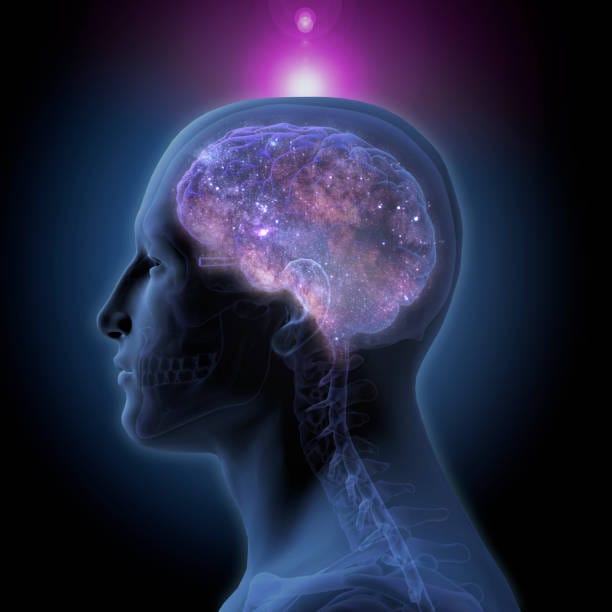
Despite their differences, sneezing, hiccupping, and yawning share a common neurological feature: they are all regulated by the brainstem. This ancient part of the brain controls vital functions such as breathing, heart rate, and reflexes essential for survival.
The brainstem operates largely outside conscious control, ensuring that critical processes continue without deliberate thought. Reflexes like sneezing and hiccupping are initiated and executed through neural circuits in this region, allowing for rapid responses to internal and external stimuli.
Yawning also involves brainstem activity, particularly in areas linked to arousal and autonomic regulation. The involvement of the brainstem explains why these behaviors are difficult or impossible to suppress entirely.
This shared control center underscores their importance. The body entrusts these actions to its most reliable neural systems, emphasizing their role in maintaining physiological stability.
9. These Reflexes Reveal the Body’s Hidden Intelligence
Sneezing, hiccupping, and yawning may appear trivial, but together they reveal a profound truth about human biology. The body is not a passive structure, but an active, self-regulating system constantly responding to internal and external conditions.
Each reflex reflects layers of evolutionary history, from ancient survival mechanisms to modern neurological complexity. They demonstrate how the body balances protection, regulation, and adaptation without conscious effort.
Emotionally, these actions connect us to our shared humanity. Everyone sneezes, hiccups, and yawns, regardless of culture or background. They are reminders that beneath our individual differences lies a common biological heritage shaped by millions of years of evolution.
Understanding these behaviors transforms annoyance into appreciation. What seems like an interruption is often a sign of the body quietly doing its job, maintaining equilibrium in a world that constantly challenges it.
Conclusion: Ordinary Actions, Extraordinary Biology
Sneezing, hiccupping, and yawning are among the most familiar human behaviors, yet they arise from intricate physiological systems that reflect the body’s remarkable adaptability. Each action serves as a small but meaningful response to environmental stimuli, internal imbalances, or neurological transitions.
By examining these reflexes scientifically, we uncover stories of evolution, neural integration, and survival written into our bodies. They remind us that even the simplest actions are shaped by deep biological logic.
In paying attention to these everyday mysteries, we gain not only knowledge, but a renewed sense of connection to the living systems that sustain us. The next time you sneeze, hiccup, or yawn, you are not merely reacting—you are participating in a quiet dialogue between your body, your brain, and the world around you.