Time feels steady.
It ticks forward in quiet, measured steps. Seconds accumulate into minutes, minutes into hours, and days into years. Our lives unfold according to this seemingly constant rhythm. We celebrate birthdays, mark anniversaries, and measure history as if time were an invisible river flowing at a fixed speed.
But in the vast theater of the cosmos, time does not behave so obediently.
According to modern physics—particularly the theories of Albert Einstein—time can stretch, compress, slow down, and bend. It does not pass at the same rate for everyone. It depends on motion. It depends on gravity. It depends on where you are and how fast you are moving.
In space, time becomes elastic.
What follows are seven mind-bending realities of time dilation—real, experimentally verified consequences of relativity that challenge intuition and reshape our understanding of existence.
1. The Faster You Travel, the Slower Your Time Moves
In 1905, Einstein introduced special relativity, built upon a radical postulate: the speed of light in a vacuum is constant for all observers, regardless of their motion. This simple idea has extraordinary consequences.
Imagine two observers. One stands still on Earth. The other boards a spacecraft traveling at a significant fraction of the speed of light. When the spacecraft returns, the traveler will have aged less than the person who remained behind.
This is not science fiction. It is a mathematical and experimentally verified prediction known as velocity time dilation.
The key lies in how spacetime behaves. If the speed of light must remain constant, then measurements of space and time must adjust accordingly. As velocity increases, time for the moving observer slows relative to the stationary observer.
This effect is described by the Lorentz factor, which depends on velocity relative to the speed of light. At everyday speeds—cars, airplanes, even rockets—the effect is tiny. But as velocity approaches the speed of light, time dilation becomes dramatic.
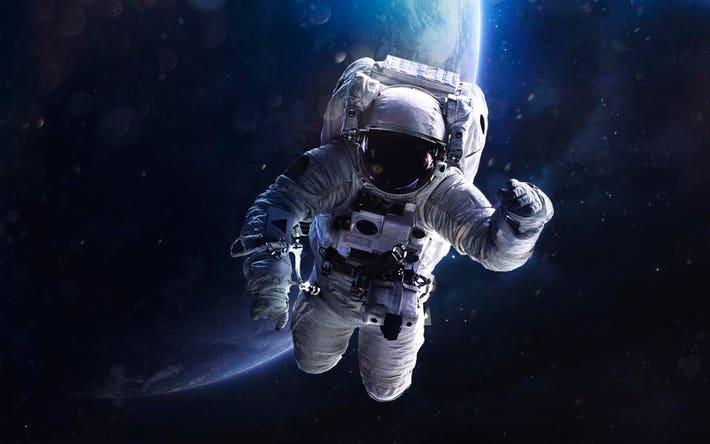
Astronauts aboard the International Space Station age slightly slower than people on Earth because they are moving at about 7.66 kilometers per second. The difference amounts to milliseconds over months—but it is measurable.
Particle accelerators provide even more striking evidence. Subatomic particles called muons, produced in Earth’s upper atmosphere by cosmic rays, should decay before reaching the surface. Yet because they travel near light speed, their internal clocks slow down relative to Earth’s frame, allowing many to survive long enough to be detected at ground level.
The universe enforces this rule with precision. The faster you move, the slower your time flows relative to someone at rest.
Time is not universal. It is personal.
2. Gravity Slows Time Itself
If motion can slow time, gravity can too.
In 1915, Einstein expanded his ideas into general relativity, describing gravity not as a force but as curvature of spacetime caused by mass and energy. Massive objects bend spacetime around them. Planets orbit the Sun not because they are pulled by an invisible force, but because they follow curved paths in warped spacetime.
One astonishing implication is gravitational time dilation.
The stronger the gravitational field, the slower time passes.
A clock placed near a massive object—such as a neutron star or black hole—will tick more slowly than a clock far away in weaker gravity. Even here on Earth, this effect exists. A clock at sea level ticks slightly slower than a clock atop a mountain because it is deeper within Earth’s gravitational well.
This effect has been measured experimentally with atomic clocks. In 1959, the Pound–Rebka experiment confirmed gravitational redshift, a direct consequence of time dilation in a gravitational field. Modern atomic clocks are so precise that they can detect differences in time caused by height changes of less than a meter.
Gravity does not merely pull on matter. It stretches and compresses time itself.
Near a black hole, the effect becomes extreme. From the perspective of a distant observer, time for an object approaching the event horizon appears to slow dramatically. Light emitted from the object becomes increasingly redshifted and delayed.
In the presence of immense gravity, time does not simply tick slower—it nearly grinds to a halt.
3. GPS Satellites Would Fail Without Time Dilation Corrections
Time dilation is not just a theoretical curiosity. It is a practical necessity.
The Global Positioning System relies on satellites orbiting Earth at an altitude of about 20,200 kilometers. Each satellite carries highly accurate atomic clocks that transmit timing signals to receivers on the ground. By comparing the arrival times of signals from multiple satellites, a receiver calculates its position.
But here is the complication: those satellites experience both velocity time dilation and gravitational time dilation.
Because they move at high speed relative to Earth’s surface, their clocks tick slightly slower due to special relativity. However, because they are farther from Earth’s center, they experience weaker gravity, causing their clocks to tick faster due to general relativity.
The gravitational effect is stronger than the velocity effect, so overall, satellite clocks run faster than ground clocks by about 38 microseconds per day.
That may seem negligible. But without correction, GPS errors would accumulate at roughly 10 kilometers per day.
Engineers must incorporate Einstein’s equations into satellite software. Every time you navigate using a smartphone, you are relying on the reality of time dilation.
The cosmos bends time, and modern technology bends with it.
4. Astronauts Can Travel Into the Future
Time dilation makes a peculiar kind of time travel possible.
If an astronaut were to travel at speeds close to light and return to Earth, they would find that far more time had passed on Earth than for them. From their perspective, perhaps only a few years elapsed. On Earth, decades or even centuries could have passed.
This scenario is often called the twin paradox. One twin stays on Earth while the other embarks on a high-speed journey. Upon reunion, the traveling twin is younger.
It is not a paradox in the mathematical sense; the asymmetry arises because the traveling twin undergoes acceleration and changes inertial frames, while the Earth-bound twin does not.
Although current spacecraft cannot approach light speed, the principle remains valid. In theory, sufficiently advanced propulsion could allow humans to experience significant forward leaps in time relative to those who remain behind.
Nature allows one-directional time travel into the future.
You cannot return to the past. Relativity does not permit reversing time’s arrow. But you can outrun it—slightly—by moving very fast or dwelling in weaker gravity.
The future is accessible, not by magic, but by physics.
5. Black Holes Turn Time Into a Labyrinth
Black holes are among the most extreme arenas for time dilation.
When a massive star exhausts its nuclear fuel, gravity can overwhelm internal pressure, causing the core to collapse. If the remaining mass exceeds a certain threshold, it forms a black hole—a region where spacetime curvature becomes so intense that an event horizon forms.
Outside observers watching an object fall toward a black hole see something extraordinary. As the object approaches the event horizon, its clock appears to slow dramatically. Signals it emits take longer and longer to reach the observer. The object appears to freeze near the horizon, fading and reddening.
From the falling object’s own perspective, however, time proceeds normally. It crosses the horizon without noticing anything special at that boundary.
This difference reveals a profound truth: time is not absolute. It depends entirely on your trajectory through spacetime.
Near the center, classical general relativity predicts a singularity—a region where curvature becomes infinite. In such an extreme environment, our current theories break down. Quantum gravity effects likely dominate, but we do not yet possess a complete theory to describe them.
Black holes demonstrate that time can stretch to unimaginable extremes. Near the event horizon, minutes for one observer could correspond to years for another.
Time, in the presence of extreme gravity, becomes a maze of relative experiences.
6. The Universe Has No Universal “Now”
We instinctively believe in a universal present moment. Somewhere, we imagine, there exists a cosmic “now” shared by all observers.
Relativity dismantles this notion.
In special relativity, simultaneity is relative. Two events that appear simultaneous to one observer may occur at different times for another observer moving at a different velocity.
Consider two lightning strikes hitting opposite ends of a moving train. An observer standing on the ground midway between them might see the flashes simultaneously. But an observer inside the train, moving toward one strike and away from the other, would see one flash before the other and conclude they were not simultaneous.
There is no absolute temporal ordering for spatially separated events unless they are causally connected.
This has profound implications. Across the vast distances of space, there is no single, shared “present.” Events unfolding in distant galaxies cannot be assigned a universal timestamp independent of the observer’s frame.
The cosmos is a four-dimensional spacetime, where past, present, and future are woven together differently for each observer.
Your “now” is not the universe’s “now.” It is uniquely yours.
7. Time Dilation Reveals That Spacetime Is a Single Fabric
Perhaps the most mind-bending reality of time dilation is what it reveals about the structure of existence itself.
Before Einstein, space and time were considered separate entities. Space was a three-dimensional stage. Time flowed independently, uniformly, and universally.
Relativity united them into spacetime—a four-dimensional continuum.
Motion through space affects motion through time. Gravity curves both space and time together. Objects follow paths called geodesics through this curved geometry.
Time dilation is not an isolated effect. It is a natural consequence of the geometry of spacetime.
When you move quickly, you alter your path through spacetime. When you dwell near massive objects, you traverse curved regions of spacetime differently than someone far away. The difference manifests as time dilation.
In this view, time is not a ticking metronome separate from the universe. It is part of the universe’s structure.
The equations of general relativity describe this structure with extraordinary precision. Observations of gravitational waves—ripples in spacetime caused by merging black holes—confirm that spacetime itself can vibrate.
Time dilation is evidence that time is not merely a background parameter. It is woven into reality’s fabric.
Living in a Relativistic Universe
Time dilation challenges intuition because human experience evolved in a narrow range of speeds and gravitational strengths. At walking pace and Earth’s surface gravity, relativistic effects are imperceptible.
Yet the universe operates under these laws at all scales.
High-energy particles streak through space, their lifetimes extended by velocity. Massive stars warp time in their vicinity. Satellites correct their clocks to account for relativity. Light from distant galaxies arrives redshifted not only by expansion but by gravitational effects along its path.
We inhabit a relativistic cosmos whether we notice it or not.
The passage of time is not uniform. It is shaped by motion and gravity. It bends near massive objects. It stretches for travelers racing near light speed. It differs for observers separated by vast cosmic distances.
Time dilation is not a trick of measurement. It is a feature of reality.
It tells us that time is not what it seems.
It is elastic.
It is relative.
It is entwined with space in a four-dimensional dance governed by geometry and light.
And in recognizing this, we confront a humbling truth: the universe is stranger than intuition, more elegant than imagination, and more profound than our everyday sense of ticking clocks ever suggested.