Science is often portrayed as a steady march toward certainty, a process that replaces mystery with knowledge and ignorance with explanation. Yet the deeper science probes into nature, the more clearly it reveals how much remains unknown. Modern science, despite its extraordinary successes, stands before a set of profound unanswered questions—mysteries not at the edges of curiosity, but at the very foundations of reality. These mysteries are not signs of failure. They are signs that our understanding has reached the boundary between the known and the unknown.
What makes these mysteries especially powerful is that they are not abstract puzzles detached from everyday existence. They shape the structure of the universe, the origin of matter, the nature of life, and the limits of human understanding itself. They persist not because scientists have failed to ask the right questions, but because nature has proven more subtle and complex than expected.
The following seven unsolved mysteries represent some of the deepest challenges facing modern science. Each is grounded in strong observational evidence, guided by well-tested theories, and yet stubbornly resistant to complete explanation. Together, they define the frontiers of knowledge in the twenty-first century.
1. What Is Dark Matter?
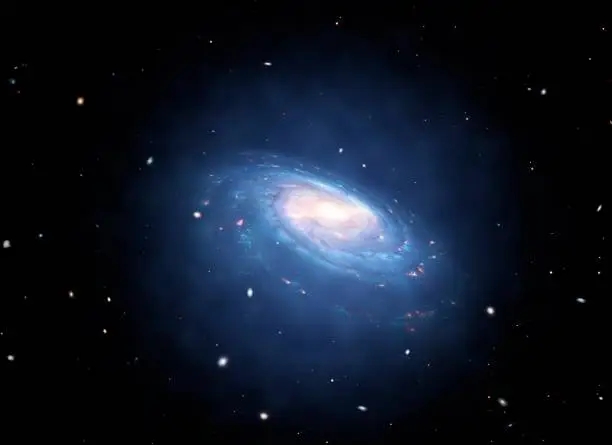
One of the most striking discoveries in modern astronomy is that most of the matter in the universe is invisible. Galaxies rotate too quickly to be held together by the gravitational pull of their visible stars and gas alone. Galaxy clusters bend light from background objects far more strongly than ordinary matter can account for. The large-scale structure of the universe forms patterns that cannot be explained unless an unseen mass is shaping cosmic evolution. This missing mass is known as dark matter.
Dark matter does not emit, absorb, or reflect light, making it invisible to telescopes across the electromagnetic spectrum. Its existence is inferred solely through gravity. Measurements indicate that dark matter makes up about 85 percent of all matter in the universe, outweighing ordinary atoms by a wide margin. Without it, galaxies would not form as they do, and the universe would look radically different.
Despite overwhelming evidence for its gravitational influence, the nature of dark matter remains unknown. It does not behave like ordinary matter, nor does it fit neatly into the Standard Model of particle physics. Numerous candidates have been proposed, including weakly interacting massive particles, axions, and other exotic entities. Decades of experiments, from underground detectors to particle accelerators, have searched for signs of these particles, yet none have been conclusively detected.
The mystery of dark matter is emotionally compelling because it reveals how incomplete our picture of reality truly is. Everything familiar—stars, planets, people, and galaxies—appears to be built from a minority component of the universe. The dominant substance shaping cosmic structure remains hidden, silently guiding the evolution of everything we see. Solving this mystery would not merely add a new particle to physics; it would transform our understanding of what the universe is made of.
2. What Is Dark Energy and Why Is the Universe Expanding Faster?
In the late twentieth century, astronomers made a discovery that fundamentally altered cosmology. Observations of distant supernovae revealed that the expansion of the universe is not slowing down, as once expected, but accelerating. Some unknown influence is pushing galaxies apart at an ever-increasing rate. This mysterious driver of cosmic acceleration is known as dark energy.
Dark energy appears to make up about 68 percent of the total energy content of the universe, dominating its large-scale behavior. Unlike dark matter, which clumps under gravity, dark energy seems to act uniformly throughout space, exerting a repulsive effect that counteracts gravitational attraction on cosmic scales.
The simplest explanation for dark energy is the cosmological constant, a term originally introduced by Albert Einstein. In this interpretation, dark energy is a property of empty space itself, an intrinsic energy associated with the vacuum. However, theoretical calculations of vacuum energy based on quantum physics produce values that are vastly larger than what is observed, creating one of the greatest discrepancies between theory and observation in all of science.
Alternative explanations propose new dynamic fields or modifications to gravity itself, but none have yet been confirmed. Precise measurements of cosmic expansion continue to refine our understanding, yet the fundamental nature of dark energy remains elusive.
This mystery touches on something deeply unsettling. If dark energy continues to dominate the universe’s evolution, it may determine the ultimate fate of everything—whether galaxies drift endlessly apart, stars fade into darkness, or spacetime itself undergoes an unfamiliar transformation. Dark energy reminds us that even empty space may hold secrets capable of shaping cosmic destiny.
3. How Did Life Begin on Earth?
Life exists in astonishing diversity on Earth, from microscopic bacteria to complex, conscious organisms. Yet the origin of life remains one of the most profound unsolved problems in science. While biology explains how life evolves once it exists, it does not yet fully explain how non-living chemistry gave rise to the first living systems.
Evidence suggests that life appeared on Earth relatively soon after the planet became habitable, over 3.5 billion years ago. This rapid emergence implies that the transition from chemistry to biology may not be exceedingly rare, but the precise steps involved remain unclear. Life requires complex molecules capable of storing information, catalyzing reactions, and reproducing with variation. How such systems assembled spontaneously under early Earth conditions is still debated.
Several hypotheses exist. Some propose that life began in shallow pools exposed to cycles of drying and wetting, which could concentrate organic molecules. Others suggest deep-sea hydrothermal vents, where chemical gradients provide energy and catalytic surfaces. Still others explore the possibility that key components of life arrived from space, delivered by meteorites rich in organic compounds.
Despite extensive laboratory experiments and theoretical work, no single pathway has yet emerged as definitive. The challenge lies in bridging the gap between simple chemistry and self-sustaining, evolving systems. Life is not just a collection of molecules; it is an organized process, maintained far from equilibrium by constant energy flow.
The mystery of life’s origin resonates deeply because it touches on identity and belonging. Understanding how life began would illuminate whether biology is a cosmic inevitability or a rare accident. It would also guide the search for life beyond Earth, shaping how we interpret discoveries on other worlds.
4. Are We Alone in the Universe?
Closely related to the origin of life is the question of whether life exists elsewhere in the universe. Modern astronomy has revealed that planets are common, and many orbit within regions where liquid water could exist. Organic molecules, the building blocks of life, are widespread in space. From a scientific perspective, the conditions necessary for life appear to be abundant.
Yet despite these favorable factors, no confirmed evidence of extraterrestrial life has been found. This tension between expectation and observation is often expressed through the question of why, in a vast universe, we have not yet detected other civilizations or unmistakable signs of life.
The search for life beyond Earth takes many forms. Robotic missions explore Mars and icy moons for traces of past or present biology. Telescopes analyze the atmospheres of distant exoplanets for chemical signatures that might indicate life. Radio and optical surveys scan the sky for artificial signals that could suggest technological activity.
So far, the universe has remained silent. This silence does not mean that life is absent, but it does highlight the difficulty of detection and the possibility that intelligent life is rare, short-lived, or fundamentally different from what we expect.
The emotional weight of this mystery is immense. The discovery of life elsewhere would transform humanity’s understanding of its place in the cosmos. Conversely, finding that life is exceedingly rare would underscore the fragility and preciousness of Earth’s biosphere. Either answer would reshape philosophy, science, and culture in profound ways.
5. How Can Quantum Mechanics and Gravity Be Unified?
Modern physics rests on two extraordinarily successful frameworks: quantum mechanics and general relativity. Quantum mechanics governs the behavior of particles and forces at the smallest scales, while general relativity describes gravity and the structure of spacetime on cosmic scales. Each theory has been confirmed by countless experiments within its domain. Yet they are fundamentally incompatible.
Quantum mechanics treats forces as mediated by particles and embraces uncertainty and probability. General relativity treats gravity as the smooth curvature of spacetime, governed by deterministic equations. When physicists attempt to apply both theories simultaneously, such as inside black holes or at the beginning of the universe, mathematical inconsistencies arise.
The quest for a unified theory of quantum gravity is one of the central challenges of modern theoretical physics. Proposed approaches include string theory, which replaces point-like particles with tiny vibrating strings, and loop quantum gravity, which suggests that spacetime itself has a discrete, granular structure. These ideas are mathematically rich and conceptually bold, but experimental evidence remains elusive.
The difficulty lies partly in scale. Quantum gravitational effects become significant only at energies far beyond current experimental reach. This makes direct testing extraordinarily challenging, forcing physicists to rely on indirect clues from cosmology and high-energy phenomena.
This mystery strikes at the heart of scientific ambition. A unified theory would provide a coherent description of all known forces and particles, revealing whether nature operates according to a single underlying principle. Until such a framework is found, our understanding of reality remains fundamentally divided.
6. What Is Consciousness and How Does It Arise from the Brain?
Few mysteries are as intimate and perplexing as consciousness. Humans experience the world through subjective awareness—sensations, emotions, thoughts, and a sense of self. Neuroscience has made remarkable progress in mapping brain activity and identifying neural correlates of mental states. Yet the question of how physical processes in the brain give rise to conscious experience remains unanswered.
From a scientific perspective, the brain is a complex network of neurons exchanging electrical and chemical signals. These interactions explain behavior, perception, and decision-making to an impressive degree. However, explaining why these processes are accompanied by experience—why there is something it feels like to be a conscious organism—is a deeper challenge.
Some theories suggest that consciousness emerges from information processing or network complexity. Others propose that it arises from specific patterns of neural integration. Still others question whether current scientific frameworks are sufficient to address subjective experience at all.
What makes this mystery especially difficult is that consciousness cannot be observed directly from the outside. It is known most intimately through first-person experience, which resists objective measurement. Bridging this gap between subjective and objective descriptions is one of the greatest conceptual challenges in science.
The mystery of consciousness carries emotional weight because it touches on identity, free will, and meaning. Understanding consciousness would not only advance neuroscience; it would reshape how humans understand themselves as thinking, feeling beings embedded in the physical universe.
7. Why Does the Universe Exist at All?
Perhaps the deepest mystery of all is not how the universe works, but why it exists in the first place. Modern cosmology describes the universe as having emerged from an extremely hot, dense state commonly known as the Big Bang. This framework explains the expansion of space, the cosmic microwave background, and the distribution of galaxies. Yet it does not explain why the universe began or why its laws take the form they do.
Fundamental constants appear finely tuned to allow the existence of complex structures and life. Small changes in these values would produce a universe devoid of stars, chemistry, or stability. Some scientists interpret this as evidence for deeper underlying principles not yet understood. Others invoke the possibility of a multiverse, in which many universes exist with different physical properties, and observers arise only in those compatible with life.
These ideas push science to its conceptual limits. While grounded in mathematical models, they challenge traditional notions of testability and observation. The question of why there is something rather than nothing may ultimately blur the boundary between physics and philosophy.
This mystery endures because it addresses existence itself. It confronts the human desire for explanation at the most fundamental level. Even if science never provides a complete answer, the pursuit of this question reflects humanity’s deepest intellectual and emotional curiosity.
Conclusion: Mystery as the Engine of Discovery
The greatest unsolved mysteries in modern science are not signs of ignorance, but invitations to exploration. They mark the boundaries of current knowledge and point toward deeper levels of understanding yet to be reached. Each mystery discussed here is rooted in solid evidence and rigorous theory, yet resists simple explanation.
What unites these mysteries is their scope. They connect the smallest particles to the largest structures, the physical world to conscious experience, and the origin of life to the fate of the universe. They remind us that science is not a closed book, but an ongoing dialogue between humanity and nature.
In confronting these unanswered questions, science continues the ancient human tradition of wonder. The unknown is not an enemy to be feared, but a frontier to be explored. As long as these mysteries endure, they will inspire curiosity, humility, and the relentless drive to understand the universe and our place within it.