Human history is, in many ways, the story of curiosity refusing to accept silence. From the moment our ancestors first wondered why the Sun rises or why lightning splits the sky, we have tried to uncover the hidden rules of reality. Over centuries, science transformed those questions into discoveries. We learned the structure of atoms, the age of stars, the expansion of the universe, and the intricate chemistry of life itself.
Yet as our knowledge has expanded, another truth has become increasingly clear. The universe may contain secrets so deep, so distant, or so fundamentally hidden that humanity may never fully uncover them.
This is not a failure of science. It is a reflection of the immense scale and complexity of the cosmos. Some mysteries may lie beyond our technological reach. Others may be shielded by the very laws of physics. Some may require energies or conditions impossible to recreate. And a few may simply exist outside the limits of human comprehension.
What follows are fifteen of the most profound cosmic mysteries—questions that might remain unanswered even after centuries or millennia of exploration.
1. What Is Dark Matter Made Of?
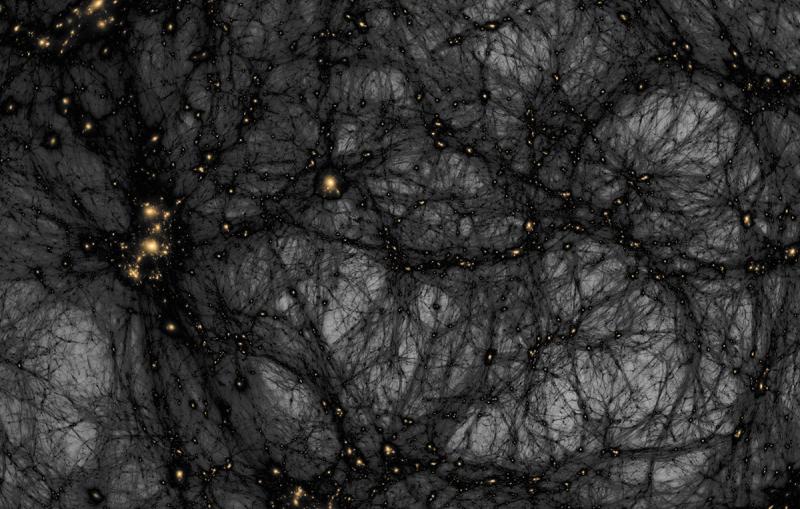
Astronomers have known for decades that most of the matter in the universe is invisible. Galaxies rotate too quickly for their visible mass to hold them together. Galaxy clusters bend light more strongly than expected. Gravitational effects reveal the presence of enormous amounts of unseen material.
This mysterious substance is called dark matter.
Unlike ordinary matter, dark matter does not emit or absorb light. It interacts primarily through gravity. According to current cosmological measurements, dark matter accounts for roughly 27 percent of the universe’s total energy content.
Scientists have proposed many possible candidates. Some theories suggest new particles known as weakly interacting massive particles. Others propose extremely light particles such as axions. More speculative ideas involve primordial black holes formed in the early universe.
Enormous underground detectors, particle accelerators, and space observatories have searched for direct evidence of dark matter particles. So far, none have provided definitive proof.
It is possible that dark matter interacts so weakly with ordinary matter that detecting it directly may remain extraordinarily difficult. The universe may be dominated by a form of matter that humanity can observe only indirectly.
2. The Nature of Dark Energy
Even stranger than dark matter is dark energy.
In the late twentieth century, astronomers discovered that the expansion of the universe is accelerating. Galaxies are not merely drifting apart; they are being pushed away from each other faster and faster over time.
The force driving this acceleration is called dark energy. It appears to make up nearly 70 percent of the universe’s total energy.
But what exactly is it?
One possibility is that dark energy is the energy of empty space itself. Quantum physics suggests that vacuum fluctuations produce a small but persistent energy density. However, theoretical calculations predict a value enormously larger than what observations show.
Another possibility is that gravity behaves differently at cosmic scales. Some theories modify Einstein’s general relativity to explain cosmic acceleration without invoking a mysterious new energy component.
Despite decades of study, the true nature of dark energy remains unknown. It dominates the universe, yet its identity may remain hidden from us for generations.
3. What Happened Before the Big Bang?
The universe began approximately 13.8 billion years ago in an extremely hot and dense state known as the Big Bang. Evidence for this includes the cosmic microwave background radiation and the observed expansion of galaxies.
But what came before?
In Einstein’s theory of general relativity, the beginning of the universe corresponds to a singularity—a point where density and temperature become infinite and the equations break down. Most physicists believe that such infinities signal the limits of our current theories.
A complete theory of quantum gravity might reveal what happened at the very beginning. Some models suggest that the universe underwent a “bounce,” transitioning from contraction to expansion. Others propose that our universe emerged from a larger multiverse.
Yet testing these ideas is extraordinarily difficult. Evidence from earlier than the first fractions of a second after the Big Bang may be permanently inaccessible.
The origin of the universe may remain one of the deepest mysteries in science.
4. The True Nature of Black Hole Singularities
Black holes are regions of space where gravity becomes so strong that nothing—not even light—can escape once it crosses the event horizon.
At the center of a black hole, general relativity predicts a singularity, a point where matter collapses to infinite density and spacetime curvature becomes infinite.
But infinities in physics usually indicate that a theory is incomplete. A future theory of quantum gravity may reveal what truly happens inside black holes.
Unfortunately, information from within the event horizon cannot reach the outside universe. This means we may never directly observe the internal structure of a black hole.
Even if new theories describe these regions mathematically, experimental verification may remain impossible.
The true nature of black hole cores may forever remain hidden behind cosmic horizons.
5. Whether the Universe Is Finite or Infinite
Is the universe infinite in size, or does it have a finite but unbounded geometry?
Observations suggest that the universe appears spatially flat on large scales. A flat universe could extend infinitely in all directions. However, it could also be finite if its topology is more complex, wrapping around itself in higher-dimensional ways.
The observable universe is limited by the distance light has traveled since the Big Bang. Beyond that cosmic horizon lies a vast region we cannot see.
If the universe is infinite, there are infinitely many galaxies, stars, and possibly even copies of our own observable region. But confirming this may be impossible.
The true size and shape of the cosmos might remain forever beyond human observation.
6. The Multiverse Hypothesis
Some cosmological theories suggest that our universe may be only one among many. In certain models of cosmic inflation, space continually produces new regions of expansion, each forming its own universe with potentially different physical laws.
String theory also allows for a vast landscape of possible vacuum states, each corresponding to a different universe with different constants.
If the multiverse exists, our universe might be just a tiny bubble in an unimaginably vast cosmic foam.
The challenge is that other universes would likely be causally disconnected from ours. Their light could never reach us. Their physical processes might leave no detectable trace.
The multiverse may exist—but proving it could remain forever beyond our reach.
7. The Ultimate Laws of Physics
Physics today is built on two incredibly successful frameworks: quantum mechanics and general relativity. Yet these theories describe different realms of reality and do not fully integrate with each other.
Physicists search for a unified theory that can describe all fundamental forces within a single mathematical framework. Candidates include string theory and loop quantum gravity.
But verifying such theories may require energies far beyond what human technology can produce. Particle accelerators capable of reaching those energies might need to be larger than entire planets.
Even if the ultimate laws exist in elegant mathematical form, experimentally confirming them may remain impossible.
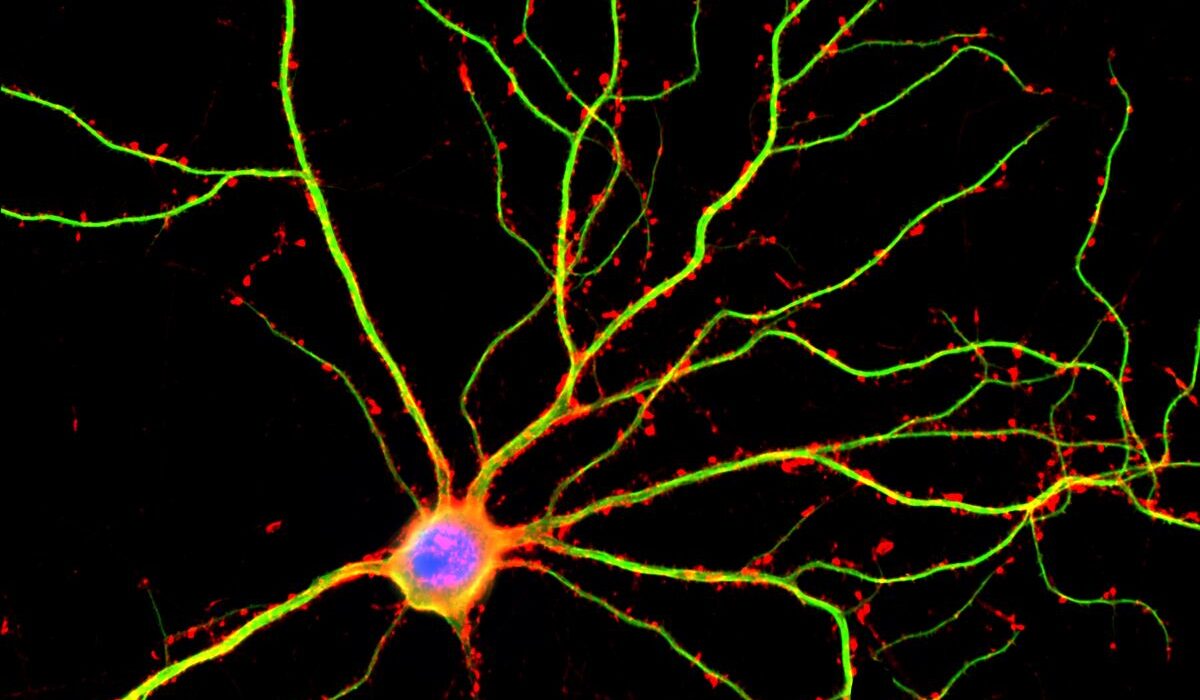
8. The Nature of Consciousness
Although consciousness is often studied in neuroscience rather than cosmology, it remains one of the deepest mysteries connected to the universe.
Human consciousness arises from physical processes in the brain. But how subjective experience emerges from neurons and electrical signals remains unclear.
Some physicists and philosophers speculate that consciousness might be related to fundamental aspects of reality, possibly involving quantum processes or information theory.
Understanding the nature of awareness may require insights not only from biology but from physics itself.
The universe gave rise to beings capable of observing it. Yet how that awareness emerges from matter remains unresolved.
9. Why Physical Constants Have Their Values
The laws of physics contain numerous constants: the speed of light, the strength of gravity, the charge of the electron, and many others.
These values appear finely tuned for the existence of complex structures. Small changes in certain constants could prevent stars from forming or chemistry from functioning as it does.
Why do these constants have the values we observe?
Some theories suggest they arise from deeper principles not yet discovered. Others propose that different universes in a multiverse possess different constants, and we observe this particular set because it allows life to exist.
The origin of physical constants may lie beyond the reach of direct experimentation.
10. Whether Time Is Fundamental or Emergent
Time feels like the most basic feature of reality. It flows from past to future, shaping every experience we have.
Yet in some theories of quantum gravity, time may not be fundamental. Instead, it could emerge from deeper relationships between physical systems.
Certain mathematical formulations of physics do not include time as a basic variable. Instead, time arises from correlations between changing states.
Understanding whether time is fundamental or emergent may require radically new ways of thinking about the universe.
But testing such ideas experimentally may be extraordinarily difficult.
11. The Complete History of Cosmic Inflation
Many cosmologists believe the early universe experienced a brief but dramatic expansion known as cosmic inflation. During this period, space expanded exponentially in a tiny fraction of a second.
Inflation explains several features of the universe, including the uniformity of the cosmic microwave background and the distribution of galaxies.
However, the precise mechanism behind inflation remains uncertain. Multiple models exist, each involving different hypothetical fields and particles.
Observations of cosmic background radiation provide clues, but they may never fully reveal the detailed physics of inflation.
The earliest moments of cosmic history may remain partially hidden.
12. Whether Life Exists Elsewhere in the Universe
The universe contains hundreds of billions of galaxies, each with vast numbers of stars and planets. Many planets exist in environments where liquid water could be stable.
Given these numbers, it seems plausible that life exists elsewhere.
Yet detecting extraterrestrial life remains extraordinarily challenging. Microbial life may be common but difficult to observe from great distances. Intelligent civilizations may be rare or short-lived.
Even if life exists elsewhere in the universe, the enormous distances between stars may prevent us from ever confirming it.
The cosmos may be alive with biology—or Earth may be uniquely fortunate.
13. The Fate of Information in Black Holes
Quantum mechanics states that information cannot be destroyed. Yet black holes appear to erase information when matter falls into them.
Stephen Hawking showed that black holes slowly evaporate through quantum radiation. If a black hole disappears entirely, what happens to the information it contained?
Physicists debate possible solutions, including information encoded in subtle correlations in Hawking radiation or preserved on the event horizon itself.
The black hole information paradox touches the deepest connections between gravity, quantum theory, and thermodynamics.
Resolving it may require a theory of quantum gravity that humanity has not yet discovered.
14. The Ultimate Fate of the Universe
The universe is expanding, and dark energy appears to drive this expansion ever faster.
If dark energy remains constant, the universe may approach a state known as heat death. Over trillions of years, stars will burn out, galaxies will grow dark, and matter will slowly decay.
If dark energy changes over time, other possibilities arise. The universe might tear itself apart in a Big Rip or collapse in a future Big Crunch.
Understanding the ultimate fate of the cosmos depends on the true nature of dark energy—a mystery still unresolved.
Even if we eventually determine the likely outcome, witnessing these distant futures will remain beyond human experience.
15. Whether Reality Has a Deeper Layer
Physics has repeatedly revealed that reality contains deeper layers beneath what we observe. Atoms were once thought indivisible. Later, they were shown to contain nuclei and electrons. Protons and neutrons turned out to contain quarks.
It is possible that even the particles described by the Standard Model are not fundamental. There may exist deeper structures or dimensions underlying the universe.
If such layers exist at scales far smaller than we can probe, confirming them experimentally may remain impossible.
Reality may possess levels of structure forever hidden from observation.
The Beauty of the Unknown
These fifteen mysteries represent the frontiers of human knowledge. Some may eventually yield to future discoveries. Others may remain permanently beyond our reach.
Yet this uncertainty is not a failure of science. It is a reminder of the extraordinary scale of the universe and the remarkable progress humanity has already made.
Every generation of scientists pushes the boundaries of understanding a little further. Questions once considered impossible have been answered. Entire new fields have emerged from curiosity.
Even if some cosmic secrets remain forever hidden, the search itself is one of humanity’s greatest achievements.
The universe is vast, ancient, and filled with wonder. And somewhere within its endless depths lie truths that may forever challenge the limits of human understanding.