Every star you see in the night sky is temporary.
Every galaxy, every planet, every atom, every living creature—everything that exists today is part of a universe that will not last forever. Modern cosmology has revealed that the universe had a beginning around 13.8 billion years ago, and according to the laws of physics, it will also have an ending.
But what happens after that ending?
This question sits at the edge of science and philosophy. Physicists can use the known laws of thermodynamics, gravity, quantum mechanics, and cosmology to imagine possible futures. Yet once the universe reaches its ultimate fate, reality may behave in ways that stretch beyond anything we can currently test.
Some theories predict eternal darkness. Others imagine violent destruction. Some even suggest that new universes may be born from the ashes of the old.
Here are seven scientifically grounded theories about what might happen after the universe dies.
1. The Heat Death and Eternal Darkness
The most widely accepted prediction among cosmologists is known as heat death.
This idea comes directly from the second law of thermodynamics, which states that entropy—often described as the measure of disorder—tends to increase over time in an isolated system. The universe itself appears to be the ultimate isolated system.
In the far future, stars will stop forming. Existing stars will burn out. Galaxies will gradually grow dark as stellar fuel runs out.
Eventually the cosmos will enter what scientists call the Stelliferous Era’s final stages. White dwarfs will cool into black dwarfs. Neutron stars may slowly decay. Even the largest stars will long since have collapsed into black holes.
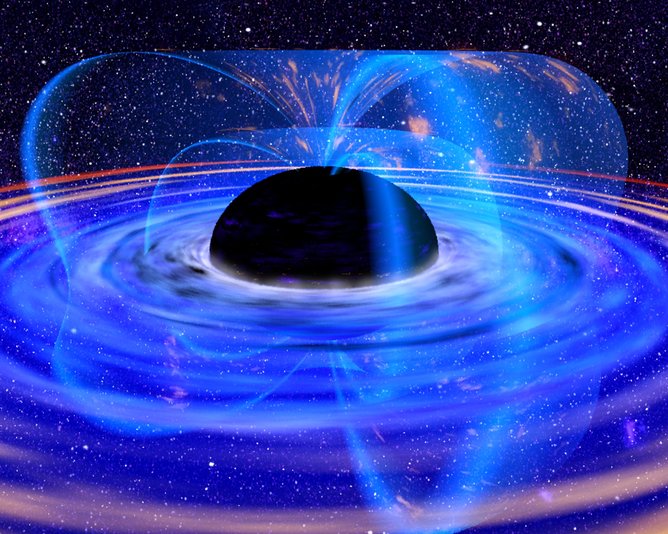
Trillions upon trillions of years later, black holes will dominate the cosmic landscape. Yet even these titanic objects are not eternal. Theoretical work by Stephen Hawking showed that black holes emit faint radiation due to quantum effects near the event horizon. This process, now called Hawking radiation, causes black holes to slowly evaporate.
The largest black holes may survive for up to 10^100 years or more. But eventually they too will disappear.
What remains after that is almost unimaginable: an incredibly cold, dilute universe filled mostly with low-energy photons, neutrinos, and perhaps a few elementary particles drifting in near-perfect emptiness.
No stars.
No planets.
No structures.
Just darkness and thin radiation spread across expanding space.
This is the heat death scenario—a universe that fades quietly into thermodynamic equilibrium, where no energy gradients remain to power motion, chemistry, or life.
If this is the universe’s fate, then after it dies, nothing dramatic follows. Time continues, but meaningful events effectively cease.
Existence becomes an endless stillness.
2. The Big Rip
While heat death suggests a slow fading, another possibility is far more violent.
The universe is expanding, and observations show that this expansion is accelerating. The cause is attributed to something called dark energy, a mysterious component that appears to make up about 68 percent of the cosmos.
Einstein’s equations in general relativity allow for a cosmological constant—a uniform energy density filling space. This idea was first introduced by Albert Einstein, though he later abandoned it. Today it has returned as a leading explanation for dark energy.
If dark energy behaves as a constant property of space, the universe will simply expand forever, leading to heat death.
But if dark energy grows stronger over time, something extraordinary could happen.
The expansion of the universe could accelerate so dramatically that it eventually overcomes every force that binds structures together.
First galaxy clusters would disperse.
Then individual galaxies would fly apart.
Later, solar systems would break apart as gravitational bonds fail.
Eventually even atoms could be torn apart by cosmic expansion.
This hypothetical end is called the Big Rip.
As the final moment approaches, the expansion rate becomes infinite. Space itself stretches so violently that all structure dissolves.
After the Big Rip, spacetime may be left in a strange fragmented state, possibly incapable of supporting any familiar physics.
Whether anything exists afterward is unclear. Some speculative models suggest quantum fluctuations might give rise to new regions of spacetime.
But if the Big Rip occurs, the death of the universe would not be a quiet fading.
It would be the ultimate cosmic disintegration.
3. The Big Crunch
Long before dark energy was discovered, many cosmologists believed the universe might eventually collapse.
Gravity pulls matter together. If the average density of the universe were high enough, expansion could eventually slow, stop, and reverse. Galaxies would begin moving closer again. The cosmos would contract.
This hypothetical future is called the Big Crunch.
In such a scenario, the universe’s expansion halts after billions of years and begins collapsing inward. Galaxies collide and merge. Temperatures rise as matter compresses.
Eventually everything falls together into an extremely hot, dense state similar to the one that existed at the Big Bang.
The universe essentially reverses its birth.
For decades, scientists believed measuring the universe’s density would reveal whether this collapse would occur. But observations in the late 1990s showed that expansion is accelerating, making a Big Crunch unlikely under current models.
However, some alternative theories still allow for it.
If dark energy changes sign in the distant future, gravity could regain dominance and initiate contraction.
What happens after the final collapse remains unknown. Some physicists speculate that the end of one universe could trigger the birth of another.
In that sense, the Big Crunch might not be a final death at all—but a cosmic reset.
4. The Big Bounce
The Big Bounce takes the idea of the Big Crunch one step further.
Instead of ending permanently in collapse, the universe could rebound.
In this model, contraction compresses the cosmos to an extremely dense state. But quantum gravitational effects prevent a true singularity from forming. Instead, the universe “bounces,” triggering a new expansion phase.
The result is a cyclic process: expansion, contraction, bounce, expansion again.
Some versions of this theory arise from attempts to combine quantum mechanics with gravity. Approaches like loop quantum gravity suggest that spacetime may have a discrete structure at the smallest scales. When densities become extremely high, quantum effects create a repulsive force that halts collapse.
The universe then expands again.
If this model is correct, our universe might be just one cycle in an endless sequence of cosmic rebirths.
The Big Bang would not be the beginning of everything—only the beginning of our current phase.
What came before could have been another universe collapsing into the bounce that produced ours.
And after this universe dies, another may follow.
5. Vacuum Decay
One of the most unsettling possibilities in modern physics comes from quantum field theory.
According to current models, the vacuum of space—the lowest-energy state of all fields—may not be perfectly stable. Instead, it could exist in a “false vacuum,” a temporary state that appears stable but is not the absolute minimum energy configuration.
If a lower-energy state exists, the vacuum could suddenly transition to that state.
This process is called vacuum decay.
If such a transition occurred somewhere in space, it would create a bubble of true vacuum expanding outward at nearly the speed of light. Inside that bubble, the fundamental constants of physics might change.
Particles could acquire different masses. Forces might behave differently. Atoms could no longer exist in their familiar forms.
Anything encountered by the expanding bubble would be instantly destroyed, replaced by a region of space governed by entirely new physics.
Because the bubble would travel at nearly light speed, observers would not see it coming.
One moment the universe exists.
The next moment its laws are rewritten.
If vacuum decay occurs in the distant future—or even tomorrow—it would represent not just the death of our universe but the transformation of reality itself.
6. Black Hole Universe Creation
Black holes are among the most mysterious objects predicted by general relativity. At their centers lie singularities—points where density becomes infinite and spacetime curvature becomes extreme.
Some physicists have speculated that these singularities might connect to new universes.
In this idea, matter falling into a black hole could collapse into a region where a new expanding spacetime emerges. The black hole’s interior becomes the Big Bang of another universe.
Each universe might therefore give birth to many others through black holes.
This concept has been explored in theories of cosmological natural selection proposed by researchers such as Lee Smolin. In such models, universes that produce more black holes generate more offspring universes, potentially leading to cosmic evolution.
If this scenario is correct, the death of our universe might not end existence. Instead, the cosmos could continue branching into new universes formed within black holes.
Each would have its own physical constants and laws.
The universe we inhabit might itself be the interior of a black hole in a parent universe.
7. The Multiverse Renewal
Perhaps the most expansive idea of all is that our universe is only one region within a much larger multiverse.
In some models of cosmic inflation, space expands eternally in different regions. New universes continuously form like bubbles within an ever-growing cosmic foam.
Each bubble universe could have its own physical laws, particle types, and constants.
In this framework, the death of our universe—whether through heat death, collapse, or another mechanism—would not end existence overall. Other universes would continue forming and evolving.
Our cosmos would simply be one chapter in a much larger cosmic library.
This idea arises naturally in several theoretical frameworks, including certain versions of inflation and string theory.
Though difficult to test experimentally, the multiverse concept offers a potential explanation for why the constants of physics appear finely tuned for life. Among countless universes with different conditions, we naturally find ourselves in one where life is possible.
If the multiverse is real, then the death of our universe might be little more than the closing of one door in an infinite corridor.
The Silence Beyond the End
The ultimate fate of the universe is one of the most profound questions science can ask.
From the gentle fading of heat death to the violent rupture of the Big Rip, from cyclic bounces to quantum vacuum transitions, the possibilities stretch our imagination and challenge our understanding of physical law.
What lies beyond the universe’s end may never be observed directly. The timescales involved extend trillions upon trillions of years into the future—far beyond the lifespan of stars, galaxies, or civilizations.
Yet these questions matter.
They remind us that the cosmos is not static. It evolves, transforms, and eventually reaches limits imposed by the laws of physics.
Humanity exists during a brief but extraordinary era—the age of stars, galaxies, and cosmic complexity. The universe today is vibrant with light, chemistry, and life.
Someday it will not be.
But whether that final darkness is truly the end—or merely the beginning of something new—remains one of the deepest mysteries the human mind has ever dared to explore.