On a clear night, far from city lights, the sky does not look empty. It looks alive.
Pinpricks of brilliance scatter across darkness, some steady, some faint, some ancient beyond comprehension. For most of human history, stars were symbols—guides for navigation, anchors for mythology, markers of seasons. Today we know they are something far more profound.
Stars are not decorations. They are engines.
They are vast thermonuclear furnaces, converting mass into energy through nuclear fusion. They shape galaxies, manufacture the elements of life, regulate cosmic ecosystems, and influence the geometry of spacetime itself. Without stars, the universe would be a cold, thin fog of hydrogen and helium. There would be no planets, no chemistry complex enough for biology, no observers looking up in wonder.
Stars drive the evolution of the cosmos.
Here are seven scientifically grounded reasons why stars truly are the engines of the universe.
1. Stars Convert Mass into Energy and Power the Cosmos
At the heart of every star lies a balance between gravity and pressure.
Gravity pulls matter inward. Nuclear fusion pushes outward. When a cloud of gas collapses under its own gravity, increasing density and temperature in its core eventually ignite fusion. In stars like our Sun, hydrogen nuclei fuse into helium through a sequence of reactions known as the proton–proton chain. In more massive stars, the carbon–nitrogen–oxygen cycle dominates.
The essential process is the same: four hydrogen nuclei combine to form one helium nucleus. The helium nucleus has slightly less mass than the four hydrogen nuclei combined. That missing mass is converted into energy according to the equation E = mc², formulated by Albert Einstein.
Even a tiny amount of mass yields enormous energy because the speed of light squared is a colossal number.
This energy travels outward from the core through radiation and convection, eventually escaping as starlight. That light spreads across space, warming planets, illuminating nebulae, and powering chemical reactions. The Sun alone emits about 3.8 × 10²⁶ watts of power every second. It has been doing so for approximately 4.6 billion years and will continue for billions more.
Multiply that by hundreds of billions of stars in a typical galaxy, and then by hundreds of billions of galaxies in the observable universe.
Stars are the primary luminous engines of the cosmos. They transform gravitational collapse into radiant energy, shaping the thermal and radiative environment of galaxies. Without fusion, the universe would be dark and frigid.
The night sky shines because stars are converting matter into light.
2. Stars Forge the Chemical Elements of Life
The early universe was chemically simple. After the Big Bang, matter consisted primarily of hydrogen and helium, with trace amounts of lithium. There was no carbon, no oxygen, no iron, no calcium. The periodic table as we know it did not yet exist.
Stars changed that.
Inside stellar cores, nuclear fusion builds heavier elements in stages. In stars roughly the mass of the Sun, helium fuses into carbon and oxygen through processes like the triple-alpha reaction. In more massive stars, fusion proceeds further, creating neon, magnesium, silicon, sulfur, and eventually iron in the core.
Iron marks a turning point. Fusion beyond iron does not release energy—it requires energy. When a massive star builds an iron core, it can no longer support itself through fusion pressure. The core collapses, triggering a supernova explosion.
During these explosive deaths, temperatures and neutron densities become so extreme that elements heavier than iron are formed through rapid neutron capture processes. Gold, uranium, lead—these elements are forged in catastrophic stellar events.
Observations of supernova remnants and neutron star mergers confirm this cosmic alchemy.
When a supernova explodes, it ejects newly synthesized elements into surrounding space. Over time, this enriched material becomes part of new star-forming clouds. Subsequent generations of stars and planets incorporate these elements.
The calcium in your bones, the iron in your blood, the oxygen you breathe—all were forged in ancient stars.
Stars are the chemical factories of the universe. They manufacture complexity from simplicity, transforming primordial hydrogen into the diverse matter required for planets and life.
Without stars, chemistry would remain primitive.
3. Stars Regulate the Structure and Evolution of Galaxies
Galaxies are not static collections of stars. They are dynamic systems shaped by gravitational interactions, gas dynamics, dark matter, and stellar feedback.
Stars play a central role in regulating galactic evolution.
When massive stars form within molecular clouds, they emit intense ultraviolet radiation. This radiation ionizes surrounding gas, creating H II regions and driving powerful stellar winds. These winds inject energy and momentum into the interstellar medium.
Later, when massive stars explode as supernovae, they release enormous energy—about 10⁴⁴ joules per explosion—into their host galaxy. This energy heats surrounding gas, triggers shock waves, and can both compress nearby clouds (stimulating new star formation) or disperse gas (suppressing star formation).
This interplay is known as stellar feedback.
Without stellar feedback, galaxies might collapse into runaway star formation, rapidly consuming their gas supply. Feedback acts as a regulating mechanism, maintaining balance between collapse and expansion within galactic ecosystems.
Observations of starburst galaxies reveal how intense star formation and supernova activity can drive galactic-scale winds, expelling gas into intergalactic space. These outflows influence future star formation rates and even contribute to enriching the intergalactic medium with heavy elements.
Stars are not passive inhabitants of galaxies. They are active agents shaping galactic architecture.
They determine how galaxies evolve over billions of years.
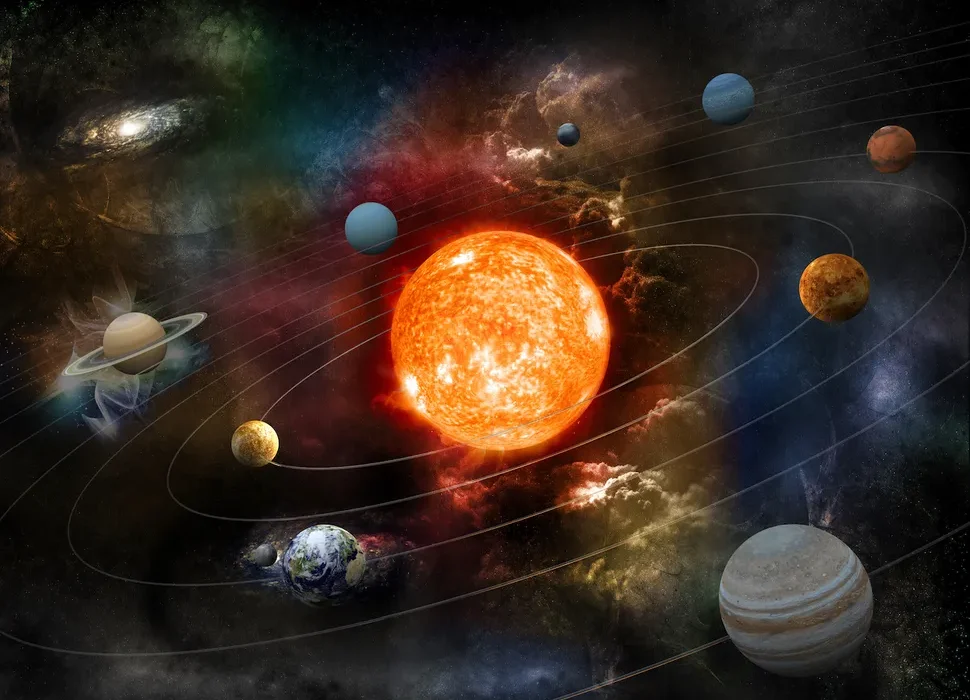
4. Stars Create and Sustain Planetary Systems
Stars are the anchors around which planetary systems form.
When a molecular cloud collapses, conservation of angular momentum causes the forming protostar to be surrounded by a rotating disk of gas and dust. Within this protoplanetary disk, microscopic grains collide and stick together, gradually building planetesimals, then protoplanets, and eventually full-fledged planets.
The star at the center governs the system.
Its mass determines the size of the habitable zone—the region where temperatures allow liquid water to exist on a planetary surface. A more massive star has a brighter luminosity but a shorter lifespan. A smaller star burns more slowly, offering potentially longer windows for planetary development.
Our own star, Sun, is a G-type main-sequence star. Its stability over billions of years has allowed life on Earth to evolve complexity.
Stellar radiation also influences planetary atmospheres. Ultraviolet light can drive chemical reactions, while stellar winds can erode atmospheres if planetary magnetic fields are weak.
Observations from missions such as the Kepler Space Telescope have revealed thousands of exoplanets orbiting distant stars. These discoveries confirm that planet formation is a common outcome of star formation.
Stars are the gravitational and energetic centers of planetary systems. Without them, planets would drift as frozen wanderers through space.
The warmth that allows oceans to shimmer and climates to stabilize comes from stellar fusion.
5. Stars Shape Spacetime Through Gravity
Stars are engines not only of light but of gravity.
According to general relativity, mass and energy curve spacetime. The more massive an object, the greater the curvature it produces. Stars, especially massive ones, significantly warp the spacetime around them.
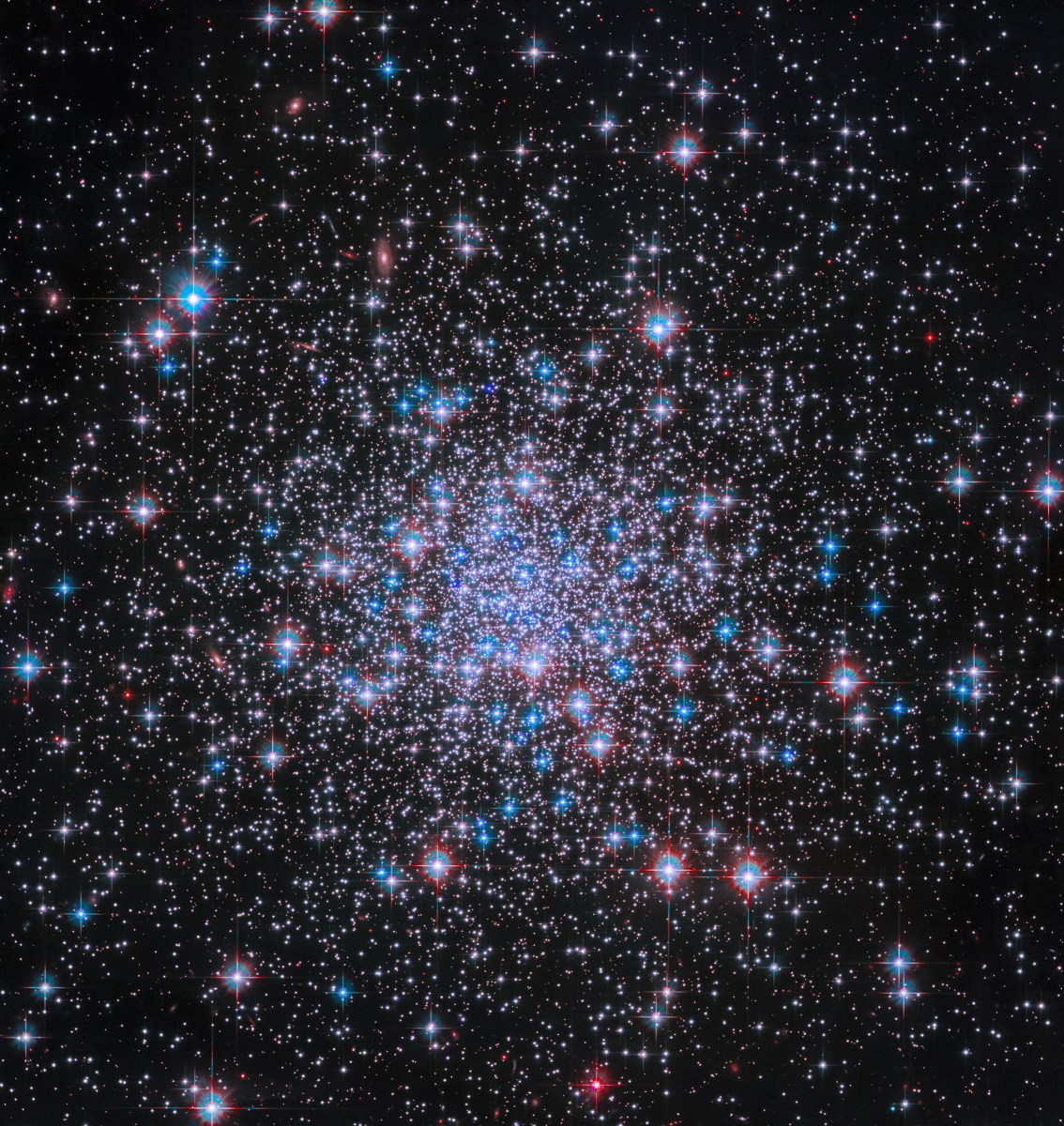
This curvature governs orbital motion. Planets orbit stars because they move along curved paths in spacetime. Binary star systems dance around shared centers of mass. Entire star clusters orbit galactic cores.
When stars die, their gravitational influence intensifies in extraordinary ways.
If a star of moderate mass exhausts its fuel, it may collapse into a white dwarf. More massive stars can collapse into neutron stars—objects so dense that a teaspoon of their material would weigh billions of tons. The most massive stars collapse into black holes, regions where spacetime curvature becomes so extreme that not even light can escape.
Collisions between neutron stars or black holes generate gravitational waves—ripples in spacetime first predicted by Einstein and directly detected in 2015.
These events are cosmic engines of both matter and geometry.
Stars structure the universe not only by shining but by bending the very fabric of reality.
6. Stars Drive Cosmic Recycling
The universe operates as a grand cycle of birth, evolution, death, and rebirth—and stars are central to this cycle.
Stars form from collapsing molecular clouds. Over millions to billions of years, they evolve, altering their internal structure and chemical composition. When they die, they return enriched material to the interstellar medium.
Low-mass stars like the Sun eventually shed outer layers as planetary nebulae, leaving behind dense white dwarfs. Massive stars explode as supernovae, dispersing heavy elements across light-years of space.
These expelled materials mix with existing gas clouds. Over time, gravity gathers them into new star-forming regions. Each new generation of stars contains a slightly higher fraction of heavy elements—a property astronomers call metallicity.
This cosmic recycling enriches galaxies chemically over time.
Without stellar death, the universe would stagnate chemically. Each star’s life contributes to a larger ecological network of matter and energy exchange.
Stars are not isolated entities. They are participants in a cosmic metabolism.
7. Stars Enable the Possibility of Life and Consciousness
Perhaps the most profound reason stars are the engines of the universe is this: they make life possible.
Life as we understand it requires stable energy sources, complex chemistry, and time. Stars provide all three.
The steady output of a main-sequence star offers long-term energy for planetary climates. The heavy elements forged in stellar interiors allow for complex molecules, including carbon-based organic compounds. The timescales of stellar evolution allow billions of years for biological processes to unfold.
Earth’s biosphere depends directly on solar radiation. Photosynthesis converts sunlight into chemical energy, forming the base of the food chain. Climate systems are driven by differential heating from the Sun.
Even on geological timescales, the Sun’s gradual brightening influences planetary evolution.
Beyond our Solar System, the search for life focuses on exoplanets orbiting stars within habitable zones. The properties of host stars—mass, variability, flare activity—are crucial in determining planetary habitability.
Stars do not merely illuminate life. They enable its existence.
The atoms in our bodies were forged in stellar cores. The energy that powers our thoughts originates from nuclear fusion 150 million kilometers away.
In a profound sense, stars are the engines that made observers possible.
The Eternal Fire
Stars are not eternal. They are born, they evolve, and they die. Some shine for millions of years. Others burn for trillions. But across cosmic time, they transform the universe from simplicity into complexity.
They generate light and heat. They manufacture the elements. They sculpt galaxies. They create planets. They warp spacetime. They recycle matter. They make life possible.
Remove stars from the cosmic equation, and the universe becomes sterile—a thin, dark expanse of primordial gas drifting endlessly.
Instead, because stars ignite, the cosmos becomes dynamic and luminous.
Every sunrise is a reminder of nuclear fusion in action. Every distant galaxy glimmering in telescope images is a testament to countless stellar furnaces blazing across space and time.
Stars are not mere points of light.
They are engines of transformation.
And in their fire, the universe finds its power, its structure, its chemistry, and ultimately, its capacity for awareness.
We look up at the stars.
And we are looking at the engines that built everything.