The universe is not quiet. It is not static. It is not eternal in the way ancient myths once imagined. Stars are born in luminous clouds of gas and dust, blaze for millions or billions of years, and then die—sometimes gently, sometimes violently, sometimes in explosions so bright they briefly outshine entire galaxies.
When a star dies, it does not simply vanish. It leaves behind a remnant: a white dwarf, a neutron star, or a black hole. These remnants are the dense corpses of once-living suns. Over cosmic time, galaxies accumulate them. They gather in clusters. They drift into stellar neighborhoods where the light of youth has faded and only the relics remain.
Astronomers sometimes describe certain regions of space as “stellar graveyards”—places where dead stars outnumber the living, where ancient suns have ended their lives and left behind dense, silent remains. These graveyards are not merely poetic metaphors. They are real astrophysical environments, shaped by gravity, time, and the unstoppable evolution of stars.
Below are six of the most haunting galactic graveyards known to science—vast regions filled with stellar remnants that tell the story of how stars live, die, and continue to shape the cosmos even after their light has gone out.
1. Globular Clusters: Ancient Cities of Dead Stars
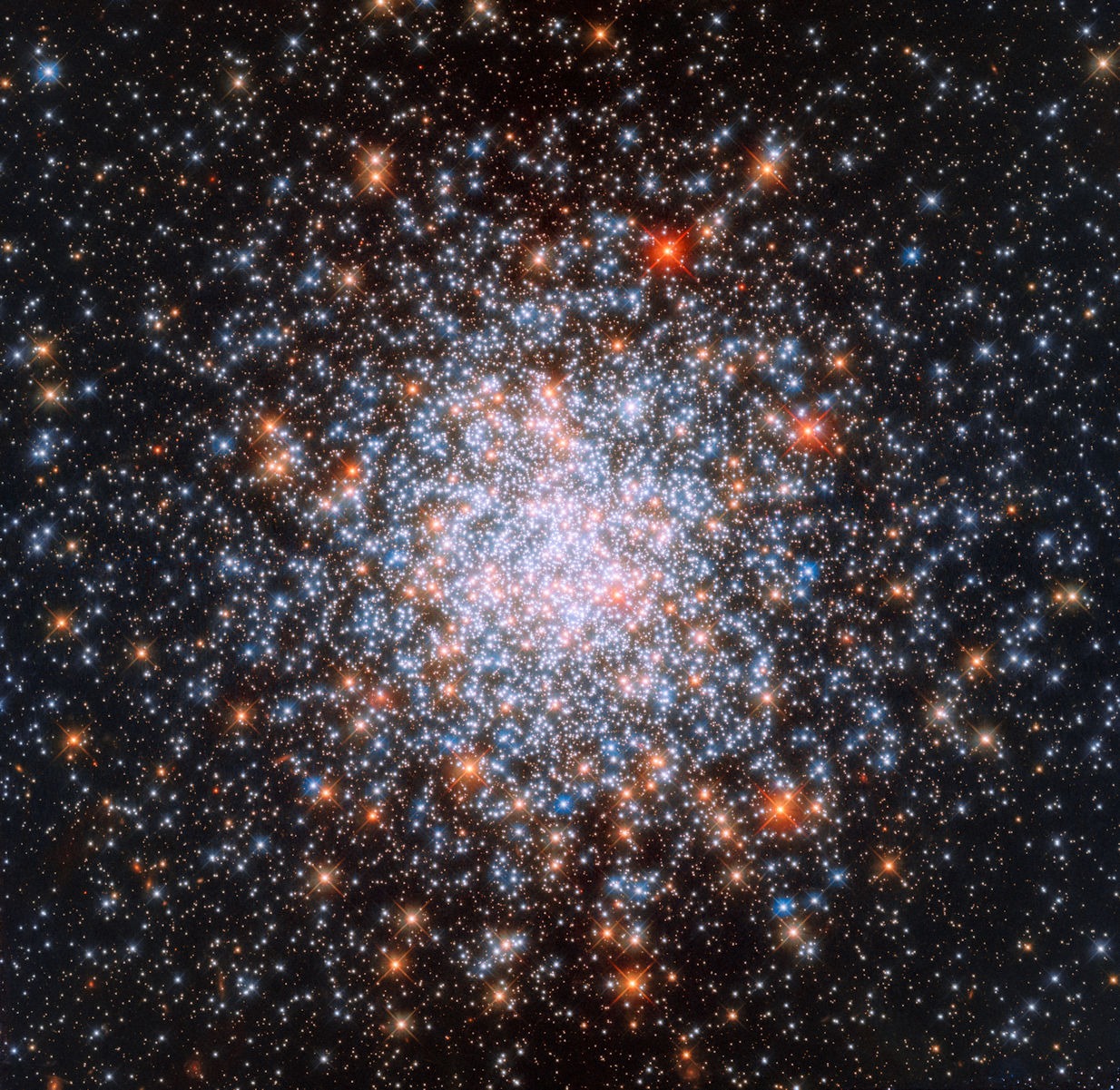
Orbiting many galaxies, including our own Milky Way, are spherical swarms of stars known as globular clusters. These clusters are among the oldest objects in the universe, with ages often exceeding 10 billion years. They formed early in galactic history, when the universe itself was young.
At first glance, globular clusters appear brilliant and alive. They contain hundreds of thousands, sometimes millions, of stars packed tightly together in a spherical volume only a few dozen light-years across. But look closer, and a sobering reality emerges: most of the massive stars that once lived there are long gone.
Because globular clusters are so old, their most massive stars burned through their nuclear fuel billions of years ago. Massive stars live fast and die young. They ended their lives in supernova explosions, leaving behind neutron stars or black holes. Medium-mass stars, like the Sun, evolved into red giants and then shed their outer layers, becoming white dwarfs.
Today, globular clusters are filled with stellar remnants. White dwarfs are especially common, cooling slowly over billions of years. Neutron stars—ultra-dense remnants formed in supernovae—are also present, often detected as pulsars emitting regular radio signals. Some clusters even harbor black holes, once thought unlikely but now supported by observations.
In these ancient stellar cities, the living stars are mostly low-mass, long-lived red dwarfs. The brilliant giants of youth are gone. What remains is a population dominated by the dead and the dying—a cosmic retirement home that has quietly accumulated stellar corpses for eons.
Globular clusters are graveyards not because they are empty, but because they are old beyond imagination. They show us what stellar populations look like after billions of years of evolution.
2. The Galactic Center: A Dense Graveyard Around a Supermassive Black Hole
At the heart of the Milky Way lies a supermassive black hole known as Sagittarius A*. Surrounding it is one of the most extreme environments in our galaxy—a crowded region where stars are packed densely and gravity dominates everything.
This galactic center is not just a place of intense star formation. It is also a repository of stellar remnants. Over billions of years, massive stars near the center have exploded as supernovae, leaving behind neutron stars and black holes. Due to a process called mass segregation, heavier objects gradually sink toward the center of a gravitational system.
This means that stellar-mass black holes and neutron stars tend to drift inward over time, accumulating in the region surrounding the supermassive black hole. Simulations predict that thousands, perhaps tens of thousands, of stellar-mass black holes may orbit within a few light-years of Sagittarius A*.
Observational evidence supports the presence of many X-ray sources in the galactic center—likely binary systems involving neutron stars or black holes accreting material. These compact remnants are often invisible unless actively feeding, making the region a hidden graveyard.
The galactic center is therefore both a birthplace and a cemetery. It is a place where gravity gathers the dead, where stellar remnants swirl in tight orbits around a central abyss. It is one of the densest graveyards in our galaxy.
3. Supernova Remnant Fields: The Aftermath of Stellar Explosions
When massive stars die, they explode as supernovae. These explosions blast material into space at enormous speeds, creating expanding shells of gas and dust known as supernova remnants. Inside these glowing clouds often lies a neutron star or black hole—the collapsed core of the original star.
Regions of active star formation produce many massive stars, and therefore, over time, many supernova remnants. Certain parts of galaxies become littered with these expanding shells—cosmic tombstones marking where stars once burned.
The Milky Way contains hundreds of known supernova remnants, and likely many more that are too faint or too old to detect easily. In galaxies experiencing bursts of star formation, such as starburst galaxies, supernova remnants can be extraordinarily common.
Each remnant is a record of death. Shockwaves race outward, compressing surrounding gas and sometimes triggering new star formation. Heavy elements forged in the star’s core—carbon, oxygen, iron—are scattered into space. These elements eventually become part of new stars, planets, and even living organisms.
Supernova remnant fields are violent graveyards. They are not quiet resting places but dynamic regions where death seeds new beginnings. The remnants glow in radio, optical, and X-ray wavelengths, reminding us that even in death, stars reshape their environment.
4. The Halo of the Milky Way: A Diffuse Sea of White Dwarfs
Beyond the bright spiral disk of the Milky Way lies a vast, diffuse halo. This halo contains old stars, globular clusters, and dark matter. It also contains countless white dwarfs—the cooling cores of once-sunlike stars.
White dwarfs are the final evolutionary stage for stars with masses up to about eight times that of the Sun. After exhausting nuclear fuel, such stars shed their outer layers and leave behind a dense core roughly the size of Earth but with about half the Sun’s mass.
Over billions of years, these white dwarfs cool and fade, becoming dim and difficult to detect. Many drift into the galactic halo through gravitational interactions. Because they no longer shine brightly, they form a hidden population of stellar corpses surrounding the galaxy.
Large astronomical surveys have identified numerous halo white dwarfs, confirming that they are common relics of the Milky Way’s long history of star formation. These remnants represent ancient generations of stars that lived and died long before the Sun was born.
The galactic halo is thus a vast, faint graveyard—a sea of cooling stellar embers slowly radiating away their remaining heat into the darkness of space.
5. Open Clusters in Their Final Stages: Dispersed Graveyards
Open clusters are looser groups of stars that form together from the same molecular cloud. Unlike globular clusters, they are relatively young and less tightly bound. Over time, gravitational interactions with passing stars and galactic tides pull them apart.
As open clusters age, their massive stars die first, leaving behind white dwarfs, neutron stars, or black holes. Eventually, the cluster disperses entirely, its stars spreading into the galactic disk.
In some older open clusters, astronomers observe significant populations of white dwarfs—clear evidence that many stars have already completed their life cycles. These clusters become transitional graveyards, halfway between a living stellar family and complete dissolution.
The Hyades cluster, for example, contains several white dwarfs that were once the cluster’s more massive stars. These remnants offer direct evidence of stellar evolution in action.
Open clusters in their final stages are fragile graveyards. They are not tightly bound like globular clusters. Instead, they gradually dissolve, scattering their dead and living members across the galaxy.
6. Ultra-Compact Dwarf Galaxies: Remnant-Dominated Systems
Beyond individual star clusters, entire small galaxies can function as stellar graveyards. Ultra-compact dwarf galaxies are dense collections of stars that may represent the stripped cores of larger galaxies.
Many of these systems are dominated by old stellar populations. Their massive stars died billions of years ago. What remains are low-mass stars and an abundance of stellar remnants—white dwarfs, neutron stars, and black holes.
Some ultra-compact dwarfs show evidence of unusually high mass relative to their light output, suggesting large populations of dark remnants. In certain cases, they may even harbor central black holes.
These compact systems are ancient and remnant-heavy. They are galactic-scale graveyards—dense fossils of earlier cosmic eras.
They remind us that not only stars die. Galaxies themselves can be stripped, cannibalized, and reduced to dense relics filled with the remnants of long-extinct stellar generations.
The Cycle of Death and Renewal
Calling these regions “graveyards” may evoke stillness, but in astrophysics, death is never the end of the story. White dwarfs cool slowly for trillions of years. Neutron stars emit pulses like cosmic lighthouses. Black holes shape galaxies through their gravitational influence.
The heavy elements forged in dying stars become the building blocks of planets and life. Every atom of calcium in your bones, every iron atom in your blood, was once inside a star that died long ago.
Stellar graveyards are not places of emptiness. They are archives of cosmic history. They preserve evidence of how stars evolve, how galaxies mature, how matter cycles through different forms.
Over unimaginable timescales, even these remnants will fade. White dwarfs will cool into black dwarfs. Neutron stars may collide or slowly decay. Black holes will eventually evaporate via Hawking radiation over incomprehensibly long durations.
The universe itself is evolving toward a future where star formation ceases and stellar graveyards dominate the cosmos.
But for now, these six galactic graveyards stand as profound reminders of the life cycle of stars. They tell a story written in light and gravity, in fusion and collapse.
They show us that even in death, stars shape the universe.
And in that sense, the cosmos is not merely a graveyard—it is a place where endings become beginnings, and where every dying star contributes to the next chapter of cosmic history.