Science often appears orderly in textbooks. Hypotheses are proposed, experiments are conducted, data is analyzed, and conclusions are drawn. It seems like a carefully choreographed dance of logic. But the real history of science is far messier—and far more beautiful. Many of the discoveries that reshaped our world were not the result of perfectly executed plans. They were accidents. They were surprises. They were moments when something went “wrong,” and a curious mind dared to look closer instead of turning away.
These accidental discoveries did not happen because scientists were careless. They happened because scientists were attentive. They noticed anomalies. They questioned unexpected results. They allowed curiosity to override frustration. And in doing so, they changed medicine, industry, communication, and our understanding of the universe itself.
Here are six accidental scientific discoveries that transformed human civilization forever.
1. Penicillin and the Birth of Modern Antibiotics
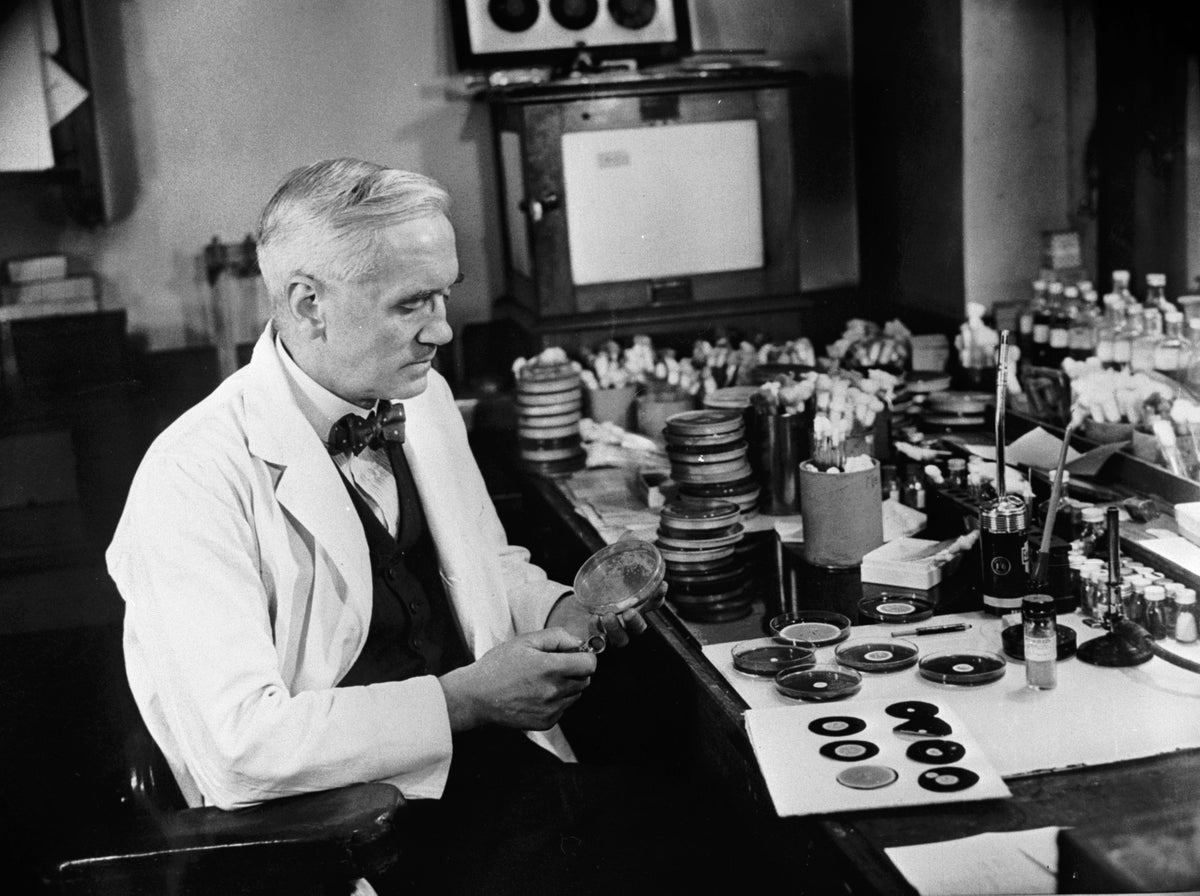
In 1928, inside a modest laboratory at St. Mary’s Hospital in London, a Scottish bacteriologist named Alexander Fleming returned from vacation to find something unusual. He had been studying Staphylococcus bacteria grown in petri dishes. One of the dishes had been contaminated by mold. Under normal circumstances, contamination would mean failure. The experiment would be discarded. The dish would be thrown away.
But Fleming noticed something strange. Around the mold, the bacteria had been destroyed. A clear zone surrounded the fungal colony, as if an invisible shield had wiped the bacteria out of existence.
Instead of tossing the contaminated dish aside, Fleming became curious. He identified the mold as belonging to the genus Penicillium. The substance released by the mold, which he named penicillin, appeared to kill many harmful bacteria.
At the time, medicine had few effective treatments for bacterial infections. Pneumonia, sepsis, and infected wounds often led to death. Fleming’s initial findings did not immediately transform medicine; isolating and producing penicillin in large quantities proved difficult. But over a decade later, scientists including Howard Florey and Ernst Boris Chain developed methods to purify and mass-produce it.
During World War II, penicillin became widely available. It saved countless soldiers from infected wounds. It reduced mortality from pneumonia and other bacterial diseases. For the first time in human history, doctors had a reliable weapon against bacterial infections.
This accidental observation launched the antibiotic era. It fundamentally altered life expectancy, surgery, childbirth, and modern medicine. What began as a forgotten petri dish became one of the greatest medical revolutions in history.
2. X-Rays and the Hidden World Beneath the Skin
In 1895, a German physicist named Wilhelm Conrad Röntgen was experimenting with cathode rays inside a vacuum tube. The tube was covered in black cardboard to block visible light. Yet, as he worked, he noticed something unexpected. A nearby screen coated with barium platinocyanide began to glow.
This glow should not have been possible. The tube was shielded. No visible light was escaping. Something invisible was passing through the cardboard and causing the screen to fluoresce.
Röntgen realized he had encountered a new type of radiation. Because its nature was unknown, he called it “X-rays,” using the mathematical symbol for the unknown.
He began experimenting further. He discovered that these rays could pass through soft tissue but were absorbed by denser materials like bone and metal. In one of his most famous experiments, he placed his wife’s hand between the tube and a photographic plate. The resulting image revealed the bones of her hand and her wedding ring floating eerily in space.
For the first time, humans could see inside the living body without cutting it open.
X-rays revolutionized medicine almost immediately. Surgeons could locate fractures and bullets. Doctors could diagnose lung diseases. Over time, radiology became an essential branch of medical science.
Beyond medicine, X-rays opened new fields of research in physics, chemistry, and materials science. Techniques such as X-ray crystallography later revealed the structures of complex molecules, including DNA.
What began as a mysterious glow in a darkened laboratory became a window into the invisible.
3. The Microwave Oven and the Melting Chocolate Bar
During World War II, radar technology advanced rapidly. Radar systems relied on devices called magnetrons to generate microwaves. In 1945, an American engineer named Percy Spencer was working with radar equipment at the Raytheon company.
While standing near an active radar set, Spencer noticed something peculiar. A chocolate bar in his pocket had melted.
Curious, he conducted further experiments. He placed popcorn kernels near the magnetron. They popped. He placed an egg nearby. It exploded from internal heating.
Spencer realized that microwaves could heat food quickly by causing water molecules within it to vibrate. These vibrations generate heat through molecular motion.
The first microwave ovens were large and expensive, but continued engineering improvements made them smaller and more affordable. By the late 20th century, microwave ovens became common household appliances.
This accidental discovery transformed food preparation. It changed domestic routines, restaurant operations, and the global food industry. Today, millions of people rely on microwave ovens daily, rarely thinking about the radar experiment that led to their creation.
An engineer noticed melted chocolate—and the modern kitchen was born anew.
4. The Discovery of Radioactivity
In 1896, French physicist Henri Becquerel was studying phosphorescent materials, inspired by the recent discovery of X-rays. He was investigating whether uranium salts emitted radiation after exposure to sunlight.
He placed uranium crystals on a photographic plate wrapped in black paper, expecting that sunlight would activate the crystals, which would then emit radiation capable of penetrating the paper and exposing the plate.
But cloudy weather interrupted his experiment. The uranium samples and photographic plates were stored together in a drawer. Days later, Becquerel developed the plates anyway—expecting little or no exposure.
To his surprise, the plates showed strong markings. The uranium had emitted radiation without any exposure to sunlight.
Becquerel had discovered spontaneous radioactivity.
This unexpected finding revealed that atoms were not indivisible and inert, as once believed. They could emit energy from within. Later research by Marie Curie and Pierre Curie expanded the study of radioactive elements and led to the isolation of radium and polonium.
Radioactivity reshaped physics. It led to the development of nuclear physics and the understanding of atomic structure. It enabled medical treatments such as radiation therapy for cancer. It also paved the way for nuclear power—and nuclear weapons.
From a cloudy day and an unplanned experiment came a discovery that altered science, medicine, and global politics.
5. The Discovery of the Cosmic Microwave Background
In the 1960s, two radio astronomers, Arno Penzias and Robert Wilson, were working with a large horn antenna at Bell Labs in New Jersey. They were trying to eliminate background noise from their radio measurements.
But no matter what they did, a faint microwave signal persisted. It came from every direction in the sky. They cleaned the antenna. They even removed pigeon droppings, suspecting interference. Yet the signal remained.
Unbeknownst to them, other physicists had predicted that if the universe began in a hot, dense state, there should be leftover radiation—an echo of the early cosmos—still detectable today.
The persistent noise Penzias and Wilson observed turned out to be this cosmic microwave background radiation.
Its discovery provided powerful evidence for the Big Bang model of the universe. It showed that the universe had once been much hotter and denser. It transformed cosmology from speculation into precision science.
What appeared to be an irritating technical problem became one of the most important discoveries in modern astronomy. The faint whisper of ancient light revealed the origin story of the cosmos itself.
6. Teflon and the Slippery Polymer
In 1938, chemist Roy J. Plunkett was working at DuPont, experimenting with gases related to refrigerants. One morning, he found that a cylinder of tetrafluoroethylene gas had stopped flowing. Expecting a malfunction, he cut open the cylinder.
Inside, he found not gas—but a white, waxy solid coating the interior.
The gas had polymerized unexpectedly, forming a new material known as polytetrafluoroethylene, or PTFE. This substance had remarkable properties. It was highly resistant to heat and chemical reactions. It had an extremely low coefficient of friction.
The material later became known by the brand name Teflon.
Initially used in industrial and military applications due to its chemical stability, Teflon eventually found its way into cookware as a nonstick coating. It also became essential in aerospace engineering, electronics, and medical devices.
A failed gas experiment led to a polymer that now lines frying pans, insulates wires, and protects equipment in extreme environments.
From surprise came slipperiness. From slipperiness came innovation.
The Hidden Pattern Behind Accidental Discoveries
What connects these stories is not randomness alone. Accidents happen constantly in laboratories. Most lead nowhere. The difference lies in attention and curiosity.
Fleming did not ignore the mold. Röntgen did not dismiss the glowing screen. Spencer did not shrug off melted chocolate. Becquerel did not discard his cloudy-day experiment. Penzias and Wilson did not abandon the persistent signal. Plunkett did not overlook the strange residue.
Each scientist paused. Each asked why.
Accidental discoveries remind us that science is not a rigid march forward. It is an exploration filled with detours. The unknown often appears disguised as error. Progress sometimes arrives disguised as inconvenience.
The Emotional Power of Serendipity in Science
There is something deeply human about these stories. They reveal that discovery does not require perfection. It requires openness. It requires humility before the unexpected.
The world-changing power of these accidents lies not only in their scientific impact but also in what they teach about creativity. Breakthroughs often emerge when preparation meets chance. The scientist must be prepared enough to recognize significance when it appears.
Serendipity favors the observant mind.
These discoveries transformed medicine, physics, cosmology, and daily life. They lengthened human lifespan, expanded our cosmic perspective, modernized our homes, and reshaped industries.
Yet their origins were quiet, even mundane: a contaminated dish, a glowing screen, a melted candy bar, a cloudy day, a persistent hiss of static, a clogged cylinder.
Science advances through careful design. But it also advances through wonder.
A World Forever Changed
Today, antibiotics treat infections that once killed millions. X-rays reveal broken bones in minutes. Microwave ovens heat meals in seconds. Nuclear physics powers cities and medical therapies. Cosmology maps the history of the universe. Teflon coats surfaces that must endure extreme conditions.
None of these transformations were fully planned from the beginning.
Accidental scientific discoveries remind us that knowledge is not always found where we expect it. Sometimes it waits in mistakes. Sometimes it hides in contamination. Sometimes it whispers through noise.
The history of science is not just a record of experiments conducted perfectly. It is a story of human curiosity confronting the unexpected—and choosing to investigate rather than ignore.
In those moments of surprise, the world changes forever.