Space is often described as empty. Yet in reality, it is not truly empty at all. Galaxies gather in clusters, clusters form superclusters, and enormous filaments of matter stretch across billions of light-years, forming what scientists call the cosmic web. The universe, on its largest scales, resembles a vast three-dimensional network of glowing nodes and threads separated by immense cavities known as cosmic voids.
These voids are regions where galaxies are extremely rare. They are not completely empty, but compared with the dense clusters of galaxies that define the cosmic web, they feel almost ghostlike.
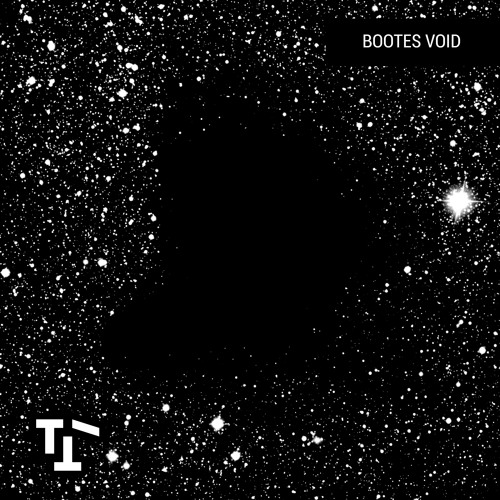
Among these voids, one stands out for its eerie size and haunting emptiness. It is known as the Boötes Void.
Located roughly 700 million light-years away in the direction of the constellation Boötes, this enormous region of space is one of the largest known voids in the observable universe. It stretches roughly 330 million light-years across. To grasp the scale, consider that our Milky Way galaxy is about 100,000 light-years wide. The Boötes Void is thousands of times larger.
When astronomers first mapped this region in the early 1980s, they were stunned. The number of galaxies inside it was shockingly small. For such a huge region of space, hundreds or even thousands of galaxies might normally be expected. Instead, only a few dozen were found scattered throughout its vast interior.
The Boötes Void became known informally as “the Great Nothing.”
It is not merely large. It is deeply unsettling. The existence of such an immense emptiness challenges our understanding of how the universe evolved and how matter organizes itself across cosmic distances.
Below are ten scientifically grounded reasons why the Boötes Void is often considered one of the scariest places in the universe—not because it contains monsters, but because its emptiness reveals profound mysteries about the nature of reality.
1. It Is One of the Largest Known Voids in the Universe
The first reason the Boötes Void is so unsettling is its sheer size.
With a diameter of about 330 million light-years, it ranks among the largest cosmic voids ever discovered. This means that if you could somehow travel across it at the speed of light, the journey from one side to the other would take longer than the entire time since the dinosaurs first appeared on Earth.
For comparison, the distance between the Milky Way and the neighboring Andromeda Galaxy is only about 2.5 million light-years. The Boötes Void could swallow that distance more than a hundred times over.
Cosmic voids are not unusual. They are an expected part of the large-scale structure of the universe. However, most voids are smaller and contain more galaxies than this one.
What makes the Boötes Void frightening is not simply that it is empty—it is that it is so extraordinarily empty over such a colossal volume.
When astronomers first realized how vast it was, they struggled to explain how such a gigantic region could form with so little matter.
The universe, it seemed, had carved out a hole of unimaginable scale.
2. It Contains Far Fewer Galaxies Than Expected
A region as large as the Boötes Void should statistically contain hundreds or even thousands of galaxies. Instead, astronomers have identified only a few dozen scattered throughout its enormous volume.
Even these galaxies are not clustered together. They are isolated islands of stars surrounded by enormous stretches of near-vacuum.
To appreciate the loneliness of this environment, imagine living in a galaxy inside the void. The nearest neighboring galaxy might be tens of millions of light-years away. The night sky would look radically different from ours.
In the Milky Way, the sky is filled with countless stars and distant galaxies. Inside the Boötes Void, the cosmic scenery would feel eerily sparse.
Galaxies exist there, but they are extremely rare. The darkness between them stretches across distances so vast that even light would require millions of years to travel from one island of stars to another.
It is the ultimate cosmic isolation.
3. It Challenges Our Understanding of Cosmic Structure
Modern cosmology explains the large-scale structure of the universe through the growth of tiny density fluctuations after the Big Bang.
Regions with slightly more matter gradually pulled in additional material through gravity, forming galaxies, clusters, and filaments. Regions with slightly less matter became voids.
This model successfully explains the cosmic web observed across billions of light-years.
However, the Boötes Void is so large that it pushes the limits of these models. Simulations of the universe rarely produce voids of such extreme size and emptiness without special conditions.
Its existence forces cosmologists to refine their understanding of how matter distributed itself during the universe’s earliest moments.
The void may have formed from an unusually large underdense region in the early universe, but exactly how such an enormous gap emerged remains an active topic of research.
Sometimes the scariest discoveries in science are not dangerous objects, but anomalies—places where the universe behaves in ways we do not yet fully understand.
4. If You Lived There, the Night Sky Would Be Almost Empty
Imagine standing on a planet inside a galaxy located near the center of the Boötes Void.
On Earth, the night sky is rich with stars because we live inside a galaxy. Even beyond the Milky Way, powerful telescopes reveal countless distant galaxies scattered across the cosmos.
Inside the Boötes Void, the cosmic landscape would be profoundly different.
Beyond your own galaxy, the nearest galaxies might lie tens of millions of light-years away. Many would appear extremely faint or invisible without powerful instruments.
To the naked eye, the sky might contain almost nothing beyond the stars of your own galaxy.
The broader universe would appear nearly absent.
Civilizations living in such a galaxy might struggle to discover the true scale of the cosmos. The evidence of other galaxies might be so faint that the universe could appear much smaller than it truly is.
This thought experiment reveals how much our understanding of the universe depends on our cosmic location.
In the Boötes Void, the universe might feel terrifyingly lonely.
5. It Is Almost Completely Devoid of Matter
Voids are not perfect vacuums. They still contain dark matter, thin gas, and occasional galaxies. However, their density is dramatically lower than the cosmic average.
In the Boötes Void, the density of matter is extremely low even by void standards.
Most of the universe’s matter—both ordinary matter and dark matter—flows toward filaments and clusters under the influence of gravity. This process leaves voids increasingly empty over time.
The Boötes Void represents one of the most extreme examples of this process.
If you could travel through its interior, you might cross millions of light-years without encountering a galaxy. The intergalactic gas would be incredibly thin, far thinner than even the already sparse material between galaxies elsewhere.
The result is a region that feels almost like a cosmic abyss.
It is not nothing—but it is about as close to nothing as the universe naturally produces on such vast scales.
6. The Void Continues to Expand Over Time
Cosmic voids are not static structures. They evolve as the universe expands.
Because voids contain relatively little matter, there is less gravitational pull to slow their expansion. As a result, they tend to expand faster than the surrounding regions.
Matter flows away from void centers toward denser filaments and clusters. Over billions of years, this process makes voids larger and emptier.
The Boötes Void likely began as a modest underdense region early in cosmic history. Over billions of years, gravity amplified that difference, pushing matter outward and leaving behind an expanding emptiness.
In a sense, the void is still growing.
The cosmic web slowly stretches and reshapes itself, and regions like the Boötes Void continue to become even more desolate over time.
The emptiness is not only vast—it is increasing.
7. It Reveals the Hidden Influence of Dark Matter
Although the Boötes Void appears empty, dark matter still plays a role in shaping its structure.
Dark matter is invisible, but it provides most of the gravitational scaffolding for galaxies and clusters. In the cosmic web, dark matter filaments guide the formation of galaxies.
Inside voids, dark matter density is lower but not zero. It forms faint structures that influence where the few existing galaxies appear.
The distribution of galaxies inside the Boötes Void helps scientists study how dark matter behaves in low-density environments.
These galaxies act as cosmic probes, revealing how matter evolves when gravity is weak and interactions are rare.
Ironically, the emptiness of the void provides valuable clues about the invisible matter that dominates the universe.
8. It Contains Mysterious Isolated Galaxies
The galaxies inside the Boötes Void are unusual.
In dense clusters, galaxies frequently interact, collide, and merge. These interactions shape their evolution, triggering bursts of star formation and altering their structure.
Inside the void, galaxies evolve in extreme isolation.
Without frequent encounters, they may retain more pristine structures. Their star formation histories can differ from galaxies in crowded environments.
Some void galaxies appear relatively small and gas-rich, suggesting slow, quiet evolution.
These isolated systems offer scientists rare laboratories for studying how galaxies develop when left almost entirely alone.
The emptiness around them becomes part of their story.
9. It Demonstrates the Universe’s Extreme Scale
Human intuition struggles with cosmic distances.
The Earth orbits the Sun at a distance of about 150 million kilometers. The nearest star lies about four light-years away. The Milky Way spans 100,000 light-years.
But the Boötes Void dwarfs these familiar scales.
Its diameter of 330 million light-years reminds us that the universe operates on dimensions far beyond everyday comprehension.
Even the largest galaxies appear like tiny sparks scattered across its interior.
Standing at the center of such a void—if that were somehow possible—you would be surrounded by darkness stretching hundreds of millions of light-years in every direction before encountering the dense filaments of the cosmic web.
It is a reminder that the universe is not merely big. It is staggeringly, overwhelmingly vast.
10. It Forces Us to Confront Cosmic Loneliness
Perhaps the most unsettling aspect of the Boötes Void is philosophical rather than physical.
Humans often imagine the universe as full of stars, galaxies, and possibilities for life. Yet structures like the Boötes Void reveal that enormous portions of the cosmos are almost completely empty.
If intelligent life arose inside a galaxy within this void, its inhabitants might spend centuries searching the skies for signs of other civilizations—seeing almost nothing.
Even advanced telescopes might reveal only a handful of distant galaxies scattered across the darkness.
They might wonder whether they were alone in the universe.
The Boötes Void reminds us that cosmic isolation is possible on unimaginable scales.
It is a haunting thought.
The Great Silence of the Cosmic Web
The Boötes Void is not a threat. It does not contain deadly radiation or devouring black holes waiting in ambush. In fact, its defining feature is the absence of things.
Yet that absence is precisely what makes it so eerie.
It reveals how matter has arranged itself across billions of years of cosmic evolution. It demonstrates that the universe is not uniformly filled with galaxies but structured into an intricate web of clusters, filaments, and vast empty cavities.
The Boötes Void is one of the most dramatic examples of this pattern—a region where gravity has pushed matter outward, leaving behind an enormous cosmic silence.
In studying such voids, astronomers learn not only about the distribution of galaxies but also about dark matter, cosmic expansion, and the history of the universe itself.
The void may seem frightening, but it is also profoundly beautiful. It is part of the grand architecture of the cosmos.
And somewhere within its vast emptiness, a few lonely galaxies continue to shine—small islands of light floating in the greatest darkness the universe has to offer.