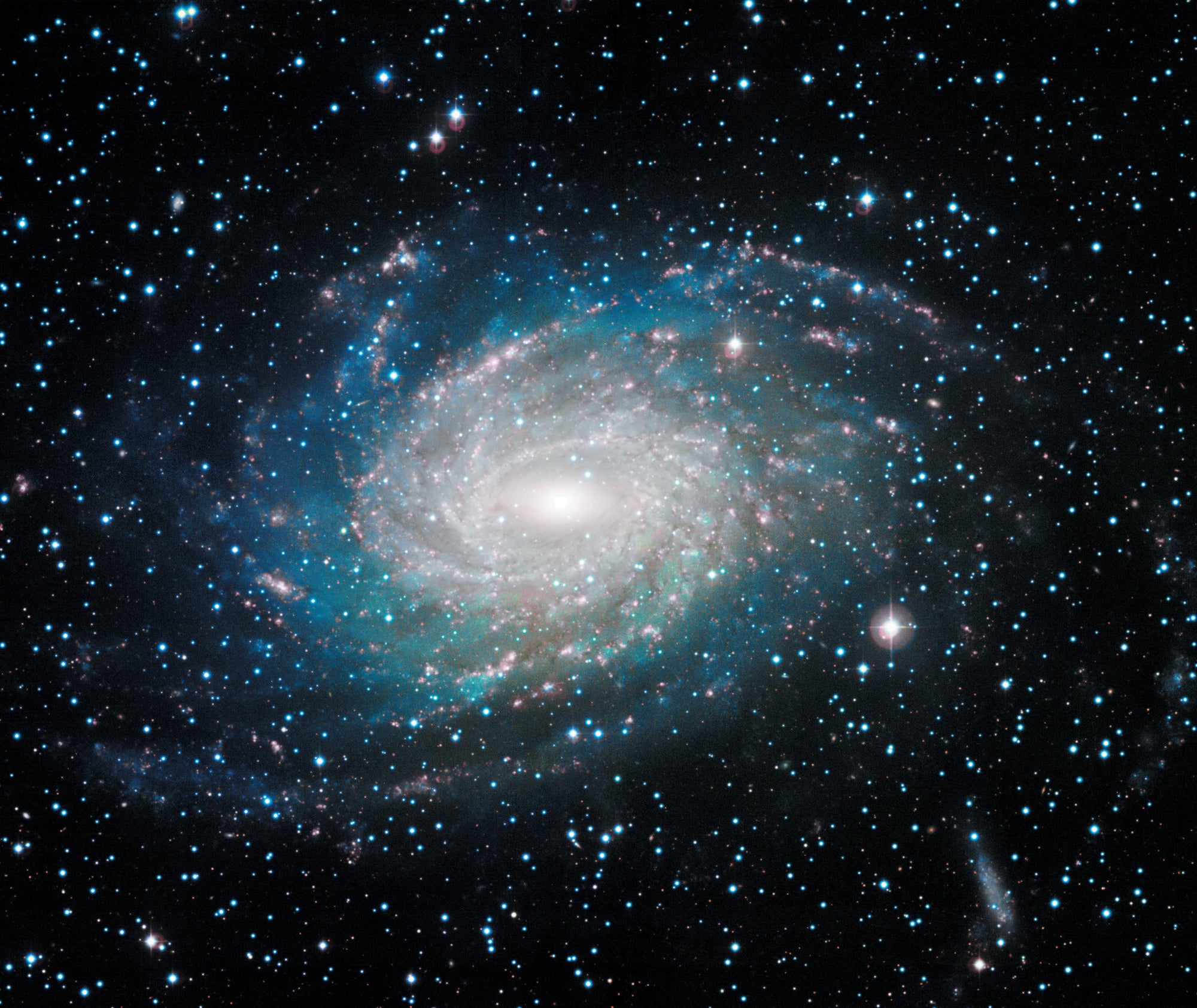
On clear, moonless nights far from city lights, a faint, misty band stretches across the sky. For most of human history, it was a mystery—an ethereal river of light arching from horizon to horizon. Ancient civilizations wove myths around it. Some imagined it as spilled milk from a goddess, others as a celestial pathway for souls.
Today, we know that this glowing band is our galaxy: the Milky Way.
Yet knowing its name does not mean we comprehend its scale. The Milky Way is not simply a cluster of stars. It is a vast gravitational ecosystem, a rotating island of light and dark matter that contains hundreds of billions of stars, trillions of planets, immense clouds of gas and dust, and a supermassive black hole at its heart. It is ancient beyond human imagination. It is dynamic beyond human experience.
And within it—on a small rocky planet orbiting a fairly ordinary star—there exists a species capable of reflecting on the galaxy’s enormity and feeling small in its presence.
Here are ten scientifically grounded, mind-blowing facts about the Milky Way that may shift your perspective and stir a quiet existential awe.
1. The Milky Way Is Almost Unimaginably Large
The Milky Way spans roughly 100,000 to 120,000 light-years across in its visible disk, though its dark matter halo extends much farther. A light-year is the distance light travels in one year—about 9.46 trillion kilometers. Multiply that by one hundred thousand.
If you could travel at the speed of light, the ultimate cosmic speed limit, it would still take you one hundred thousand years to cross from one side of the galaxy to the other.
Our solar system resides about 26,000 light-years from the galactic center, nestled within a spiral arm called the Orion Arm. From here, we are not at the center of anything. We are not even particularly close to the middle. We are off to the side, orbiting quietly in the suburbs of a colossal stellar metropolis.
When you look at the night sky, you are not seeing distant, isolated objects. You are seeing just a tiny fraction of the stars that make up an enormous rotating structure. Most of the Milky Way is invisible to the naked eye. Even with powerful telescopes, interstellar dust blocks our view of vast regions.
The size of the Milky Way alone challenges human intuition. Every direction you look, you are peering into a structure so vast that language struggles to contain it.
2. It Contains Hundreds of Billions of Stars
Estimates suggest that the Milky Way contains between 100 and 400 billion stars. The uncertainty exists because counting them all directly is impossible; much of the galaxy is obscured by dust, and faint stars are difficult to detect.
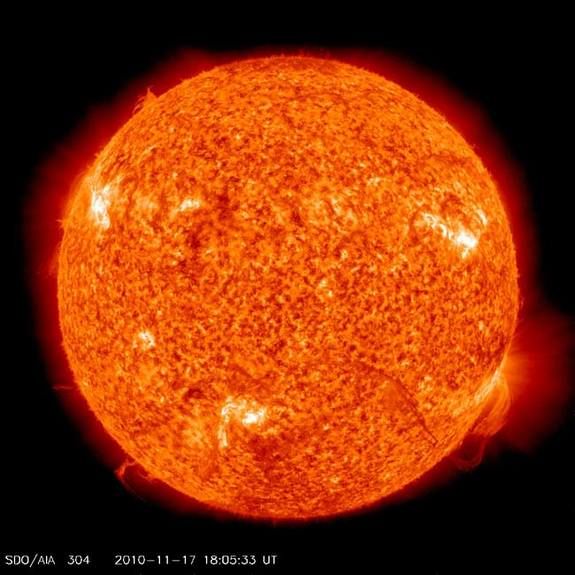
Our Sun is just one of these hundreds of billions.
If you tried to count one star per second without pause, it would take you thousands of years to reach even a modest estimate of the galaxy’s stellar population.
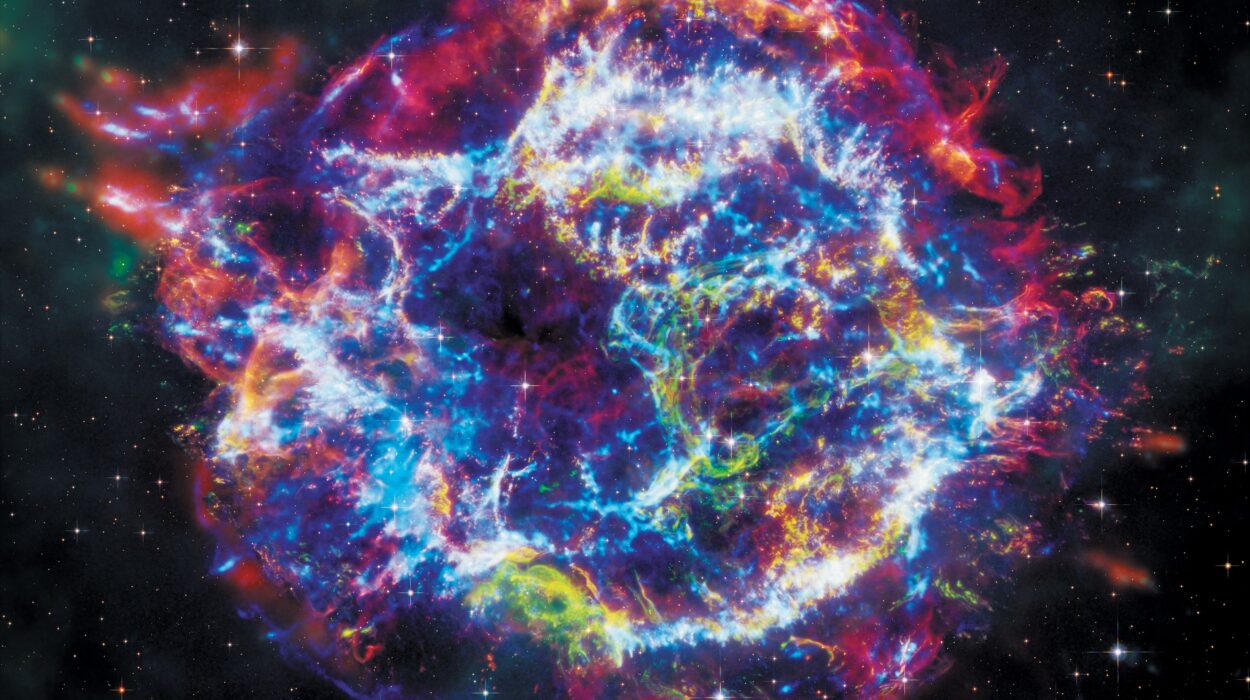
Many of these stars are smaller and dimmer than the Sun, such as red dwarfs, which are the most common type. Others are massive, luminous giants that live fast and die in spectacular supernova explosions.
Around many of these stars orbit planets. Modern exoplanet research suggests that planets are common—perhaps even the norm. That means the Milky Way likely hosts hundreds of billions of planets.
Each star is a potential center of its own planetary system, its own history, its own possibilities. Somewhere among those billions of stars, other worlds circle in darkness or light, some perhaps with oceans, atmospheres, and conditions suitable for life.
The sheer number of stars makes you feel small. But it also makes you feel connected—one spark in a galaxy of sparks.
3. At Its Center Lies a Supermassive Black Hole
At the heart of the Milky Way resides a supermassive black hole known as Sagittarius A*. It contains about four million times the mass of the Sun, compressed into a region no larger than our solar system.
Stars orbit this invisible monster at tremendous speeds. By tracking their motion over decades, astronomers confirmed the presence of this compact, massive object.
A black hole is not a cosmic vacuum cleaner indiscriminately devouring everything. Its gravitational influence is significant only in its immediate vicinity. From our distance of 26,000 light-years, Sagittarius A* has no direct effect on Earth beyond contributing to the galaxy’s overall gravitational structure.
Yet the idea that at the center of our galaxy lies a region where spacetime curves so intensely that not even light can escape is deeply unsettling.
Every star in the Milky Way, including our Sun, participates in a slow orbit around this gravitational anchor. We are all circling something we can never see directly from our vantage point.
The center of our home galaxy is a dark abyss.
4. We Are Moving Faster Than You Realize
The Sun, along with its planets, is orbiting the center of the Milky Way at an average speed of about 220 kilometers per second. That is roughly 792,000 kilometers per hour.
At this speed, we complete one full orbit around the galactic center in about 225 to 250 million years—a period known as a galactic year.
When dinosaurs roamed Earth, our solar system was in a completely different region of the Milky Way. Since Earth formed about 4.5 billion years ago, it has completed roughly 20 galactic orbits.
You do not feel this motion. There is no wind in your face, no sense of cosmic velocity. Yet at this very moment, you are hurtling through space at extraordinary speed, carried along by the gravitational dance of the galaxy.
Our everyday experience feels static and grounded. In reality, we are passengers on a starship racing through a rotating disk of hundreds of billions of suns.
5. Most of the Milky Way Is Invisible
Everything we see—stars, gas clouds, planets—makes up only a small fraction of the galaxy’s total mass.
The Milky Way is embedded in a massive halo of dark matter. This invisible substance does not emit or absorb light, but its gravitational influence is undeniable. The way stars move in the outer regions of the galaxy indicates far more mass than can be accounted for by visible matter alone.
Dark matter likely outweighs ordinary matter in the Milky Way by a significant margin.
This means that most of our galaxy is composed of something we do not understand.
We are living inside a structure dominated by an invisible component whose nature remains one of the biggest unsolved mysteries in physics. The stars we admire are just the luminous icing on a much larger, unseen cosmic cake.
The realization that most of our galaxy is fundamentally mysterious adds a layer of existential humility. We inhabit a reality where the majority of matter is unknown.
6. The Milky Way Is Not Static — It Is Evolving
The Milky Way was not always as it appears today. Galaxies grow by merging with smaller galaxies, accreting gas, and forming new stars.
Astronomers have found evidence that the Milky Way has consumed numerous dwarf galaxies over billions of years. Streams of stars orbiting the galaxy are remnants of these past mergers.
In fact, our galaxy is currently interacting gravitationally with several smaller satellite galaxies, including the Large and Small Magellanic Clouds.
And the future holds an even more dramatic event. In about 4 to 5 billion years, the Milky Way is expected to collide and merge with the neighboring Andromeda galaxy. This will not be a catastrophic explosion of stars crashing into one another—stellar distances are too vast for that—but it will dramatically reshape both galaxies over time.
Our galaxy is not a permanent, unchanging structure. It is a dynamic, evolving system shaped by gravity and time.
The Milky Way you see in the sky is just a temporary arrangement in a much longer cosmic story.
7. There May Be Billions of Potentially Habitable Worlds
Observations of exoplanets within our galaxy have revealed that planets are extremely common. Statistical analyses suggest that on average, many stars host at least one planet.
Some fraction of these planets orbit within their star’s habitable zone—the region where temperatures could allow liquid water to exist on the surface, given suitable atmospheric conditions.
If even a small percentage of the Milky Way’s hundreds of billions of stars host Earth-sized planets in habitable zones, that could mean billions of potentially habitable worlds.
Of course, “potentially habitable” does not mean inhabited. Life requires more than just the right temperature. But the raw numbers are staggering.
Somewhere in the vast spiral arms, there may be worlds with oceans reflecting alien suns. There may be continents, weather systems, perhaps even ecosystems.
Or perhaps not.
The silence of the sky raises a haunting question: if the galaxy is so full of possibilities, why have we found no clear evidence of extraterrestrial life?
The Milky Way might be teeming with life—or we might be extraordinarily rare.
8. The Night Sky Shows Only a Tiny Fraction of It
On a clear night, away from light pollution, you might see a few thousand stars with the naked eye. That feels impressive.
But it is nothing compared to the galaxy’s true population.
The stars visible to you are mostly relatively nearby, within a few thousand light-years. The Milky Way’s disk extends tens of thousands of light-years farther.
Interstellar dust blocks visible light from distant stars, hiding much of the galaxy’s interior from direct view. Only by observing in infrared, radio, and other wavelengths can astronomers peer through the dust and map the structure more completely.
When you gaze upward, you are seeing a filtered, partial glimpse of your galactic home.
The vast majority of the Milky Way’s stars will never be visible to your eyes. They exist beyond your sensory reach, yet they are as real as the Sun.
It is a humbling reminder that perception is limited, and reality is always larger than it appears.
9. Our Position May Be Unusually Calm
The Milky Way contains regions of intense star formation, where massive stars explode as supernovae and flood space with radiation. It contains dense clusters near the galactic center, where gravitational interactions are frequent.
Our solar system resides in a relatively quiet region, far from the central supermassive black hole and major star-forming regions.
This calmer environment may have played a role in Earth’s long-term habitability. Frequent nearby supernovae or gravitational disturbances could disrupt planetary systems or strip atmospheres.
It is possible that our position within the galaxy is unusually favorable for complex life to evolve and persist.
If so, then our existence is not only a product of planetary conditions but also of galactic geography.
We are not just citizens of Earth. We are citizens of a specific address within a spiral galaxy—and that address may matter.
10. One Day, the Milky Way’s Stars Will Go Dark
The Milky Way is about 13.6 billion years old, roughly as old as the universe itself. But it will not shine forever.
Star formation in the galaxy has slowed compared to its earlier history. Eventually, the gas needed to form new stars will be depleted or locked away. Existing stars will age. Massive stars will explode as supernovae. Smaller stars like the Sun will swell into red giants and then fade into white dwarfs.
Over trillions of years, the galaxy will become darker as stars burn out and no new ones replace them.
The future merged galaxy formed with Andromeda will gradually fade as well. The cosmos itself will continue expanding, driven by dark energy, carrying distant galaxies beyond our observable horizon.
The Milky Way feels timeless when you look at it. But it is not eternal.
Its brilliance is temporary. Its stars are finite.
And we are here during a brief window in cosmic history when the galaxy is alive with light.
A Quiet Realization
The Milky Way is not just a collection of stars. It is our cosmic environment. It shaped the conditions that allowed Earth to form. It provided the heavy elements forged in ancient supernovae that became the atoms in your body.
You are made of galactic history.
The calcium in your bones, the iron in your blood, the oxygen you breathe—all were created in stars that lived and died long before the Sun existed.
When you look up at the Milky Way, you are not merely observing something external. You are seeing the larger structure of which you are a part.
That realization can feel overwhelming. The scale is immense. The timescales are vast. The darkness between stars is deep and cold.
But it is also profoundly beautiful.
In a galaxy of hundreds of billions of stars, on a small planet orbiting one of them, matter has become conscious enough to ask questions about its origins. The Milky Way is not just a distant spectacle—it is the stage upon which awareness has emerged.
You are tiny in comparison to the galaxy. And yet, in another sense, the galaxy exists within you, in your thoughts, in your curiosity, in your wonder.
That is the most existential fact of all.