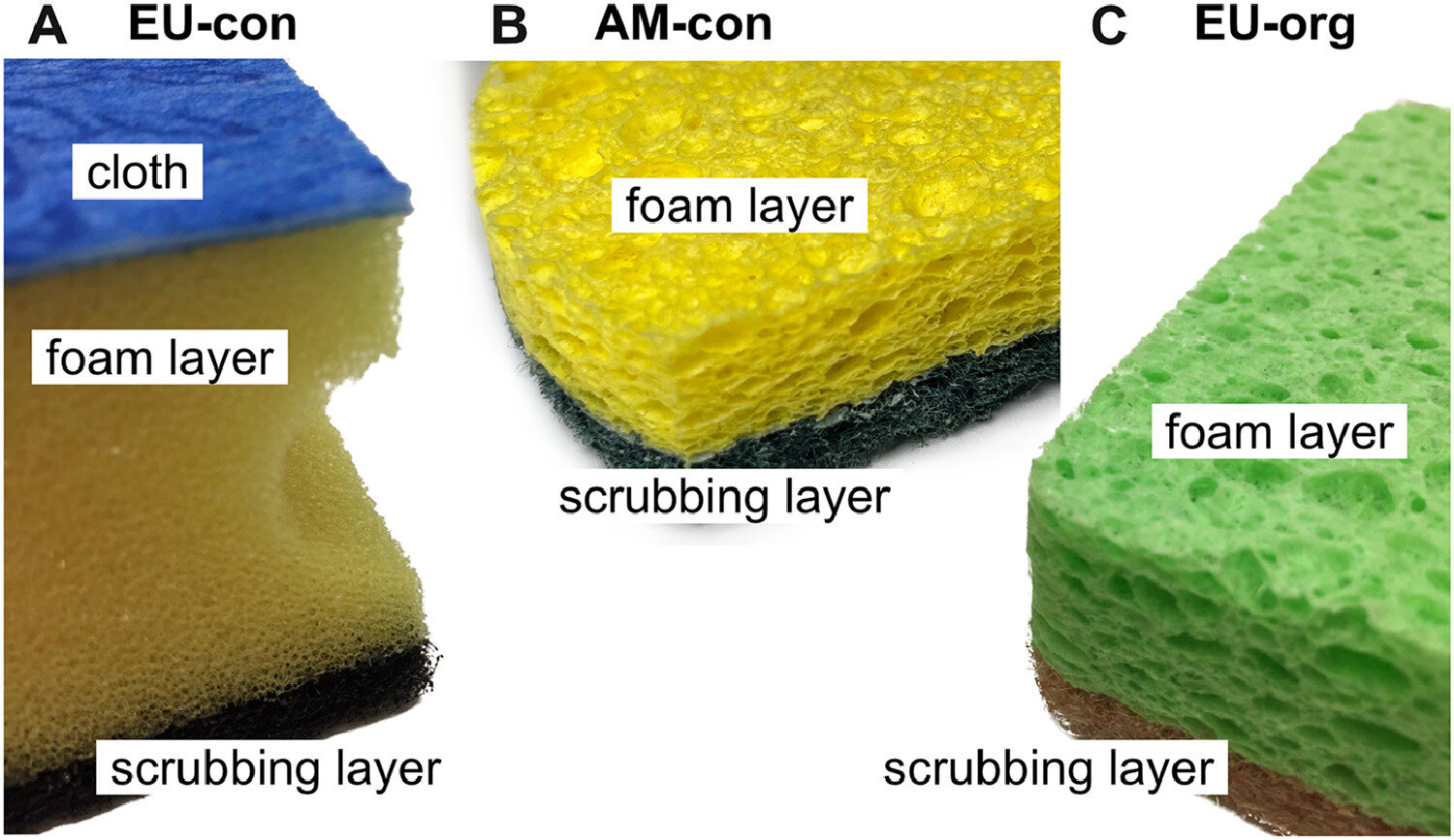
Every day, in millions of kitchens across the globe, a quiet ritual unfolds at the kitchen sink. We reach for a familiar tool—the humble kitchen sponge—to scrub away the remnants of dinner. It is a mundane object, often overlooked, yet it occupies a central place in our domestic lives. Recently, however, researchers have begun to look more closely at these porous blocks, wondering if they might be a hidden source of microplastics—tiny fragments of plastic that find their way into our soil and seas. A new study published in the journal Environmental Advances, titled “From sink to sea: Microplastic release from kitchen sponges and potential environmental effects,” has finally pulled back the curtain on what happens to a sponge as it wears down through daily use.
The Secret Life of a Scrubbing Tool
To understand the footprint of a sponge, researchers knew they couldn’t just stay in the laboratory. Real life is messy, and the way people wash dishes varies wildly from one household to the next. To capture this complexity, the study turned to citizen science, inviting volunteers from households in Germany and North America to participate. These citizen scientists were given one of three different sponge types and asked to incorporate them into their actual daily routines. As the volunteers scrubbed pots and wiped down counters, they meticulously documented their usage, providing a window into the “real-world” life cycle of these cleaning tools.
By weighing the sponges before they were put to work and again after they had reached the end of their useful lives, the team could calculate exactly how much material loss had occurred. This loss represents the plastic fibers and fragments that break off during the mechanical friction of cleaning. To complement this human element, the researchers also employed a specialized automated device affectionately dubbed the SpongeBot. This machine was designed to simulate the repetitive mechanical stress of dishwashing under controlled conditions, ensuring that the findings were grounded in both human behavior and rigorous mechanical testing.
Tiny Fragments on a Massive Scale
The results of the study confirmed a long-held suspicion: all investigated sponges lose material and release microplastics during use. While a single sponge might seem insignificant, the cumulative numbers tell a different story. On an individual level, the data revealed that the annual release of microplastics ranges from approximately 0.68 to 4.21 grams per person. The specific amount depends heavily on the sponge type being used, with those containing a lower overall plastic content releasing significantly fewer particles.
When these small individual numbers are scaled up to a national level, the impact becomes startling. If a specific type of high-shedding sponge were used in every household across Germany, the researchers estimated that the country could generate up to 355 metric tons of microplastics every single year. Even though modern wastewater treatment plants are efficient at catching a large proportion of these particles, several tons still manage to slip through the filters, eventually settling into aquatic environments or contaminating the soil. What begins as a simple chore in a kitchen sink eventually expands into a broad environmental footprint.
Finding the True Culprit in the Kitchen
However, as the researchers delved deeper into the life cycle assessment (LCA), they discovered a surprising twist in the narrative. While the release of microplastics is a genuine concern, it is not actually the primary driver of a sponge’s environmental impact. When the team looked at the total “ecosystem damage” caused by the act of washing dishes, they found that microplastic emissions represented a relatively small share of the burden. Instead, the overwhelming majority of the environmental impact—between 85% and 97%—is actually attributable to water consumption.
The energy required to heat water and the resources involved in processing it for manual dishwashing far outweigh the damage caused by the plastic fragments themselves. This revelation shifts the focus from just the tool we use to the way we use it. While the sponge is shedding plastic, the tap is the true heavy hitter in terms of environmental cost. This nuanced view allowed the researchers to move beyond just pointing out a problem; it allowed them to identify the most effective levers for change.
A Roadmap for a Cleaner Sink
The story of the kitchen sponge ends with a set of practical choices that any household can make to lighten their environmental load. The most significant action a person can take is remarkably simple: use less water when washing dishes. Because water usage dominates the environmental assessment, being mindful of the tap has the greatest positive effect on the planet.
Beyond the water, consumers can also make smarter choices about the tools they buy. Opting for sponges with a lower plastic content directly reduces the volume of microplastics entering the wastewater system. Furthermore, the study suggests that we should try to use our sponges for a longer time. By extending the lifespan of a single sponge, we reduce the overall resource consumption required to manufacture, package, and ship replacements. This research reminds us that even the smallest, most ordinary objects in our homes are connected to a much larger global system, and that our daily habits—from how long we scrub to how high we turn the faucet—have the power to ripple far beyond the kitchen sink.
Why This Research Matters
This study is vital because it brings scientific clarity to a corner of the home that is often ignored. By quantifying the release of microplastics from kitchen sponges, it provides a realistic data point for environmental scientists and policymakers who are trying to track the flow of plastics into our oceans and soil. More importantly, it uses a life cycle assessment to put those findings in context, preventing us from focusing on one issue while ignoring a much larger one. By highlighting that water consumption is the primary driver of environmental damage in dishwashing, the research empowers individuals with actionable knowledge. It proves that sustainability isn’t just about what we buy, but about the habits we form and the ways we choose to interact with the world’s most basic resources.
Study Details
Leandra Hamann et al, From sink to Sea: Microplastic release from kitchen sponges and potential environmental effects, Environmental Advances (2026). DOI: 10.1016/j.envadv.2026.100693