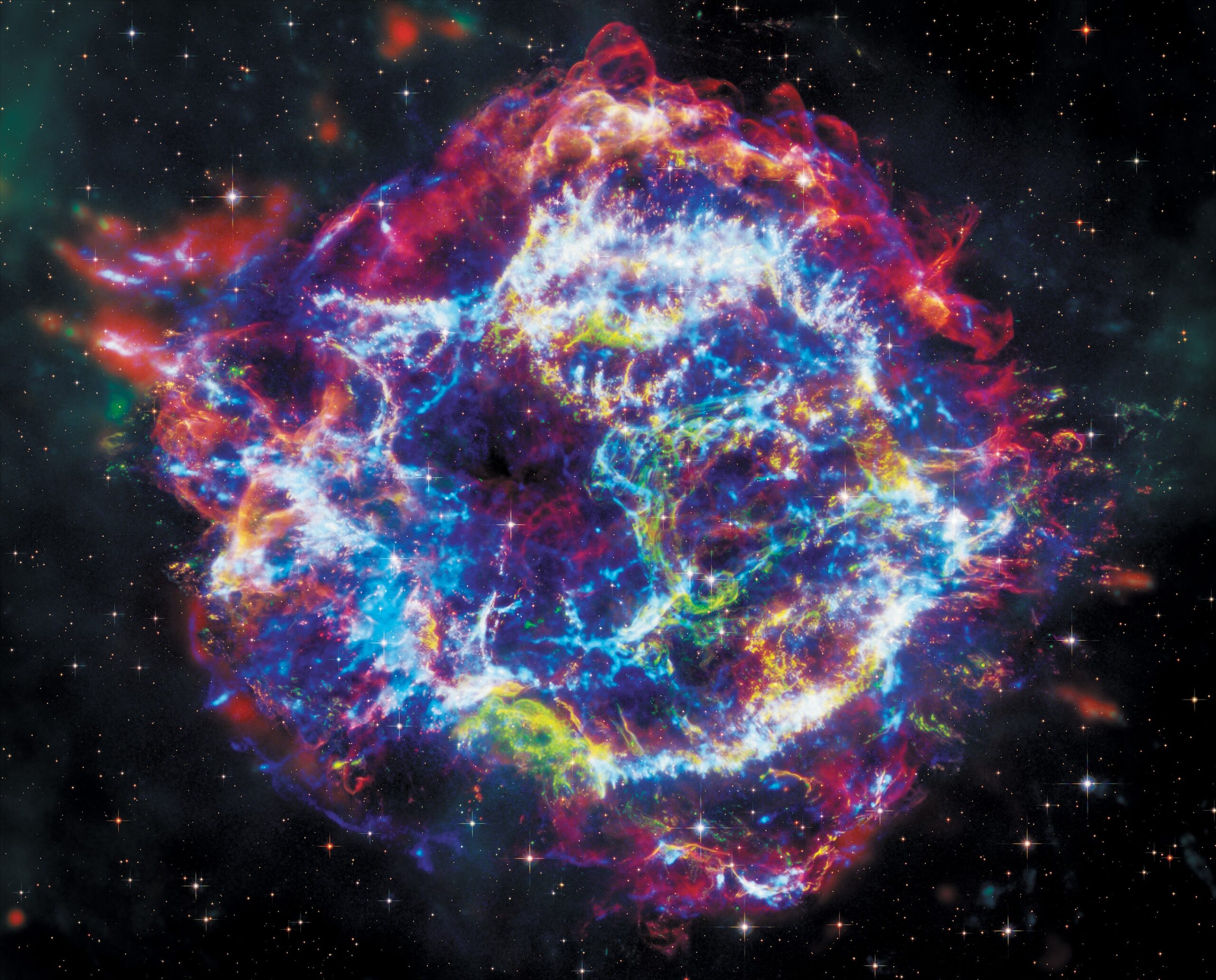
The universe is not a quiet place. Beyond the peaceful blue sky of Earth, space is filled with violence on a scale that is difficult to imagine. Stars are born in clouds of gas, they burn for millions or billions of years, and some of them die in spectacular explosions that briefly outshine entire galaxies. These explosions are called supernovae, and they are among the most powerful events nature can produce.
The idea of a supernova is thrilling and terrifying at the same time. If a star can explode with enough energy to be seen across the universe, what would happen if one occurred close to Earth? Would the sky turn into a blinding light? Would our planet be scorched? Would our technology fail? And the most haunting question of all: could Earth go dark?
To answer this properly, we have to understand what a supernova really is, what it releases into space, and how close one would need to be to affect our planet in a catastrophic way. The truth is more complex than science fiction, but it is no less fascinating.
What Exactly Is a Supernova?
A supernova is the explosive death of a star. It is not a single type of event, but rather a category of stellar explosions that can occur in different ways depending on the star’s mass and circumstances.
One major type happens when a massive star—at least about eight times the mass of the Sun—reaches the end of its life. For millions of years, that star fuses lighter elements into heavier ones in its core. Hydrogen becomes helium, helium becomes carbon, carbon becomes oxygen, and so on. This chain continues until the star begins producing iron.
Iron is the breaking point. Unlike lighter elements, fusing iron does not release energy. Instead, it consumes energy. When the core fills with iron, the star loses its ability to support itself against gravity. The core collapses in a fraction of a second. The collapse triggers an enormous rebound explosion, blasting the outer layers into space at thousands of kilometers per second.
This is called a core-collapse supernova.
Another type occurs in binary star systems when a white dwarf—the dense remnant of a dead Sun-like star—steals matter from a companion star. If the white dwarf gains too much mass and crosses a critical threshold, it becomes unstable and detonates in a runaway nuclear explosion. This is called a Type Ia supernova.
Both types release mind-bending amounts of energy. For a short time, a supernova can shine brighter than billions of ordinary stars combined. The explosion produces shockwaves, floods space with radiation, and forges heavy elements like gold, uranium, and many of the metals found on Earth. In a very real sense, supernovae are responsible for making the material that allows planets and life to exist.
But they are also dangerous.
What Does a Supernova Release Into Space?
When people imagine a supernova, they often picture a giant ball of fire expanding outward. That is part of it, but the real danger comes from what the explosion throws into the cosmos.
A supernova releases intense electromagnetic radiation, including visible light, ultraviolet light, X-rays, and gamma rays. It also releases neutrinos—nearly massless particles that pass through matter with little interaction. Neutrinos are so elusive that trillions pass through your body every second without leaving a trace, but during a supernova, the neutrino flood becomes extraordinary.
In addition to radiation, supernovae also hurl massive amounts of high-speed particles into space. These particles are known as cosmic rays, mostly protons and atomic nuclei accelerated to near the speed of light. Cosmic rays are not unique to supernovae, but supernova remnants are considered one of the major sources of the most energetic cosmic rays in our galaxy.
If Earth were close enough, this combination of gamma rays, X-rays, and cosmic rays could damage our atmosphere, disrupt life, and potentially destabilize technology. However, the key phrase is “close enough.”
Space is unimaginably vast, and distance matters more than most people realize.
How Close Would a Supernova Need to Be to Harm Earth?
The effects of a supernova drop off rapidly with distance. Radiation spreads out as it travels, meaning the farther away the explosion is, the less intense it becomes by the time it reaches Earth.
Astronomers estimate that a supernova would need to occur within roughly 50 light-years to pose a major threat to Earth’s biosphere. Within this range, the radiation could significantly damage the ozone layer, exposing the surface to dangerous ultraviolet sunlight. It could increase mutation rates, disrupt ecosystems, and potentially contribute to mass extinction events.
If the explosion happened within about 25 light-years, the danger could be severe. The ozone depletion could become extreme, and cosmic rays could bombard Earth for thousands of years, creating long-term biological stress.
Beyond about 100 light-years, the risk becomes much smaller, though minor atmospheric effects might still occur depending on the supernova’s energy and direction.
This means Earth is not threatened by most supernovae. Even if a supernova occurred somewhere in the Milky Way tomorrow, it would likely be thousands of light-years away. It might look stunning in the night sky, perhaps even visible during the day, but it would not end civilization.
So would Earth go dark? That depends on what “dark” means.
Would the Sky Go Dark Immediately After a Supernova?
If a supernova happened close enough to seriously affect Earth, the sky would not go dark at first. It would do the opposite.
A nearby supernova could become an incredibly bright object in the sky, potentially rivaling or even exceeding the brightness of the full Moon. If it were extremely close, it might be visible even in daylight, appearing like a second Sun in the sky for weeks.
For ancient humans, such an event would have been terrifying and awe-inspiring. Even modern civilization would be shaken. People would gather outside at night to witness a star that suddenly appeared where nothing had been before, glowing with unnatural brilliance.
This brightness would fade over time, but the supernova could remain visible for months. Eventually, it would dim into a glowing nebula of expanding gas.
So in the immediate aftermath, Earth would not go dark. The night sky would become brighter.
The real danger lies not in the visible light, but in the invisible radiation that could alter Earth’s atmosphere and long-term habitability.
The Ozone Layer: Earth’s Shield Against Ultraviolet Death
One of the most important protective systems on Earth is the ozone layer, a region of the upper atmosphere rich in ozone molecules (O₃). Ozone absorbs a large fraction of the Sun’s harmful ultraviolet radiation, especially UV-B and UV-C. Without ozone, the surface of Earth would be bombarded by radiation capable of damaging DNA, causing skin cancer, destroying crops, and harming ocean life.
A nearby supernova could damage this shield.
Gamma rays and cosmic rays from the explosion can break apart nitrogen and oxygen molecules in Earth’s atmosphere, creating reactive nitrogen oxides. These compounds can trigger chemical reactions that destroy ozone.
If enough ozone were depleted, the planet would not necessarily “go dark,” but life would face a different kind of catastrophe: the Sun would become deadly. Daylight would still shine, but it would carry far more ultraviolet radiation than Earth’s ecosystems are adapted to handle.
Plants would struggle. Phytoplankton, the microscopic organisms that form the base of the ocean food chain and produce a significant portion of Earth’s oxygen, could be severely harmed. Terrestrial animals, including humans, would face increased cancer rates and genetic damage.
The Earth would not go dark, but it might become hostile under the light.
Could a Supernova Cause Global Climate Cooling?
Now we reach a scenario that sounds closer to Earth “going dark” in a metaphorical sense: climate disruption.
If cosmic rays increased significantly, they could alter atmospheric chemistry and potentially influence cloud formation. There has been debate among scientists about whether cosmic rays play a major role in cloud cover, and the topic remains uncertain. However, there is a more established mechanism for climate effects: atmospheric changes that alter sunlight penetration.
A severe ozone depletion event could be accompanied by chemical changes that affect stratospheric transparency. Increased nitrogen dioxide, for example, can create a brownish haze in the atmosphere that absorbs sunlight. This could reduce the amount of solar energy reaching the surface, cooling the planet.
If sunlight were reduced enough, global temperatures could drop. Growing seasons could shorten. Ecosystems could collapse. In extreme cases, Earth might experience a prolonged period of cooling.
This would not mean literal darkness, but it could mean dimmer skies, weaker sunlight, and a world under stress.
However, the extent of this effect depends heavily on the supernova’s distance and energy. For most plausible supernova distances, Earth might experience ozone depletion and increased radiation without a dramatic reduction in sunlight.
A true “dark Earth” scenario is more likely from massive volcanic eruptions or asteroid impacts, which inject huge amounts of dust into the atmosphere. Supernovae are more likely to harm Earth through radiation than through blocking sunlight.
What About a Gamma-Ray Burst? The Real Nightmare Scenario
When people worry about supernovae, the greatest danger is not the explosion itself, but a related phenomenon: the gamma-ray burst.
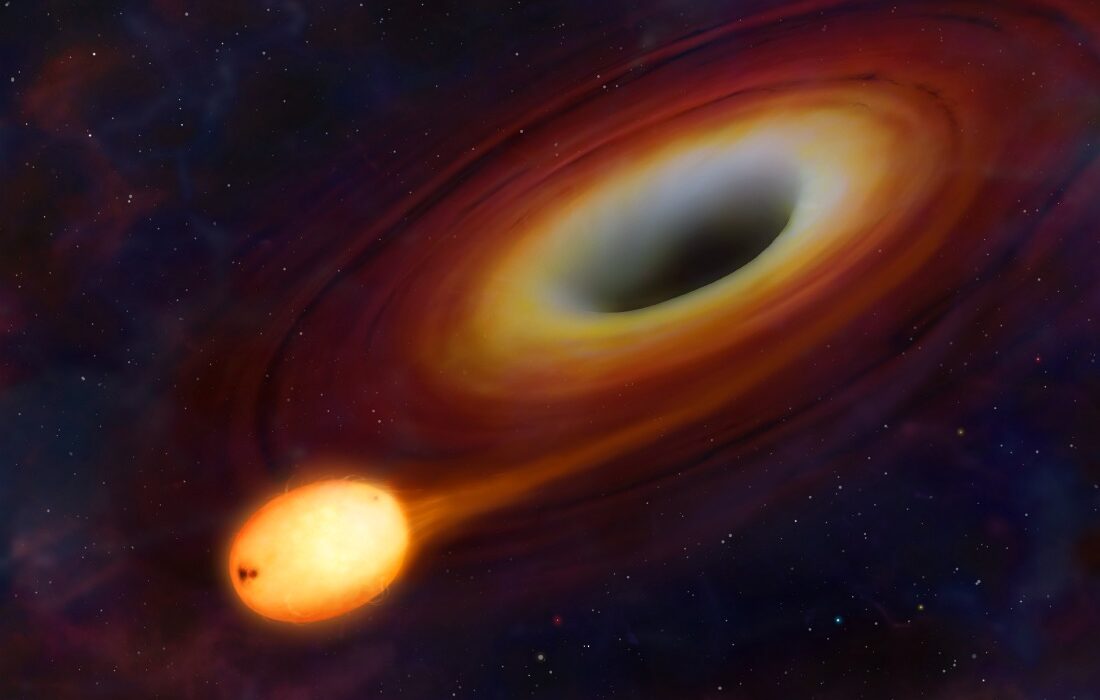
A gamma-ray burst is a narrow, extremely powerful beam of gamma radiation released during certain types of stellar collapse, often involving very massive stars forming black holes. These bursts can release more energy in seconds than the Sun will emit in its entire lifetime.
The terrifying detail is that gamma-ray bursts are not emitted in all directions. They are focused into jets, like cosmic laser beams. If one of these jets were aimed directly at Earth from within a few thousand light-years, it could severely damage the ozone layer in a matter of minutes.
Unlike a normal supernova, which spreads energy outward more evenly, a gamma-ray burst concentrates destruction into a narrow cone. Earth could be safe if the burst were not pointed at us, even if it happened relatively nearby. But if it were aimed at Earth, it could be catastrophic even at much greater distances than a normal supernova would require.
In that case, Earth might not go dark, but life could face widespread collapse due to ultraviolet exposure and atmospheric damage. The oceans would suffer. Land ecosystems would be devastated. Civilization could struggle to survive.
Gamma-ray bursts are rare in the Milky Way, and the kind of massive stars that produce them are not common in our region of the galaxy. Still, they are considered one of the most serious astrophysical threats to life.
If Earth ever truly faced an existential danger from a stellar explosion, a gamma-ray burst would be the prime suspect.
Would a Supernova Shut Down Electricity and Technology?
Modern civilization is fragile in ways that ancient societies never had to worry about. Our world runs on electrical systems, satellites, communication networks, and delicate electronics. Even a moderate disruption of Earth’s magnetic environment can cause major problems.
Cosmic rays from a nearby supernova could increase radiation exposure for satellites and astronauts. They could cause electronic glitches, degrade solar panels, and shorten satellite lifespans. Communication systems could become unreliable.
A supernova could also trigger a long-term increase in high-energy particle radiation reaching Earth, which might influence Earth’s magnetosphere and ionosphere. This could lead to increased auroras and potentially interfere with radio communications.
Would it shut down the power grid? That depends. Power grids are most vulnerable to geomagnetic storms caused by solar activity. A supernova itself does not directly create the same kind of solar storm, but the increased cosmic ray environment could potentially contribute to atmospheric ionization and electrical disturbances.
Still, the most immediate technology threat would likely come from radiation damaging satellites and increasing risks for aviation and spaceflight, rather than instantly plunging Earth into a blackout.
The phrase “Earth going dark” might fit a world where satellites fail, communication collapses, and the modern night sky loses the glow of city lights due to infrastructure breakdown. But that would be a human-caused darkness triggered indirectly by a cosmic event, not literal planetary darkness.
Could a Supernova Affect the Sun and Make It Dim?
A common fear is whether a nearby supernova could somehow damage our Sun. This is an understandable thought—if a star explodes, could it disturb other stars?
In reality, the Sun is extremely stable and far too massive and energetic to be meaningfully affected by a nearby supernova unless the explosion were unbelievably close, within a fraction of a light-year. No star capable of going supernova exists that close to our solar system.
Even if a supernova occurred within a few dozen light-years, it would not cause the Sun to dim or shut down. The Sun’s nuclear fusion is governed by conditions deep in its core, and external radiation or shockwaves at such distances would not disrupt it.
So Earth would not go dark because the Sun turned off. That is not a realistic possibility.
The Sun is not a candle that can be blown out by distant cosmic violence.
Would the Supernova Blast Wave Reach Earth?
Supernova explosions send shockwaves through space, sweeping up gas and dust and creating expanding supernova remnants. These shockwaves travel at thousands of kilometers per second, which sounds fast, but in interstellar terms, it is slow.
Even if a supernova occurred 50 light-years away, it would take tens of thousands of years for the physical blast wave to reach Earth. By then, it would be spread out and weakened, interacting with the solar wind and the heliosphere—the protective bubble created by the Sun’s charged particle emissions.
The heliosphere helps shield the solar system from interstellar particles. A supernova blast wave could compress the heliosphere and allow more cosmic rays to penetrate, potentially increasing radiation exposure over long periods. But the blast itself would not slam into Earth like a shockwave in an action movie.
The danger is not a sudden impact. It is a slow poisoning of the environment through radiation and atmospheric chemistry.
What Would Humans Experience on the Ground?
If a supernova occurred close enough to affect Earth significantly, the first sign would likely be astronomical: a “new star” appearing in the sky, growing brighter over days and weeks. Scientists would detect neutrinos and gravitational signals before the visible explosion became obvious, giving humanity an early warning.
At first, life might continue normally. The sky would be brighter at night. Astronomers would celebrate an unprecedented opportunity to study stellar death.
But if the explosion were within the dangerous range, changes would follow.
Within months to years, increased radiation might begin to affect satellites. Astronauts would face severe danger outside Earth’s magnetic field. Airlines might need to adjust flight paths to reduce radiation exposure at high altitudes.
Over time, ozone depletion could increase ultraviolet radiation levels. People would notice higher rates of sunburn, increased skin cancer risk, and damage to crops. Governments might respond by encouraging protective clothing and limiting outdoor exposure during peak sunlight.
Oceans could begin to suffer as phytoplankton populations decline. Food chains might weaken. Agriculture could face stress, and ecosystems might begin to destabilize.
This would not be a sudden apocalypse. It would be a slow crisis, stretching across years and decades, perhaps centuries, depending on how long cosmic ray bombardment persisted.
Earth would still have daylight. But the relationship between life and sunlight could change dramatically.
Could Earth Go Dark in the Sense of Mass Extinction?
When people say “go dark,” they may mean something deeper than the Sun disappearing. They may mean the collapse of life, the silencing of ecosystems, the extinction of countless species.
Could a supernova cause that?
Yes, in theory, if it occurred close enough.
A supernova within about 30 to 50 light-years could cause significant ozone depletion, leading to increased ultraviolet radiation that might trigger a major extinction event. Some scientists have even suggested that past extinction events may have been influenced by nearby supernovae, though evidence is difficult to confirm because such events leave subtle geological signatures.
One possible signature is the presence of radioactive isotopes like iron-60 in Earth’s crust. Iron-60 is produced in supernovae and has been found in ocean sediments, suggesting that one or more supernovae occurred relatively near Earth in the last few million years. These events may have influenced Earth’s environment, though they did not wipe out life completely.
This tells us something important: Earth has likely already experienced nearby supernova activity in its history. Life survived.
But survival does not mean safety. A closer or more energetic explosion could push ecosystems over the edge.
In that sense, Earth could “go dark” biologically, as if the planet’s living systems dimmed, weakened, and collapsed.
Are There Any Nearby Stars That Could Go Supernova Soon?
To assess real risk, we must look at the stars near us.
The most famous nearby candidate is Betelgeuse, the red supergiant in the constellation Orion. Betelgeuse is nearing the end of its life and will eventually explode as a supernova. It is a massive star, unstable, and already shedding material into space.
But Betelgeuse is about 500 to 700 light-years away. That is far beyond the danger zone for Earth. If it explodes tomorrow, it will be one of the most spectacular astronomical sights in human history, possibly visible in daylight, but it will not destroy Earth.
Another candidate is Antares, another red supergiant around 550 light-years away. Again, visually dramatic but not dangerous.
There are stars closer than that that may eventually go supernova, but none known within 50 light-years that are immediate threats. The nearest likely future supernova candidates are still far enough away that Earth would be safe from catastrophic radiation damage.
So while supernovae are inevitable in the galaxy, the odds of one happening dangerously close in the near future are extremely low.
The universe is violent, but it is also spacious.
Could Earth’s Atmosphere Protect Us Completely?
Earth has several layers of defense. The atmosphere absorbs many forms of radiation. The ozone layer blocks ultraviolet. The magnetosphere deflects many charged particles. Even the planet’s surface and oceans provide shielding.
But gamma rays and high-energy cosmic rays can penetrate deeply. They can trigger cascades of secondary particles in the atmosphere. Some of these particles can reach the ground, increasing radiation exposure.
Earth’s defenses are strong, but they are not invincible. If the supernova is close enough, the atmosphere itself becomes part of the problem. Chemical reactions triggered by radiation can dismantle ozone and alter the climate.
Earth can protect life from ordinary cosmic background radiation. But a nearby supernova is not ordinary. It is a storm of energy far beyond the usual cosmic environment.
Still, it is important to remember that Earth’s atmosphere is thick, and oceans cover most of the planet. Even in severe scenarios, life would not be completely erased. Many organisms could survive underground, underwater, or in sheltered environments. Extinction would not necessarily mean total annihilation.
Life on Earth is stubborn. It has survived asteroid impacts, ice ages, volcanic cataclysms, and dramatic climate shifts. A supernova would be another brutal test, but not necessarily the end.
Would Earth Literally Become Dark?
If we interpret the question literally—would Earth lose sunlight and plunge into darkness after a supernova—the answer is no.
A supernova does not extinguish the Sun. It does not block sunlight in the way a volcanic eruption or asteroid impact might. It does not cast a permanent shadow over Earth.
If anything, a nearby supernova would temporarily brighten the night sky. For weeks or months, the heavens could glow with an unnatural brilliance, reminding every human being that the universe is alive with fire.
However, if we interpret “dark” in a broader sense—could Earth’s ecosystems collapse, could civilization suffer, could life be thrown into crisis—then the answer becomes more complicated.
A sufficiently close supernova could strip away ozone, unleash ultraviolet radiation, disrupt the food chain, and potentially contribute to mass extinction. It could create a long-term cosmic ray environment that stresses life for centuries or millennia. It could damage technology and make space travel extremely dangerous.
That kind of darkness would not be a lack of sunlight. It would be the dimming of safety, stability, and biological abundance.
The Most Realistic Outcome of a Nearby Supernova
If a supernova occurred within a few hundred light-years, the most likely outcome would be spectacular beauty with minimal danger. Humanity would witness an extraordinary celestial event, a star dying in brilliant glory. Astronomers would gather priceless data. The night sky would be changed for generations.
If a supernova occurred within 50 light-years, the situation would become serious. Ozone depletion could cause widespread environmental damage. Life would face higher radiation stress. Technology could be affected, especially satellites and space missions. Humanity might survive, but the world would change.
If a gamma-ray burst were aimed at Earth from within a few thousand light-years, the risk could be catastrophic. This is the scenario most capable of triggering a rapid atmospheric crisis.
But such events are rare, and the galaxy is large. The universe contains dangers, but it also contains distance—and distance is often the greatest shield of all.
The Cosmic Perspective: Supernovae Are Both Destroyers and Creators
There is an almost poetic irony in the supernova threat. These explosions can destroy, but they are also the reason we exist.
Supernovae are responsible for creating many of the heavy elements that make planets possible. The calcium in your bones, the iron in your blood, the oxygen you breathe, and the silicon in Earth’s crust were forged in ancient stellar furnaces and scattered through space by explosions like these.
A supernova is not merely death. It is transformation.
The universe recycles itself through fire. Stars die so that new stars and planets can form. Life emerges from the ashes of cosmic catastrophe.
When we ask whether Earth could go dark after a supernova, we are really asking a deeper question: how fragile is life in the universe?
Physics gives an honest answer. Life is vulnerable, but not helpless. The cosmos is dangerous, but it is also balanced by immense distances and protective layers. Earth is not invincible, but it is not defenseless.
Final Answer: Will Earth Go Dark?
Earth will not literally go dark after a supernova explosion. The Sun will continue shining, and the planet will not suddenly lose its light.
But a supernova close enough could bring a different kind of darkness—one written in damaged ozone, intensified ultraviolet radiation, stressed ecosystems, and a civilization forced to confront its vulnerability under the stars.
The good news is that no known nearby star poses an immediate supernova threat within the dangerous distance range. The universe may be filled with explosions, but Earth is, for now, safely distant from the nearest stellar time bombs.
And perhaps that is one of the quiet miracles of our existence: we live in a cosmic neighborhood where the stars are close enough to inspire wonder, but far enough to let life thrive.
For now, the night sky remains a place of beauty rather than doom. Yet every star above us is a reminder that the universe is not static. It is alive, evolving, and filled with forces that can create worlds—or end them.
And that knowledge, rather than making the universe feel terrifying, can make it feel even more extraordinary.