Dinosaurs first appeared about 230 million years ago, during the Triassic Period, and remained a dominant group of land animals for roughly 165 million years. Their reign ended at the close of the Cretaceous Period, about 66 million years ago, when a catastrophic asteroid impact triggered a mass extinction. However, dinosaurs did not disappear entirely: birds are their living descendants, making them the only dinosaur lineage to survive to the present day.
To understand how dinosaurs rose to prominence, flourished across the planet, and ultimately lost their dominance, it helps to look at the changing world they inhabited. Their history unfolded over three geological periods, each marked by major environmental shifts, evolutionary developments, and changes in the animals that shared the Earth.
Dinosaurs first appeared during the Triassic Period
The first dinosaurs evolved during the Triassic Period, which lasted from about 252 million to 201 million years ago. Their emergence followed the Permian-Triassic mass extinction, the most severe known extinction event in Earth’s history. This earlier catastrophe eliminated a large proportion of marine species and many terrestrial animals, leaving ecosystems profoundly altered.
In the aftermath, life gradually diversified. The continents were joined in the supercontinent Pangaea, which stretched across much of the globe. Much of its interior experienced a dry climate, while conditions varied across different regions. Reptiles and other vertebrates occupied a wide range of ecological roles, creating an environment in which new evolutionary groups could develop.
Dinosaurs arose from a broader group of reptiles called archosaurs. This evolutionary group also gave rise to crocodilians and their extinct relatives. Early dinosaurs were generally much smaller than many of the giants that would appear later. Some walked on two legs, and many were relatively lightly built, with adaptations that helped them move efficiently.
The earliest dinosaurs were not immediately dominant. They lived alongside other reptiles, including crocodile-line archosaurs and other successful terrestrial animals. Dinosaurs initially occupied only part of the ecological landscape, and their eventual rise was a gradual process rather than a sudden takeover.
Fossils show that dinosaurs were established by approximately 230 million years ago, although the precise timing of their origin remains uncertain. Evolution does not leave a complete record, and the earliest known fossils represent animals that lived after their lineage had already begun to develop.
Why dinosaurs became so successful
Dinosaurs developed a combination of anatomical and ecological characteristics that helped many of their lineages thrive. Their limbs were generally positioned beneath their bodies rather than extending outward to the sides, as in many modern lizards. This arrangement supported efficient movement on land and allowed different dinosaur groups to develop a wide range of body sizes and ways of life.
Their evolutionary success also depended on diversification. Some dinosaurs became plant eaters, while others evolved as predators. Some remained relatively small and agile; others developed massive bodies, long necks, specialized teeth, or powerful jaws. Over millions of years, these adaptations enabled dinosaurs to occupy many different ecological niches, meaning the distinct roles organisms play in their environments.
Dinosaurs also benefited from broader changes in terrestrial ecosystems. Climate, vegetation, competition, and the distribution of other animal groups all influenced which species flourished. There was no single adaptation or environmental event that explains the success of every dinosaur lineage.
A major turning point came near the end of the Triassic Period, around 201 million years ago. A mass extinction eliminated many other terrestrial vertebrates, including several groups that had competed with dinosaurs. Dinosaurs survived and subsequently became the dominant large land animals in many ecosystems.
Their expansion was not inevitable. Evolution depends on changing environmental conditions, inherited characteristics, and chance events. The extinction of competitors helped create opportunities that dinosaurs were able to exploit.
The Jurassic Period brought enormous diversification
The Jurassic Period lasted from about 201 million to 145 million years ago. During this time, dinosaurs diversified extensively and became prominent across terrestrial ecosystems.
Pangaea began breaking apart, gradually separating into large landmasses and changing regional climates and habitats. Plant communities evolved, and the distribution of food and suitable environments shifted. These changes provided opportunities for different dinosaur populations to become isolated and develop into distinct species.
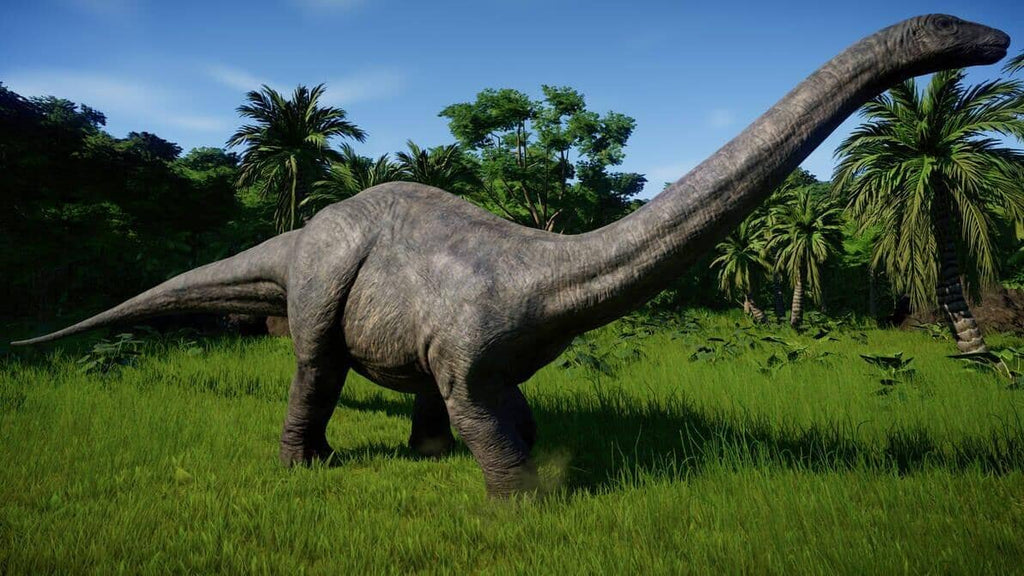
Some of the most recognizable dinosaurs lived during the Jurassic. Large long-necked sauropods, including relatives of Diplodocus and Brachiosaurus, evolved enormous bodies and specialized feeding adaptations. Their long necks helped them reach vegetation across a broad area, while their size supported the consumption of large quantities of plant material.
Predatory dinosaurs also diversified. Theropods, the group that includes modern birds, evolved a variety of body sizes and hunting adaptations. Although popular depictions often emphasize enormous predators, many theropods were much smaller, and dinosaur ecosystems contained a wide range of feeding strategies.
Dinosaurs were not the only successful animals of the Jurassic. Marine reptiles occupied the oceans, while pterosaurs, which were flying reptiles rather than dinosaurs, inhabited the skies. Early mammals also lived during this period, although many were small and occupied ecological roles quite different from those of the largest dinosaurs.
The Jurassic illustrates why the phrase “age of dinosaurs” is useful but incomplete. Dinosaurs dominated many land environments, yet Earth supported a much broader community of organisms, each adapted to its own ecological setting.
The Cretaceous Period saw dinosaurs reach extraordinary diversity
The Cretaceous Period lasted from about 145 million to 66 million years ago. It was the final period of the Mesozoic Era, the geological era commonly known as the age of dinosaurs.
During the Cretaceous, continents continued moving toward their modern positions. Sea levels were often high, and shallow seas covered extensive areas of some continents. Flowering plants diversified and spread, transforming terrestrial ecosystems and creating new food sources and habitats for insects and other animals.
Dinosaurs continued to evolve in response to these changing conditions. Horned dinosaurs, duck-billed dinosaurs, armored plant eaters, and many different theropods became prominent in various regions. Their distribution changed as continents separated, climates shifted, and populations evolved independently.
Among the best-known Cretaceous dinosaurs were Tyrannosaurus rex, Triceratops, and Ankylosaurus. All lived relatively late in the period, shortly before the mass extinction that ended the non-avian dinosaurs. They did not live alongside the Jurassic giants Diplodocus and Brachiosaurus, which had disappeared millions of years earlier.
This distinction matters because the familiar image of dinosaurs gathered together in a single prehistoric world compresses an immense span of time. The difference between the earliest dinosaurs and the last non-avian dinosaurs was roughly 164 million years—longer than the time separating the last non-avian dinosaurs from modern humans.
Dinosaurs also evolved a range of behaviors and physical characteristics that fossils can reveal indirectly. Nesting sites, eggs, footprints, and preserved bone structures provide evidence of reproduction, movement, growth, and, in some cases, social interactions. Although these clues do not tell us everything about dinosaur behavior, they show that dinosaurs were biologically diverse animals rather than a single uniform group.
How long did dinosaurs rule Earth?
From their appearance about 230 million years ago to the extinction of non-avian dinosaurs 66 million years ago, dinosaurs existed for approximately 164 million years. Their period of prominence was therefore extraordinarily long by the standards of familiar animal groups.
For comparison, modern humans have existed for only a few hundred thousand years. Even the entire history of our species represents a tiny fraction of the time dinosaurs inhabited Earth.
However, the phrase “ruled Earth” requires some qualification. Dinosaurs did not dominate every environment or occupy every ecological role. Marine reptiles were important predators in the oceans, pterosaurs were major members of flying-animal communities, and mammals persisted alongside dinosaurs throughout the Mesozoic.
Nor did every dinosaur species live for millions of years. Individual species appeared and disappeared as environments changed and evolution produced new forms. The 164-million-year figure describes the history of the dinosaur lineage as a whole, not the lifespan of any particular species.
Dinosaurs also did not remain unchanged throughout that time. Early dinosaurs differed substantially from later sauropods, horned dinosaurs, and large predatory theropods. Their long evolutionary history was a succession of different communities, with species continually emerging, spreading, declining, and becoming extinct.
The term “rule” is therefore best understood as a description of their ecological prominence, particularly among large land animals, rather than a claim that dinosaurs controlled the planet in every sense.
What caused the dinosaurs to go extinct?
About 66 million years ago, a large asteroid struck near what is now the Yucatán Peninsula in Mexico. The impact created the Chicxulub crater and released enormous amounts of energy. It marked the beginning of a global environmental crisis that led to the Cretaceous-Paleogene mass extinction.
The impact generated intense heat, powerful shock waves, and widespread fires. It also sent large quantities of dust, soot, and sulfur-rich material into the atmosphere. These substances reduced the amount of sunlight reaching Earth’s surface and disrupted climate and food production.
The consequences extended through food webs. Plants and other photosynthetic organisms depend on sunlight to produce food. When photosynthesis was severely disrupted, the effects spread to herbivores and then to the predators that depended on them. Marine ecosystems also suffered major losses as the environmental disruption affected the base of their food chains.
The extinction eliminated roughly three-quarters of Earth’s species, although the exact proportion varies with how scientists define and reconstruct the event. Non-avian dinosaurs disappeared, along with many other groups of organisms, including pterosaurs and large marine reptiles.
The asteroid impact is the principal explanation for the extinction. Scientists also recognize that large volcanic eruptions in what is now India, known as the Deccan Traps eruptions, occurred around this broader interval and may have contributed to environmental stress. The relative importance and timing of volcanic effects remain subjects of scientific investigation, but the evidence for the Chicxulub impact as the central trigger is compelling.
Importantly, the extinction was not a failure unique to dinosaurs. Many successful groups disappeared because environmental conditions changed faster and more severely than they could withstand. Other organisms survived because of differences in their habitats, diets, life cycles, geographic distributions, and ecological flexibility.
Dinosaurs did not all disappear
The extinction 66 million years ago ended the history of non-avian dinosaurs, but it did not eliminate every dinosaur lineage. Birds evolved from theropod dinosaurs and survived the mass extinction.
Birds are therefore not merely distant relatives of dinosaurs. In the scientific classification of living organisms, they are dinosaurs. Their feathers, skeletal structures, reproductive biology, and evolutionary history connect them directly to extinct theropods.
The earliest birds evolved well before the end of the Cretaceous, and numerous feathered dinosaurs are known from fossils. Feathers originally evolved in dinosaur lineages before the appearance of modern birds, and they served functions that could include insulation, display, and eventually flight in some groups.
Exactly why certain bird lineages survived while all non-avian dinosaurs disappeared is not fully settled. Small body size, varied diets, and the ability of some species to exploit seeds and other persistent food sources may have helped particular birds endure the collapse of food webs. Survival likely depended on a combination of biological traits and environmental circumstances rather than one universal advantage.
After the extinction, surviving birds diversified over time. Mammals also expanded into ecological roles left vacant by extinct animals, eventually giving rise to the wide variety of mammals found today. These changes did not happen overnight; ecosystems required substantial time to recover and reorganize.
The continued existence of birds changes how we understand dinosaur history. The end of the Cretaceous was a catastrophic break in dinosaur evolution, but it was not the end of dinosaurs themselves.
What the dinosaur timeline tells us about Earth’s history
The history of dinosaurs spans far more than the rise and fall of a famous group of animals. It demonstrates how evolution interacts with continental movement, climate, competition, ecological opportunity, and catastrophic change.
Dinosaurs first appeared about 230 million years ago, became increasingly prominent during the Jurassic, and remained major components of terrestrial ecosystems throughout the Cretaceous. Approximately 164 million years after their earliest known appearance, the Chicxulub impact triggered an extinction that eliminated their non-avian members.
Their history also illustrates the difference between evolutionary success and permanence. Dinosaurs flourished for an immense period, diversified into countless forms, and adapted to changing environments. Yet even a long-established and highly diverse group can be devastated when global conditions change abruptly.
The broader lesson is that extinction and survival are both parts of evolution. Environmental upheavals reshape ecosystems, removing some lineages while creating opportunities for others. Dinosaurs experienced both outcomes: most vanished in the mass extinction, but one branch survived and diversified into the birds that inhabit Earth today.