The main difference between Triassic, Jurassic, and Cretaceous dinosaurs was when they lived, how they evolved, and which groups dominated their environments. The Triassic Period saw the first dinosaurs emerge, the Jurassic Period brought their diversification and the rise of many enormous species, and the Cretaceous Period produced an extraordinary variety of dinosaurs, including Tyrannosaurus rex and Triceratops.
These three periods were successive chapters of the Mesozoic Era, often called the Age of Dinosaurs. Together, they spanned roughly 185 million years, from about 252 million to 66 million years ago. Each period had its own climate patterns, ecosystems, and evolutionary developments, although many changes occurred gradually rather than at clear boundaries.
Understanding the differences requires looking beyond familiar dinosaur names. The environments in which dinosaurs lived, the plants and animals around them, and the evolutionary changes taking place all helped shape the distinct prehistoric worlds of the Triassic, Jurassic, and Cretaceous.
When did the Triassic, Jurassic, and Cretaceous periods occur?
The Mesozoic Era began about 252 million years ago and ended 66 million years ago. Geologists divide it into three periods based on changes in Earth’s rocks, fossils, and geological history.
The Triassic Period, lasting from approximately 252 million to 201 million years ago, followed the largest known mass extinction in Earth’s history. Life gradually recovered from that catastrophe, and dinosaurs appeared during the period.
The Jurassic Period, from approximately 201 million to 145 million years ago, followed a major extinction event at the end of the Triassic. Dinosaurs diversified substantially, and some of the largest land animals that ever lived flourished.
The Cretaceous Period, from approximately 145 million to 66 million years ago, was the final chapter of the Mesozoic Era. Dinosaurs continued to diversify, flowering plants spread and became increasingly important in many ecosystems, and new groups of herbivorous and carnivorous dinosaurs emerged.
The Cretaceous ended with a mass extinction that eliminated all non-avian dinosaurs. Birds, which evolved from theropod dinosaurs, survived. The extinction also wiped out many other groups, including pterosaurs, ammonites, and marine reptiles such as mosasaurs and plesiosaurs.
These dates are approximate because geological boundaries are established through scientific evidence and can be refined as researchers study rocks and fossils. Nevertheless, the sequence is clear: Triassic, Jurassic, then Cretaceous.
What made Triassic dinosaurs different?
The Triassic was the period in which dinosaurs first appeared, but they were not immediately the dominant land animals. They evolved within ecosystems already occupied by numerous reptiles and other vertebrates, including relatives of crocodilians and various extinct groups that had diversified after the earlier mass extinction.
The earliest dinosaurs emerged during the latter part of the Triassic, roughly 230 million years ago. They evolved from earlier members of the archosaur lineage, a group of reptiles that also gave rise to crocodilians and pterosaurs. Dinosaurs were distinguished by features of their skeletons and limbs, including an upright posture that supported their bodies above the ground.
Early dinosaurs were generally smaller and less imposing than many of the giants that appeared later. Some were relatively slender, agile animals that walked or ran on two legs. Early carnivorous dinosaurs hunted other animals, while early plant-eating forms exploited vegetation available in their environments.
Examples include Eoraptor, a small early dinosaur from what is now Argentina, and Coelophysis, a slender, lightly built dinosaur known from fossils in North America. Their exact relationships to later dinosaur groups have been the subject of scientific research, but they illustrate the relatively modest body sizes and varied forms present among early dinosaurs.
Not all Triassic dinosaurs were small. Some early sauropodomorphs, members of the broader lineage that eventually included the long-necked sauropods, grew to considerable sizes. Even so, the immense sauropods characteristic of the Jurassic had not yet reached their later prominence.
The Triassic environment
During much of the Triassic, Earth’s landmasses were joined in the supercontinent Pangaea. Because so much land lay within a single enormous continent, many interior regions experienced strongly seasonal conditions, with hot temperatures and relatively dry climates. Deserts and other arid environments were widespread, although wetter habitats existed in some regions.
Vegetation included conifers, cycads, ferns, and other plants that predated the widespread dominance of flowering plants. These plants supported diverse communities of herbivores, which in turn provided food for predators.
Dinosaurs initially shared these environments with several other groups of land animals. Their eventual success was not simply a matter of being larger or faster. Their anatomy, reproductive biology, ecological flexibility, and evolutionary history contributed to their diversification, although the precise reasons for their changing fortunes remain an active area of research.
By the end of the Triassic, dinosaurs were becoming more prominent in terrestrial ecosystems. A major extinction event around 201 million years ago eliminated many competing groups and helped reshape those ecosystems, setting the stage for the Jurassic world.
How did Jurassic dinosaurs differ from Triassic dinosaurs?
The Jurassic Period marked a major expansion in dinosaur diversity, body size, and ecological importance. Dinosaurs became the dominant large land vertebrates in many environments, and several groups that would remain successful for millions of years became especially prominent.
One of the most recognizable developments was the rise of giant sauropods. These long-necked, long-tailed herbivores had massive bodies, sturdy limbs, and relatively small heads. Their long necks helped them reach vegetation across a wide area, although the exact feeding heights and behaviors varied among species.
Famous Jurassic sauropods included Diplodocus, Apatosaurus, and Brachiosaurus. These dinosaurs were not identical in shape or feeding habits. Diplodocus had an especially long, slender body and neck, while Brachiosaurus had forelimbs longer than its hind limbs, giving its body a different profile and supporting a distinctive posture.
The Jurassic also supported a variety of plant-eating dinosaurs beyond sauropods. Stegosaurs, recognizable by the plates or spikes along their backs and tails, became important members of some ecosystems. Stegosaurus, for example, lived during the Late Jurassic and possessed a relatively small head compared with its body.
Predatory dinosaurs diversified alongside these herbivores. Large theropods such as Allosaurus occupied major predator roles in some Jurassic ecosystems. These two-legged carnivores had powerful jaws and sharp teeth adapted for feeding on other animals. Their success was part of a wider pattern in which dinosaur groups developed different body forms and feeding strategies.
The Jurassic environment
The supercontinent Pangaea continued to break apart during the Jurassic. As the continents separated, coastlines and shallow seas expanded in many regions, and changing geography influenced climate, ocean circulation, and the distribution of plants and animals.
Much of the Jurassic was relatively warm, and many regions supported extensive vegetation. Conifers, cycads, ferns, and other non-flowering plants remained important components of terrestrial ecosystems. Large herbivorous dinosaurs consumed this vegetation, while carnivores hunted herbivores and other available prey.
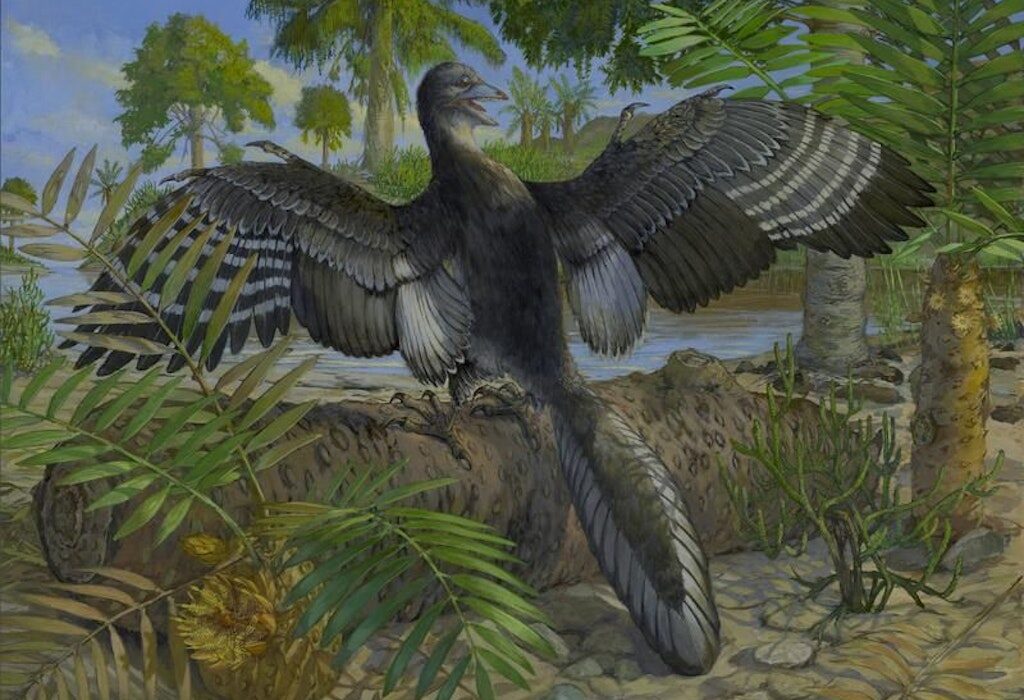
The Jurassic was also a period of major evolutionary developments beyond the dinosaurs. Pterosaurs flew through the skies, marine reptiles occupied ocean ecosystems, and early birds evolved from theropod dinosaurs. Archaeopteryx, which lived during the Late Jurassic, is an important example of an early bird-like animal with both avian and non-avian dinosaur characteristics.
These developments demonstrate that the Jurassic was not simply an age of enormous dinosaurs. It was a period of increasingly complex ecosystems in which different animal groups occupied a wide range of ecological roles.
Compared with the Triassic, the Jurassic featured a much greater prominence of giant sauropods and a broader range of familiar dinosaur body plans. Yet evolution did not stop at the end of the period. Many groups continued changing during the Cretaceous.
What distinguished Cretaceous dinosaurs from Jurassic dinosaurs?
The Cretaceous Period was the final and, in many respects, one of the most diverse chapters of dinosaur evolution. Some Jurassic groups persisted, while others declined or disappeared. New lineages developed specialized ways of feeding, moving, and surviving in changing environments.
Among the most famous Cretaceous dinosaurs were Tyrannosaurus rex, Triceratops, Ankylosaurus, and Velociraptor. These animals lived at different times and in different regions, so they did not all share the same ecosystems. Nevertheless, they illustrate the variety of dinosaurs that flourished during the period.
Tyrannosaurus rex lived near the end of the Cretaceous in what is now western North America. It was a large theropod with powerful jaws, strong hind limbs, and a massive skull. Its short forelimbs were small relative to its body, but its overall anatomy was adapted to a very different role from that of earlier predators such as Allosaurus.
Triceratops was a large herbivore with three facial horns and an expansive bony frill at the back of its skull. Its beak and teeth were suited to processing plant material. The horns and frill may have served several functions, including display, species recognition, and defense, although their precise uses are not fully settled.
Ankylosaurus was another Late Cretaceous herbivore. Its body was covered in bony armor, and it had a large bony club at the end of its tail. These features likely contributed to defense, although reconstructing exactly how the animal used its tail in life requires caution.
Cretaceous herbivores also included hadrosaurs, commonly called duck-billed dinosaurs, and ceratopsians such as Triceratops. Hadrosaurs had specialized teeth arranged in dental batteries, which allowed them to grind tough plant material efficiently. Some had elaborate hollow or solid crests on their heads, likely used in communication and display.
The Cretaceous also contained smaller theropods, including members of the group that gave rise to birds. The familiar image of every dinosaur as a giant reptile overlooks the many smaller species that occupied different ecological roles.
Flowering plants changed Cretaceous ecosystems
One of the major botanical developments of the Cretaceous was the diversification and spread of flowering plants, also known as angiosperms. They appeared before the period began, but they became increasingly important in many ecosystems during the Cretaceous.
Flowering plants differed from older plant groups in several ways, including their reproductive structures and the development of seeds enclosed within fruits. Their spread transformed terrestrial plant communities, although the pace and extent of these changes varied across regions.
As flowering plants diversified, herbivorous dinosaurs encountered changing food sources. Some dinosaurs had teeth and jaws suited to processing different kinds of vegetation, while others retained feeding adaptations associated with older plant groups. The relationship between flowering plants and dinosaur evolution was complex: plants influenced the food available to herbivores, while the feeding habits of animals also affected vegetation and ecosystems.
Conifers, ferns, cycads, and other non-flowering plants remained important throughout the Cretaceous. Flowering plants did not suddenly replace all earlier vegetation, nor did every dinosaur depend on them. Instead, plant communities became more varied, creating new opportunities and ecological pressures.
Continents and climates continued to change
By the Cretaceous, Pangaea had fragmented into separate continents. The Atlantic Ocean continued to widen, and shifting coastlines created new marine and terrestrial habitats. These geographical changes influenced which species could spread between regions and which populations became isolated.
The Cretaceous also included periods of unusually warm global climate, with relatively high sea levels and extensive shallow seas in some regions. Conditions varied through time, however, and the entire period should not be treated as uniformly warm or environmentally stable.
As ecosystems changed, dinosaur groups continued to evolve. Some lineages became highly specialized, while others spread across broad geographical areas. Fossils show that dinosaur communities differed considerably between continents and between the early and late parts of the period.
The Cretaceous therefore represents not just the end of the dinosaur age but a long interval of continued evolutionary experimentation.
How did dinosaur anatomy and behavior evolve across the three periods?
The differences among Triassic, Jurassic, and Cretaceous dinosaurs were part of a broader evolutionary process. Natural selection, environmental change, geographic separation, and biological interactions gradually produced new species with different anatomical features and ways of life.
One important development was the expansion of body size in several dinosaur lineages. Early dinosaurs were often relatively small, but some later groups evolved enormous bodies. In sauropods, features such as column-like limbs, long necks, and extensive air spaces in the skeleton helped support large body sizes while managing the demands of breathing and movement.
Not every lineage became larger. Many dinosaurs remained small or medium-sized, and different groups evolved adaptations suited to different habitats and food sources. Size was only one aspect of dinosaur diversity.
Feeding structures also evolved. Carnivorous theropods developed different combinations of teeth, jaws, and limbs suited to capturing or consuming prey. Herbivorous dinosaurs evolved a range of beaks, tooth arrangements, and jaw mechanics that helped them process vegetation. These adaptations allowed multiple species to coexist by using food resources in different ways.
Movement and posture varied as well. Most dinosaurs held their limbs beneath their bodies rather than sprawling outward like many modern lizards. This arrangement supported an upright posture, although dinosaur locomotion differed among groups. Some were primarily bipedal, moving on two hind limbs, while others were quadrupedal and walked on all four limbs.
Evidence from fossils also indicates that many dinosaurs had complex behaviors. Trackways reveal patterns of movement and sometimes suggest that individuals traveled together. Nests, eggs, and juvenile fossils provide evidence about reproduction and growth. In certain species, preserved nesting sites and groups of individuals support the interpretation that at least some dinosaurs engaged in parental care or other social behaviors.
Feathers provide another important example of evolutionary change. Fossils show that feathers evolved in several non-avian dinosaur groups, including theropods. Their original functions may have included insulation, display, and other roles before feathers became essential to powered flight in birds. Feathers were not limited to the Cretaceous, and the evolution of birds began during the Mesozoic rather than appearing suddenly after the extinction.
These patterns of change did not occur uniformly across all dinosaurs. Evolution produced a branching family tree, with some lineages flourishing while others disappeared. Each period records part of that continuing process.
Why did the Triassic, Jurassic, and Cretaceous periods end?
The boundaries between the three periods reflect major changes in Earth’s geological and biological history, but their causes differed.
The Triassic Period ended around 201 million years ago during a mass extinction that eliminated many marine and terrestrial organisms. Large-scale volcanic activity associated with the initial breakup of Pangaea released enormous quantities of gases into the atmosphere. These emissions contributed to environmental disruption, including climate change and changes in ocean chemistry. The extinction reshaped ecosystems and helped dinosaurs become more prominent during the Jurassic.
The Jurassic Period ended around 145 million years ago, but its boundary was not marked by an extinction event comparable in global impact to the one at the end of the Triassic or Cretaceous. Changes in species distributions, ecosystems, and geological conditions occurred around this transition, and the details vary among regions and groups.
The Cretaceous Period ended 66 million years ago in the Cretaceous–Paleogene extinction event, commonly called the K–Pg extinction. The leading explanation is that an asteroid struck the region near what is now the Yucatán Peninsula in Mexico, forming the Chicxulub impact structure.
The impact released immense energy and sent material into the atmosphere. Dust, soot, and other particles reduced the amount of sunlight reaching Earth’s surface, disrupting photosynthesis and causing widespread ecological collapse. Food webs were damaged as plants and other photosynthetic organisms declined, affecting herbivores and the predators that depended on them.
All non-avian dinosaurs became extinct in this event, along with many other organisms. However, birds survived. Because birds are living members of the dinosaur lineage, dinosaurs did not disappear completely. Their surviving descendants diversified after the extinction and remain part of ecosystems around the world today.
The extinction also created opportunities for surviving groups of mammals, birds, and other animals to diversify in the Cenozoic Era, which followed the Mesozoic. The modern world emerged through a long sequence of evolutionary and environmental changes, not from an immediate replacement of dinosaurs by mammals.
How can scientists tell which period a dinosaur lived in?
Scientists determine when dinosaurs lived by combining evidence from fossils, rock layers, and geological dating. A fossil’s age is not usually established by examining the fossil alone. Instead, researchers study the geological context in which it was discovered.
The principle of superposition states that, in undisturbed sedimentary rock layers, older layers generally lie beneath younger ones. By comparing fossil-bearing layers, geologists can establish the relative order in which organisms lived. Geological processes can complicate this pattern, so scientists also examine the structure and history of the rocks.
Radiometric dating provides numerical ages by measuring the decay of radioactive isotopes in suitable minerals. For example, volcanic ash layers near fossil-bearing rocks can sometimes be dated using radioactive elements. These dates help establish the ages of rock layers and constrain when the organisms preserved in nearby sediments lived.
Scientists also compare fossils with those from other locations. Particular species or fossil assemblages can help identify the geological intervals represented by a rock layer. This method, known as biostratigraphy, is especially useful when combined with radiometric dates and other geological evidence.
Together, these techniques allow researchers to place dinosaurs within the Triassic, Jurassic, or Cretaceous and to reconstruct how dinosaur communities changed over time. They also help distinguish animals that lived millions of years apart, even when those animals are commonly grouped together in popular culture.
What is the most important difference between the three periods?
The Triassic, Jurassic, and Cretaceous periods represent successive stages in the evolution of dinosaurs and the environments they inhabited.
The Triassic was the time of dinosaur origins. Early dinosaurs evolved among diverse groups of reptiles and other vertebrates, and they gradually became more prominent in terrestrial ecosystems.
The Jurassic was a period of major diversification, marked by the success of giant sauropods, the rise of familiar groups such as stegosaurs, and the presence of large predators including Allosaurus. Early birds also evolved during this period.
The Cretaceous brought further diversification and included some of the best-known dinosaurs, such as Tyrannosaurus rex and Triceratops. Flowering plants spread widely, continents continued to separate, and dinosaur ecosystems developed in increasingly varied forms before the asteroid impact triggered the end-Cretaceous mass extinction.
These distinctions are useful, but they should not be treated as rigid rules. Dinosaurs evolved continuously, and many lineages crossed the boundaries between geological periods. Some groups appeared, diversified, and disappeared within a single period, while others persisted across much of the Mesozoic.
The central difference is therefore evolutionary as much as chronological: the Triassic records the emergence of dinosaurs, the Jurassic records the expansion of many major dinosaur groups, and the Cretaceous records their continued diversification until a global catastrophe ended the reign of all non-avian dinosaurs.