Imagine standing at a crossroads and making a choice. You decide to turn left instead of right. Life continues, and eventually that decision becomes part of your personal history. But what if somewhere, in another version of reality, a different you turned right? What if another version of Earth exists where dinosaurs never went extinct? What if there are universes where the laws of physics are completely different, where stars burn green, gravity behaves strangely, or life evolved in forms beyond imagination?
These questions sound like the plot of a science-fiction novel, yet they are closely connected to one of the most fascinating and controversial ideas in modern science: the multiverse theory.
The multiverse is the concept that our universe may not be the only universe. Instead, reality might consist of many universes—perhaps a handful, perhaps billions, perhaps infinitely many. Each could possess its own history, physical laws, particles, dimensions, and possibilities.
The idea is both thrilling and unsettling. For centuries, humanity believed Earth was the center of everything. Then we learned Earth orbits the Sun. Later we discovered our Sun is just one star among hundreds of billions in the Milky Way. Then we found that the Milky Way itself is only one galaxy among countless others.
Each scientific revolution expanded our view of reality.
The multiverse theory represents another possible expansion—one so enormous that it challenges our deepest assumptions about existence itself.
But is the multiverse real? Where did the idea come from? What does modern physics actually say? And could there truly be infinite versions of reality?
The answers lie at the frontier where science, cosmology, mathematics, and philosophy meet.
Understanding What We Mean by “Universe”
Before discussing multiple universes, it is important to understand what scientists mean by the word “universe.”
The universe includes all space, time, matter, energy, galaxies, stars, planets, and physical laws that we can observe or interact with.
Everything we know exists within this cosmic framework.
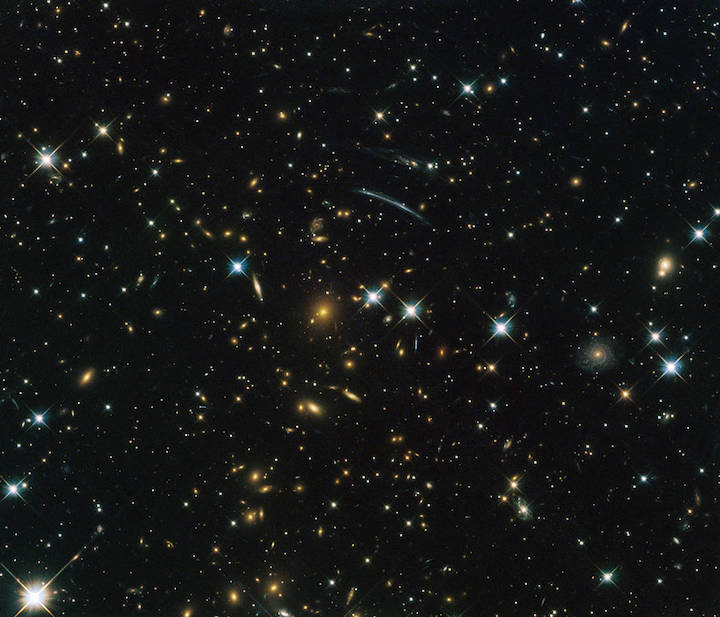
The observable universe alone contains hundreds of billions of galaxies. Each galaxy contains billions or even trillions of stars. Around many of those stars orbit planets.
The scale is almost impossible to comprehend.
Yet despite its enormous size, the observable universe may represent only a small part of a much larger reality.
The multiverse theory proposes that our universe could be one region within a far grander cosmic landscape.
In this picture, our universe becomes similar to a single island in an immense ocean of universes.
What Is the Multiverse Theory?
The multiverse theory is not one single idea.
Instead, it is a collection of scientific hypotheses suggesting that our universe may be only one of many universes.
Different versions of the theory emerge from different areas of physics and cosmology.
Some suggest that other universes exist beyond the limits of our observable cosmos.
Others arise from quantum mechanics and propose that every possible outcome of an event actually occurs in separate realities.
Still others emerge from advanced theories involving extra dimensions and fundamental physics.
Although these ideas differ significantly, they share one central concept: reality may be much larger than the universe we can observe.
The multiverse is therefore not a single model but an umbrella term covering several possible ways multiple universes might exist.
Why Scientists Began Considering the Multiverse
The multiverse did not originate as a purely philosophical speculation.
Many scientists arrived at multiverse ideas while attempting to solve genuine problems in physics.
Researchers were trying to explain observations about the universe.
Unexpectedly, some mathematical models seemed to predict the existence of other universes.
In many cases, scientists were not specifically searching for a multiverse. Instead, the multiverse appeared as a consequence of theories developed for entirely different reasons.
This is one reason the idea attracts serious attention.
The multiverse is not simply a fantasy. It emerges naturally from several respected areas of theoretical physics.
However, whether those theories accurately describe reality remains an open question.
The Vastness of the Observable Universe
To appreciate why the multiverse seems plausible to some scientists, it helps to understand the limits of observation.
Light travels at a finite speed.
When we observe distant galaxies, we see them as they existed millions or billions of years ago because their light required time to reach us.
Since the universe has existed for approximately 13.8 billion years, there is a limit to how far we can see.
This creates the observable universe.
Beyond that boundary may lie regions forever inaccessible to us.
Those regions could continue endlessly.
If space extends infinitely, there may be distant regions containing every possible arrangement of matter.
Some physicists argue that in an infinite cosmos, exact copies of galaxies, planets, and even people could eventually appear simply through repetition.
This possibility leads to one of the simplest forms of the multiverse concept.
Cosmic Inflation and the Birth of Multiple Universes
One of the strongest scientific motivations for the multiverse comes from a theory known as cosmic inflation.
According to modern cosmology, the universe experienced an extraordinary expansion shortly after the Big Bang.
During a tiny fraction of a second, space expanded enormously.
This rapid growth helps explain several important features of the universe.
Inflation successfully accounts for observations that would otherwise be difficult to understand.
However, some versions of inflation lead to an unexpected consequence.
Inflation may never completely stop.
In certain regions, inflation ends and forms a universe like ours.
Elsewhere, inflation continues.
New universes keep forming within an ever-expanding cosmic background.
This process is known as eternal inflation.
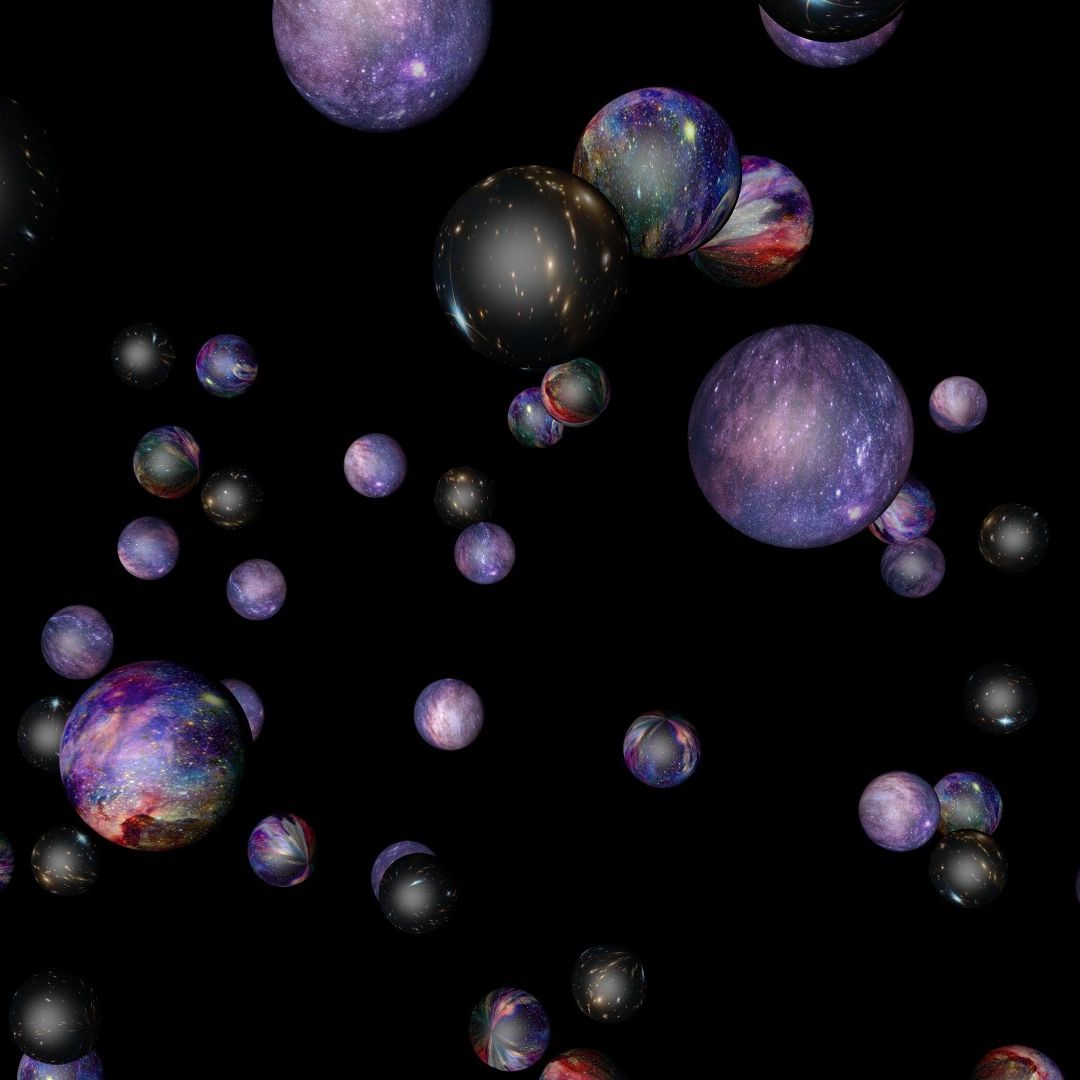
According to this idea, our universe would be just one bubble in a vast cosmic foam containing countless other bubble universes.
Each bubble could possess different properties.
The result is a potentially enormous multiverse.
Bubble Universes
The image of bubble universes is one of the most popular multiverse concepts.
Imagine a pot of boiling water.
Bubbles constantly form, expand, and separate from one another.
Now replace water with inflating space.
Each bubble becomes a universe.
Inside every bubble, stars, galaxies, planets, and perhaps life may emerge.
Observers living inside one bubble might never detect neighboring bubbles because the distances involved are unimaginably vast.
From their perspective, their universe appears complete.
Yet beyond their cosmic horizon, countless other universes may exist.
This picture arises naturally from some inflationary models and remains one of the most widely discussed versions of the multiverse.
Quantum Mechanics and Multiple Realities
Another famous route to the multiverse comes from quantum mechanics.
Quantum physics describes the behavior of matter and energy at extremely small scales.
Unlike everyday physics, quantum mechanics often deals with probabilities rather than certainties.
Before measurement, a quantum system may exist in multiple possible states.
This strange feature led physicists to develop different interpretations of quantum theory.
One of the most intriguing is the Many-Worlds Interpretation.
Proposed by physicist Hugh Everett III in 1957, this interpretation suggests that all possible outcomes of quantum events actually occur.
Instead of one outcome becoming real while others disappear, reality branches into multiple versions.
Every quantum decision creates separate histories.
In one branch, an event happens one way.
In another branch, it happens differently.
Over time, countless branches emerge.
The result is an enormous collection of parallel realities.
Are There Infinite Versions of You?
The Many-Worlds Interpretation naturally raises a captivating question.
Could there be other versions of you?
According to the theory, every quantum event contributes to branching realities.
Across these branches, alternative versions of individuals might exist.
Some differences would be tiny.
Perhaps another version of you chose tea instead of coffee one morning.
Other differences could be profound.
Perhaps another version pursued a different career, lived in another country, or never encountered certain people.
However, it is important to understand that this remains a theoretical interpretation of quantum mechanics.
No evidence currently proves that alternate versions of ourselves actually exist.
The idea emerges from one possible way of understanding quantum theory.
It remains fascinating but unconfirmed.
The Strange Logic of Quantum Reality
Quantum mechanics repeatedly challenges human intuition.
Particles sometimes behave like waves.
Objects can exist in superpositions of multiple states.
Probabilities play a fundamental role in physical predictions.
The Many-Worlds Interpretation attempts to explain these peculiar features without requiring wave functions to collapse during measurement.
Instead, reality continuously branches.
Every possibility becomes real somewhere.
To many people, this idea seems outrageous.
Yet some physicists argue it may actually be mathematically simpler than alternative explanations.
Whether nature truly operates this way remains one of the deepest unanswered questions in science.
String Theory and Hidden Universes
Another source of multiverse ideas comes from string theory.
String theory attempts to unify all fundamental forces within a single mathematical framework.
According to the theory, elementary particles are not point-like objects but tiny vibrating strings.
Different vibrations produce different particles.
String theory introduces additional spatial dimensions beyond the familiar three dimensions of everyday life.
In some versions, the mathematics permits an enormous number of possible universes.
Each universe may possess different physical constants and laws.
This collection of possibilities is sometimes called the string landscape.
The number of potential universes may be staggeringly large.
Some estimates suggest values so enormous that ordinary language struggles to describe them.
Although string theory remains unproven, it provides another pathway through which multiverse concepts emerge.
Why Does Our Universe Seem Fine-Tuned?
One of the most intriguing motivations for the multiverse involves the apparent fine-tuning of nature.
Many physical constants appear remarkably well suited for the existence of stars, planets, chemistry, and life.
If certain values were even slightly different, the universe might be radically altered.
Stars might never form.
Atoms might become unstable.
Life as we know it could be impossible.
This observation has puzzled scientists for decades.
Why do the constants possess precisely the values they do?
The multiverse offers one possible explanation.
If countless universes exist with different properties, then it is not surprising that at least some universes support life.
Observers naturally find themselves in one of those life-friendly universes because they could not exist elsewhere.
This reasoning is known as the anthropic principle.
The Anthropic Principle
The anthropic principle is often misunderstood.
It does not claim the universe was designed for life.
Instead, it emphasizes a simple observational fact.
Any observer capable of asking why the universe supports life must exist in a universe where life is possible.
If many universes exist with varying properties, most may be sterile and lifeless.
Only a small fraction might permit complex structures.
Life would emerge only within those rare universes.
Consequently, observers would naturally perceive a universe seemingly tailored for their existence.
Some physicists find this explanation compelling.
Others remain skeptical.
The debate continues.
Can We Ever Detect Other Universes?
Perhaps the greatest challenge facing multiverse theories is testing them.
Science depends on evidence.
A scientific theory ideally makes predictions that can be observed or measured.
If other universes exist beyond our observable horizon, detecting them may prove extraordinarily difficult.
Some critics argue that theories involving inaccessible universes fall outside science entirely.
Supporters respond that if multiverse predictions arise naturally from successful physical theories, they deserve serious consideration.
Researchers have proposed possible observational signatures.
For example, collisions between bubble universes might leave subtle imprints in the cosmic microwave background.
So far, no convincing evidence has been found.
The search continues.
The Difference Between Science and Speculation
Discussions of the multiverse often blur the line between established science and speculation.
Certain underlying theories, such as inflation and quantum mechanics, enjoy substantial scientific support.
However, the multiverse implications derived from those theories remain less certain.
It is important to distinguish between what scientists know and what they hypothesize.
We know the universe exists.
We know cosmic inflation is strongly supported by evidence.
We know quantum mechanics works extraordinarily well.
We do not know whether these theories necessarily imply multiple universes.
We also do not know whether any proposed multiverse actually exists.
Scientific honesty requires acknowledging these uncertainties.
Philosophical Implications of the Multiverse
The multiverse touches profound philosophical questions.
What does it mean for something to be real?
Can realities exist that we can never observe?
How should we think about probability if every possible outcome occurs somewhere?
What becomes of personal identity if alternate versions of ourselves exist?
These questions extend beyond physics.
They enter the realms of philosophy, metaphysics, and even human psychology.
The multiverse challenges traditional assumptions about uniqueness and existence.
For many people, these implications are as fascinating as the scientific theories themselves.
The Emotional Appeal of Infinite Possibilities
Part of the multiverse’s popularity comes from its emotional resonance.
People naturally wonder about roads not taken.
What if life had unfolded differently?
What if different choices produced different futures?
The idea of parallel realities gives physical form to these questions.
Some imagine universes where lost opportunities succeeded.
Others imagine worlds where historical events unfolded differently.
The concept captures a deeply human fascination with possibility.
Even though science cannot currently confirm such realities, the idea speaks to our curiosity about alternate paths through life.
Multiverses in Popular Culture
The multiverse has become a major theme in books, films, television shows, and video games.
Stories involving alternate realities allow creators to explore different versions of characters and worlds.
A familiar hero may become a villain.
Historical events may unfold differently.
Entire civilizations may evolve along alternate paths.
These fictional portrayals often draw inspiration from genuine scientific concepts, though they frequently simplify or exaggerate them.
As a result, many people encounter the multiverse first through entertainment rather than physics.
While these stories can be imaginative and enjoyable, they should not be confused with actual scientific theories.
Arguments Against the Multiverse
Not all scientists embrace multiverse ideas.
Many researchers remain skeptical.
One criticism concerns testability.
If other universes can never be observed, how can their existence be scientifically evaluated?
Another concern involves explanatory power.
Critics argue that invoking countless unseen universes may complicate explanations rather than simplify them.
Some physicists prefer seeking deeper fundamental laws that uniquely determine our universe’s properties.
Others worry that multiverse reasoning could reduce motivation to search for underlying explanations.
These criticisms are serious and continue shaping scientific discussions.
Arguments Supporting the Multiverse
Supporters counter that science has often accepted entities before direct observation became possible.
Atoms were proposed long before they could be observed.
Black holes existed in theory decades before convincing evidence emerged.
If well-supported theories naturally predict a multiverse, scientists should investigate those implications.
Supporters also note that rejecting a theory solely because its predictions seem strange would be unscientific.
Nature is under no obligation to conform to human intuition.
Ultimately, evidence—not personal preference—must decide.
Infinite Universes Versus Finite Universes
One common misconception is that all multiverse theories require infinite universes.
This is not necessarily true.
Some models involve finite numbers of universes.
Others imply extraordinarily large but limited collections.
Still others permit genuine infinity.
The distinction matters because infinity introduces unique mathematical and philosophical challenges.
An infinite multiverse could contain every physically possible arrangement of matter.
A finite multiverse might contain only a subset of possibilities.
Scientists continue debating which scenarios, if any, are physically realistic.
Could Different Universes Have Different Laws of Physics?
One of the most intriguing possibilities is that other universes might obey different physical laws.
Imagine a universe where gravity is stronger.
Stars could burn differently.
Planetary systems might be unstable.
Life could face entirely different challenges.
In another universe, atoms might never form.
In yet another, dimensions could differ from our own.
These possibilities emerge from certain multiverse models, particularly those associated with eternal inflation and string theory.
If true, our universe would represent only one example among many possible realities.
What the Multiverse Means for Humanity
Whether or not the multiverse exists, contemplating it changes how we think about our place in reality.
Human history repeatedly reveals that the universe is larger than we once imagined.
Each expansion of perspective has humbled and inspired us.
The multiverse represents perhaps the ultimate expansion.
Instead of one universe among many galaxies, we become inhabitants of one universe among potentially many universes.
This possibility transforms familiar questions into cosmic mysteries.
It encourages us to think beyond traditional boundaries and consider realities far greater than our immediate experience.
The Future of Multiverse Research
Future advances in physics may bring new insights.
Improved observations of the early universe could reveal clues about cosmic inflation.
More powerful telescopes may uncover evidence supporting or challenging existing theories.
Advances in quantum physics could shed light on the nature of reality itself.
New mathematical frameworks may emerge.
Unexpected discoveries could transform current debates.
History shows that scientific revolutions often arrive from directions nobody anticipates.
The future may reveal answers that today remain beyond imagination.
Are There Really Infinite Versions of Reality?
The honest scientific answer is that nobody currently knows.
Some multiverse theories suggest infinite versions of reality may exist.
Others predict vast but finite numbers of universes.
Still others may prove incorrect altogether.
At present, no direct evidence confirms the existence of alternate universes.
Yet the idea remains scientifically interesting because it arises from serious attempts to understand the cosmos.
The question remains open.
Perhaps future discoveries will reveal that reality is far larger than we ever suspected.
Or perhaps the universe we inhabit is truly unique.
For now, both possibilities remain on the table.
Conclusion
The multiverse theory is one of the most fascinating ideas in modern science. It proposes that our universe may be only one part of a much larger reality containing many universes, each with its own history, properties, and possibilities. Different versions of the multiverse arise from cosmic inflation, quantum mechanics, string theory, and other areas of theoretical physics.
Although the concept captures the imagination with visions of alternate worlds, parallel histories, and infinite possibilities, it remains a hypothesis rather than an established fact. Scientists continue debating whether the multiverse exists and whether it can ever be tested through observation or experiment.
What makes the multiverse so compelling is not merely the possibility of other universes. It is what the idea reveals about science itself. Humanity’s quest to understand reality continually pushes beyond familiar boundaries. The multiverse stands at one of those boundaries today—a place where knowledge meets mystery, where mathematics meets imagination, and where some of the deepest questions about existence remain waiting for answers.
Whether infinite versions of reality truly exist or not, the search for the answer continues to expand our understanding of the cosmos. And in that search, we are reminded that the universe—or perhaps the multiverse—may be far stranger, larger, and more wondrous than we have ever imagined.