When people first begin exploring astronomy, they quickly encounter a surprising problem: space is unimaginably large.
The distances we use in everyday life become meaningless almost immediately. Kilometers and miles work perfectly for measuring roads, cities, countries, and even the size of our planet. But once we step beyond Earth and begin looking toward the stars, those familiar units become inconveniently small.
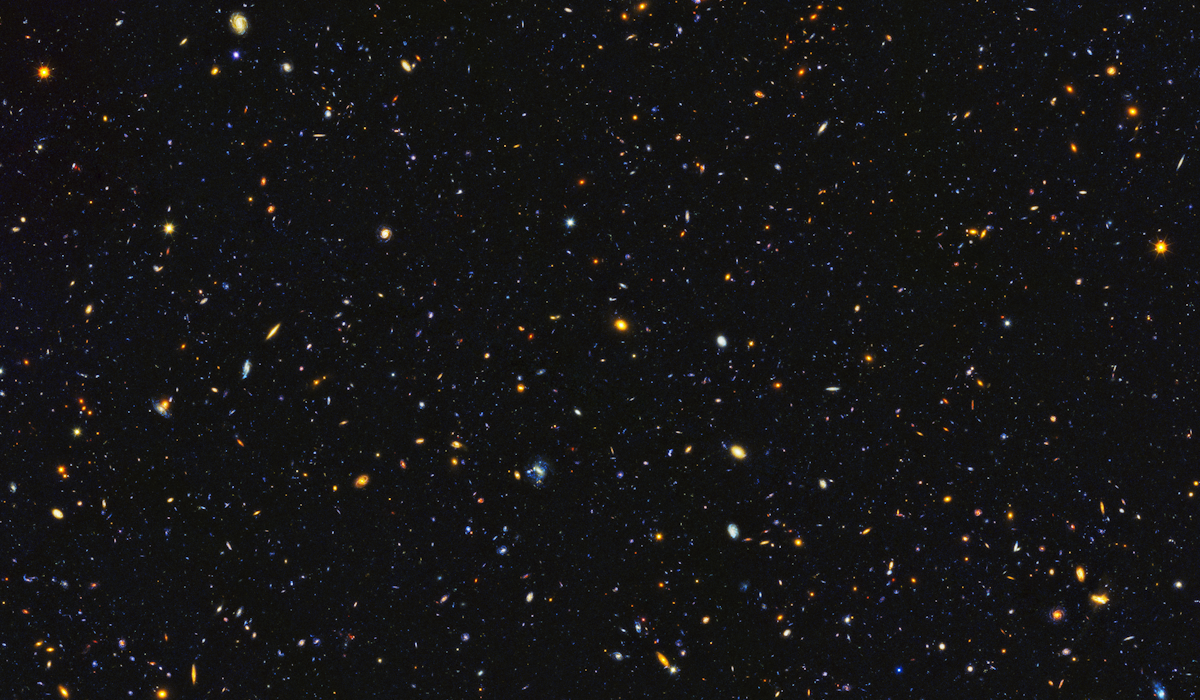
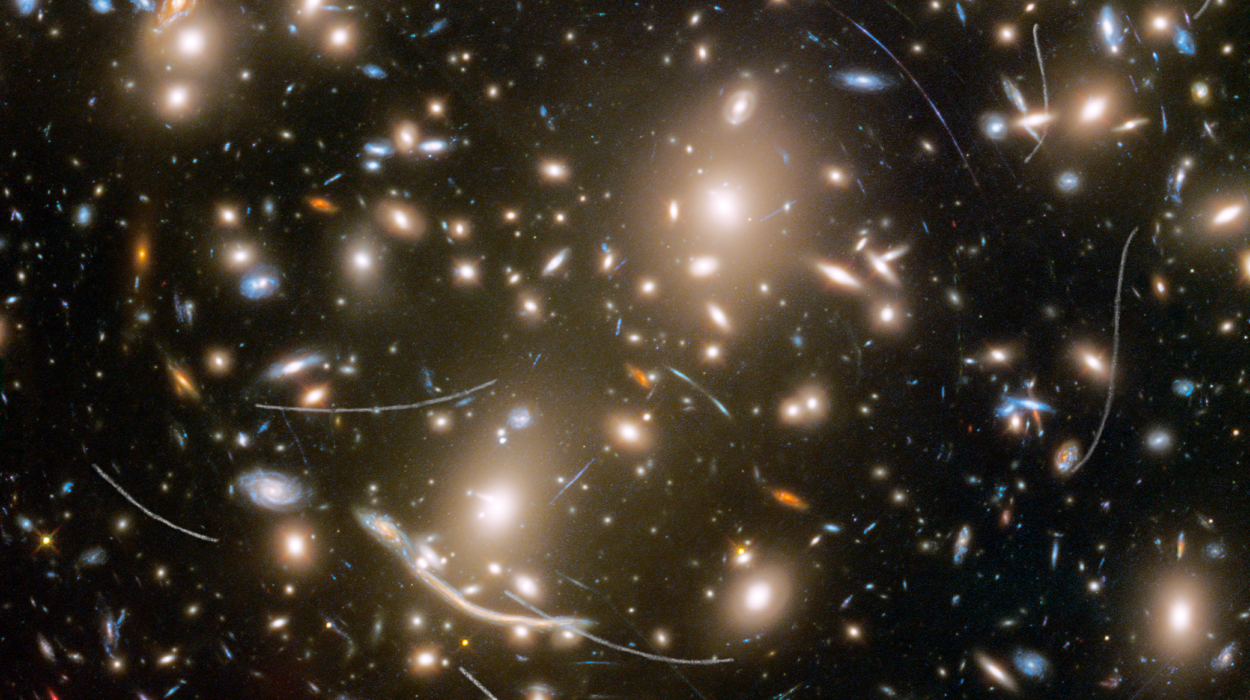
The nearest star beyond our Sun lies more than 40 trillion kilometers away. The center of our galaxy is about 26,000 light-years from Earth. Some galaxies visible through modern telescopes are billions of light-years distant.
Faced with numbers so enormous, astronomers developed specialized ways to describe cosmic distances. Most people are familiar with the light-year, a unit based on how far light travels in one year. Yet professional astronomers often use another measurement that can sound mysterious to the public: the parsec.
You might hear scientists describe a star as being 10 parsecs away or a galaxy as existing millions of parsecs from Earth. To many people, the term sounds like science-fiction jargon. In fact, it is one of the most practical and scientifically important distance measurements in astronomy.
Understanding the parsec is more than learning a new unit. It opens a window into how astronomers actually measure the universe. It reveals how scientists determine the distances to stars, map the structure of the Milky Way, and estimate the scale of the cosmos itself.
The story of the parsec is ultimately a story about humanity’s effort to comprehend the vastness of space.
The Challenge of Measuring the Universe
Imagine standing on a beach and looking across a small bay.
Estimating the distance is relatively easy. You can compare it to familiar objects, walk part of the way, or use surveying equipment.
Now imagine trying to measure the distance to the Moon.
The task becomes much more difficult.
Next, imagine measuring the distance to a star.
Suddenly, the challenge seems almost impossible.
Stars are so far away that no spacecraft has traveled even a tiny fraction of the distance to most of them. Unlike mountains or buildings, we cannot physically visit them to make direct measurements.
Astronomers must therefore rely on indirect methods.
The problem becomes even more complicated because the universe contains objects at vastly different scales. Distances between planets, stars, galaxies, and galaxy clusters differ enormously.
Using kilometers for these measurements quickly becomes impractical.
For example, the distance to the star Proxima Centauri is approximately 40 trillion kilometers.
Writing and working with numbers that large repeatedly is inconvenient. Scientists needed a more efficient way to describe cosmic distances.
This need eventually led to units like the light-year and the parsec.
What Exactly Is a Parsec?
A parsec is a unit of distance used primarily in astronomy.
One parsec equals approximately 3.26 light-years.
In metric terms, one parsec is about 30.9 trillion kilometers.
In miles, it is roughly 19.2 trillion miles.
These numbers are so large that they can feel abstract. To truly understand a parsec, it helps to know where the unit comes from.
Unlike the light-year, which is based on the speed of light, the parsec is derived from geometry.
Its definition is tied directly to one of the oldest and most important techniques astronomers use to measure stellar distances.
That technique is called parallax.
In fact, the word “parsec” comes from combining two words: “parallax” and “arcsecond.”
The name itself reveals the concept behind the measurement.
Understanding Parallax
Parallax is something you experience every day, often without realizing it.
Hold your thumb out in front of your face.
Close one eye and then switch to the other eye.
Your thumb appears to shift position relative to distant objects in the background.
The thumb is not actually moving.
Instead, your viewing position changes slightly because your eyes occupy different locations.
This apparent shift is called parallax.
Your brain uses parallax to perceive depth and judge distances.
Astronomers apply the same principle on a much larger scale.
Instead of using two eyes, they use Earth’s motion around the Sun.
As Earth travels through its orbit, our viewpoint changes.
Nearby stars appear to shift slightly against the much more distant background stars.
By measuring this tiny apparent movement, astronomers can calculate how far away a star is.
This method forms the foundation of the parsec.
Earth’s Orbit as a Measuring Tool
The orbit of Earth provides astronomers with a gigantic baseline for distance measurements.
Earth travels around the Sun once every year.
Observing a nearby star from opposite sides of Earth’s orbit means observing it from locations separated by approximately 300 million kilometers.
This enormous separation creates a measurable parallax effect.
When astronomers compare observations taken six months apart, nearby stars appear to move slightly relative to distant stars.
The closer the star, the larger the apparent shift.
The farther away the star, the smaller the shift.
By carefully measuring this angle, astronomers can determine the star’s distance using geometry.
This technique does not require assumptions about the star’s brightness or physical properties.
It relies solely on geometry and observation.
For this reason, parallax remains one of the most reliable methods for measuring stellar distances.
The Official Definition of a Parsec
The formal definition of a parsec is surprisingly elegant.
One parsec is the distance at which one astronomical unit subtends an angle of one arcsecond.
That sentence sounds intimidating at first, but it becomes much simpler when broken down.
An astronomical unit, often abbreviated AU, is the average distance between Earth and the Sun.
An arcsecond is an extremely small angular measurement.
There are 60 arcseconds in an arcminute and 60 arcminutes in a degree.
A full circle contains 360 degrees.
Therefore, one arcsecond is incredibly tiny.
If a star is located at a distance where Earth’s average distance from the Sun appears to span exactly one arcsecond, that star is one parsec away.
This geometric relationship creates the unit known as the parsec.
Why Astronomers Invented the Parsec
At first glance, the light-year seems easier to understand.
Light travels at a known speed, and a light-year simply represents the distance traveled in one year.
So why didn’t astronomers stop there?
The answer lies in measurement.
The parsec emerges naturally from parallax calculations.
When astronomers measure a star’s parallax angle, the resulting distance is conveniently expressed in parsecs.
The mathematics becomes simpler and more direct.
Rather than converting everything into kilometers or light-years, scientists can work directly with the distances generated by observational data.
In practical astronomy, parsecs often make calculations cleaner and more efficient.
As a result, professional astronomers frequently prefer parsecs over light-years.
Why Light-Years Are More Popular with the Public
Despite the advantages of parsecs, light-years remain far more familiar to the general public.
The reason is largely psychological.
People find the concept of light traveling through space easier to visualize.
When someone hears that a galaxy is one million light-years away, they understand that the light reaching us today left the galaxy one million years ago.
This immediately conveys both distance and time.
The parsec lacks that intuitive storytelling element.
It is based on geometry rather than a dramatic image of light racing across the cosmos.
As a result, science communicators often use light-years when speaking to broad audiences while astronomers continue using parsecs in professional research.
Both units describe the same reality from different perspectives.
The Relationship Between Parsecs and Light-Years
Because both units measure distance, converting between them is straightforward.
One parsec equals approximately 3.26 light-years.
A star located 10 parsecs away is about 32.6 light-years from Earth.
A galaxy located one million parsecs away is approximately 3.26 million light-years distant.
Astronomers frequently switch between these units depending on context.
Scientific papers often use parsecs because they connect naturally to observational techniques.
Educational materials frequently use light-years because they are easier for non-specialists to understand.
Neither unit is inherently better.
Each serves a different purpose.
Measuring Nearby Stars
The earliest and most important use of parsecs involved measuring nearby stars.
For centuries, astronomers suspected that stars existed at enormous distances, but proving this was difficult.
The challenge arose because stellar parallax angles are incredibly small.
Even the nearest stars shift only tiny amounts against the background sky.
Technological limitations prevented accurate measurements for much of history.
Finally, during the nineteenth century, improved instruments allowed astronomers to detect stellar parallax directly.
This achievement represented a major milestone in astronomy.
For the first time, scientists could determine the true distances to stars.
The resulting measurements naturally led to the use of parsecs.
Suddenly, humanity possessed a reliable ruler extending beyond the Solar System.
The First Successful Stellar Distance Measurements
One of the greatest achievements in nineteenth-century astronomy came when astronomers successfully measured the distance to a nearby star using parallax.
These measurements confirmed that stars were not simply points of light attached to a celestial sphere.
They were distant suns scattered throughout space.
The realization transformed humanity’s understanding of the universe.
The stars were far beyond anything previously imagined.
The distances involved were so immense that traditional units became useless.
The parsec emerged as a practical way to express these extraordinary scales.
What began as a mathematical convenience soon became a standard astronomical unit.
From Parsecs to Kiloparsecs
As astronomers expanded their studies beyond nearby stars, even parsecs became too small for many applications.
To simplify discussions, scientists introduced larger versions of the unit.
A kiloparsec equals one thousand parsecs.
This corresponds to approximately 3,260 light-years.
Kiloparsecs are particularly useful when describing structures within galaxies.
For example, the Milky Way spans roughly 30 kiloparsecs across.
Using kiloparsecs makes large-scale galactic measurements far easier to express and compare.
Without such units, astronomers would constantly be writing enormous numbers.
Megaparsecs and the Scale of Galaxies
The universe extends far beyond individual galaxies.
When discussing distances between galaxies, astronomers often use megaparsecs.
One megaparsec equals one million parsecs.
This corresponds to approximately 3.26 million light-years.
Many nearby galaxies are measured in megaparsecs.
At these scales, even light-years become cumbersome.
Megaparsecs provide a compact and practical way to describe the immense separations between galaxies.
They have become standard units in extragalactic astronomy.
Gigaparsecs and the Observable Universe
The largest cosmic distances require even larger units.
A gigaparsec equals one billion parsecs.
This corresponds to approximately 3.26 billion light-years.
Gigaparsecs are commonly used in cosmology, the study of the universe as a whole.
The observable universe spans tens of billions of light-years.
Expressing such distances in gigaparsecs simplifies calculations and scientific communication.
At these scales, the parsec becomes part of a hierarchy of units designed specifically for navigating the immense dimensions of the cosmos.
Mapping the Milky Way
One of the most important applications of parsecs involves mapping our galaxy.
The Milky Way is so large that understanding its structure requires accurate distance measurements.
Astronomers use parsecs to locate stars, star clusters, nebulae, and other objects throughout the galaxy.
By measuring distances, scientists can construct three-dimensional maps of the Milky Way.
These maps reveal spiral arms, stellar populations, and regions of active star formation.
Without accurate distance measurements, the galaxy would appear as a confusing collection of lights.
Parsecs help transform observations into a coherent picture of our galactic home.
The Gaia Revolution
Modern astronomy has entered a golden age of distance measurement thanks to the European Space Agency’s Gaia mission.
Gaia is measuring the positions, motions, and distances of more than a billion stars.
Using extremely precise parallax observations, it has created the most detailed map of the Milky Way ever produced.
The mission measures stellar distances with unprecedented accuracy.
Many of these measurements are naturally expressed in parsecs.
Gaia demonstrates that the concept behind the parsec remains as relevant today as ever.
A unit invented from geometry continues to help astronomers chart the cosmos with extraordinary precision.
Why Distance Matters in Astronomy
Distance is one of the most important pieces of information astronomers can obtain.
Without knowing an object’s distance, many of its properties remain uncertain.
A faint star might be intrinsically dim and nearby.
Or it might be extremely bright and very distant.
Distance allows astronomers to determine true brightness, size, mass, and energy output.
It also helps reveal how objects evolve over time.
Accurate distances form the foundation upon which much of modern astronomy is built.
The parsec plays a crucial role in establishing those distances.
The Cosmic Distance Ladder
Parallax measurements work best for relatively nearby stars.
Beyond certain distances, the apparent shifts become too small to measure accurately.
To reach farther into space, astronomers use a series of interconnected techniques known as the cosmic distance ladder.
Parallax forms the first rung.
Distances measured through parallax calibrate other methods.
Those methods then calibrate even more distant techniques.
Step by step, astronomers extend their reach across the universe.
Because parallax provides the foundation for this ladder, the parsec occupies a central position in cosmic distance measurement.
The entire system ultimately depends on the geometric principles that define the parsec.
The Human Perspective on Cosmic Distances
One reason parsecs can feel strange is that human intuition evolved on Earth.
Our ancestors measured distances by walking, traveling, and observing landscapes.
The scale of the universe lies far beyond ordinary experience.
A kilometer feels understandable.
A thousand kilometers feels large.
A trillion kilometers becomes almost impossible to visualize.
Parsecs help astronomers manage these vast scales mathematically, but they also remind us how extraordinary the universe truly is.
Every parsec represents distances so immense that light itself requires years to cross them.
Parsecs in Popular Culture
Many people first encounter the word “parsec” through science fiction.
The term gained widespread recognition after appearing in the Star Wars franchise.
Although popular culture introduced millions of people to the word, it also created confusion about its meaning.
A parsec is a unit of distance, not time.
Professional astronomers had been using the term long before it appeared in movies and novels.
Its scientific significance comes not from fiction but from its connection to one of astronomy’s most important measurement techniques.
Today, the word serves as a fascinating example of how scientific terminology can enter mainstream culture.
The Elegance of the Parsec
At its heart, the parsec represents something profoundly elegant.
It transforms a simple geometric relationship into a tool capable of measuring the universe.
The same principle that makes your thumb appear to shift when viewed with different eyes allows astronomers to determine the distances to stars.
This connection between everyday experience and cosmic measurement is one of the beauties of science.
The universe often reveals its secrets through surprisingly simple ideas.
The parsec is a perfect example.
A tiny angular shift observed from Earth becomes a ruler stretching across the galaxy and beyond.
Looking Deeper Into Space
As telescopes become more powerful, astronomers continue observing objects farther and farther away.
New instruments are revealing galaxies that formed shortly after the Big Bang.
These discoveries push the limits of distance measurement and cosmological understanding.
Yet even as astronomy advances into new frontiers, the parsec remains a fundamental unit.
Whether measuring nearby stars or discussing the large-scale structure of the universe, astronomers continue relying on the framework built around parallax and parsecs.
The unit has endured because it is deeply connected to the geometry of observation itself.
Conclusion
A parsec is far more than an unusual astronomical term. It is a distance unit rooted in the geometry of parallax, the apparent shift in an object’s position when viewed from different locations. Defined as the distance at which one astronomical unit subtends an angle of one arcsecond, a parsec equals approximately 3.26 light-years or about 30.9 trillion kilometers.
Astronomers use parsecs because they emerge naturally from one of the most reliable methods of measuring stellar distances. While light-years are often easier for the public to visualize, parsecs provide practical advantages in scientific calculations and observations. From mapping nearby stars to measuring galaxies millions of light-years away, the parsec has become one of astronomy’s most essential tools.
More importantly, the parsec tells a deeper story about humanity’s quest to understand the universe. It demonstrates how careful observation, geometry, and curiosity allow us to measure distances that once seemed impossible to comprehend. In a cosmos of staggering size, the parsec serves as one of the rulers that helps us find our place among the stars.