On a clear night, the stars above seem scattered across the sky like tiny islands of light. For centuries, humanity looked upward and imagined a universe where celestial objects drifted alone through an immense emptiness. Even after astronomers discovered galaxies beyond our own, many people pictured them as isolated cosmic cities separated by vast oceans of darkness.
The reality is far more fascinating.
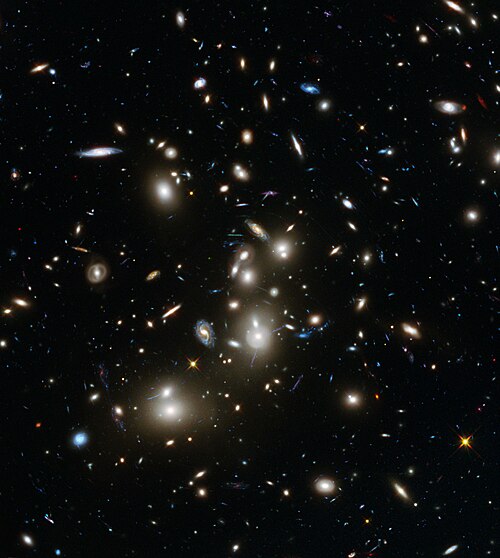
Galaxies are not lonely wanderers. Just as people form communities, cities grow into regions, and nations become part of larger networks, galaxies also gather together. They interact, influence one another, exchange material, and sometimes even collide. Across the universe, gravity connects enormous collections of galaxies into gigantic structures known as galaxy clusters.
These clusters are among the largest gravitationally bound objects in existence. They contain hundreds or even thousands of galaxies, vast quantities of hot gas, and enormous amounts of mysterious dark matter. Together, these components form colossal cosmic communities stretching millions of light-years across space.
If individual galaxies are cities of stars, galaxy clusters are the sprawling metropolitan regions of the cosmos.
Understanding galaxy clusters helps scientists answer some of the biggest questions in astronomy. How did the universe evolve? What role does dark matter play in shaping cosmic structures? How do galaxies change over billions of years? And what can the largest structures in the universe reveal about the nature of reality itself?
The story of galaxy clusters is the story of connection on the grandest scale imaginable.
Understanding Galaxies Before Understanding Clusters
To appreciate what a galaxy cluster is, we first need to understand galaxies themselves.
A galaxy is a vast collection of stars, gas, dust, planets, black holes, and dark matter held together by gravity. Galaxies can contain millions, billions, or even trillions of stars.
Our cosmic home, the Milky Way, contains hundreds of billions of stars. The Sun is merely one among them.
For much of human history, the Milky Way was thought to be the entire universe. Only during the twentieth century did astronomers realize that countless other galaxies exist beyond it.
As telescopes improved, scientists discovered something surprising.
Galaxies rarely exist completely alone.
Instead, they often gather into groups, clusters, and even larger structures connected by gravity.
The universe, it turned out, possesses an intricate social network of galaxies.
What Is a Galaxy Cluster?
A galaxy cluster is a massive collection of galaxies bound together by gravity.
These clusters can contain anywhere from several hundred to several thousand galaxies, along with enormous amounts of hot gas and dark matter.
The galaxies within a cluster are not simply passing by each other. They are gravitationally connected members of the same giant structure.
Imagine a city filled with people, roads, buildings, and infrastructure. A galaxy cluster is somewhat similar, except its residents are entire galaxies rather than people.
Each galaxy may contain billions of stars, yet together they form part of something even larger.
Galaxy clusters represent one of the most impressive examples of nature’s ability to build structures on enormous scales.
How Big Are Galaxy Clusters?
The size of a galaxy cluster is almost impossible to comprehend using everyday experience.
Many clusters stretch across several million light-years.
A light-year is the distance light travels in one year—about 9.46 trillion kilometers.
Even at the speed of light, crossing a large cluster would require millions of years.
To appreciate this scale, consider our own galaxy.
The Milky Way is roughly 100,000 light-years wide.
A galaxy cluster may span dozens of times that distance.
These structures are so enormous that they challenge the limits of human imagination.
Yet despite their vast size, gravity keeps them together as coherent systems.
The Components of a Galaxy Cluster
At first glance, it might seem that galaxy clusters are simply collections of galaxies.
In reality, galaxies account for only part of the story.
A galaxy cluster contains three major ingredients.
The first is the galaxies themselves. These include spiral galaxies, elliptical galaxies, lenticular galaxies, and irregular galaxies.
The second component is extremely hot gas filling the spaces between galaxies.
The third—and by far the largest—is dark matter.
Together, these ingredients create some of the most massive structures in the universe.
Understanding how they interact has become one of the most important goals in modern astronomy.
The Galaxies Inside the Cluster
The most visible members of a galaxy cluster are its galaxies.
Through telescopes, these galaxies appear as glowing islands of stars scattered throughout the cluster.
Some are giant elliptical galaxies containing trillions of stars.
Others are smaller spiral galaxies similar to the Milky Way.
Dwarf galaxies are also common.
Within a cluster, galaxies are constantly moving under the influence of gravity.
Their speeds can reach thousands of kilometers per second.
Even though clusters are gravitationally bound, their member galaxies are engaged in a complex cosmic dance that has continued for billions of years.
These motions provide important clues about the cluster’s total mass.
The Hidden Ocean of Hot Gas
One of the greatest surprises in astronomy was the discovery that galaxy clusters contain enormous amounts of hot gas.
This gas fills the spaces between galaxies, creating what astronomers call the intracluster medium.
The gas is incredibly hot—often reaching temperatures of tens of millions of degrees Celsius.
At such extreme temperatures, the gas emits X-rays rather than visible light.
As a result, ordinary optical telescopes cannot see it.
Specialized X-ray observatories revealed that this glowing gas contains more normal matter than all the stars in the cluster combined.
The discovery transformed scientists’ understanding of galaxy clusters.
What appeared to be mostly empty space was actually filled with an enormous reservoir of superheated material.
The Mystery of Dark Matter
Perhaps the most fascinating component of galaxy clusters is dark matter.
Dark matter does not emit light.
It does not reflect light.
It cannot be observed directly.
Yet its gravitational influence is unmistakable.
When astronomers measured the motions of galaxies inside clusters, they found something puzzling.
The galaxies were moving too quickly.
Based on visible matter alone, the clusters should have flown apart long ago.
Something invisible was providing additional gravitational pull.
That missing mass became one of the strongest pieces of evidence for dark matter.
Today, scientists estimate that dark matter accounts for most of a cluster’s total mass.
Without it, galaxy clusters could not exist in their current form.
The Discovery of Galaxy Clusters
The realization that galaxies gather into clusters did not happen overnight.
As astronomers began mapping the universe during the nineteenth and twentieth centuries, they noticed concentrations of galaxies appearing in certain regions of space.
These concentrations seemed too significant to be random.
One of the first astronomers to study clusters in detail was Fritz Zwicky.
During the 1930s, Zwicky examined the Coma Cluster and calculated the motions of its galaxies.
His results revealed the famous “missing mass” problem.
There simply was not enough visible matter to explain the cluster’s gravitational behavior.
Although many scientists initially doubted his conclusions, later observations confirmed that Zwicky had uncovered one of astronomy’s greatest mysteries.
His work laid the foundation for modern dark matter research.
How Galaxy Clusters Form
Galaxy clusters did not appear instantly after the universe began.
They formed gradually over billions of years through the action of gravity.
Following the Big Bang, matter was distributed unevenly throughout space.
Some regions contained slightly higher concentrations of matter than others.
Over time, gravity amplified these differences.
Dense regions attracted additional material.
Small structures merged into larger ones.
Galaxies formed.
Groups of galaxies formed.
Eventually, some regions accumulated enough matter to create enormous galaxy clusters.
This process continues today.
Galaxy clusters are still growing as they attract nearby galaxies and smaller groups.
The universe remains a work in progress.
The Cosmic Web
Galaxy clusters do not exist in isolation.
Instead, they are connected through an immense structure known as the cosmic web.
The cosmic web consists of gigantic filaments of matter stretching across the universe.
These filaments connect clusters and superclusters over hundreds of millions of light-years.
When astronomers map the distribution of galaxies on the largest scales, the universe resembles a vast three-dimensional network.
Galaxy clusters occupy the intersections where filaments meet.
These intersections become gravitational gathering points where matter accumulates.
The cosmic web represents the largest known structure in the universe.
Galaxy clusters are its bustling hubs.
Galaxy Groups Versus Galaxy Clusters
Not every collection of galaxies qualifies as a cluster.
Smaller associations are known as galaxy groups.
A galaxy group typically contains fewer than fifty galaxies.
Our own Milky Way belongs to the Local Group, which includes the Andromeda Galaxy and dozens of smaller galaxies.
Galaxy clusters are much larger and more massive.
They contain hundreds or thousands of galaxies and possess stronger gravitational fields.
The distinction is partly based on size and mass.
Groups represent smaller cosmic communities.
Clusters represent major galactic metropolises.
Both, however, play important roles in cosmic evolution.
Life Inside a Galaxy Cluster
Living inside a galaxy cluster would be dramatically different from living in a relatively isolated galaxy.
Galaxies within clusters experience frequent gravitational encounters.
Close passes can distort their shapes.
Gas may be stripped away.
Star formation can be altered.
Sometimes galaxies merge entirely.
The cluster environment is therefore highly influential.
A galaxy entering a cluster may undergo profound transformations over billions of years.
Astronomers often describe clusters as environments where galaxies evolve under social pressure from their neighbors.
Just as communities shape individuals, clusters shape galaxies.
Galaxy Collisions in Clusters
Although stars rarely collide directly, galaxies within clusters frequently interact.
Because clusters contain so many galaxies packed into a relatively confined volume, encounters are common.
These interactions can trigger spectacular events.
Spiral arms may become distorted.
Gas clouds can collapse, forming new stars.
Galaxies may merge to create larger systems.
Sometimes repeated interactions gradually erase spiral structures, transforming galaxies into ellipticals.
The crowded environment of a cluster acts like a cosmic laboratory where galactic evolution unfolds on grand scales.
The Giant Elliptical Galaxies at Cluster Centers
Many galaxy clusters contain an enormous galaxy near their center.
These central galaxies are often among the largest galaxies in the universe.
Over billions of years, they grow by merging with smaller galaxies that drift toward the cluster’s core.
The result is a gigantic elliptical galaxy containing trillions of stars.
These cosmic giants dominate their surroundings.
Their immense mass influences nearby galaxies and contributes significantly to the cluster’s overall structure.
Studying them helps astronomers understand how galaxies grow through mergers and interactions.
Observing Galaxy Clusters Across the Universe
Galaxy clusters are so massive that astronomers can observe them across vast cosmic distances.
Some clusters are located billions of light-years away.
Observing distant clusters allows scientists to look back in time.
Because light takes time to travel, a cluster one billion light-years away appears as it existed one billion years ago.
By comparing nearby and distant clusters, astronomers can trace how these structures evolved throughout cosmic history.
Each cluster becomes a snapshot from a different era of the universe.
Together, they create a timeline spanning billions of years.
X-Ray Vision and Galaxy Clusters
Much of what we know about galaxy clusters comes from X-ray astronomy.
The hot gas within clusters emits powerful X-rays that reveal structures invisible in ordinary light.
Space-based observatories have mapped these emissions in extraordinary detail.
X-ray observations show shock waves, gas flows, and regions of intense activity.
They reveal evidence of past collisions between clusters.
They also help scientists estimate the total amount of matter present.
Without X-ray astronomy, much of the cluster universe would remain hidden.
Gravitational Lensing: Nature’s Cosmic Magnifying Glass
One of the most remarkable phenomena associated with galaxy clusters is gravitational lensing.
According to Einstein’s theory of general relativity, massive objects bend space-time.
As light passes near a massive cluster, its path becomes curved.
This effect can magnify and distort the images of more distant galaxies behind the cluster.
The result resembles a giant cosmic lens.
Astronomers use gravitational lensing to map dark matter distributions within clusters.
Because lensing depends on total mass rather than visible matter alone, it provides one of the most powerful tools for studying dark matter.
In some cases, clusters magnify extremely distant galaxies that would otherwise be too faint to detect.
Famous Galaxy Clusters
Throughout the universe, certain galaxy clusters have become particularly important to scientific research.
The Virgo Cluster is the nearest large galaxy cluster to the Milky Way and contains thousands of galaxies.
The Coma Cluster played a key role in the discovery of dark matter.
The Bullet Cluster became famous because observations provided compelling evidence that dark matter exists independently of ordinary matter.
Each of these clusters has helped reshape our understanding of the cosmos.
Their immense scale makes them invaluable laboratories for testing fundamental theories.
The Bullet Cluster and the Dark Matter Debate
Among all known galaxy clusters, the Bullet Cluster holds a special place in astronomy.
This system formed when two clusters collided.
The collision separated ordinary matter from dark matter in a way that astronomers could observe.
Hot gas slowed during the collision, while dark matter passed through with relatively little interaction.
Measurements revealed that most of the mass remained associated with the dark matter rather than the visible gas.
For many scientists, this became some of the strongest observational evidence supporting dark matter’s existence.
The Bullet Cluster transformed a theoretical idea into something much more tangible.
Superclusters: Clusters of Clusters
As enormous as galaxy clusters are, they are not the largest structures in the universe.
Clusters themselves can gather into even larger systems called superclusters.
These vast regions contain multiple galaxy clusters connected by gravity and the cosmic web.
Our own galaxy resides within the Laniakea Supercluster, an immense structure containing around 100,000 galaxies.
The scale is almost beyond comprehension.
Clusters become neighborhoods.
Superclusters become continents.
Together they reveal the astonishing architecture of the cosmos.
What Galaxy Clusters Teach Us About the Universe
Galaxy clusters serve as powerful tools for understanding cosmic history.
Their masses reveal information about dark matter.
Their distributions help scientists study the expansion of the universe.
Their hot gas preserves records of ancient interactions.
Their evolution reflects the growth of cosmic structure over billions of years.
By studying clusters, astronomers can test theories about the origin and fate of the universe.
Few objects provide such a rich source of information.
Galaxy clusters are not merely collections of galaxies.
They are archives of cosmic history.
The Future of Galaxy Clusters
The story of galaxy clusters is still unfolding.
As the universe expands, clusters continue evolving.
Galaxies within them will merge.
New material will be captured.
Structures will grow larger.
At the same time, cosmic expansion driven by dark energy influences how clusters interact on the largest scales.
Future telescopes will reveal thousands of previously unknown clusters.
Advanced instruments will map dark matter with unprecedented precision.
Astronomers hope these observations will answer some of the most profound questions in science.
What is dark matter?
What is dark energy?
How did cosmic structure emerge?
Galaxy clusters may hold the answers.
The Emotional Wonder of Cosmic Communities
There is something deeply moving about galaxy clusters.
At first glance, space appears lonely.
The distances are enormous.
The darkness seems endless.
Yet galaxy clusters reveal a different reality.
Even on the grandest scales, connection matters.
Galaxies gather together.
Gravity links them into communities.
Their histories become intertwined.
Their futures influence one another.
Across millions of light-years, relationships shape the cosmos.
The universe is not simply a collection of isolated objects.
It is a network.
A web.
A community on a scale almost impossible to imagine.
Conclusion
Galaxy clusters are the massive social networks of the cosmos—enormous gravitationally bound collections of hundreds or thousands of galaxies, along with vast reservoirs of hot gas and enormous quantities of dark matter. Stretching across millions of light-years, they rank among the largest structures held together by gravity in the universe.
Far more than simple gatherings of galaxies, clusters are dynamic environments where galaxies interact, evolve, merge, and transform. They illuminate the hidden influence of dark matter, reveal the structure of the cosmic web, and preserve clues about the universe’s history stretching back billions of years.
From the nearby Virgo Cluster to the famous Bullet Cluster, these colossal systems continue to help astronomers uncover the deepest secrets of existence. They demonstrate that even on the largest scales imaginable, connection remains a fundamental feature of the universe.
In the end, galaxy clusters remind us that the cosmos is not a collection of isolated islands drifting through darkness. It is a vast interconnected network where gravity weaves galaxies together into magnificent communities, creating some of the most awe-inspiring structures nature has ever produced.