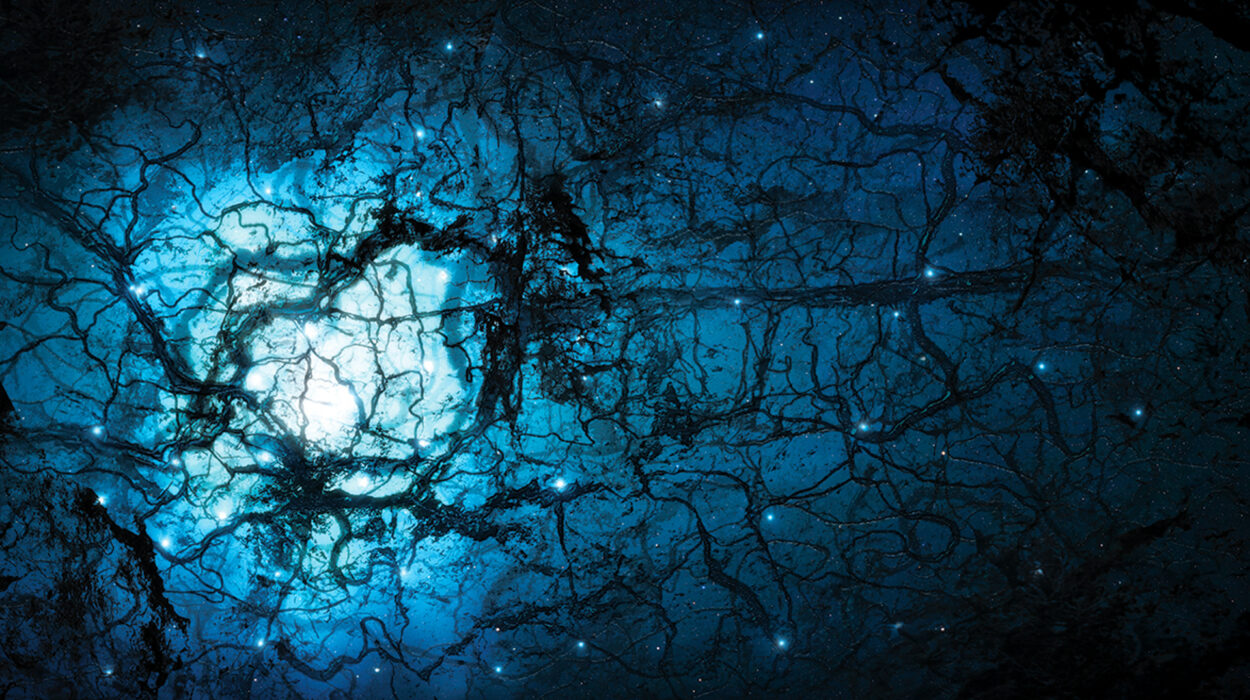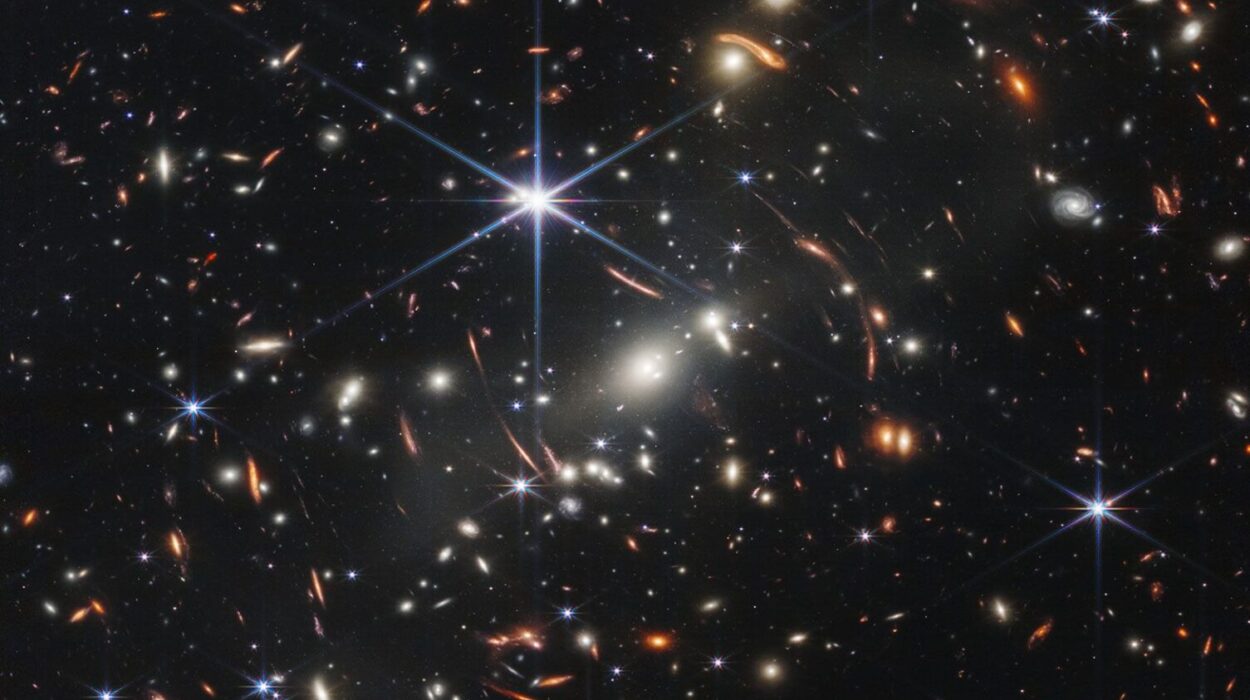
Imagine standing beneath a sky filled with stars. Each tiny point of light represents a distant sun, and many of those suns are surrounded by planets. Some of those worlds are blazing infernos where metals melt. Others are frozen wastelands locked beneath kilometers of ice. But somewhere among the countless planets scattered across the universe, there may be worlds remarkably similar to Earth—places where oceans ripple beneath blue skies, where rain falls, rivers flow, and perhaps life has found a way to thrive.
How do scientists identify these potentially life-friendly worlds?
One of the most important concepts in modern astronomy is something known as the Goldilocks Zone. It is a deceptively simple idea that has transformed our search for life beyond Earth. The concept suggests that for life as we know it to exist, a planet must orbit its star at a distance that is neither too hot nor too cold. It must be “just right.”
The name comes from the famous fairy tale of Goldilocks and the Three Bears, where Goldilocks rejects porridge that is too hot and too cold, choosing only the bowl that is exactly right. In astronomy, the Goldilocks Zone describes a similar balance.
Yet the reality is far more fascinating than a simple temperature range. The Goldilocks Zone is not merely about warmth. It involves complex interactions between stars, atmospheres, water, planetary chemistry, and even the long-term stability of entire solar systems.
Understanding the Goldilocks Zone helps answer one of humanity’s greatest questions: Are we alone in the universe?
Understanding the Basic Idea
At its core, the Goldilocks Zone refers to the region around a star where temperatures may allow liquid water to exist on a planet’s surface.
This idea is important because water is considered one of the essential ingredients for life as we know it. Every living organism on Earth depends on water. Cells require it. Biological reactions occur within it. Plants, animals, fungi, and microbes all rely on it.
Scientists therefore use liquid water as a practical guide when searching for habitable worlds.
If a planet orbits too close to its star, temperatures become extremely high. Water evaporates into the atmosphere and may eventually be lost to space.
If a planet orbits too far away, temperatures become extremely low. Water freezes into solid ice.
Only within a certain range can liquid water potentially remain stable for long periods.
That range is the Goldilocks Zone.
Why Water Matters So Much
When scientists search for life elsewhere, they often begin by looking for water. This is not because water is magical but because it possesses extraordinary properties that make life possible.
Water is an excellent solvent. It allows nutrients and chemicals to dissolve and interact. It transports substances throughout living organisms. It participates directly in countless biological processes.
Unlike many liquids, water remains stable across a relatively broad range of temperatures. It can absorb and release heat efficiently, helping regulate climate and biological systems.
Earth’s oceans also play a crucial role in stabilizing our planet’s environment. They store enormous amounts of heat, influence weather patterns, and support vast ecosystems.
Because water is so important to life on Earth, scientists use it as a starting point when considering habitability elsewhere.
This does not necessarily mean life cannot exist without water. The universe may surprise us. However, water remains the best-known ingredient for supporting biology.
How the Goldilocks Zone Was Developed
The concept of habitable zones emerged gradually as astronomers gained a better understanding of planetary environments.
For much of human history, people knew almost nothing about other worlds. The planets visible in our sky appeared as mysterious wandering lights.
As telescopes improved, scientists learned more about the Solar System. They discovered that planets experience dramatically different conditions depending on their distance from the Sun.
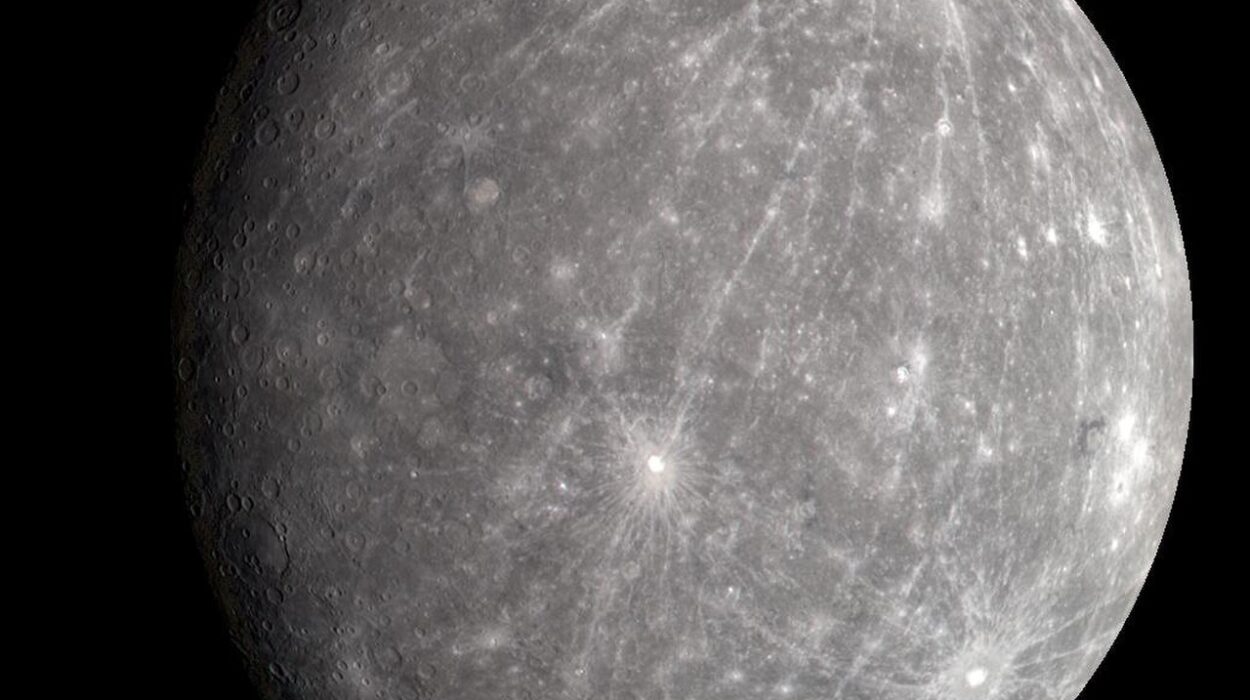
Mercury is scorched by intense solar radiation.
Venus is even hotter due to a powerful greenhouse effect.
Earth supports abundant liquid water.
Mars is much colder and drier.
These differences highlighted the importance of orbital distance.
By the twentieth century, scientists began formalizing the idea of habitable zones around stars. As knowledge of planetary atmospheres expanded, researchers developed increasingly sophisticated models to estimate where liquid water might exist.
Today, the Goldilocks Zone is a cornerstone of astrobiology—the scientific study of life in the universe.
The Goldilocks Zone Around Our Sun
Our Solar System provides an excellent example of the Goldilocks concept.
Earth lies within the Sun’s habitable zone. This fortunate position allows water to remain liquid across much of the planet’s surface.
The average distance between Earth and the Sun is about 150 million kilometers, or approximately 93 million miles.
This distance provides enough solar energy to keep oceans from freezing completely while preventing them from boiling away.
Venus, which orbits closer to the Sun, offers a glimpse of what can happen when a planet receives too much energy.
Although Venus is only slightly closer to the Sun than Earth, its dense carbon dioxide atmosphere traps enormous amounts of heat. Surface temperatures exceed 460 degrees Celsius, making Venus hotter than Mercury despite being farther from the Sun.
Mars presents the opposite situation.
Located farther from the Sun, Mars receives less solar energy. Today, much of its water exists as ice, and average temperatures are well below freezing.
These neighboring worlds demonstrate how delicate planetary habitability can be.
Why Distance Is Not the Whole Story
Many people imagine the Goldilocks Zone as a simple ring around a star. If a planet lies inside the ring, life is possible. If it lies outside, life is impossible.
Reality is far more complicated.
Distance alone does not determine habitability.
A planet’s atmosphere can dramatically alter surface conditions.
Earth and Venus provide a powerful example. Although their sizes are relatively similar, their climates differ enormously.
Earth’s atmosphere allows a moderate greenhouse effect that keeps the planet warm enough for life.
Venus’s atmosphere contains massive amounts of carbon dioxide, producing a runaway greenhouse effect that transformed the planet into a furnace.
Atmospheric composition, pressure, cloud cover, and circulation patterns all influence surface temperatures.
As a result, two planets at similar distances from the same star may experience completely different environments.
The Role of the Greenhouse Effect
The greenhouse effect is one of the most important factors affecting planetary habitability.
Certain gases in an atmosphere trap heat radiated from a planet’s surface. This process warms the planet and helps regulate temperature.
Without a greenhouse effect, Earth would be a frozen world.
Our atmosphere naturally retains enough heat to maintain liquid oceans and support life.
However, greenhouse warming can become excessive.
Venus illustrates the extreme outcome. Thick layers of carbon dioxide trap so much heat that surface temperatures become hotter than those on Mercury.
This demonstrates that a planet’s location within the Goldilocks Zone is only part of the story.
The atmosphere ultimately determines how much of a star’s energy is retained.
Different Stars Have Different Goldilocks Zones
Not all stars are like the Sun.
Stars vary enormously in size, brightness, temperature, and lifespan.
Because stars produce different amounts of energy, their habitable zones occur at different distances.
A large, bright star emits tremendous energy. Its Goldilocks Zone lies relatively far away.
A smaller, cooler star emits less energy. Its habitable zone lies much closer.
This means there is no universal Goldilocks distance.
Instead, every star possesses its own unique habitable zone.
Astronomers calculate these zones by estimating how much stellar energy reaches planets at different distances.
The characteristics of the star strongly influence the potential habitability of its planets.
Red Dwarfs and Their Challenges
One of the most interesting discoveries in modern astronomy involves red dwarf stars.
Red dwarfs are smaller and cooler than the Sun. They are also incredibly common.
In fact, most stars in our galaxy are red dwarfs.
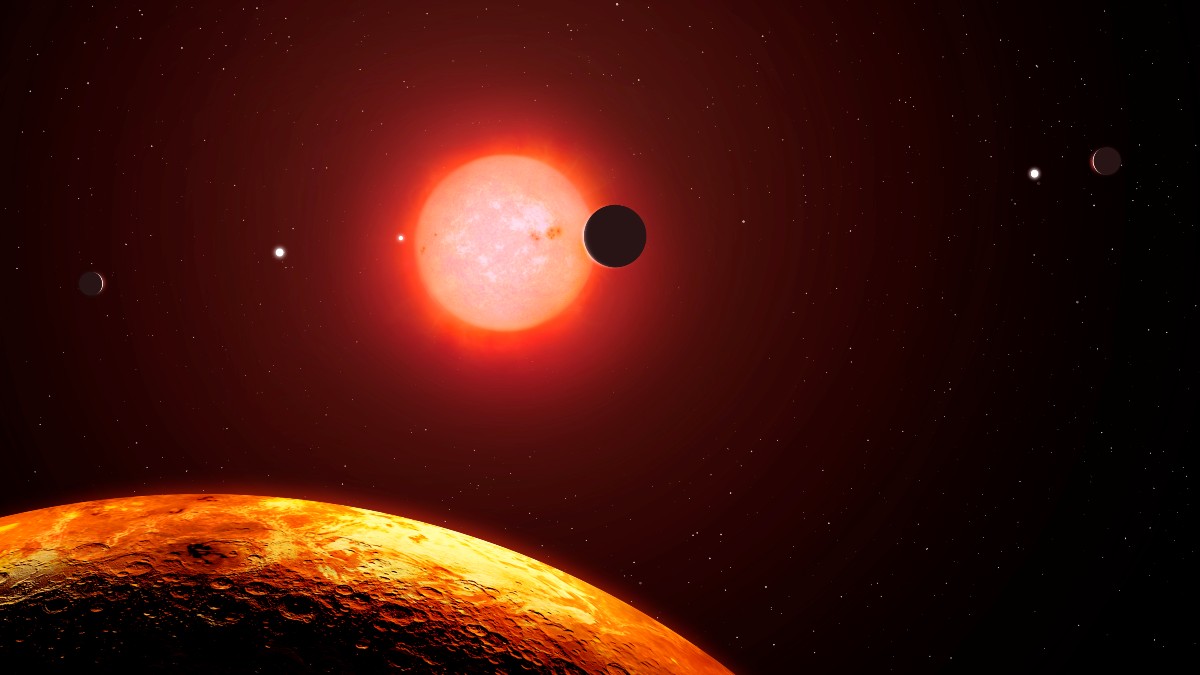
Because they emit less energy, their Goldilocks Zones lie very close to the star.
At first glance, this seems promising. A nearby habitable zone means planets are easier to detect.
However, red dwarfs present unique challenges.
Young red dwarfs often produce intense stellar flares that release powerful bursts of radiation.
Planets orbiting close to these stars may experience harsh conditions that could damage atmospheres or threaten emerging life.
Some planets may also become tidally locked.
In a tidally locked world, one side permanently faces the star while the other remains in darkness.
This creates unusual climate patterns that scientists are still studying.
Despite these challenges, red dwarfs remain important targets in the search for life.
Blue Giants and Short Lifespans
Massive stars occupy the opposite extreme.
Blue giants produce enormous amounts of energy and possess wide habitable zones.
However, these stars burn through their fuel rapidly.
While the Sun is expected to live for roughly ten billion years, massive stars may survive only a few million years.
Life on Earth required billions of years to evolve from simple microbes into complex organisms.
If a star’s lifespan is too short, there may not be enough time for life to emerge and develop.
This means that having a habitable zone is not sufficient.
The star must also remain stable long enough for biology to gain a foothold.
Earth’s Remarkable Position
When scientists examine Earth, they often describe it as exceptionally fortunate.
Our planet occupies a favorable location within the Sun’s habitable zone.
The Sun itself is relatively stable compared to many stars.
Earth possesses abundant liquid water, a protective atmosphere, and a magnetic field that shields the surface from harmful charged particles.
The Moon helps stabilize Earth’s axial tilt, reducing extreme climate variations.
Plate tectonics recycle nutrients and regulate atmospheric carbon dioxide over long timescales.
These factors work together to create a remarkably hospitable environment.
The Goldilocks Zone is important, but Earth’s habitability depends on numerous interconnected systems.
Our planet’s success story reflects a combination of favorable circumstances.
The Inner Edge of the Goldilocks Zone
The inner boundary of a habitable zone marks the point where conditions become too hot for stable liquid water.
As temperatures rise, evaporation increases.
More water enters the atmosphere.
Water vapor itself is a powerful greenhouse gas.
This can create a feedback loop in which warming leads to more water vapor, which causes even more warming.
Eventually, a runaway greenhouse effect may occur.
Oceans evaporate, temperatures soar, and the planet becomes increasingly hostile.
Scientists believe Venus may have experienced such a process billions of years ago.
The inner edge therefore represents a critical threshold for planetary habitability.
The Outer Edge of the Goldilocks Zone
The outer boundary marks the point where temperatures become too low for stable surface water.
Farther from the star, less energy reaches the planet.
Water begins to freeze.
If cooling becomes extreme, oceans may become covered by ice.
However, atmospheres can complicate the picture.
A thick atmosphere rich in greenhouse gases can trap additional heat, extending habitability farther from the star.
This means the outer edge is not fixed.
Different atmospheric conditions can shift it significantly.
Scientists continually refine these boundaries as they learn more about planetary climates.
Can Life Exist Outside the Goldilocks Zone?
One of the most exciting developments in astrobiology is the realization that life may not be limited to traditional habitable zones.
Within our own Solar System, several icy moons challenge conventional assumptions.
Jupiter’s moon Europa possesses a frozen surface, yet evidence suggests a vast liquid ocean may exist beneath the ice.
Saturn’s moon Enceladus also appears to contain subsurface liquid water.
These hidden oceans remain liquid because of internal heating generated by gravitational interactions.
Such worlds lie outside the Sun’s classical Goldilocks Zone, yet they may still possess environments suitable for life.
This discovery has expanded scientific thinking.
The Goldilocks Zone remains important, but it may not define all possible habitats.
Exoplanets and the Search for New Earths
The discovery of exoplanets transformed astronomy.
An exoplanet is a planet orbiting a star beyond our Solar System.
Before the 1990s, scientists had no confirmed examples of such worlds.
Today, thousands have been identified.
Many reside within the habitable zones of their stars.
Some are rocky planets similar in size to Earth.
Others are larger “super-Earths” unlike anything in our Solar System.
Each discovery brings new excitement because it expands the list of potential homes for life.
Astronomers now know that planets are common throughout the galaxy.
The question is no longer whether other planets exist.
The question is how many might be habitable.
What Makes a Planet Truly Habitable?
Being located in the Goldilocks Zone does not automatically make a planet suitable for life.
Numerous factors influence habitability.
A planet may lack an atmosphere.
It may have a toxic atmosphere.
Its surface may be dominated by volcanic activity.
Radiation levels may be extreme.
Water may be absent despite favorable temperatures.
The planet’s size also matters.
Small planets may struggle to retain atmospheres.
Very large planets may develop crushing pressures and exotic environments.
Habitability is therefore a complex puzzle involving many interconnected pieces.
The Goldilocks Zone provides an important clue, but not the final answer.
The Possibility of Alien Life
The search for habitable planets is ultimately driven by a profound question.
Are we alone?
For centuries, humans have wondered whether life exists elsewhere in the cosmos.
The discovery of planets within Goldilocks Zones has made this question more scientific than ever before.
Many astronomers believe the universe likely contains countless potentially habitable worlds.
Our galaxy alone contains hundreds of billions of stars.
Beyond the Milky Way lie trillions of additional galaxies.
Even if life emerges only rarely, the sheer number of opportunities is staggering.
Yet so far, no definitive evidence of extraterrestrial life has been found.
The mystery remains one of science’s greatest unsolved questions.
How Scientists Detect Habitable Worlds
Modern telescopes use ingenious techniques to discover distant planets.
Sometimes astronomers observe a tiny dip in a star’s brightness when a planet passes in front of it.
In other cases, they detect subtle motions caused by a planet’s gravitational pull.
Once a planet is found, scientists estimate its size, mass, and orbital distance.
These measurements help determine whether the planet lies within the Goldilocks Zone.
Increasingly sophisticated instruments can also analyze planetary atmospheres.
Researchers search for gases that might indicate biological activity.
Future observatories may one day identify convincing signs of life on distant worlds.
The Goldilocks Principle Beyond Astronomy
The idea of “just right” conditions extends beyond planets.
Many aspects of the universe appear delicately balanced.
The strength of fundamental forces, the behavior of atoms, and the properties of stars all contribute to the existence of life.
Small changes in these conditions could produce a radically different cosmos.
This broader perspective sometimes leads people to reflect on how extraordinary Earth’s existence truly is.
The Goldilocks Zone serves as a reminder that life depends on balance.
Too much or too little of something can make survival impossible.
Nature often thrives in the middle ground.
The Future of the Search
The coming decades promise extraordinary discoveries.
New telescopes will study exoplanets in greater detail than ever before.
Scientists hope to identify atmospheric signatures associated with biology.
Potential indicators include oxygen, methane, and other gases that may be produced by living organisms.
Future missions could reveal oceans, weather systems, and seasonal changes on distant worlds.
Some researchers even dream of detecting artificial signals from technological civilizations.
Although such discoveries remain uncertain, the search continues with growing sophistication.
Every year brings new data and new possibilities.
Why the Goldilocks Zone Captures the Imagination
The Goldilocks Zone resonates with people because it combines science with one of humanity’s deepest hopes.
The idea suggests that Earth may not be unique.
Somewhere among the stars, another planet may possess blue oceans, drifting clouds, and perhaps living creatures looking up at their own night sky.
The concept also highlights the precious nature of our own world.
Earth exists within a narrow range of conditions that support life.
Understanding this balance encourages appreciation for the fragile systems that sustain us.
The Goldilocks Zone is more than an astronomical concept.
It is a bridge between science and wonder.
It invites us to imagine distant worlds while gaining a deeper appreciation for our own.
Conclusion
The Goldilocks Zone is the region around a star where conditions may allow liquid water to exist on a planet’s surface, making it one of the most important concepts in the search for life beyond Earth. Named after the fairy tale character who preferred things that were “just right,” the Goldilocks Zone represents a delicate balance between excessive heat and extreme cold.
Yet habitability is far more complex than distance alone. Atmospheres, greenhouse effects, magnetic fields, planetary composition, stellar activity, and countless other factors influence whether a world can support life. Earth’s success as a living planet reflects a remarkable combination of favorable conditions working together over billions of years.
The discovery of thousands of exoplanets has transformed the Goldilocks Zone from a theoretical concept into a practical tool for exploring the cosmos. Scientists now routinely identify worlds that occupy these potentially habitable regions, bringing us closer than ever to answering the question of whether life exists elsewhere.
At the same time, discoveries of subsurface oceans on icy moons remind us that nature may be more creative than our definitions. Life could exist in places we once considered impossible.
Ultimately, the Goldilocks Zone is not just about finding another Earth. It is about understanding the conditions that make life possible and appreciating how extraordinary those conditions truly are. As humanity continues to explore the universe, the Goldilocks Zone remains one of our most valuable guides—a cosmic map pointing toward the places where life may have found a way to flourish among the stars.