The Moon has fascinated humanity since the dawn of civilization. It lights up the night sky, influences tides, inspires myths, and serves as Earth’s constant celestial companion. Most nights, the Moon appears familiar and comforting, glowing softly with reflected sunlight. But occasionally, something extraordinary happens. The bright Moon slowly darkens, a shadow creeps across its face, and over time it transforms into a mysterious reddish orb hanging in the darkness.
To ancient observers, this sudden change was both beautiful and terrifying. A blood-red Moon seemed like a supernatural omen, a warning from the gods, or a sign of dramatic events yet to come. Even today, despite our scientific understanding, witnessing a total lunar eclipse can feel almost magical.
A lunar eclipse is one of the most spectacular events visible in the night sky. Unlike many astronomical phenomena that require special equipment to observe, a lunar eclipse can be enjoyed with the naked eye. It unfolds gradually, allowing people to watch celestial mechanics in action as Earth, the Moon, and the Sun align in a precise cosmic arrangement.
But what exactly is a lunar eclipse? Why does the Moon sometimes disappear into Earth’s shadow? And perhaps most intriguingly, why does it often turn a deep red color during totality, creating what is commonly called a “Blood Moon”?
The answers lie in the fascinating interplay of light, shadows, atmospheric physics, and orbital motion. Understanding lunar eclipses not only reveals how these beautiful events occur but also offers a deeper appreciation of the dynamic relationship between Earth and its nearest neighbor in space.
Understanding the Moon’s Normal Appearance
Before exploring lunar eclipses, it helps to understand why the Moon normally shines in the first place.
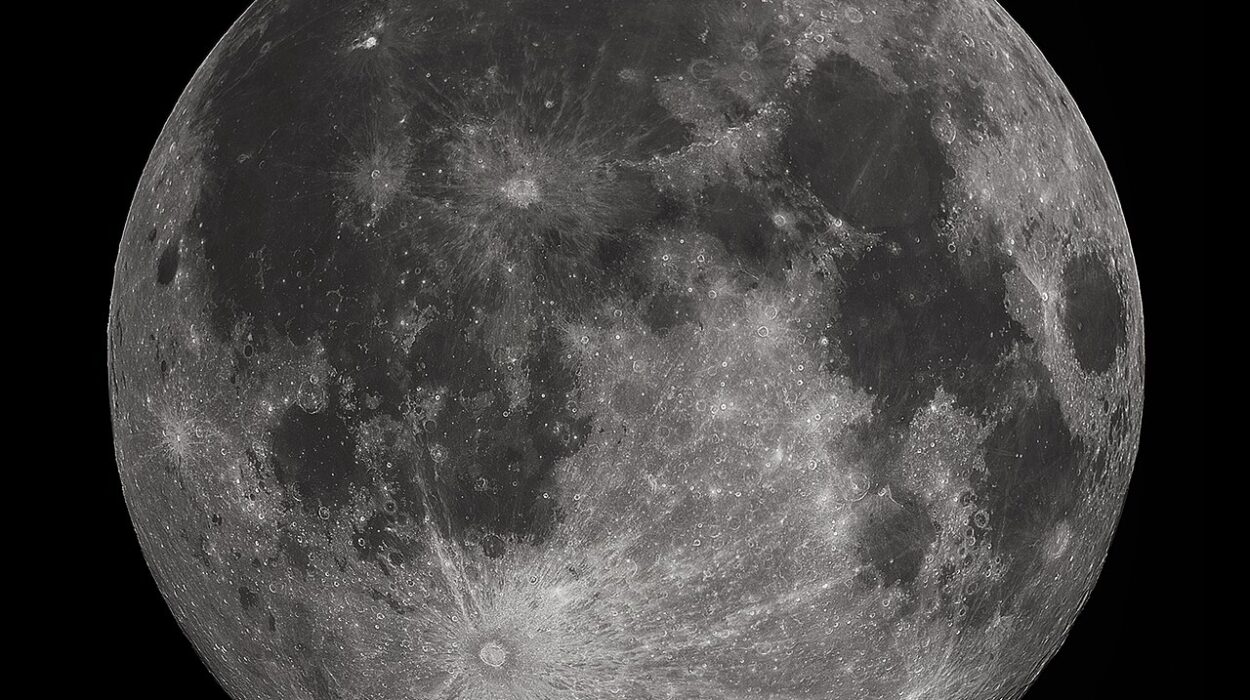
Contrary to what many people assume, the Moon does not produce its own light. It appears bright because it reflects sunlight. The Sun illuminates the Moon’s surface, and some of that light travels across space to reach our eyes.
The Moon acts much like a giant cosmic mirror, although it reflects only a small fraction of the sunlight that strikes it. Despite this relatively low reflectivity, it appears bright because it is so close to Earth.
As the Moon orbits Earth, different portions of its sunlit side become visible, creating the familiar phases of the Moon. Sometimes we see a crescent, sometimes a half moon, and sometimes a full moon.
A lunar eclipse can only occur during one specific phase: the full moon.
This requirement exists because a lunar eclipse depends on a particular alignment involving the Sun, Earth, and Moon.
What Exactly Is a Lunar Eclipse?
A lunar eclipse occurs when Earth moves directly between the Sun and the Moon, causing Earth’s shadow to fall on the lunar surface.
Imagine shining a flashlight toward a wall while holding a ball in front of the light. The ball blocks some of the light and creates a shadow. In a similar way, Earth blocks sunlight and casts a shadow into space.
When the Moon passes through this shadow, a lunar eclipse takes place.
The alignment can be visualized as a straight line. The Sun sits on one side, Earth occupies the middle position, and the Moon lies on the opposite side.
As the Moon enters Earth’s shadow, sunlight can no longer illuminate it directly. The result is a gradual darkening of the lunar disk.
Depending on the exact alignment, the eclipse may be partial or total.
The process is entirely natural and predictable, governed by the orbital motions of Earth and the Moon.
Earth’s Shadow in Space
Many people are surprised to learn that Earth constantly casts a shadow into space.
Because Earth blocks sunlight, a cone-shaped shadow extends away from the Sun. This shadow stretches for nearly 1.4 million kilometers.
The shadow contains two important regions.
The outer portion is called the penumbra.
Within the penumbra, Earth blocks only part of the Sun’s light. An observer located there would see the Sun partially obscured by Earth.
The inner region is called the umbra.
Inside the umbra, Earth completely blocks direct sunlight. This area forms the darkest part of the shadow.
The type of lunar eclipse that occurs depends on how deeply the Moon enters these shadow regions.
Why Lunar Eclipses Do Not Happen Every Month
At first glance, lunar eclipses might seem like they should occur every full moon.
After all, the Moon orbits Earth once every month. If Earth is between the Sun and Moon during every full moon, why doesn’t the Moon pass through Earth’s shadow each time?
The answer involves the tilt of the Moon’s orbit.
The Moon’s orbital path is inclined by about five degrees relative to Earth’s orbital plane around the Sun.
Because of this slight tilt, the Moon usually passes above or below Earth’s shadow during a full moon.
Most months, the alignment is close but not perfect.
Only when a full moon occurs near one of the points where the Moon’s orbit crosses Earth’s orbital plane can a lunar eclipse happen.
This requirement makes lunar eclipses relatively uncommon events.
The Different Types of Lunar Eclipses
Not all lunar eclipses look the same.
The most subtle type is the penumbral lunar eclipse.
During this event, the Moon passes only through Earth’s penumbra. Because the penumbra blocks only part of the sunlight, the dimming is often difficult to notice. Casual observers may not even realize an eclipse is occurring.
A partial lunar eclipse is more dramatic.
In this case, part of the Moon enters Earth’s umbra while the rest remains illuminated. A dark shadow appears to take a bite out of the Moon’s disk, gradually covering a larger portion before receding.
The most spectacular variety is the total lunar eclipse.
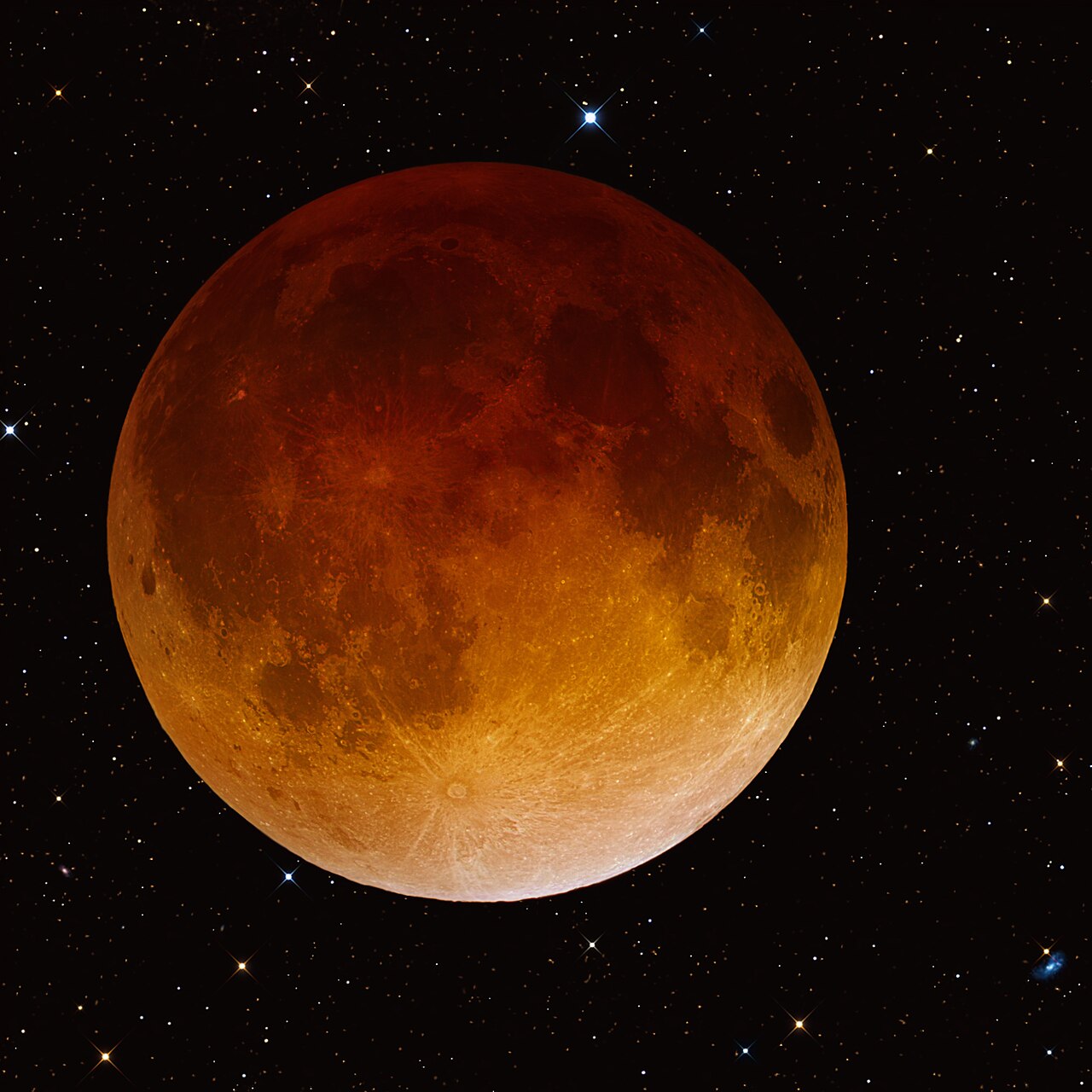
During a total eclipse, the entire Moon moves into Earth’s umbra. Instead of disappearing completely, it often glows with a stunning reddish color.
This transformation creates one of the most beautiful sights in astronomy.
The Journey Into Darkness
A total lunar eclipse unfolds gradually over several hours.
The event begins when the Moon enters Earth’s penumbra.
At first, the change may be difficult to detect. The lunar surface simply appears slightly dimmer than usual.
As the Moon approaches the umbra, the eclipse becomes more noticeable.
A dark shadow begins creeping across the Moon. This shadow appears remarkably curved because it is cast by Earth’s round shape.
Ancient Greek philosophers used this curved shadow as evidence that Earth is spherical.
As more of the Moon enters the umbra, the bright lunar surface steadily disappears.
Eventually, the entire Moon becomes immersed in Earth’s darkest shadow.
At this point, totality begins.
This is when the Moon often transforms into a glowing red orb.
Why Doesn’t the Moon Vanish Completely?
One of the most fascinating aspects of a total lunar eclipse is that the Moon remains visible.
If Earth completely blocks sunlight, shouldn’t the Moon become invisible?
The answer lies in Earth’s atmosphere.
Although Earth blocks direct sunlight, our atmosphere bends some sunlight around the edges of the planet.
This phenomenon is known as refraction.
The atmosphere acts like a giant lens, redirecting a small amount of sunlight into Earth’s shadow.
Without an atmosphere, total lunar eclipses would be far darker.
The Moon might become almost completely invisible.
Instead, Earth’s atmosphere allows some light to reach the lunar surface even during totality.
But not all colors of sunlight survive the journey equally.
This is where the famous red color originates.
Why the Moon Turns Blood Red
The blood-red appearance of the Moon during a total lunar eclipse results from the way Earth’s atmosphere interacts with sunlight.
Sunlight appears white, but it actually contains all the colors of the visible spectrum.
As sunlight passes through Earth’s atmosphere, different colors behave differently.
Shorter wavelengths, such as blue and violet light, scatter easily when they encounter molecules and tiny particles in the atmosphere.
This process, known as Rayleigh scattering, is also responsible for Earth’s blue daytime sky.
Longer wavelengths, such as red and orange light, scatter much less.
As sunlight travels through Earth’s atmosphere, much of the blue light gets scattered away.
The remaining light becomes increasingly red.
During a lunar eclipse, this reddened sunlight is bent into Earth’s shadow and reaches the Moon.
The Moon reflects this red light back toward Earth.
As a result, observers see a reddish lunar disk glowing in the darkness.
In essence, the eclipsed Moon is illuminated by sunlight filtered through every sunrise and sunset occurring around Earth’s edge at that moment.
A Moon Lit by Every Sunrise and Sunset on Earth
One of the most poetic ways to understand a Blood Moon is to imagine all the sunrises and sunsets on Earth working together.
At any given moment during a total lunar eclipse, sunlight passes through Earth’s atmosphere around the planet’s circumference.
From the Moon’s perspective, Earth appears as a dark disk surrounded by a glowing red ring.
That ring consists of sunlight filtering through Earth’s atmosphere.
The same atmospheric effects that create colorful sunsets also create the red illumination reaching the Moon.
The eclipsed Moon is therefore lit by the combined glow of countless sunrises and sunsets occurring simultaneously around Earth.
This remarkable perspective transforms a lunar eclipse into something even more beautiful.
The red Moon is not simply a shadowed object.
It is illuminated by the filtered light of an entire planet.
Why Some Blood Moons Are Brighter Than Others
Not every total lunar eclipse produces the same shade of red.
Some eclipses create a bright copper-colored Moon.
Others generate a deep crimson appearance.
Occasionally, the Moon becomes so dark that it is difficult to see.
The difference depends largely on Earth’s atmosphere.
Dust, volcanic ash, smoke, pollution, and atmospheric conditions influence how much sunlight reaches the Moon.
After major volcanic eruptions, large quantities of particles can enter the upper atmosphere.
These particles block and scatter more sunlight.
As a result, total lunar eclipses may appear darker than usual.
Atmospheric clarity plays a significant role in determining the Moon’s final appearance.
This means every total lunar eclipse possesses its own unique character.
Ancient Reactions to Blood Moons
Long before people understood atmospheric scattering and orbital mechanics, lunar eclipses inspired awe and fear.
Many ancient cultures interpreted blood-red moons as supernatural signs.
Some civilizations believed a dragon, serpent, or celestial creature was devouring the Moon.
Others saw eclipses as warnings of disaster, war, famine, or political upheaval.
In some regions, people beat drums, rang bells, or made loud noises to frighten away the creature supposedly attacking the Moon.
Without scientific explanations, these reactions were understandable.
The sudden transformation of a bright full moon into a red glowing sphere must have seemed extraordinary.
Even today, knowing the science does not entirely remove the emotional impact of witnessing such an event.
Lunar Eclipses in Ancient Astronomy
Despite myths and fears, lunar eclipses also played an important role in the development of astronomy.
Ancient observers carefully recorded eclipse events.
These records helped early astronomers identify patterns in celestial motion.
Babylonian astronomers became particularly skilled at predicting eclipses.
Their observations laid foundations for future astronomical studies.
The Greeks also used lunar eclipses to gain insights into Earth’s shape.
The curved shadow visible during eclipses provided compelling evidence that Earth is round.
Centuries before space travel, lunar eclipses helped reveal fundamental truths about our planet.
How Scientists Predict Lunar Eclipses
Modern eclipse predictions are astonishingly precise.
Astronomers can calculate the timing of lunar eclipses years, decades, and even centuries into the future.
These predictions rely on detailed knowledge of orbital mechanics.
Earth and the Moon move according to well-understood gravitational laws.
By tracking their positions and motions, scientists can determine exactly when alignments will occur.
Computers now perform these calculations with incredible accuracy.
As a result, eclipse schedules can be published long before the events take place.
Observers often know the exact minute when each phase of an eclipse will begin and end.
The Role of Gravity
Gravity is the invisible force responsible for lunar eclipses.
Earth’s gravity keeps the Moon in orbit.
The Moon’s gravity influences Earth’s tides.
Meanwhile, the Sun’s gravity affects both bodies.
The interactions among these gravitational forces determine the positions of Earth, Moon, and Sun.
Without gravity, the precise alignments necessary for eclipses would never occur.
The elegant dance of celestial mechanics that produces lunar eclipses is ultimately governed by gravity.
Every eclipse serves as a visible reminder of these cosmic forces at work.
Viewing a Lunar Eclipse Safely
One advantage of lunar eclipses is that they are completely safe to observe.
Unlike solar eclipses, which require eye protection, lunar eclipses pose no danger to human vision.
The Moon merely reflects sunlight.
Observers can watch every stage of the eclipse without special equipment.
Binoculars reveal additional detail.
Telescopes provide even closer views of the changing lunar surface.
Yet many people find that the naked-eye experience remains the most memorable.
Watching the Moon slowly change color against the backdrop of stars creates a powerful connection with the night sky.
The Difference Between Lunar and Solar Eclipses
People often confuse lunar eclipses with solar eclipses.
Although both involve alignments of Earth, Moon, and Sun, they occur in opposite arrangements.
During a solar eclipse, the Moon passes between Earth and the Sun.
The Moon’s shadow falls on Earth.
During a lunar eclipse, Earth passes between the Sun and Moon.
Earth’s shadow falls on the Moon.
Solar eclipses are visible only from narrow regions of Earth.
Lunar eclipses can be seen from anywhere on Earth’s night side.
This makes lunar eclipses accessible to a much larger audience.
Millions of people can witness the same eclipse simultaneously.
Supermoons and Blood Moons
Sometimes a lunar eclipse coincides with a supermoon.
A supermoon occurs when a full moon happens near the point where the Moon is closest to Earth in its orbit.
Because the Moon is slightly closer, it appears somewhat larger and brighter than usual.
When a total lunar eclipse occurs during a supermoon, the event is often called a Blood Moon supermoon.
These events generate significant public interest because they combine two striking astronomical phenomena.
The resulting spectacle can be particularly dramatic.
The Moon’s Color Beyond Red
Although “Blood Moon” is a popular term, the eclipsed Moon does not always appear pure red.
Its color can vary considerably.
Observers may see shades of orange, copper, rust, brown, crimson, or even deep gray.
Atmospheric conditions influence the exact appearance.
The human eye also perceives color differently under low-light conditions.
As a result, descriptions of the same eclipse can vary among observers.
This variability adds to the uniqueness of each event.
Lunar Eclipses and Space Exploration
Lunar eclipses are valuable scientific opportunities.
Researchers study how Earth’s atmosphere affects the light reaching the Moon.
Measurements taken during eclipses can provide information about atmospheric composition and conditions.
Spacecraft orbiting the Moon have also observed lunar eclipses from unique perspectives.
These observations help scientists better understand both Earth and the Moon.
Even in the age of advanced space missions, lunar eclipses remain scientifically useful.
Could Other Planets Experience Lunar Eclipses?
Earth is not unique in experiencing eclipses.
Many planets with moons can experience similar events.
For example, moons orbiting Jupiter and Saturn frequently pass through their planets’ shadows.
Observers standing on those moons would witness eclipse phenomena unlike anything seen on Earth.
Each planetary system produces its own variations depending on the sizes of the planet, moon, and star involved.
Studying eclipses elsewhere helps astronomers understand how common these events are throughout the universe.
The Emotional Power of a Blood Moon
Scientific explanations reveal how lunar eclipses occur, but they do not diminish their emotional impact.
Watching a bright full moon gradually fade into darkness creates a sense of wonder.
As the Moon turns red, the familiar becomes unfamiliar.
Something we have seen countless times suddenly appears transformed.
This experience connects modern observers with countless generations of people who watched the same phenomenon.
Ancient kings, farmers, sailors, astronomers, poets, and children all looked upward and wondered about the changing Moon.
Today we understand the science behind the event, yet the sense of awe remains.
Perhaps that is part of what makes lunar eclipses so special.
They remind us that knowledge and wonder can coexist.
What Lunar Eclipses Teach Us About the Universe
A lunar eclipse demonstrates several important scientific principles simultaneously.
It reveals the geometry of the Earth-Moon-Sun system.
It showcases the behavior of light.
It illustrates the effects of Earth’s atmosphere.
It highlights the role of gravity in shaping celestial motion.
Most importantly, it shows that the universe operates according to consistent natural laws.
The same principles that explain a lunar eclipse also govern countless other phenomena across the cosmos.
By understanding eclipses, we gain insight into the broader workings of nature.
Conclusion
A lunar eclipse is one of the most beautiful and accessible astronomical events visible from Earth. It occurs when Earth moves directly between the Sun and the Moon, causing Earth’s shadow to fall across the lunar surface. As the Moon enters the deepest part of that shadow, it often transforms into a glowing reddish orb known as a Blood Moon.
This remarkable color arises because Earth’s atmosphere bends and filters sunlight. Blue wavelengths are scattered away, while red and orange light pass through more effectively and are redirected into Earth’s shadow. The Moon then reflects this reddish light back toward Earth, creating the breathtaking appearance that has fascinated humanity for thousands of years.
Throughout history, blood-red moons inspired myths, fears, religious interpretations, and scientific curiosity. Today, astronomy provides a clear explanation for the phenomenon, yet the experience remains every bit as captivating. A total lunar eclipse is more than a lesson in celestial mechanics—it is a reminder of the intricate connections between Earth, the Moon, the Sun, and the atmosphere surrounding our world.
Every time the Moon turns red, we witness an extraordinary cosmic alignment unfolding above us. It is a moment when science, beauty, history, and wonder come together in the night sky, inviting us to look upward and appreciate the remarkable universe we inhabit.