On a clear night, few sights are as familiar and comforting as the Moon. For thousands of years, people have looked up at it and wondered about its changing appearance. Some nights it shines as a brilliant full circle, lighting up the landscape below. On other nights it appears as a delicate crescent hanging low in the sky. Sometimes it seems to disappear altogether.
These changes have fascinated humanity since ancient times. Long before telescopes existed, people carefully watched the Moon and noticed its repeating cycle. Farmers used it to track seasons. Sailors relied on it during long voyages. Ancient civilizations built calendars around its movements. Myths, legends, and religious traditions across the world were shaped by its ever-changing face.
At first glance, it might seem as though the Moon is actually changing shape. But the truth is even more interesting. The Moon itself remains essentially the same. What changes is the portion of its sunlit surface that we can see from Earth.
This regular pattern, known as the lunar phases, is one of the most beautiful examples of celestial motion. It is a cosmic dance involving the Earth, the Moon, and the Sun—a dance that has continued for billions of years and will continue long after our own lifetimes.
Understanding the phases of the Moon not only helps us appreciate the night sky but also reveals important insights about gravity, orbital motion, eclipses, tides, and the workings of our solar system.
Meet Earth’s Constant Companion
Before exploring the Moon’s phases, it helps to understand what the Moon actually is.
The Moon is Earth’s only natural satellite. It orbits our planet at an average distance of about 384,400 kilometers (238,855 miles). Although that sounds far away, the Moon is actually one of the closest objects in space.
Its diameter is about 3,474 kilometers (2,159 miles), making it roughly one-quarter the width of Earth. If Earth were the size of a basketball, the Moon would be about the size of a tennis ball.
The Moon has no light of its own. This is an important fact that explains everything about lunar phases.
Many people casually talk about “moonlight,” but the Moon does not generate light the way the Sun does. Instead, the Moon reflects sunlight. The bright glow we see in the night sky is sunlight bouncing off the Moon’s surface and traveling to Earth.
Just as a mirror reflects light from a lamp, the Moon reflects light from the Sun.
Because sunlight illuminates one side of the Moon at all times, half of the Moon is always lit while the other half remains dark.
The changing phases occur because our view of that illuminated half changes as the Moon travels around Earth.
The Moon Is Always Half Illuminated
One of the biggest misconceptions about lunar phases is the idea that the Moon becomes partly lit and partly dark as it changes shape.
In reality, half of the Moon is almost always illuminated by sunlight.
Imagine holding a ball under a lamp in a dark room. The side facing the lamp will be brightly lit, while the opposite side remains in shadow.
The Moon behaves the same way.
No matter where the Moon is in its orbit, sunlight always illuminates one hemisphere. What changes is the angle from which we observe it.
Sometimes we can see nearly the entire sunlit half.
Sometimes we can see only a small portion.
Sometimes the illuminated side faces mostly away from Earth.
The apparent shape we see depends entirely on geometry.
The Moon is not changing shape at all. Our perspective is changing.
The Cosmic Dance of Earth, Moon, and Sun
The phases of the Moon occur because of the constantly changing positions of three objects: the Earth, the Moon, and the Sun.
The Moon travels around Earth in an orbit that takes approximately 27.3 days relative to the stars. However, because Earth is also moving around the Sun, the complete cycle of lunar phases takes about 29.5 days.
This period is known as a lunar month or synodic month.
As the Moon moves around Earth, different portions of its sunlit side become visible from our perspective.
Sometimes the Moon is positioned between Earth and the Sun.
Sometimes Earth is between the Moon and the Sun.
At other times, the Moon occupies positions in between.
These changing angles create the familiar sequence of lunar phases that repeats month after month.
The New Moon: The Beginning of the Cycle
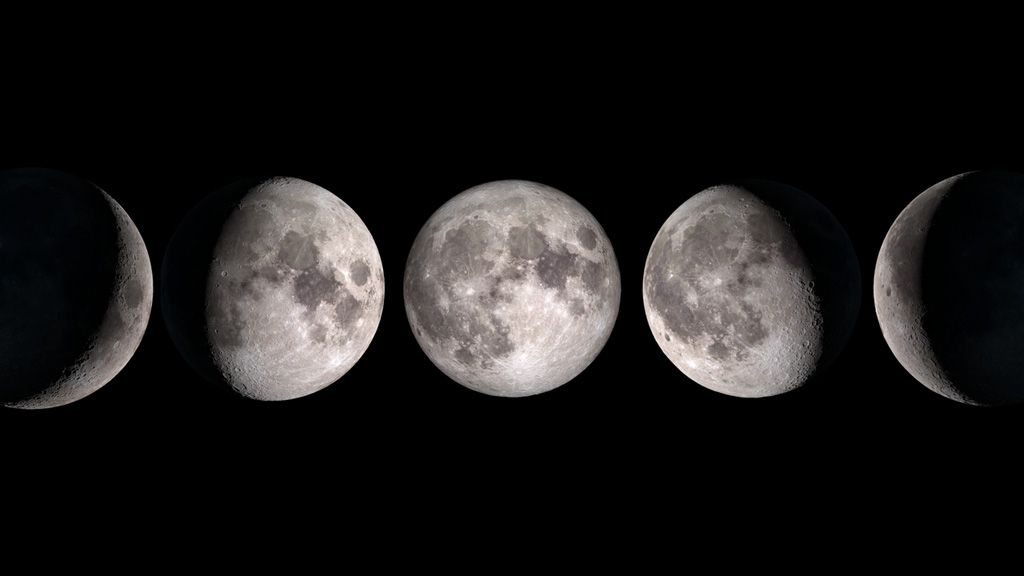
The lunar cycle begins with the new moon.
During this phase, the Moon lies roughly between Earth and the Sun.
The side facing the Sun is brightly illuminated, but the side facing Earth remains dark.
As a result, the Moon becomes nearly invisible from our viewpoint.
Many people think the Moon disappears during the new moon phase. In reality, it is still there, but the illuminated side faces away from us.
The new moon marks the start of a fresh lunar cycle.
Because the Moon is close to the Sun in the sky during this phase, its glare makes the Moon difficult or impossible to see.
The night sky becomes darker without bright moonlight.
Astronomers often appreciate new moon nights because they provide ideal conditions for observing faint stars, galaxies, and nebulae.
The Waxing Crescent: A Sliver of Light Appears
Shortly after the new moon, a thin crescent begins to emerge.
This phase is called the waxing crescent.
The word “waxing” means growing.
As the Moon continues its orbit, a small portion of the sunlit side becomes visible from Earth.
A delicate curve of light appears against the darkness.
Many people find the crescent moon especially beautiful. Its graceful shape has inspired poetry, art, and symbolism across cultures.
The waxing crescent grows a little larger each evening.
As more of the illuminated hemisphere comes into view, the Moon appears brighter and more prominent.
At this stage, observers can often see a phenomenon called Earthshine.
Earthshine occurs when sunlight reflects off Earth and faintly illuminates the Moon’s dark side. The result is a ghostly glow surrounding the bright crescent.
This subtle effect creates one of the most enchanting sights in the night sky.
The First Quarter: Half a Moon
About a week after the new moon, the Moon reaches the first quarter phase.
Despite the name, the Moon appears half illuminated.
The term “first quarter” refers not to how much of the Moon is lit but to the Moon’s position in its orbit. It has completed approximately one-quarter of its journey around Earth.
From our perspective, exactly half of the visible lunar disk appears illuminated.
The dividing line between the bright and dark regions is called the terminator.
This boundary is particularly interesting because shadows along the terminator highlight craters, mountains, and valleys on the Moon’s surface.
Through binoculars or a telescope, the first quarter moon often reveals striking details.
The contrast between light and shadow creates dramatic landscapes that are easier to observe than during a full moon.
The Waxing Gibbous: Growing Toward Fullness
After the first quarter, the Moon enters the waxing gibbous phase.
The term “gibbous” refers to a shape that is more than half illuminated but not yet full.
Each night, the illuminated portion expands.
The Moon becomes brighter and dominates more of the evening sky.
This stage can last for several days.
Many people overlook the waxing gibbous phase because they focus on crescents or full moons. Yet it offers some of the most beautiful views through telescopes.
As sunlight strikes the lunar surface at changing angles, mountains and craters become vividly visible.
The Moon appears to be steadily preparing for its grandest appearance.
The Full Moon: Maximum Illumination
The full moon is the phase most people recognize instantly.
During a full moon, Earth lies roughly between the Moon and the Sun.
The entire sunlit hemisphere faces Earth.
As a result, the Moon appears as a brilliant circular disk.
A full moon can be breathtaking.
Its bright light illuminates fields, forests, mountains, and oceans.
For countless generations, full moons guided travelers through the darkness and inspired stories, songs, and celebrations.
Interestingly, the Moon is not actually brighter because it produces more light during this phase.
We simply see the maximum amount of reflected sunlight.
The full moon rises around sunset and remains visible throughout the night.
Its presence transforms the appearance of the landscape and often creates an emotional connection between people and the natural world.
The Waning Gibbous: The Moon Begins to Shrink
After the full moon, the illuminated portion begins decreasing.
This phase is called the waning gibbous.
The word “waning” means shrinking.
Although the Moon still appears mostly illuminated, a small dark region begins to emerge.
Night after night, the bright portion gradually decreases.
The lunar cycle now enters its second half.
The waning gibbous often rises later in the evening and remains visible well into the morning.
Many early risers become familiar with this phase as they see the Moon lingering in the dawn sky.
The Last Quarter: Another Half Moon
About three weeks into the cycle, the Moon reaches the last quarter phase.
Like the first quarter, half of the visible lunar disk appears illuminated.
Again, the name refers to the Moon’s orbital position rather than the amount of light visible.
The last quarter occurs when the Moon has completed approximately three-quarters of its journey around Earth.
This phase is particularly common in the early morning sky.
People who wake before sunrise often see the last quarter moon hanging overhead while the eastern horizon begins to brighten.
Its appearance mirrors the first quarter, but the illuminated side is opposite.
The Waning Crescent: The Final Sliver
The final phase before a new moon is the waning crescent.
Only a narrow crescent of sunlight remains visible.
Each day, the illuminated portion becomes thinner.
Eventually, the Moon approaches the position where its sunlit side faces away from Earth.
The cycle is nearly complete.
The waning crescent often appears shortly before sunrise.
Its delicate shape can create a peaceful and reflective atmosphere.
Many skywatchers consider this phase one of the most beautiful because it is less commonly observed than the evening crescent.
Soon afterward, the Moon reaches the new moon phase once again, and the entire cycle repeats.
Why the Same Side of the Moon Faces Earth
One fascinating aspect of the Moon is that we always see nearly the same side.
This phenomenon results from tidal locking.
The Moon rotates on its axis while also orbiting Earth.
Remarkably, it takes approximately the same amount of time to complete one rotation as it takes to complete one orbit.
Because these periods match, the same hemisphere remains pointed toward Earth.
For centuries, humans never saw the Moon’s far side.
Only with the advent of space exploration did we finally obtain images of the hemisphere hidden from Earth.
Despite popular expressions, the far side is not permanently dark.
It receives sunlight just like the near side.
It simply faces away from us.
Why Lunar Phases Are Not Eclipses
Many people initially assume lunar phases occur because Earth’s shadow falls on the Moon.
This idea seems logical but is incorrect.
The phases result from changing viewing angles, not shadows cast by Earth.
Earth’s shadow only becomes important during a lunar eclipse.
Most months, the Moon passes slightly above or below Earth’s shadow because its orbit is tilted relative to Earth’s orbit around the Sun.
As a result, lunar phases occur regularly every month, while eclipses are comparatively rare.
Understanding this distinction helps clarify one of astronomy’s most common misconceptions.
The Difference Between Lunar Phases and Lunar Eclipses
A lunar eclipse occurs when Earth moves directly between the Sun and the Moon.
In this situation, Earth’s shadow falls across the lunar surface.
The Moon may appear darkened or take on a reddish color.
This is entirely different from normal lunar phases.
Phases happen every month because of geometry.
Eclipses happen only when Earth, Moon, and Sun align precisely.
Because such alignments are uncommon, eclipses are much rarer than lunar phases.
The distinction highlights the complexity and beauty of celestial mechanics.
How the Moon Influences Earth’s Tides
The Moon does more than provide beautiful phases.
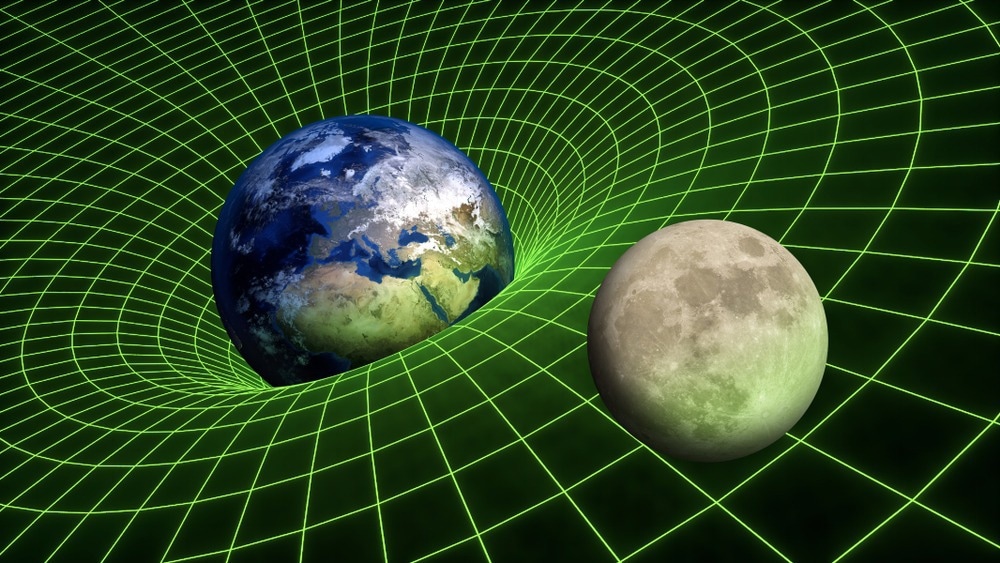
Its gravitational pull affects Earth’s oceans.
As the Moon orbits Earth, gravity creates bulges in ocean water.
These bulges produce tides.
The relationship between lunar phases and tides is particularly important.
During new and full moons, the Sun, Earth, and Moon align more closely.
Their gravitational forces combine to produce especially strong tides known as spring tides.
During first and last quarter phases, the gravitational influences partially offset each other.
This produces weaker tides called neap tides.
The connection between lunar phases and ocean tides demonstrates how closely Earth and the Moon are linked.
How Ancient Civilizations Used Lunar Phases
Long before modern astronomy, people carefully tracked the Moon’s changing appearance.
Ancient civilizations recognized that lunar phases followed a predictable cycle.
Many cultures developed calendars based on lunar months.
Farmers used the Moon to help organize agricultural activities.
Religious ceremonies were often timed according to lunar cycles.
Navigation, hunting, fishing, and storytelling frequently incorporated lunar knowledge.
The Moon served as one of humanity’s earliest clocks.
Its predictable rhythm helped societies understand the passage of time.
Even today, many traditional calendars retain strong connections to lunar phases.
The Moon in Mythology and Culture
Because lunar phases are so noticeable, they became deeply woven into human culture.
Many ancient societies viewed the Moon as a deity or supernatural force.
Its changing appearance seemed mysterious and magical.
Some cultures associated the waxing moon with growth and renewal.
The full moon symbolized abundance, power, or enlightenment.
The waning moon represented decline, reflection, or transformation.
These symbolic meanings appeared in myths, religious practices, literature, and folklore around the world.
Although modern science explains lunar phases through orbital mechanics, the emotional impact of the Moon remains remarkably powerful.
People still gather to watch full moons rise and feel a sense of wonder beneath their glow.
Can Lunar Phases Affect Human Behavior?
For centuries, stories have linked full moons to unusual behavior.
The very word “lunacy” comes from ancient beliefs connecting the Moon to mental disturbances.
Modern scientific studies, however, have found little convincing evidence that lunar phases significantly influence human behavior.
While people often remember unusual events occurring during full moons, they may overlook similar events at other times.
This tendency can create the illusion of a connection.
The Moon certainly affects tides through gravity, but current evidence suggests it does not dramatically alter human actions, emotions, or health.
Nevertheless, the belief remains widespread because the full moon is visually striking and culturally significant.
Exploring the Moon Up Close
The space age transformed our understanding of the Moon.
Spacecraft revealed details that were impossible to observe from Earth.
Astronauts walked on the lunar surface and collected rock samples.
Scientists learned about the Moon’s geology, history, and formation.
These missions showed that the Moon is a complex world filled with impact craters, volcanic plains, mountains, and valleys.
The familiar phases remained the same, but humanity gained a deeper appreciation for the object behind them.
The Moon became not merely a bright light in the sky but a real place that humans had visited.
How the Moon Formed
Current scientific evidence suggests the Moon formed about 4.5 billion years ago.
The leading explanation is known as the giant impact hypothesis.
According to this theory, a Mars-sized object collided with the young Earth.
The impact ejected enormous amounts of material into space.
Over time, this debris gathered together and formed the Moon.
This dramatic event helped shape both Earth and its satellite.
Without the Moon, our planet might be very different.
Its presence influences Earth’s rotation, stabilizes the planet’s tilt, and contributes to long-term climate stability.
The lunar phases we enjoy today are a consequence of a relationship forged billions of years ago.
Why the Moon Will Always Fascinate Us
The Moon occupies a special place in human experience.
Unlike distant planets or remote galaxies, it feels close and familiar.
Children notice it.
Poets write about it.
Scientists study it.
Lovers admire it.
Travelers navigate by it.
Its phases create a sense of rhythm in the sky.
Night after night, month after month, the Moon changes in a predictable yet captivating way.
These transformations remind us that the universe is not static.
Everything is moving.
Everything is connected.
The Earth, Moon, and Sun participate in an endless celestial dance that unfolds above us every night.
Conclusion
The phases of the Moon are among the most beautiful and accessible phenomena in astronomy. Although the Moon may appear to change shape throughout the month, its form remains the same. What changes is our view of the sunlit portion of its surface as it orbits Earth.
From the invisible new moon to the brilliant full moon and back again, the lunar cycle unfolds over approximately 29.5 days. This repeating sequence results from the constantly changing positions of the Earth, Moon, and Sun. The phases are not caused by Earth’s shadow but by simple geometry and perspective.
Understanding lunar phases reveals much more than why the Moon changes appearance. It helps explain tides, eclipses, calendars, and the motions of celestial bodies throughout the solar system. It connects modern science with ancient traditions and reminds us of humanity’s long relationship with the night sky.
Every time you look up and see a crescent moon, a glowing half moon, or a dazzling full moon, you are witnessing a process that has continued for billions of years. The Moon’s changing face is not merely an astronomical event. It is a timeless reminder of our connection to the cosmos and the remarkable celestial mechanics that shape the world above us.