For thousands of years, humanity could only look up at the night sky and wonder. Ancient civilizations mapped the stars, philosophers imagined countless worlds, and astronomers gradually uncovered the motions of planets and galaxies. Yet even with centuries of progress, much of the universe remained hidden just beyond the reach of our telescopes.
Then the 21st century arrived.
In just a few decades, astronomy entered a golden age unlike any before. New generations of space telescopes, giant ground-based observatories, powerful computers, gravitational-wave detectors, and planetary missions transformed our understanding of the cosmos. Scientists discovered thousands of alien worlds, photographed a black hole for the first time, detected ripples in spacetime, explored mysterious icy moons, and peered farther into the early universe than ever imagined.
Perhaps most astonishing is that many of these discoveries were once considered impossible. Today, they form the foundation of modern astronomy and continue to reshape our understanding of where we came from and whether we are alone in the universe.
Here are fifteen of the biggest astronomy discoveries of the 21st century that changed humanity’s view of the cosmos forever.
1. The Discovery of Thousands of Exoplanets
One of the greatest revolutions in modern astronomy has been the discovery of planets orbiting stars beyond our own Sun.
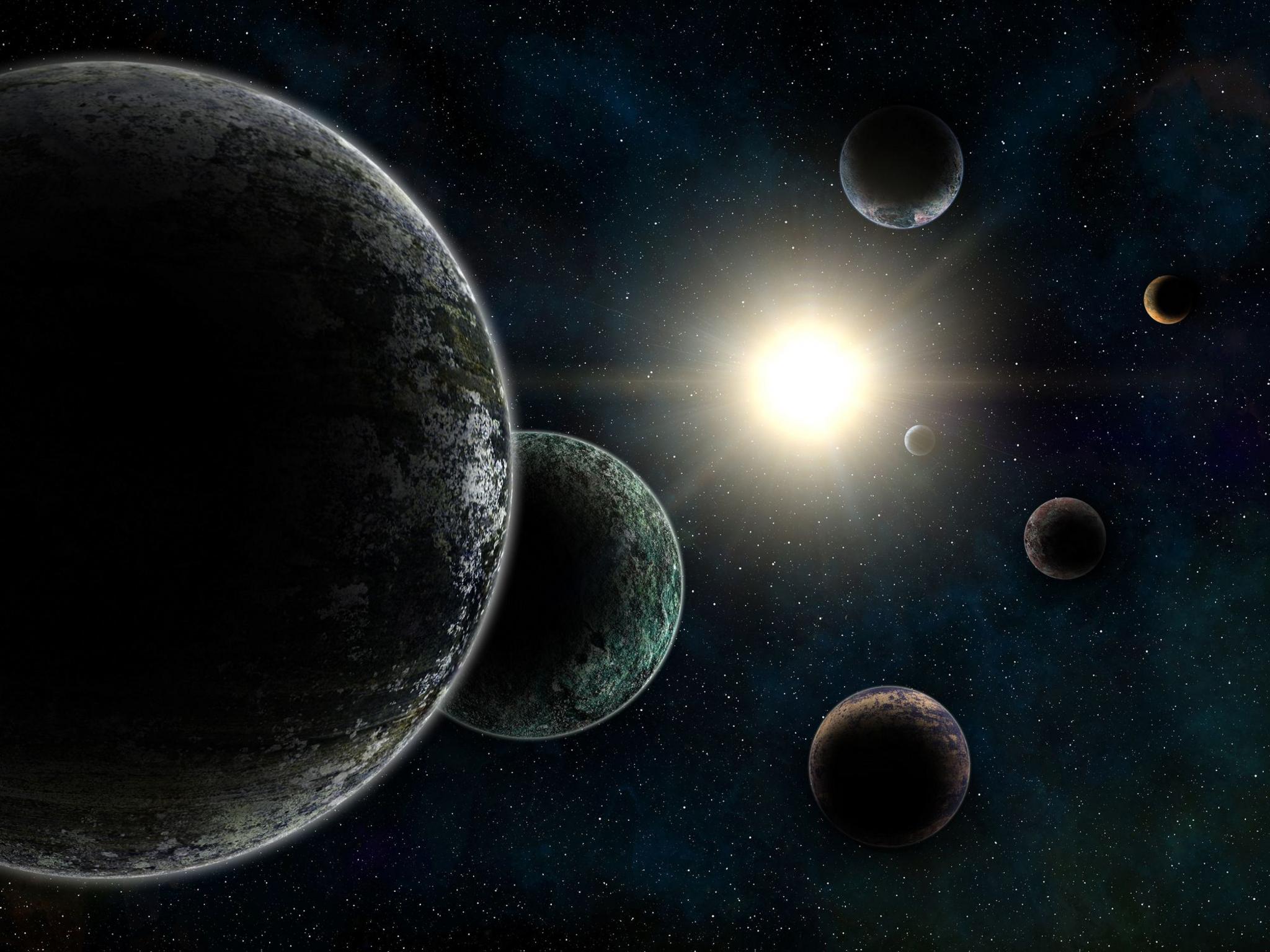
Although the first confirmed exoplanet around a Sun-like star was discovered in 1995, it was during the 21st century that scientists realized just how common these worlds truly are. NASA’s Kepler Space Telescope, launched in 2009, transformed the field by continuously monitoring more than 150,000 stars for tiny dips in brightness caused when planets crossed in front of them.
The results were astonishing.
Kepler confirmed thousands of exoplanets and revealed that our galaxy is filled with planetary systems. Today, astronomers have confirmed well over 5,000 exoplanets, ranging from scorching lava worlds to giant gas planets larger than Jupiter and rocky Earth-sized planets that may possess oceans.
Perhaps the most profound realization is that planets appear to be the rule rather than the exception. The Milky Way likely contains hundreds of billions of planets.
The question is no longer whether other worlds exist—it is how many of them might be habitable.
2. The First Direct Image of a Black Hole
For decades, black holes existed only as indirect evidence and mathematical predictions.
Everything changed in April 2019.
The Event Horizon Telescope collaboration released the first direct image of a black hole, capturing the supermassive black hole at the center of the galaxy Messier 87.
The image showed a glowing ring of hot gas surrounding a dark central shadow—the black hole’s event horizon.
Creating this image required linking radio telescopes across Earth into a virtual telescope nearly the size of the planet itself. Massive amounts of data were collected and processed using advanced algorithms.
The achievement confirmed predictions of Einstein’s general relativity under extreme conditions and provided humanity with its first glimpse of one of the universe’s most mysterious objects.
In 2022, the collaboration followed this success by imaging Sagittarius A*, the supermassive black hole at the center of our own Milky Way.
3. The Detection of Gravitational Waves
Albert Einstein predicted gravitational waves in 1916.
Nearly a century later, scientists finally detected them.
In September 2015, the Laser Interferometer Gravitational-Wave Observatory (LIGO) recorded tiny ripples in spacetime created by two merging black holes over a billion light-years away.
The discovery opened an entirely new way of observing the universe.
Until then, astronomy depended almost entirely on electromagnetic radiation such as visible light, radio waves, infrared radiation, X-rays, and gamma rays.
Gravitational waves introduced a completely different cosmic messenger.
Today, astronomers routinely detect collisions involving black holes and neutron stars, allowing scientists to study violent events that often produce little or no light.
Gravitational-wave astronomy has become one of the fastest-growing fields in science.
4. The James Webb Space Telescope Reveals the Early Universe
When the James Webb Space Telescope began scientific operations in 2022, it immediately exceeded expectations.
Its enormous mirror and powerful infrared instruments allowed astronomers to see farther into cosmic history than ever before.
Webb observed galaxies that formed only a few hundred million years after the Big Bang, offering unprecedented insight into the universe’s earliest epochs.
It also revealed breathtaking details inside stellar nurseries, detected water vapor and complex molecules in exoplanet atmospheres, examined distant quasars, and studied planetary systems with remarkable precision.
Rather than replacing the Hubble Space Telescope, Webb extended humanity’s vision into wavelengths Hubble could not observe.
It has rapidly become one of the most productive scientific instruments ever built.
5. Water Beyond Earth Is More Common Than Expected
Water is essential for life as we know it.
During the 21st century, astronomers discovered that water exists throughout the Solar System and beyond.
Evidence accumulated for vast underground oceans beneath the icy surfaces of Jupiter’s moon Europa and Saturn’s moon Enceladus.
Spacecraft detected towering plumes erupting from Enceladus that contain water vapor, salts, and organic compounds.
Mars missions found strong evidence that liquid water once flowed across the planet.
Astronomers also detected water molecules in interstellar clouds, protoplanetary disks, comets, and the atmospheres of some exoplanets.
These discoveries dramatically expanded the number of places where life might potentially exist.
6. Fast Radio Bursts Become One of Astronomy’s Greatest Mysteries
In 2007, astronomers reported an unusual cosmic signal unlike anything previously observed.
Known as Fast Radio Bursts (FRBs), these intense pulses of radio waves last only milliseconds but can release enormous amounts of energy.
Initially, scientists debated whether they were even real.
Today, hundreds have been detected.
Some originate billions of light-years away.
Some repeat.
Others appear only once.
Several have been traced to magnetars—highly magnetized neutron stars—but not all FRBs fit this explanation.
Although many questions remain, FRBs have become valuable tools for studying matter distributed across intergalactic space.
7. The Accelerating Expansion of the Universe Becomes Increasingly Mysterious
Evidence that the universe’s expansion is accelerating first emerged in the late 1990s.
During the 21st century, increasingly precise observations confirmed and refined this astonishing discovery.
Astronomers now attribute this acceleration to an unknown phenomenon called dark energy.
Dark energy appears to make up roughly 68% of the universe’s total energy content, yet its true nature remains one of the greatest unsolved mysteries in physics.
Large galaxy surveys, cosmic microwave background measurements, and supernova observations continue to strengthen the evidence while raising even deeper questions.
Understanding dark energy has become one of modern cosmology’s highest priorities.
8. Pluto Becomes a Surprisingly Complex World
When NASA’s New Horizons spacecraft flew past Pluto in 2015, scientists expected to see a frozen, inactive world.
Instead, Pluto astonished everyone.
The spacecraft revealed enormous nitrogen glaciers, towering mountains made of water ice, possible cryovolcanoes, layered atmospheric hazes, and unexpectedly young landscapes.
The famous heart-shaped region, Sputnik Planitia, became one of the Solar System’s most recognizable geological features.
Rather than a simple icy rock, Pluto emerged as a dynamic world with ongoing geological activity.
The flyby transformed scientists’ understanding of dwarf planets in the outer Solar System.
9. Organic Molecules Found Throughout Space
Astronomers have discovered increasingly complex organic molecules across the universe.
Radio telescopes have detected alcohols, sugars, amino acid precursors, aromatic hydrocarbons, and numerous carbon-containing compounds within interstellar molecular clouds.
The Rosetta mission found complex organic molecules on Comet 67P/Churyumov–Gerasimenko.
Mars missions have identified organic compounds preserved in ancient rocks.
While organic molecules are not evidence of life, they are among life’s essential chemical ingredients.
Their widespread presence suggests that the basic chemistry needed for life may naturally develop in many cosmic environments.
10. Exoplanet Atmospheres Can Be Studied
Finding distant planets was only the beginning.
Astronomers have now learned how to analyze the atmospheres of some exoplanets.
As planets pass in front of their stars, tiny amounts of starlight filter through their atmospheres.
Different gases absorb specific wavelengths of light, allowing scientists to identify atmospheric composition.
Researchers have detected water vapor, carbon dioxide, sodium, methane, and other gases in several exoplanets.
The James Webb Space Telescope has dramatically improved these observations.
Studying alien atmospheres brings scientists closer to identifying potentially habitable worlds and, eventually, searching for possible biosignatures.
11. The Milky Way’s Black Hole Comes Into Focus
For decades, astronomers inferred the existence of a supermassive black hole at the center of the Milky Way by tracking the motions of nearby stars.
Precise observations showed that stars orbit an invisible object containing about four million times the Sun’s mass.
In 2022, the Event Horizon Telescope produced the first image of Sagittarius A*.
Although smaller and more variable than the black hole in M87, the image confirmed long-standing theoretical predictions.
This achievement provided another remarkable test of Einstein’s theory of general relativity.
12. The Earliest Galaxies Were Born Faster Than Expected
One of the James Webb Space Telescope’s most surprising findings has been the discovery of extremely distant galaxies that appear brighter, more massive, and more evolved than many astronomers anticipated.
These galaxies formed only a few hundred million years after the Big Bang.
Their existence suggests that galaxy formation may have proceeded more rapidly than earlier models predicted.
Scientists continue analyzing these observations to determine whether cosmological theories require refinement or whether other explanations account for the unexpected results.
Either way, Webb has already transformed our understanding of the universe’s first billion years.
13. Mars Was Once a Wet World
A fleet of orbiters and rovers has revolutionized our understanding of Mars.
NASA’s Opportunity, Spirit, Curiosity, Perseverance, and other missions, together with spacecraft from ESA, China, India, and the United Arab Emirates, have revealed compelling evidence that ancient Mars possessed rivers, lakes, groundwater systems, deltas, and perhaps even oceans.
Sedimentary rocks, clay minerals, hydrated salts, and ancient shore-like features all indicate that liquid water once persisted for long periods.
Mars is no longer viewed as a planet that was always cold and dry.
Instead, it once had environments potentially capable of supporting microbial life.
14. The Cosmic Web Comes Into Sharper View
Galaxies are not randomly scattered through space.
Instead, they form an immense cosmic web of filaments separated by enormous voids.
Large astronomical surveys conducted during the 21st century have mapped this structure with unprecedented detail.
Projects such as the Sloan Digital Sky Survey and later surveys have measured the positions of millions of galaxies.
These observations help scientists understand how dark matter shapes cosmic evolution and how galaxies grow over billions of years.
The cosmic web represents the largest known structure in the observable universe.
15. Humanity Begins the Search for Life Beyond Earth in Earnest
Perhaps the greatest astronomical discovery of the 21st century is not a single object but a profound shift in perspective.
Scientists now know that planets are everywhere.
Water is widespread.
Organic molecules are common.
Potentially habitable environments exist throughout the Solar System.
Some exoplanets reside within the habitable zones of their stars.
Powerful telescopes can study distant planetary atmospheres.
Future observatories will search for gases that could indicate biological activity.
Although no confirmed evidence of extraterrestrial life has yet been found, astronomy has moved from asking whether suitable environments exist to identifying where they may be.
For the first time in human history, the search for life beyond Earth has become a scientifically testable endeavor rather than philosophical speculation.
Conclusion
The first quarter of the 21st century has transformed astronomy more dramatically than almost any previous period in history. We have discovered that planets crowd our galaxy, witnessed black holes directly, detected gravitational waves, explored Pluto in stunning detail, uncovered hidden oceans beneath icy moons, mapped the universe with unprecedented precision, and looked farther back in time than ever before through the eyes of the James Webb Space Telescope.
Yet perhaps the most exciting realization is that these discoveries are only the beginning. New observatories, next-generation gravitational-wave detectors, giant ground-based telescopes, advanced space missions, and increasingly sophisticated instruments promise even greater breakthroughs in the decades ahead. Questions about dark matter, dark energy, the origins of galaxies, the nature of black holes, and the possibility of life elsewhere remain unanswered.
Every major discovery reminds us that the universe is far larger, stranger, and more beautiful than anyone once imagined. As humanity continues to explore the cosmos, each new observation not only expands scientific knowledge but also deepens our sense of wonder, proving that the greatest discoveries may still be waiting among the stars.