Imagine drifting through space toward one of the most mysterious objects in the universe. At first, everything seems normal. Stars glitter in the distance. Darkness stretches endlessly in every direction. Then you notice something strange. Your feet begin falling faster than your head. The difference is tiny at first, almost impossible to feel. But as you move closer, that difference grows stronger and stronger.
Your body starts stretching.
The force pulling on your feet becomes dramatically greater than the force pulling on your head. At the same time, your body is squeezed from the sides. Every bone, muscle, organ, and cell experiences these extreme stresses.
Eventually, you are transformed into a long, thin stream of matter, stretched across space like a strand of spaghetti.
This bizarre process is known as spaghettification, one of the most dramatic consequences of gravity predicted by modern physics.
Although the name sounds humorous, the science behind it is very real. Spaghettification arises from one of nature’s most powerful phenomena: the intense tidal forces generated by black holes and other extremely massive objects.
The concept captures the imagination because it combines some of the most fascinating ideas in astronomy—gravity, black holes, relativity, and the limits of matter itself. It also reveals how the universe behaves under conditions far beyond anything humans experience on Earth.
To understand spaghettification is to explore one of the strangest and most extreme environments in existence.
Understanding Gravity Beyond Everyday Experience
Gravity feels familiar because we experience it every day.
It keeps our feet on the ground. It causes objects to fall. It governs the motions of planets and moons.
Because gravity is so common, it is easy to assume we understand it completely. Yet the gravity we encounter on Earth is remarkably gentle compared to the forces that exist elsewhere in the cosmos.
The Earth’s gravity is strong enough to hold oceans, mountains, and an atmosphere, but it is tiny compared to the gravitational fields surrounding neutron stars and black holes.
A black hole packs an enormous amount of mass into an incredibly small region of space. This concentration creates gravitational effects so extreme that they challenge our intuition.
Many of the strange phenomena associated with black holes—including spaghettification—occur because gravity behaves very differently under such conditions.
To appreciate why, we must first understand tidal forces.
What Are Tidal Forces?
The key to understanding spaghettification lies in a concept known as tidal force.
A tidal force occurs because gravity weakens with distance.
If you hold an object close to Earth, the part nearest the planet experiences slightly stronger gravity than the part farther away.
Normally, this difference is extremely small.
For example, your feet are slightly closer to Earth’s center than your head. As a result, gravity pulls a tiny bit harder on your feet.
You never notice this difference because it is incredibly weak.
Yet the effect exists.
Tidal forces become significant when an object encounters an extremely strong gravitational field.
The larger the difference in gravitational pull between one part of an object and another, the stronger the tidal force becomes.
This same phenomenon causes ocean tides on Earth.
The Moon’s gravity pulls slightly harder on the side of Earth facing it than on the opposite side. This difference stretches Earth’s oceans, creating tidal bulges.
Spaghettification is essentially the ultimate tidal-force effect.
Why Gravity Changes With Distance
Gravity decreases rapidly as distance increases.
This means that being twice as far from an object does not simply halve the gravitational force—it reduces it much more dramatically.
Near everyday objects, these changes are negligible.
Near black holes, however, small differences in distance can produce enormous differences in gravitational pull.
Imagine standing near a black hole.
Your feet might be only two meters closer to the black hole than your head.
On Earth, that difference would mean almost nothing.
Near a black hole, it could mean the difference between life and complete destruction.
The closer you get, the more dramatic the gravitational gradient becomes.
This gradient is what stretches objects into long, thin shapes.
The Origin of the Term “Spaghettification”
The word “spaghettification” was popularized because it vividly describes what happens during the process.
An object subjected to extreme tidal forces is stretched lengthwise while being compressed sideways.
The result resembles a strand of spaghetti.
Scientists sometimes use the more technical term “tidal stretching,” but spaghettification captures the concept so effectively that it has become widely accepted even in scientific discussions.
The name may sound amusing, yet the underlying physics is serious.
Spaghettification represents one of the most violent transformations matter can experience in the universe.
Black Holes: The Ultimate Gravity Machines
To understand why black holes are so effective at causing spaghettification, we need to understand what black holes actually are.
A black hole forms when an enormous amount of mass collapses into a very small volume.
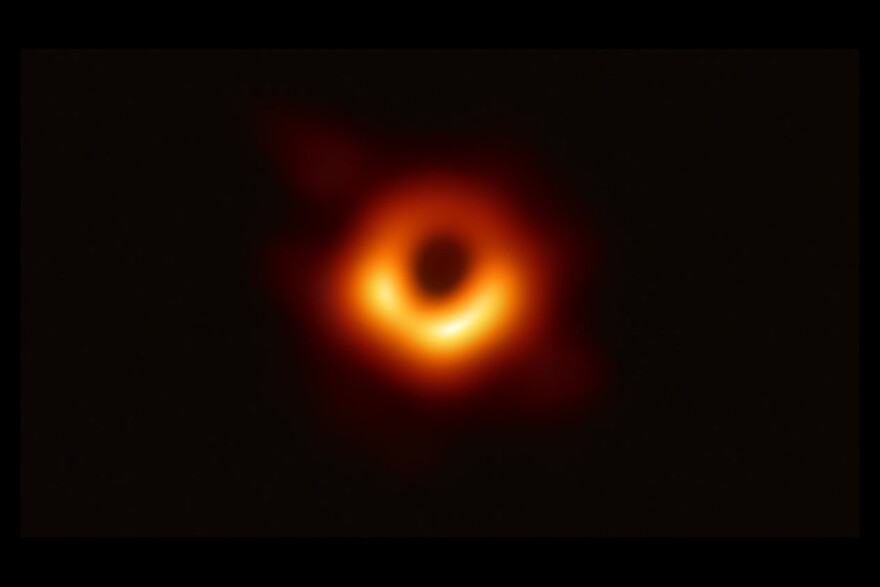
The resulting gravitational field becomes so intense that nothing—not even light—can escape once it passes a boundary known as the event horizon.
Black holes are not giant cosmic vacuum cleaners sucking everything inward.
Objects must come sufficiently close before being captured.
However, once something approaches a black hole, gravity can become extraordinarily powerful.
Near the event horizon, tidal forces may reach levels capable of tearing apart stars, planets, and anything else unfortunate enough to wander too close.
The Event Horizon
The event horizon is often described as the point of no return.
Crossing it does not involve hitting a physical surface.
Instead, it marks a boundary in spacetime.
Outside the event horizon, escape remains possible.
Inside the event horizon, every future path leads toward the black hole’s center.
Nothing can reverse course.
Not light.
Not matter.
Not information, according to classical physics.
The relationship between spaghettification and the event horizon depends on the size of the black hole.
This fact surprises many people.
Small Black Holes Are More Dangerous
Intuition suggests that larger black holes should always be more destructive.
In some ways they are.
Yet when it comes to tidal forces at the event horizon, smaller black holes can actually be more dangerous.
A stellar-mass black hole contains a few times the Sun’s mass compressed into a relatively small region.
Its gravitational gradient near the event horizon is extremely steep.
An astronaut approaching such a black hole would experience devastating tidal forces before reaching the horizon.
Spaghettification would occur rapidly.
The person would be torn apart long before crossing the boundary.
This makes stellar black holes particularly lethal.
Supermassive Black Holes and a Strange Twist
Supermassive black holes produce an unexpected result.
These giants contain millions or billions of times the Sun’s mass.
Because they are so massive, their event horizons are much larger.
As a result, the gravitational gradient at the horizon can be surprisingly gentle.
An astronaut falling toward a supermassive black hole might cross the event horizon without immediately noticing anything unusual.
The tidal forces at that location could be relatively mild.
The astronaut would still be doomed.
However, spaghettification would occur deeper inside the black hole rather than before crossing the horizon.
This strange difference highlights how black hole physics often defies intuition.
What Would Happen to a Human?
The idea of falling into a black hole has fascinated people for decades.
Although no human has ever experienced such an event, physics allows us to predict what would happen.
Imagine approaching a stellar-mass black hole feet first.
Initially, gravity feels normal.
As you move closer, the pull on your feet becomes noticeably stronger than the pull on your head.
Your body begins stretching.
Bones, muscles, and organs experience enormous stress.
At the same time, tidal forces compress you sideways.
The stretching and squeezing intensify continuously.
Eventually, no known biological structure could withstand the strain.
Your body would be pulled apart.
Then tissues would separate into smaller fragments.
Molecules would break apart.
Atoms themselves might eventually be disrupted under sufficiently extreme conditions.
The process would occur rapidly and irreversibly.
Would You Feel Pain?
This question often arises when discussing spaghettification.
Pain requires functioning nerves and a working brain.
During the early stages, an unfortunate victim would likely experience extreme physical trauma.
However, the process would soon become so destructive that normal biological functions could no longer continue.
The precise experience is impossible to know because no one has ever undergone it.
What physics tells us is that the forces involved become vastly greater than anything the human body can survive.
Spaghettification of Stars
Humans are not the only victims of tidal forces.
Entire stars can undergo spaghettification.
When a star passes too close to a black hole, tidal forces can overwhelm the star’s own gravity.
The star begins stretching.
Its material is pulled into elongated streams.
Eventually, the star may be completely torn apart.
Astronomers call these events tidal disruption events.
They are among the most spectacular phenomena observed in the universe.
Tidal Disruption Events
A tidal disruption event occurs when a star ventures too close to a black hole and is destroyed by tidal forces.
The process begins as the black hole’s gravity stretches the star.
Gas is pulled away and forms long streams.
Some of this material escapes into space.
Other portions spiral inward.
As matter falls toward the black hole, it heats to extraordinary temperatures.
The resulting radiation can outshine entire galaxies for brief periods.
These brilliant flashes provide astronomers with valuable opportunities to study black holes that would otherwise remain nearly invisible.
Tidal disruption events offer direct evidence that spaghettification is not merely theoretical.
It is actively occurring throughout the universe.
Observing Cosmic Destruction
Modern telescopes have detected numerous tidal disruption events.
Scientists identify them by observing sudden bursts of light originating from galactic centers.
These outbursts often persist for months or years.
Detailed observations reveal signatures consistent with stars being stretched and shredded by black holes.
Each event provides information about black hole masses, stellar composition, and the dynamics of extreme gravity.
What once existed only as a theoretical prediction has become an observable astronomical phenomenon.
The universe continually demonstrates that reality can be stranger than fiction.
Einstein’s Role in Understanding Spaghettification
The scientific foundation of spaghettification comes largely from Einstein’s theory of general relativity.
Before Einstein, gravity was described by Newton’s laws.
Newton’s framework worked extraordinarily well for many situations.
However, it could not fully explain the behavior of gravity under extreme conditions.
General relativity introduced a revolutionary idea.
Gravity is not simply a force acting across space.
Instead, mass and energy curve spacetime itself.
Objects move along paths determined by that curvature.
Black holes emerge naturally from Einstein’s equations.
So do the extreme tidal forces responsible for spaghettification.
Without general relativity, our modern understanding of black holes would not exist.
Spacetime and Stretching
Spaghettification can be viewed as a consequence of spacetime curvature.
Near a black hole, spacetime becomes dramatically distorted.
Different parts of an object follow slightly different paths through this curved geometry.
The result is stretching along one direction and compression along others.
This geometric interpretation reveals that spaghettification is not merely an unusual force.
It is a manifestation of the structure of spacetime itself.
Matter responds to the shape of the universe around it.
Near a black hole, that shape becomes extraordinarily extreme.
The Difference Between Compression and Stretching
One common misconception is that spaghettification involves only stretching.
In reality, two processes occur simultaneously.
Objects are stretched in the direction toward the black hole.
At the same time, they are compressed in perpendicular directions.
Imagine pulling a piece of dough.
As it becomes longer, it also becomes thinner.
The same principle applies during spaghettification.
Matter is elongated while being squeezed sideways.
This combination creates the spaghetti-like appearance that inspired the phenomenon’s name.
Could Planets Be Spaghettified?
Absolutely.
Planets that wander too close to black holes can experience powerful tidal effects.
Depending on the circumstances, tidal forces may distort a planet before ultimately tearing it apart.
The process could transform an entire world into streams of debris orbiting the black hole.
These remnants might eventually form an accretion disk—a swirling structure of gas and dust spiraling inward.
Over time, much of the material would be consumed by the black hole.
The destruction of a planet would unfold on scales far beyond human imagination.
Yet the underlying physics remains the same as in human spaghettification.
What Happens to Matter After Spaghettification?
One of the biggest mysteries concerns the ultimate fate of matter that falls into a black hole.
Classical physics suggests that matter continues inward toward a central singularity.
A singularity represents a region where density becomes infinite and known physical laws break down.
Most physicists suspect that a more complete theory, combining gravity and quantum mechanics, will eventually replace this picture.
At present, however, no fully accepted theory exists.
As a result, the final destination of spaghettified matter remains one of the greatest unanswered questions in science.
Black Holes as Natural Laboratories
Black holes provide opportunities to study physics under conditions impossible to reproduce on Earth.
Their gravitational fields are so extreme that they test the limits of our theories.
Spaghettification is one example of the remarkable phenomena occurring in these environments.
By observing black holes, scientists learn about gravity, matter, energy, spacetime, and the fundamental laws governing reality.
Every new observation helps refine our understanding of the cosmos.
In this sense, black holes are not merely destructive monsters.
They are also invaluable scientific laboratories.
The Role of Accretion Disks
Many black holes are surrounded by accretion disks.
These are rotating disks of gas, dust, and debris spiraling inward.
Material within the disk becomes compressed and heated.
Temperatures can reach millions of degrees.
As matter accelerates, enormous amounts of energy are released.
Some of the brightest objects in the universe owe their luminosity to accretion disks around black holes.
Spaghettified material often contributes to these structures.
The destruction of stars and other objects helps feed black holes while generating spectacular displays of radiation.
Can Anything Survive Spaghettification?
According to current physics, no ordinary matter can survive sufficiently strong tidal forces.
Eventually, the stresses become greater than any known material can withstand.
Steel would fail.
Diamond would fail.
Planets would fail.
Stars would fail.
The outcome depends on the intensity of the tidal forces, but beyond a certain threshold, destruction becomes unavoidable.
Nature provides no known substance capable of resisting indefinitely.
Spaghettification Beyond Black Holes
Although black holes are the most famous cause of spaghettification, they are not the only source of strong tidal forces.
Neutron stars can also generate significant tidal effects.
These incredibly dense stellar remnants contain masses comparable to the Sun compressed into spheres only about twenty kilometers across.
Approaching a neutron star could expose an object to tremendous gravitational gradients.
However, black holes generally represent the most extreme examples.
Their unique properties make them the ultimate tidal-force machines.
Why Spaghettification Captures Our Imagination
Few scientific concepts are as memorable as spaghettification.
Part of its appeal lies in its vivid imagery.
The idea of being stretched into cosmic spaghetti is both amusing and unsettling.
Yet there is something deeper as well.
Spaghettification confronts us with the immense power of nature.
It reminds us that the universe contains environments radically different from anything on Earth.
Black holes challenge our understanding of reality.
They push physical laws to their limits.
Spaghettification serves as a dramatic illustration of just how strange and extreme the cosmos can be.
What Spaghettification Teaches Us About the Universe
At its heart, spaghettification is not simply a story about destruction.
It is a story about gravity.
The phenomenon reveals how gravity changes across space, how matter responds to spacetime curvature, and how extreme environments shape the cosmos.
It demonstrates that familiar physical laws can produce astonishing outcomes when pushed to their limits.
The same gravity that keeps our feet on the ground can, under different circumstances, tear apart stars.
The same force that guides planets around the Sun can stretch matter into streams thousands or millions of kilometers long.
Spaghettification highlights the incredible range of behavior hidden within nature’s laws.
Conclusion
Spaghettification is the dramatic process by which extreme tidal forces stretch and compress matter near black holes and other extraordinarily dense objects. Caused by differences in gravitational pull across an object’s length, it transforms stars, planets, and potentially even people into elongated streams resembling strands of spaghetti. While the name may sound whimsical, the underlying science represents one of the most powerful and violent effects in the universe.
Rooted in Einstein’s theory of general relativity, spaghettification provides a vivid example of how gravity behaves under extreme conditions. Observations of tidal disruption events have confirmed that black holes regularly tear stars apart, turning theoretical predictions into observable reality.
More than a fascinating scientific curiosity, spaghettification offers a window into the nature of gravity, spacetime, and the fundamental workings of the cosmos. It reminds us that the universe is capable of phenomena far stranger and more dramatic than anything found on Earth. In the shadow of a black hole, gravity reveals its most extreme face, stretching matter—and our imagination—to the very limits of possibility.