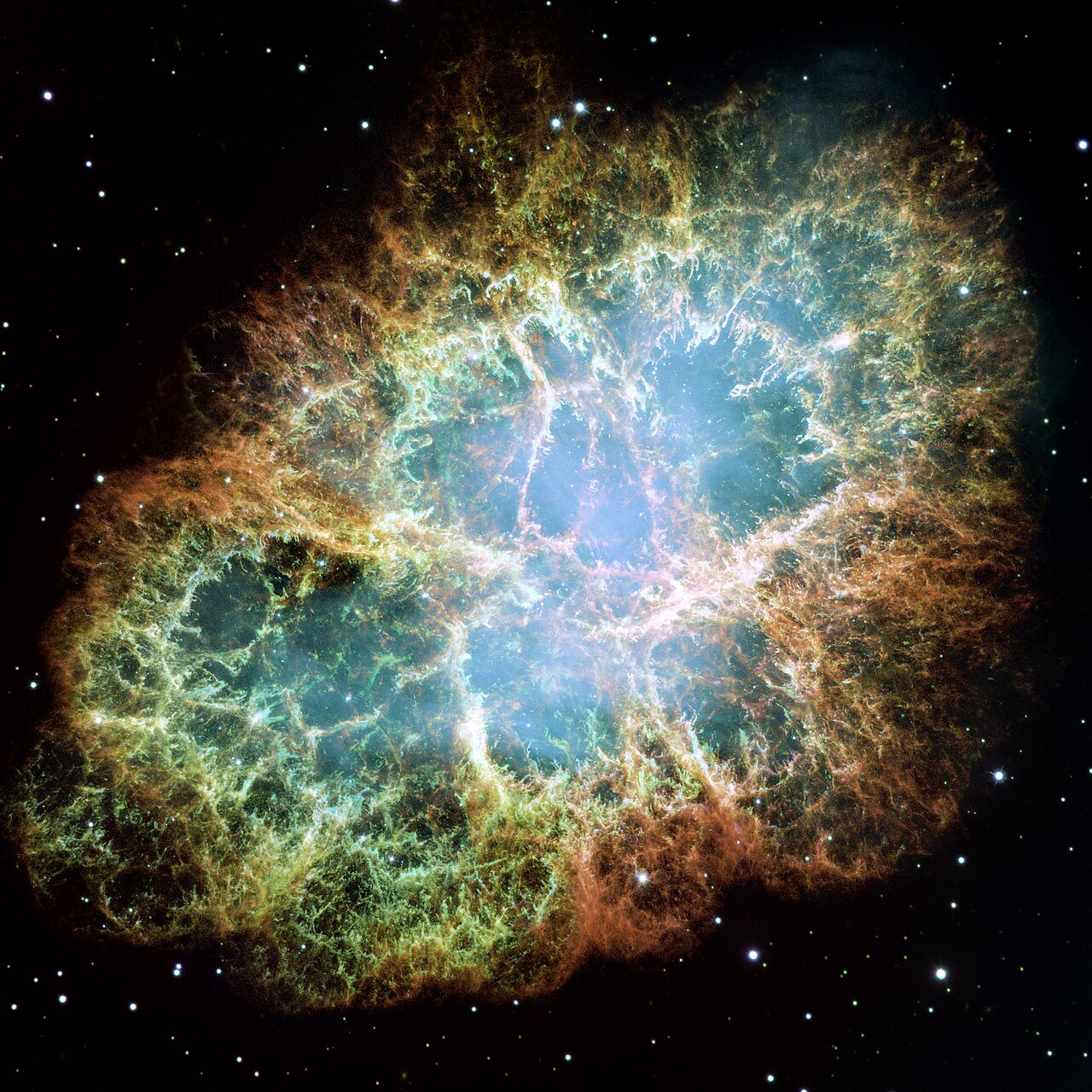
Astronomy is the scientific study of objects and phenomena beyond Earth’s atmosphere, including stars, planets, moons, galaxies, black holes, and the universe as a whole. It explores how these objects form, how they move and change, what they are made of, and how the universe began and continues to evolve. By combining observations with physics, mathematics, and computer modeling, astronomers investigate some of the most fundamental questions about nature.
Astronomy is one of the oldest sciences, but it remains an active field of modern research. Ancient observers used the positions of the Sun, Moon, and stars to track seasons and navigate across land and sea. Today, scientists use powerful telescopes, spacecraft, and sophisticated instruments to study objects billions of light-years away. Despite these technological advances, the central goal remains the same: to understand the physical processes that govern the cosmos.
What does astronomy mean?
The word astronomy comes from ancient Greek roots associated with stars and their arrangement or laws. In modern science, astronomy refers to the systematic investigation of celestial objects, space, and the physical processes that shape the universe.
Astronomy covers an enormous range of subjects. It examines the behavior of planets within our solar system, the life cycles of stars, the structure of galaxies, and the expansion of the universe. It also investigates extreme phenomena, such as neutron stars and black holes, where gravity and matter behave in ways that challenge everyday intuition.
Astronomy is not limited to studying distant objects. It also helps scientists understand Earth’s place in space. Research into the Sun explains solar activity and its effects on Earth, while observations of asteroids and comets improve our understanding of the early solar system and potential hazards to our planet.
Although astronomy is sometimes associated with simply watching the night sky, modern astronomy is a quantitative science. Astronomers measure the brightness, position, motion, temperature, chemical composition, and other properties of celestial objects. They use those measurements to test explanations and develop models of how the universe works.
How astronomy works
Astronomy relies primarily on observation because most celestial objects are too distant to visit or sample directly. Scientists collect evidence using instruments that detect different forms of radiation, measure motion, and record changes over time. They then interpret that evidence using established physical laws.
Light is one of astronomy’s most important sources of information. When astronomers analyze light from a star or galaxy, they can learn about its temperature, chemical composition, motion, and sometimes its age or evolutionary stage. Different wavelengths reveal different aspects of the same object, allowing scientists to build a more complete picture.
The distance that light travels also gives astronomy a unique perspective on time. Light takes about eight minutes to travel from the Sun to Earth. Light from more distant stars may take years to reach us, while light from distant galaxies can take billions of years. Observing these objects therefore means seeing them as they were when their light began its journey, not necessarily as they are today.
Astronomers also use mathematical models and computer simulations to explain observations. A model might predict how a planet moves around a star, how a cloud of gas collapses to form a star, or how galaxies change as the universe expands. Scientists compare those predictions with new observations to determine whether their explanations are consistent with the evidence.
Because astronomical observations often involve enormous distances and long timescales, uncertainty is an important part of the field. Researchers estimate how precise their measurements are, compare independent methods, and revise explanations when new evidence becomes available.
The main branches of astronomy
Astronomy is a broad discipline with several overlapping branches. Each focuses on particular objects, processes, or methods of investigation. Together, these specialties help explain the universe from the smallest astronomical scales to its largest structures.
Observational astronomy
Observational astronomy involves collecting and analyzing data from celestial objects. Astronomers use ground-based telescopes, space telescopes, radio antennas, cameras, and other instruments to detect radiation and measure properties of the universe.
Different instruments serve different purposes. Optical telescopes collect visible light, making it possible to observe stars, planets, nebulae, and galaxies. Radio telescopes detect radio waves emitted by objects such as pulsars and interstellar gas clouds. Infrared instruments can reveal relatively cool objects and see through some clouds of cosmic dust that obscure visible light.
Observational astronomers also track changes over time. They may monitor a star that periodically becomes brighter or dimmer, observe a comet moving across the sky, or measure the changing position of a planet. These observations can reveal physical processes that would remain hidden in a single image or measurement.
Theoretical astronomy
Theoretical astronomy uses mathematical reasoning and physical laws to explain astronomical phenomena. Rather than relying exclusively on direct observation, theoretical astronomers develop models that describe how celestial systems behave and predict what scientists should observe.
For example, theories of stellar structure explain how the pressure and energy produced inside a star balance the inward pull of gravity. Models of black holes describe how matter and light behave near extremely compact objects. Cosmological theories investigate the expansion of the universe and the development of its large-scale structure.
Theoretical work and observation are closely connected. A theory may predict an unfamiliar phenomenon, encouraging astronomers to search for it. Observations may then support the prediction, reveal limitations in the model, or show that the theory needs revision.
Astrophysics
Astrophysics applies the principles of physics to astronomical objects and events. It investigates the forces, energy, matter, and radiation responsible for the behavior of stars, planets, galaxies, and other cosmic systems.
One major subject in astrophysics is nuclear fusion, the process that powers the Sun and other stars during much of their lives. In the Sun’s core, hydrogen nuclei combine through a series of nuclear reactions that ultimately produce helium. A small amount of mass is converted into energy, which gradually travels outward and is eventually released as sunlight.
Astrophysics also explains how gravity shapes the universe. Gravity gathers gas into stars, binds planets to their stars, holds galaxies together, and influences the motion of entire galaxy clusters. Studying these processes helps scientists understand both ordinary astronomical objects and extreme environments.
Astrophysics overlaps extensively with theoretical and observational astronomy. Many astronomers use all three approaches to investigate a single question.
Planetary science
Planetary science studies planets, moons, dwarf planets, asteroids, comets, and other bodies associated with planetary systems. It examines their formation, internal structure, surfaces, atmospheres, magnetic fields, and geological histories.
Scientists investigate planetary bodies through telescopic observations, spacecraft flybys, orbiters, landers, and robotic rovers. Measurements of surface minerals, atmospheric gases, and magnetic fields help reveal how these worlds formed and how they have changed.
For example, studying Mars can provide evidence about the planet’s ancient climate and the history of liquid water on its surface. Research on Jupiter’s moon Europa investigates the possibility of a liquid-water ocean beneath its icy crust. Such studies help scientists understand how common different planetary environments may be and what conditions might support life.
Planetary science overlaps with geology, chemistry, atmospheric science, and astrobiology. Although it is closely connected to astronomy, it often focuses on physical processes that also occur on Earth.
Solar astronomy
Solar astronomy focuses on the Sun, the star at the center of our solar system. Because the Sun is much closer to Earth than any other star, scientists can examine its surface, atmosphere, magnetic field, and changing activity in considerable detail.
The Sun is not a solid object with a permanent surface. Its visible surface, called the photosphere, is a layer of hot gas that emits much of the sunlight we see. Above it lie the chromosphere and corona, which form parts of the Sun’s atmosphere. The corona extends far into space and reaches temperatures much higher than those of the photosphere, a difference that remains an important subject of solar research.
Solar astronomers study sunspots, solar flares, and coronal mass ejections. These events are linked to the Sun’s magnetic field and can release large amounts of energy or send clouds of magnetized plasma into space. When such activity interacts with Earth’s magnetic environment, it can produce auroras and sometimes disrupt satellites, radio communications, navigation systems, and electrical infrastructure.
Understanding the Sun is therefore important both for basic science and for predicting space weather that can affect modern technology.
Stellar astronomy
Stellar astronomy examines stars, including how they form, produce energy, evolve, and eventually reach the ends of their lives. Stars vary greatly in mass, temperature, brightness, and chemical composition, and these differences strongly influence their evolution.
Stars form when gravity causes dense regions within clouds of gas and dust to collapse. As the material contracts, the central region heats up. If the core becomes hot and dense enough, nuclear fusion can begin, marking the start of a star’s main energy-producing phase.
A star’s mass largely determines its subsequent development. Lower-mass stars generally consume their nuclear fuel more slowly and can remain stable for extremely long periods. More massive stars burn through their fuel more rapidly and may eventually explode as supernovae. Depending on their initial mass and the details of their evolution, stellar remnants can include white dwarfs, neutron stars, or black holes.
By comparing stars at different stages of their lives, astronomers can reconstruct the processes that shape stellar populations and produce many of the chemical elements found in planets and living organisms.
Galactic astronomy
Galactic astronomy studies galaxies, vast systems containing stars, gas, dust, and dark matter bound together by gravity. It investigates how galaxies form, how they change over time, and how their internal structures influence star formation and other processes.
Galaxies occur in different forms, including spiral galaxies, elliptical galaxies, and irregular galaxies. The Milky Way, our home galaxy, is a barred spiral galaxy containing the Sun and its planetary system. Its stars occupy a large disk with spiral structure, along with a central region and an extended surrounding halo.
Galactic astronomers examine how stars move within galaxies, how gas becomes new stars, and how interactions between galaxies affect their evolution. Collisions and mergers can rearrange galactic structures, compress gas clouds, and trigger periods of increased star formation.
They also investigate the role of dark matter, an unseen form of matter inferred from its gravitational effects. Observations of galactic motion indicate that the visible matter alone cannot account for all the gravity associated with many galaxies.
Extragalactic astronomy
Extragalactic astronomy focuses on objects beyond the Milky Way, including other galaxies, galaxy groups, galaxy clusters, and some of the most energetic sources in the universe.
By studying galaxies at different distances, astronomers can investigate how their properties change over cosmic history. Because light takes time to travel, distant galaxies are observed at earlier stages of the universe than nearby galaxies. Comparing these observations helps researchers understand how galaxies assembled, formed stars, and developed their present-day structures.
This branch also examines active galactic nuclei, extremely energetic central regions powered by matter falling toward supermassive black holes. Some of these systems produce powerful jets of particles and radiation that can extend far beyond their host galaxies.
Extragalactic astronomy helps connect the histories of individual galaxies with the larger-scale evolution of the universe.
Cosmology
Cosmology studies the universe as a whole, including its origin, large-scale structure, evolution, and ultimate future. It addresses questions about the expansion of space, the distribution of matter, and the physical conditions that shaped the early universe.
The leading scientific model of cosmic evolution holds that the universe expanded from an extremely hot, dense early state in an event commonly called the Big Bang. This model is supported by several independent lines of evidence, including the observed expansion of the universe, the cosmic microwave background, and the abundance of light elements.
The cosmic microwave background is faint radiation that fills space and represents a remnant of the early universe. It provides a record of conditions when the universe was much younger and helps scientists test models of its development.
Cosmology also investigates dark matter and dark energy. Dark matter is inferred from gravitational effects that ordinary matter alone does not adequately explain. Dark energy is the name given to whatever is responsible for the observed accelerated expansion of the universe within the standard cosmological model. Their precise physical natures remain uncertain.
Although cosmology has established a strong framework for understanding cosmic history, major questions remain about the earliest moments of the universe, the nature of dark matter and dark energy, and the ultimate behavior of cosmic expansion.
Astrobiology
Astrobiology investigates the origin, evolution, distribution, and potential future of life in the universe. It draws on astronomy, biology, chemistry, geology, and planetary science to examine where life might arise and what conditions it requires.
Scientists study environments that may contain liquid water, sources of energy, and essential chemical ingredients. Within our solar system, Mars and the icy moons Europa and Enceladus are important targets because available evidence suggests that they may have supported or may currently possess environments relevant to habitability.
Beyond the solar system, astronomers search for exoplanets, which are planets orbiting stars other than the Sun. Some exoplanets orbit within a star’s habitable zone, the range of distances where temperatures could permit liquid water on a suitable planetary surface. However, being in this zone does not establish that a planet has liquid water, suitable atmospheric conditions, or life.
No confirmed evidence of extraterrestrial life has been established. Astrobiology therefore focuses on identifying potentially habitable environments, understanding how life could originate, and developing methods to detect possible biological signatures without mistaking nonbiological processes for life.
The difference between astronomy and astrology
Astronomy and astrology share historical roots in humanity’s efforts to interpret the sky, but they are fundamentally different practices.
Astronomy is a natural science. It uses observations, measurements, mathematical models, and testable explanations to investigate celestial objects and physical processes. Its findings can be checked against new evidence, and scientific explanations are revised when observations contradict them.
Astrology, by contrast, is a belief system that associates the positions of celestial bodies with human personality traits, relationships, or future events. Its central claims have not been established through reliable scientific evidence.
For example, astronomy can calculate the position of Mars on a particular date and explain its orbit around the Sun. Astrology may interpret Mars’s position as having personal significance for someone born at that time. The first claim can be tested through measurement and physical models; the second lacks comparable scientific support.
Understanding this distinction helps clarify why astronomy is taught as a science and astrology is not considered a scientific method for predicting human behavior or events.
Examples of astronomy in everyday life
Astronomy may seem concerned mainly with distant objects, but its findings and technologies influence daily life in several ways.
Understanding the seasons and the calendar. Earth’s axis is tilted relative to its orbital plane. As Earth travels around the Sun, this tilt changes the angle and duration of sunlight received by each hemisphere throughout the year. The resulting seasonal patterns underpin many calendars and influence agriculture, ecosystems, and human activities.
Navigation and timekeeping. The positions of celestial objects have helped people navigate for thousands of years. Modern satellite navigation systems rely on precise timing and measurements, while astronomical observations help maintain and refine time standards and determine the positions of objects in space.
Satellite communications and space weather. Solar activity can disturb Earth’s upper atmosphere and magnetic environment. Astronomers and space-weather scientists monitor these effects because they can influence satellites, communication systems, and electrical networks.
Discovering planets beyond the solar system. Astronomers use several methods to detect exoplanets. The transit method measures a small decrease in a star’s brightness when a planet passes in front of it. The radial velocity method detects subtle shifts in a star’s spectrum caused by the gravitational pull of an orbiting planet. These techniques have transformed our understanding of how planetary systems form and vary.
Explaining the origin of chemical elements. The early universe produced much of its hydrogen and helium, along with small amounts of other light elements. Stars later formed heavier elements through nuclear reactions, while supernovae and other energetic astrophysical events contributed to the production and dispersal of many additional elements. These materials became part of later generations of stars, planets, and other cosmic objects.
Understanding the universe’s history. Observations of distant galaxies allow scientists to study earlier stages of cosmic evolution. Measurements of the cosmic microwave background and the distribution of galaxies help researchers reconstruct how the universe developed from its early state into the complex cosmic structures observed today.
These examples show that astronomy is not merely a collection of facts about the night sky. It is a way of understanding the physical processes that connect Earth with the wider universe.
The tools astronomers use
Astronomers rely on several kinds of instruments because no single method can reveal every property of a celestial object. The best approach depends on the question being investigated, the type of radiation involved, and the precision required.
Optical telescopes collect visible light and allow astronomers to examine the positions, brightness, and appearance of celestial objects. Larger telescopes generally collect more light, making it possible to observe fainter objects or study them in greater detail. Space telescopes avoid atmospheric distortion and can observe wavelengths that Earth’s atmosphere absorbs.
Radio telescopes detect radio waves from sources such as gas clouds, pulsars, and distant galaxies. Multiple radio telescopes can be combined through a technique called interferometry, which allows astronomers to achieve angular resolution comparable to that of a much larger instrument.
Infrared, ultraviolet, X-ray, and gamma-ray observatories reveal processes that visible-light observations cannot fully capture. Infrared observations can expose relatively cool material and regions hidden by dust. X-rays and gamma rays can reveal extremely hot gas, energetic particles, and activity around compact objects.
Spacecraft provide another essential source of evidence. Orbiters map planets, landers examine surfaces, and rovers analyze local environments. Some missions return samples to Earth for detailed laboratory analysis. These methods complement telescopic observations by providing direct measurements of materials and conditions in particular locations.
Astronomers also use spectrographs, instruments that separate light into its component wavelengths. A spectrum can reveal which chemical elements are present, estimate an object’s temperature, and show whether it is moving toward or away from Earth through the Doppler effect. When combined with other measurements, spectroscopy provides a detailed picture of objects that cannot be examined directly.
How astronomy differs from other sciences
Astronomy shares methods with physics, chemistry, geology, and biology, but its observational circumstances make it distinctive.
In many laboratory sciences, researchers can manipulate samples, repeat experiments under controlled conditions, and observe the results directly. Astronomers usually cannot alter a star, move a galaxy, or reproduce the birth of a planetary system in a laboratory. Instead, they study naturally occurring objects and events, using physical laws to interpret the evidence reaching Earth.
This limitation makes indirect measurement especially important. Astronomers often infer an object’s mass from its gravitational influence, its temperature from its emitted spectrum, or its distance from changes in brightness or other measurable properties. These estimates depend on physical models and carry uncertainties that scientists must account for.
Astronomy also provides access to physical conditions that cannot be reproduced on Earth. Black holes, neutron stars, and the interiors of stars offer opportunities to study matter, gravity, and energy under extreme conditions. Observations of distant cosmic events can test theories across environments far beyond those available to terrestrial experiments.
At the same time, astronomy depends on laboratory research. Measurements of atomic spectra help scientists interpret starlight, nuclear physics explains how stars generate energy, and materials science supports the development of sensitive detectors. Progress often occurs when astronomical observations and laboratory experiments inform one another.
Why astronomy matters
Astronomy expands our understanding of the universe and the physical laws that govern it. By studying stars, planets, galaxies, and cosmic history, scientists investigate how matter forms structures, how energy moves through space, and how the universe changes over time.
The field also helps place Earth in a broader context. Our planet is part of a planetary system around an ordinary star within a galaxy containing vast numbers of other stars. Studying other planetary systems reveals how common or unusual aspects of our own solar system may be, while research into stellar evolution explains how the elements necessary for planets and life are produced and dispersed.
Astronomy also advances technology. The demands of detecting extremely faint signals, measuring precise positions, and transmitting data across long distances encourage improvements in imaging, sensors, computing, and signal processing. These developments can have applications beyond astronomy, although their broader benefits vary by technology.
Most importantly, astronomy demonstrates how scientific knowledge develops. Researchers begin with questions, gather observations, propose explanations, and test those explanations against evidence. Some questions have well-established answers, while others remain open because the available evidence is incomplete or the underlying processes are not yet fully understood.
Astronomy is therefore both a mature scientific discipline and an ongoing investigation. It explains much about the universe, from the motion of planets to the evolution of galaxies, while continuing to explore fundamental questions about cosmic origins, dark matter, dark energy, and the possibility of life beyond Earth.