Life on Earth has never stood still. From the moment the first tiny living cells appeared in the ancient oceans billions of years ago, life began to change, adapt, divide, compete, and transform. Every creature alive today—every tree, every bird, every whale, every human being—is part of a vast and continuous story that stretches back through unimaginable stretches of time. That story is evolution.
Evolution is the scientific explanation of how living organisms change across generations. It is the process through which species arise, adapt, and sometimes disappear. Through evolution, simple beginnings give rise to astonishing complexity: delicate butterfly wings, towering redwood forests, the intelligence of dolphins, and the human capacity to reflect on our own origins.
To understand evolution is to understand the deep connections between all living things. It reveals that life is not a static collection of separate creations but a dynamic web of relationships shaped by natural forces acting across immense spans of time.
The Idea That Changed Biology Forever
Before the nineteenth century, many people believed that species were fixed and unchanging. Plants and animals were thought to have existed exactly as they appeared, unchanged since the beginning of time. Nature seemed orderly and stable, and few questioned whether species could transform into new forms.
Yet observations from explorers, naturalists, and fossil hunters began to challenge that view. Fossils revealed creatures that no longer existed. Some resembled living animals but differed in striking ways. Giant fossil sloths discovered in South America hinted at ancient relatives of modern sloths. Strange shells found in mountains suggested that those rocks had once lain beneath the sea.
These puzzling clues hinted that life had a history.
The idea of evolution gained its most powerful and persuasive explanation in the work of the English naturalist Charles Darwin. In 1859 he published On the Origin of Species, a book that transformed biology. Darwin proposed that species change over time through a process he called natural selection. His insight was both simple and revolutionary: organisms vary, some variations help individuals survive and reproduce, and those successful traits become more common in future generations.
This idea explained the diversity of life without invoking sudden creation of new species. Instead, species slowly diverge from common ancestors, branching like the limbs of a great tree.
A Voyage That Changed Scientific History
Darwin’s path to discovering evolution began with a voyage around the world. In 1831 he boarded a ship called HMS Beagle as a young naturalist eager to study geology and wildlife. The journey lasted nearly five years and carried him across the Atlantic Ocean to South America, around the southern tip of the continent, and across the Pacific.
During the voyage, Darwin observed nature with extraordinary attention. In South America he found fossils of enormous extinct mammals embedded in rocks. These animals resembled living species from the same region but were clearly different. The similarities suggested that the living animals might be descendants of the ancient ones.
On the Galápagos Islands, Darwin noticed another striking pattern. Each island hosted its own variety of finches and tortoises. The birds differed slightly in beak shape and feeding behavior. Some had strong beaks for cracking seeds, while others had slender beaks suited for catching insects.
These observations slowly formed a realization in Darwin’s mind. Species might not be fixed after all. Perhaps they change over generations, adapting to different environments.
The idea would take Darwin more than two decades to fully develop and publish, but the seeds of evolution had been planted.
Variation: The Raw Material of Evolution
Evolution begins with variation. Within every species, individuals differ from one another in countless ways. Some variations are subtle, such as slight differences in height, color, or metabolism. Others are more noticeable, like the pattern on a butterfly’s wings or the shape of a bird’s beak.
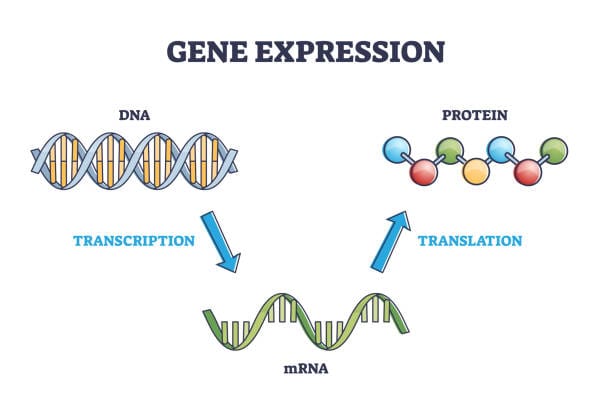
These differences arise largely from genetic variation. Genes are segments of DNA that carry instructions for building and maintaining living organisms. When organisms reproduce, they pass copies of their genes to their offspring. However, these copies are not always identical. Mutations—small changes in DNA—can introduce new variations.
Mutations occur naturally and randomly. Some have no effect at all. Others can be harmful, while a few provide advantages in certain environments.
In addition to mutations, genetic variation also arises through recombination during sexual reproduction. When two parents produce offspring, their genes mix and shuffle, creating new combinations that did not exist before.
Without variation, evolution would be impossible. If every individual were identical, natural selection would have nothing to act upon.
Natural Selection: The Engine of Change
Natural selection is the process that shapes variation into adaptation. In nature, organisms produce more offspring than can possibly survive. Food, shelter, and other resources are limited. Predators hunt, diseases spread, and environmental conditions fluctuate.
Because of this competition, individuals with traits that help them survive and reproduce tend to leave more descendants. Over generations, these beneficial traits become more common in the population.
This process does not have foresight or intention. It does not plan for the future. Instead, it simply reflects the outcome of differential survival and reproduction.
Consider a population of insects living in a forest. Some individuals might have slightly darker coloration than others. If birds hunt these insects, the darker individuals might blend more effectively into the shadows of tree bark. They survive longer and produce more offspring, passing their dark coloration to the next generation.
Over many generations, the population gradually becomes darker.
Natural selection explains how organisms adapt to their environments. It can produce the remarkable camouflage of a stick insect, the speed of a cheetah, or the water-saving features of desert plants.
Adaptation: Nature’s Ingenious Solutions
Adaptations are traits that improve an organism’s chances of survival and reproduction in a particular environment. These traits can involve physical structures, behaviors, or physiological processes.
The wings of birds are adaptations for flight. The thick fur of Arctic mammals helps them survive freezing temperatures. The long neck of a giraffe allows it to reach leaves high in trees.
Adaptations often appear perfectly designed for their functions, but they are not the result of conscious design. Instead, they emerge gradually through the accumulation of small beneficial changes.
Evolution works like a patient sculptor, shaping life over millions of years through countless tiny adjustments. Each generation inherits slight differences from the previous one. Those differences that improve survival tend to persist, while others fade away.
Through this slow process, extraordinary complexity can arise.
The Tree of Life
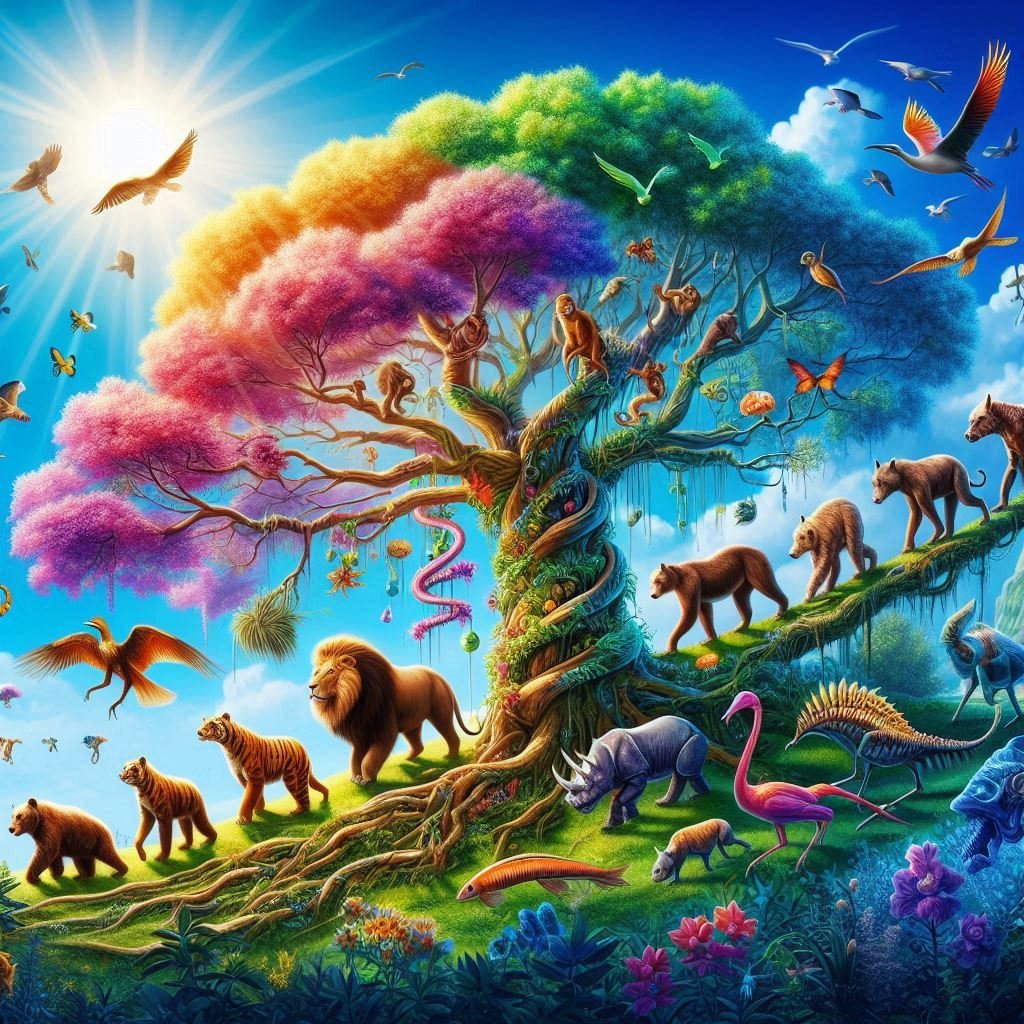
One of the most beautiful concepts in evolutionary biology is the idea of the tree of life. All living organisms share common ancestry. At some distant point in the past, the ancestors of modern species were part of the same lineage.
As populations become separated and evolve in different directions, new species emerge. Over time, these branches multiply, forming a vast tree of evolutionary relationships.
The trunk of the tree represents the earliest life forms. The branches represent the countless lineages that have evolved over billions of years. Some branches flourish and diversify, while others end in extinction.
Humans occupy only a tiny twig on this immense tree. Our closest living relatives are chimpanzees and bonobos, with whom we share a recent common ancestor. But our connections extend far beyond primates. We share ancestry with all mammals, with reptiles, with birds, with fish, and ultimately with the earliest single-celled organisms.
The tree of life reminds us that every living creature is part of a shared heritage stretching back to the dawn of life.
Fossils: Windows Into Deep Time
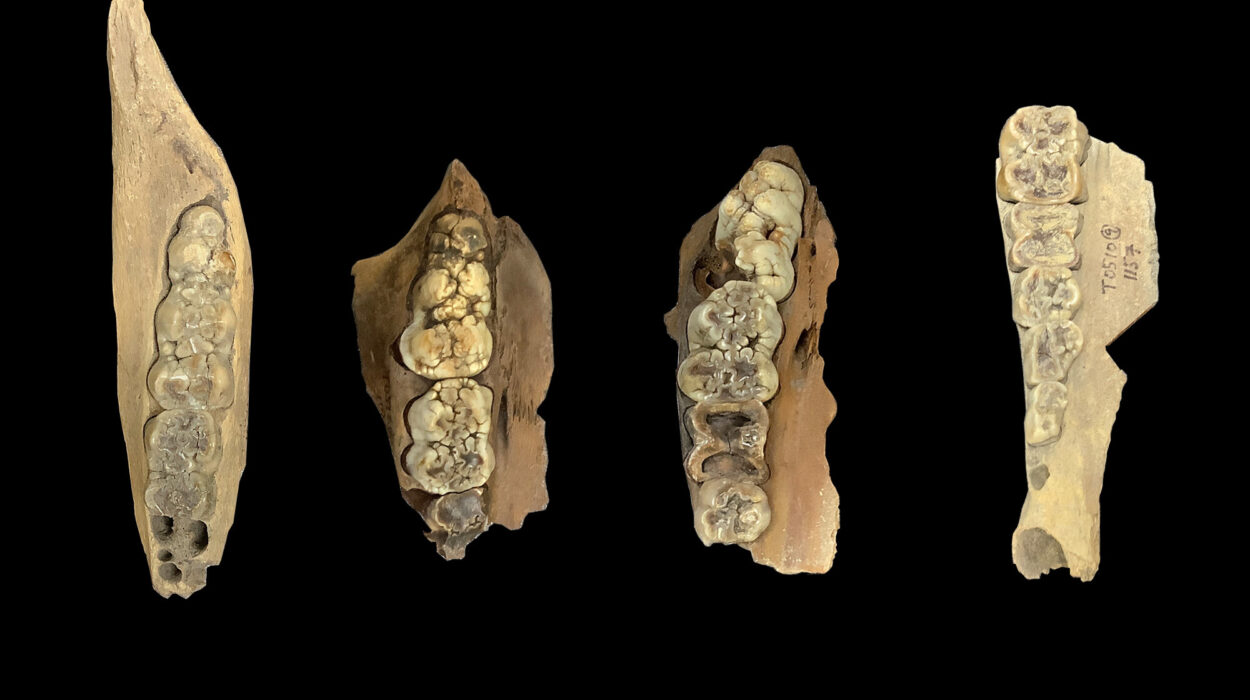
Fossils provide powerful evidence for evolution. They are the preserved remains or traces of ancient organisms embedded in rock layers. Fossils reveal what life looked like in different geological periods and how it has changed over time.
The fossil record shows a progression of forms. Early rocks contain simple organisms such as bacteria and algae. Later layers reveal the emergence of complex animals, plants, and eventually vertebrates.
Transitional fossils are especially important because they display features linking different groups of organisms. For example, fossils of ancient fish with limb-like fins illustrate the transition from aquatic fish to land-dwelling tetrapods. Fossils of feathered dinosaurs reveal the evolutionary origin of birds.
Although the fossil record is incomplete, it provides a remarkable chronicle of life’s history, confirming that species appear, evolve, and sometimes vanish forever.
Genetics and the Modern Understanding of Evolution
Darwin developed his theory before scientists understood the mechanisms of inheritance. He knew that traits passed from parents to offspring, but the details were mysterious.
The missing piece emerged through the work of Gregor Mendel, a nineteenth-century monk who studied inheritance in pea plants. Mendel discovered that traits are passed through discrete units—what we now call genes.
In the twentieth century, the discovery of DNA revealed the molecular basis of heredity. DNA carries genetic information in sequences of chemical bases. When organisms reproduce, DNA is copied and transmitted to the next generation.
The integration of Darwin’s theory of natural selection with Mendelian genetics formed what scientists call the modern evolutionary synthesis. This framework explains evolution as changes in gene frequencies within populations over time.
With the rise of molecular biology, scientists can now compare DNA sequences across species, revealing evolutionary relationships with extraordinary precision. Genetic evidence confirms that all life shares a common origin.
Speciation: The Birth of New Species
One of the most fascinating aspects of evolution is speciation, the process by which new species arise. Speciation often begins when populations of the same species become isolated from one another.
Isolation can occur for many reasons. A river might divide a population of animals. A mountain range might separate groups of plants. Climate changes might shift habitats.
Once populations are isolated, they evolve independently. Mutations accumulate, natural selection acts differently in each environment, and genetic differences gradually increase.
Eventually the two populations may become so different that they can no longer interbreed successfully. At that point, they are considered separate species.
Speciation explains the incredible diversity of life on Earth. From a few ancestral forms, evolution has produced millions of species adapted to nearly every environment imaginable.
Extinction: The Other Side of Evolution
Evolution is not only about the creation of new species; it is also about the disappearance of old ones. Extinction is a natural part of life’s history. Most species that have ever lived are now extinct.
Environmental changes, competition, disease, and catastrophic events can all drive species to extinction. The fossil record reveals several mass extinctions, moments when large percentages of species vanished in relatively short geological periods.
One of the most famous occurred about 66 million years ago, when an asteroid impact contributed to the extinction of the dinosaurs. Yet even this catastrophe opened ecological opportunities for mammals, eventually allowing humans to evolve.
Extinction reshapes the tree of life, pruning some branches while leaving others to flourish.
Evolution in Action
Although evolution often unfolds across millions of years, it can sometimes be observed within human lifetimes. Bacteria evolve resistance to antibiotics, insects evolve resistance to pesticides, and viruses change rapidly as they replicate.
These changes illustrate natural selection operating in real time. When antibiotics kill most bacteria in an infection, a few resistant individuals may survive. Those survivors reproduce, and soon the resistant strain dominates the population.
Such examples demonstrate that evolution is not merely a historical process but an ongoing one.
The Evolution of Humans
Humans are products of evolution just like every other organism. Our lineage traces back through primates, mammals, reptiles, and ultimately to the earliest life forms.
The human story is revealed through fossils, genetics, and archaeology. Early human ancestors walked upright millions of years ago in Africa. Over time, brain size increased, tools became more sophisticated, and cultures developed.
Our species, Homo sapiens, appeared roughly 300,000 years ago. Since then, humans have spread across the globe, adapting to diverse environments from deserts to polar regions.
Understanding human evolution deepens our sense of connection with the rest of life. It reminds us that we are not separate from nature but part of its unfolding story.
The Beauty of Evolutionary Thinking
Evolution is more than a biological theory; it is a framework that unites all of life’s sciences. It explains why organisms have the structures they do, why species resemble their relatives, and why ecosystems function as interconnected systems.
It reveals that complexity can arise from simple processes acting over immense periods of time. It shows that life’s diversity is not random chaos but the result of countless generations of adaptation.
Perhaps most profoundly, evolution tells us that life is dynamic. The living world is not a finished product but a continuing experiment shaped by changing environments and genetic possibilities.
A Living, Changing Planet
Even now, evolution continues. Species adapt to shifting climates, new predators, and changing ecosystems. Human activity is altering the planet in ways that influence evolutionary pressures on countless organisms.
Some species are evolving to survive urban environments. Others struggle to adapt quickly enough to rapid environmental change.
The story of evolution is still being written, and every living creature is part of it.
The Grand Perspective
When we step back and view life through the lens of evolution, the world becomes both humbling and inspiring. The diversity of life—from microscopic bacteria to towering trees and intelligent animals—is the result of billions of years of change.
Every organism alive today is the descendant of a long line of survivors stretching back to the earliest days of life on Earth. Within our cells lies genetic information inherited through countless generations.
Evolution reminds us that life is interconnected, resilient, and ever-changing. It invites us to see the natural world not as a static collection of species but as a living tapestry woven through time.
And in that realization lies one of the most profound insights science has ever given us: that the story of life is a story of transformation, and we ourselves are part of that extraordinary journey.