Ancient history is the study of early human civilizations, their political systems, economies, religions, technologies, and cultures, from the development of writing to the transformation of the ancient world during the first centuries CE and beyond. It explores how societies formed cities, established governments, developed systems of law, built trade networks, and created ideas that continue to influence modern life.
The term generally refers to the period before the Middle Ages, although its precise boundaries vary by region. In many traditional accounts of European history, ancient history begins with the earliest writing systems around 3200 BCE and ends with the fall of the Western Roman Empire in 476 CE. These dates provide useful reference points, but they do not describe a universal timeline. Civilizations developed at different rates, and many societies experienced major historical changes long after these conventional endpoints.
Understanding ancient history requires looking beyond famous rulers, monumental buildings, and military conquests. It involves examining how people lived, how their environments shaped their choices, how knowledge spread between cultures, and how human communities changed over thousands of years.
What defines ancient history?
Ancient history focuses on societies whose development can be reconstructed through written records, archaeological evidence, and other surviving traces of human activity. It overlaps with archaeology, anthropology, historical linguistics, and the study of ancient environments.
One important distinction separates ancient history from prehistory. Prehistory refers to periods before written records are available for a particular society. Ancient history, in its traditional definition, begins when writing provides direct evidence of past events, institutions, and ideas.
However, this distinction is not absolute. Writing did not appear everywhere at the same time, and societies without writing continued to develop complex political systems, technologies, and cultural traditions. Some communities also adopted writing only after maintaining oral histories for generations.
For this reason, historians do not treat the appearance of writing as proof that a society suddenly became civilized. Writing changed how people recorded information, administered governments, and transmitted knowledge, but complex human societies existed long before it emerged.
Ancient history also differs from the study of a single civilization. It examines relationships among societies, including trade, migration, warfare, diplomacy, and cultural exchange. These connections help explain why developments in one region sometimes influenced communities thousands of miles away.
When did ancient history begin and end?
Ancient history has no universally accepted beginning or ending. Its boundaries depend on geography, historical traditions, and the changes historians consider most significant.
In the ancient Near East, the development of writing in Mesopotamia during the late fourth millennium BCE provides a conventional starting point. Egyptian hieroglyphic writing also emerged around this broad period. These systems made it possible to preserve certain kinds of information beyond the memories of individuals and the limits of oral communication.
The ancient world subsequently expanded through the development of cities, kingdoms, empires, and long-distance trading networks. Different regions followed distinct timelines, and many developed important institutions independently.
The conventional end of ancient history in Europe is often associated with the fall of the Western Roman Empire in 476 CE, when the last western emperor, Romulus Augustulus, was deposed. This event became a convenient marker for the transition from antiquity to the Middle Ages.
Yet the Roman Empire continued in the east, centered on Constantinople, for nearly another thousand years. The eastern Roman state, commonly called the Byzantine Empire by modern historians, preserved and transformed Roman political, legal, religious, and cultural traditions.
Elsewhere, ancient societies followed different trajectories. The political and cultural transitions that marked the end of antiquity in western Europe did not occur at the same time in South Asia, East Asia, Africa, or the Americas.
Ancient history is therefore best understood as a broad historical period rather than a single worldwide era with precise beginning and ending dates.
How historians study the ancient world
Historians reconstruct ancient societies from evidence that has survived, often incompletely, across centuries or millennia. Because ancient sources were produced for particular purposes, interpreting them requires careful attention to context, reliability, and perspective.
Written records and inscriptions
Written sources include royal inscriptions, administrative documents, legal codes, letters, religious texts, diplomatic agreements, biographies, and historical narratives. These records can reveal how governments operated, how people understood their world, and what institutions considered important.
However, written records are not neutral accounts of reality. A king’s inscription might celebrate military victories while omitting defeats. A law code might describe official expectations without showing how consistently those rules were enforced. A religious text may preserve valuable historical information while also expressing theological beliefs.
Literacy was also unevenly distributed. Many ancient documents were produced by scribes, priests, administrators, and members of political elites. Consequently, the surviving written record often tells us more about powerful groups than about ordinary workers, enslaved people, or rural families.
Archaeological evidence
Archaeology examines the physical remains of past human activity. Excavations may uncover houses, workshops, temples, roads, graves, pottery, tools, coins, and food remains. Together, these materials help researchers reconstruct how people lived and how their societies changed.
A settlement’s layout can reveal patterns of urban planning. The distribution of imported goods may indicate trade connections. The remains of irrigation systems can show how communities managed water, while animal bones and plant remains provide clues about diets and agricultural practices.
Archaeological evidence is particularly valuable when written records are absent or unreliable. It can also challenge traditional historical narratives by revealing experiences that ancient authors overlooked.
The absence of a particular object, however, does not necessarily mean that a society never possessed it. Buildings decay, organic materials decompose, and later communities reuse older structures. Preservation conditions strongly influence what survives.
Scientific methods and environmental evidence
Scientific techniques help establish when objects were made, how materials were produced, and how people interacted with their environments.
Radiocarbon dating estimates the age of suitable organic materials by measuring the remaining radioactive carbon-14. It is particularly useful for dating wood, charcoal, seeds, and bones, although its results require calibration and depend on the quality of the sample.
Dendrochronology, or tree-ring dating, uses patterns of annual growth rings to establish dates for certain wooden objects and structures. Researchers can also study ancient DNA, isotopes in human and animal remains, pollen, and sediment to investigate migration, ancestry, diet, disease, and environmental change.
These methods answer different questions and have different limitations. Ancient DNA, for example, can reveal biological relationships and population movements, but it cannot independently establish a person’s language, political identity, or cultural beliefs.
The strongest historical interpretations combine multiple kinds of evidence. When written accounts, archaeological discoveries, and scientific analyses support the same explanation, confidence in that interpretation generally increases.
The earliest civilizations and the rise of cities
The development of ancient civilizations was a gradual process rather than a sudden transformation. Agriculture, permanent settlements, population growth, specialized labor, political organization, and long-distance exchange contributed to the emergence of increasingly complex societies.
Agriculture began in several parts of the world thousands of years before the first writing systems appeared. By cultivating plants and domesticating animals, communities could produce food in ways that supported larger and more permanent populations.
Agricultural life also created new challenges. Communities needed to manage land, water, food storage, property, and disputes. As settlements grew, some people specialized in activities such as pottery making, metalworking, construction, administration, and religious practice.
In certain regions, these developments contributed to cities and centralized governments. Rulers and administrators organized labor, collected resources, maintained irrigation systems, directed construction, and coordinated military activities. These arrangements made large-scale projects possible but also concentrated authority and wealth.
The process was neither inevitable nor uniform. Some agricultural communities remained relatively small, while others developed extensive political institutions. Cities could rise, decline, or disappear as trade patterns, environmental conditions, and political relationships changed.
Civilization itself is a broad analytical term, not a measure of human worth. Societies without cities, writing, or centralized states could possess sophisticated ecological knowledge, artistic traditions, technologies, and systems of social organization.
Mesopotamia: Cities between the Tigris and Euphrates
Mesopotamia, located primarily in what is now Iraq and extending into neighboring areas, was one of the principal centers of early urban civilization. Its name comes from a Greek expression meaning the land between rivers, referring to the Tigris and Euphrates.
By the fourth millennium BCE, some southern Mesopotamian settlements had developed into large urban centers. The city of Uruk became particularly important, with substantial buildings, specialized production, administrative institutions, and early forms of writing.
Cuneiform, one of the earliest known writing systems, developed from methods used to record economic and administrative information. Early texts frequently documented goods, labor, and transactions. Over time, scribes used cuneiform for literature, diplomacy, law, mathematics, and other subjects.
Writing supported the administration of increasingly complex societies. It allowed officials to preserve records of resources and obligations that would have been difficult to manage through memory alone. At the same time, literacy required training, giving scribes an important position within many institutions.
Mesopotamia was never a single, unchanging state. Its history included independent city-states, territorial kingdoms, and large empires. Sumerian, Akkadian, Babylonian, Assyrian, and other political and cultural traditions emerged or flourished in different periods.
The region also produced influential literary and intellectual traditions. The Epic of Gilgamesh, developed through a long process of composition and transmission, explores mortality, friendship, kingship, and the limits of human power. Mesopotamian scholars also developed sophisticated mathematical and astronomical practices.
The region’s achievements depended partly on its agricultural systems and trading relationships. Southern Mesopotamia lacked some important raw materials, including abundant timber and certain metals, encouraging exchange with neighboring regions.
Mesopotamia illustrates how urban life, recordkeeping, specialized labor, and political authority developed together without producing a single uniform model of civilization.
Ancient Egypt: The Nile and the power of the state
Ancient Egypt developed along the Nile River, whose waters supported agriculture in an otherwise largely arid landscape. The river provided transportation, fertile floodplain soils, and access to resources that helped sustain a relatively durable territorial state.
The unification of Upper and Lower Egypt around the beginning of the third millennium BCE established the foundation for the pharaonic state. Although political unity was interrupted at various times, Egyptian civilization maintained distinctive religious, artistic, and administrative traditions for thousands of years.
The pharaoh occupied a central position in Egyptian political and religious life. Royal authority was closely associated with the maintenance of cosmic and social order, often expressed through the concept of ma’at, which encompassed truth, balance, justice, and proper order.
Egyptian government relied on administrators, scribes, local officials, and systems for collecting and distributing agricultural resources. The Nile made transportation comparatively efficient, helping rulers coordinate activities along a long, narrow corridor of settlement.
Monumental construction became one of the most recognizable features of Egyptian civilization. The pyramids of the Old Kingdom demonstrate the state’s ability to mobilize labor, organize supplies, and apply specialized engineering knowledge.
These projects required substantial planning and coordination. Their construction should not be reduced to the assumption that all workers were enslaved. Evidence indicates that labor forces included organized workers, skilled specialists, and other groups mobilized through systems of state obligation and provisioning. Labor arrangements varied across time and context.
Egyptian religious beliefs placed considerable emphasis on death, the afterlife, and the preservation of the body. Mummification, tomb construction, funerary texts, and offerings formed part of broader practices intended to support the deceased beyond death.
Egypt also maintained changing relationships with neighboring societies through trade, diplomacy, migration, and warfare. Its history was shaped by both geographic advantages and interactions with the wider eastern Mediterranean and northeast African world.
The Indus Valley civilization
The Indus Valley civilization, also known as the Harappan civilization, flourished in parts of present-day Pakistan and northwestern India during the third millennium BCE, with important antecedents and later developments extending beyond its mature urban phase.
Its major urban centers included Harappa and Mohenjo-daro. These settlements featured planned streets, standardized bricks, drainage systems, and other elements of urban infrastructure. Such features indicate substantial organizational capacity and shared building practices across widely separated communities.
The Indus civilization also maintained extensive trade connections. Archaeological evidence indicates exchanges with regions including Mesopotamia, linking South Asia to broader commercial networks.
Despite its impressive urban development, many aspects of Indus society remain uncertain. Its writing system, found on seals and other objects, has not been conclusively deciphered. As a result, researchers cannot confidently reconstruct its political institutions, languages, religious beliefs, or historical narratives from written sources.
Unlike ancient Egypt or Mesopotamia, the Indus civilization has left no widely accepted body of readable royal inscriptions or historical chronicles. Archaeological evidence therefore plays an especially important role in understanding it.
The decline of its major urban centers was a prolonged process rather than a single clearly documented collapse. Changes in river systems, monsoon patterns, settlement distribution, and economic networks likely contributed, although the relative importance of different factors remains debated.
The transformation of urban life did not mean that the region’s population disappeared. Communities continued living across South Asia, adapting their settlement patterns and economic practices as circumstances changed.
Ancient China: Early states and enduring traditions
Ancient Chinese history includes the development of early states, bronze-working traditions, writing systems, political philosophies, and imperial institutions.
The Shang dynasty, which ruled parts of northern China during the second millennium BCE, is the earliest Chinese dynasty supported by substantial contemporary written and archaeological evidence. Shang inscriptions on oracle bones recorded questions posed to ancestors and divinities, often concerning warfare, agriculture, weather, illness, and royal affairs.
These inscriptions provide valuable information about Shang political authority and religious practices. They also represent an early stage in the development of the Chinese writing tradition, which continued to evolve over subsequent centuries.
The Zhou dynasty followed the Shang and introduced political ideas that influenced later Chinese thought. One particularly important concept was the Mandate of Heaven, according to which a ruler’s authority depended on maintaining a legitimate and effective government. Political failure could be interpreted as evidence that the ruler had lost this mandate.
During the Eastern Zhou period, political fragmentation and competition among states encouraged new approaches to government, ethics, and social order. Confucianism emphasized moral cultivation, proper conduct, education, and social responsibility. Daoist traditions explored harmony with the natural order and the limitations of excessive control. Legalist thinkers emphasized institutions, laws, and methods of maintaining state power.
These traditions developed in different contexts and should not be treated as identical or mutually exclusive systems. Their ideas were debated, adapted, and combined in various ways.
The Qin state eventually unified much of the region in 221 BCE under Qin Shi Huang. The Qin dynasty standardized important administrative practices, measures, and aspects of writing, strengthening the institutions of a centralized empire. Although the dynasty was short-lived, its unification became a defining turning point in Chinese history.
The Han dynasty followed and established a durable imperial system that influenced Chinese government, scholarship, and political culture for centuries.
Ancient Greece: Politics, philosophy, and cultural exchange
Ancient Greek history encompassed a diverse collection of communities around the Aegean Sea and the wider Mediterranean. These communities shared related languages and cultural traditions but were often politically independent.
The Greek world included city-states known as poleis. Athens developed a form of direct democracy in which eligible male citizens could participate in political decision-making. Women, enslaved people, and resident foreigners were excluded from citizenship, making Athenian democracy far narrower than modern democratic ideals.
Sparta developed a different political and social system, emphasizing military discipline and maintaining a social structure that depended heavily on the labor of an unfree population. Other Greek communities followed their own institutional arrangements.
Competition among Greek city-states led to wars, alliances, and shifting balances of power. The Persian Wars in the early fifth century BCE brought several Greek communities into conflict with the Persian Empire. Later, the Peloponnesian War between Athens and Sparta weakened major Greek powers and altered the political landscape.
Greek intellectual traditions made important contributions to philosophy, mathematics, medicine, political thought, history, and drama. Thinkers such as Socrates, Plato, and Aristotle developed influential approaches to ethics, knowledge, politics, and the natural world.
Greek medicine and natural philosophy encouraged efforts to explain events through observation, reasoning, and natural causes, although religious and supernatural explanations continued to coexist with these approaches. Ancient thinkers did not practice modern science, but some established methods of argument and inquiry that later scholars developed further.
Greek culture was also shaped by interactions with Egypt, western Asia, and other neighboring regions. Mathematical knowledge, artistic techniques, religious practices, and commercial connections crossed cultural boundaries.
Following the conquests of Alexander the Great in the fourth century BCE, Greek language and cultural practices spread across large parts of western Asia and Egypt. The Hellenistic period that followed combined Greek traditions with local cultures, producing new forms of art, scholarship, religion, and political organization.
Ancient Rome: From republic to empire
Rome began as a settlement in central Italy and developed into one of the most extensive political powers of the ancient Mediterranean. Its growth involved military expansion, political adaptation, alliances, infrastructure, and the incorporation of conquered peoples.
According to Roman tradition, the city was founded in 753 BCE, but its early history is difficult to separate from legend. Archaeological evidence indicates that Rome developed gradually from settlements in the region.
The Roman Republic emerged after the traditional expulsion of its kings. Its political institutions included elected magistrates, the Senate, and popular assemblies. Power was distributed unevenly, and conflicts between elite families and ordinary citizens repeatedly reshaped the political system.
Roman expansion across Italy and the Mediterranean created new opportunities for trade, taxation, and wealth. It also brought conquest, enslavement, land concentration, and political tensions. The growth of inequality and competition among powerful leaders contributed to the republic’s eventual breakdown.
Julius Caesar became a dominant political and military figure during the first century BCE. After a series of civil conflicts, he was assassinated in 44 BCE. Further wars followed before Octavian, later known as Augustus, established the imperial system in 27 BCE.
The Roman Empire connected large territories through roads, ports, shipping routes, administrative networks, and a common framework of imperial authority. Roman law, engineering, military organization, and urban infrastructure influenced many later societies.
Aqueducts transported water to cities, while roads supported travel, commerce, and military movement. Roman builders used concrete and developed techniques that enabled the construction of large public buildings, bridges, baths, and amphitheaters.
Roman society was nevertheless highly unequal. Citizenship rights varied across time and place, slavery was widespread, and wealth and political influence remained concentrated among powerful groups. Women could exercise influence in family, economic, and political settings, but they generally lacked the formal political rights held by male citizens.
Christianity emerged within the Roman Empire during the first century CE and gradually spread through urban communities and wider networks of communication. Its eventual adoption by imperial authorities transformed Roman religious and political life.
The empire’s western territories experienced increasing political and military pressures during late antiquity. The deposition of Romulus Augustulus in 476 CE became a conventional marker for the end of the Western Roman Empire, although Roman institutions, laws, cultural traditions, and populations continued to shape the societies that followed.
Ancient civilizations beyond the Mediterranean
Ancient history extends far beyond the societies most commonly discussed in European historical education. Africa, the Americas, Central Asia, and other regions developed complex communities with distinctive political, economic, and cultural traditions.
Ancient Africa
Northeast Africa was home to several important ancient societies beyond Egypt. The Kingdom of Kush, centered at different times in regions of present-day Sudan, maintained its own political institutions, religious practices, and artistic traditions. Kushite rulers at one point controlled Egypt, demonstrating that political influence moved in multiple directions across the Nile Valley.
The city of Meroë became a major center of the later Kushite kingdom. Its economy included agriculture, regional trade, and ironworking. Meroitic writing survives in inscriptions, although it is not fully understood.
Further south and east, communities around the Horn of Africa participated in Red Sea trade networks. The kingdom of Aksum, which rose to prominence during the first centuries CE, became an important regional power through commerce, coinage, monumental architecture, and political connections across the Red Sea.
These societies illustrate the diversity of ancient African history and the importance of trade routes linking the African interior, the Mediterranean, Arabia, and the Indian Ocean.
Ancient civilizations in the Americas
Complex societies developed independently in the Americas, where agriculture, urban settlement, religious institutions, and political authority followed different historical trajectories from those in Afro-Eurasia.
The Olmec civilization flourished in parts of the Gulf Coast region of present-day Mexico during the second millennium and early first millennium BCE. Olmec communities are known for monumental stone sculpture, ceremonial centers, and cultural practices that influenced later societies in Mesoamerica.
The Maya developed a network of cities and political centers across parts of present-day southern Mexico and Central America. Maya societies made significant advances in mathematics, astronomy, calendrical systems, and writing. Their inscriptions preserve information about rulers, dynastic events, warfare, rituals, and historical dates.
Maya civilization was not a single unified empire. Its cities often operated as independent political centers and competed or cooperated through changing alliances.
In the Andes, societies developed agricultural systems adapted to mountainous terrain and varied ecological zones. The Chavín cultural tradition became influential during the first millennium BCE, while later Andean societies developed increasingly complex political and economic institutions.
These civilizations demonstrate that urbanism, mathematics, monumental architecture, and sophisticated political organization did not depend on direct contact with the ancient societies of Europe or western Asia.
Trade, migration, and cultural exchange
Ancient civilizations were connected through networks that moved goods, people, technologies, languages, and ideas. These connections helped societies acquire resources unavailable locally and exposed communities to unfamiliar practices.
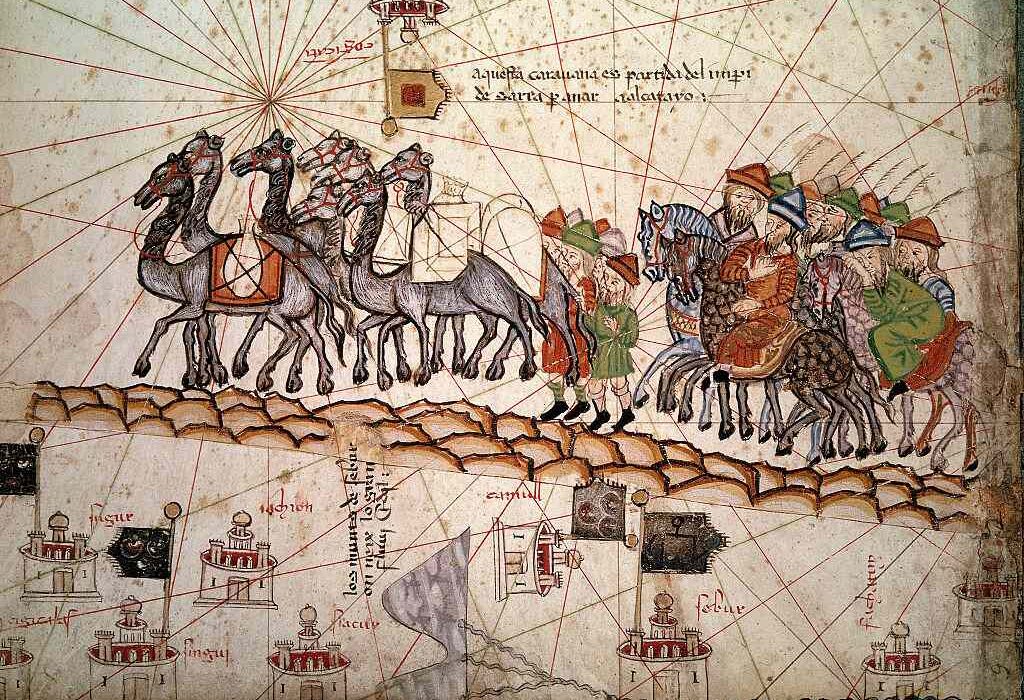
Trade routes crossed deserts, mountains, rivers, and seas. Merchants transported metals, timber, textiles, spices, ceramics, precious stones, and other goods. Some exchanges involved long chains of intermediaries, so an object found far from its place of manufacture could have passed through several communities before reaching its destination.
The Silk Roads, a network of land and maritime connections that developed over many centuries, linked parts of East Asia with Central Asia, western Asia, and regions farther west. Maritime trade across the Indian Ocean connected East Africa, Arabia, South Asia, and Southeast Asia, with routes expanding and changing over time.
These networks did more than distribute merchandise. They also transmitted religious traditions, artistic styles, technical knowledge, and languages. Merchants and travelers helped spread Buddhism into parts of Central Asia and East Asia, while other religious and philosophical traditions moved through different networks.
Migration could transform societies even when it did not involve large invading armies. Families and communities moved in search of land, work, security, or trading opportunities. Their movement changed settlement patterns and contributed to linguistic and cultural diversity.
Exchange also had harmful consequences. Epidemic diseases could spread through connected populations, and military expansion could disrupt communities or force people from their homes. Trade and cultural contact were therefore sources of both innovation and vulnerability.
The ancient world was not an isolated collection of civilizations. It was a changing system of regional networks whose participants influenced one another in ways that were sometimes direct and sometimes difficult to reconstruct.
Daily life in the ancient world
Political history often emphasizes rulers and wars, but most ancient people spent their lives working, raising families, producing food, maintaining households, and participating in local communities.
Agriculture employed a large share of the population in many ancient societies. Farmers cultivated crops suited to their environments, while herders raised animals and communities combined farming with fishing, hunting, or gathering where appropriate.
Household production supplied much of what people needed. Families prepared food, made or repaired clothing, cared for children, and produced tools or other essential goods. In towns and cities, artisans and merchants supported more specialized economies.
Living conditions varied widely according to wealth, location, legal status, and historical period. A wealthy Roman household, an Egyptian farming family, and a laborer in a Mesopotamian city experienced very different forms of daily life.
Food depended on local crops, trade, social status, and the seasons. Grains, legumes, vegetables, fruits, and other plant foods were important in many regions, while access to meat, fish, dairy products, and imported ingredients varied.
Housing ranged from modest dwellings built from locally available materials to elaborate residences with courtyards, decorated rooms, and specialized facilities. Urban infrastructure could include wells, drainage channels, public baths, streets, and marketplaces, although access and maintenance were uneven.
Work could involve family labor, wage labor, compulsory service, or enslavement. Slavery took different forms across ancient societies, but enslaved people generally lacked the freedom to control their own labor and lives. Their work could include domestic service, agriculture, mining, construction, administration, and skilled crafts.
Women performed essential economic, social, and cultural roles, but their legal rights and opportunities varied considerably. In some societies, women could own property, participate in trade, or exercise authority within households and religious institutions. In others, legal and customary restrictions sharply limited their independence.
Studying daily life reveals dimensions of ancient history that royal inscriptions and military narratives often overlook. It also helps explain how large political systems depended on the labor, knowledge, and decisions of ordinary people.
Religion, mythology, and worldviews
Religion influenced ancient ideas about nature, political authority, morality, illness, death, and the purpose of human life. Religious practices differed across societies, but many involved rituals, offerings, sacred places, festivals, and relationships with deities or ancestral powers.
Ancient Egyptian religion included a diverse group of gods and goddesses associated with natural forces, political order, fertility, and the afterlife. Mesopotamian communities worshiped deities associated with cities and aspects of the natural and social worlds. Greek and Roman traditions included multiple gods whose relationships were expressed through myths, temples, ceremonies, and public festivals.
Religion could reinforce political authority. Rulers presented themselves as chosen by divine powers, responsible for maintaining sacred order, or entitled to govern through religious legitimacy. Temples also functioned as economic and administrative institutions in some societies, controlling land, employing workers, and storing resources.
Religious traditions were not static. They changed as communities encountered new ideas, experienced political upheaval, or reinterpreted inherited practices. Religious beliefs could be shared across cultural boundaries while taking distinct local forms.
Ancient philosophical traditions sometimes challenged conventional beliefs or offered alternative explanations of the world. Natural philosophers investigated the causes of physical phenomena, while ethical thinkers debated justice, virtue, and proper conduct. Such inquiry often coexisted with religious practice rather than simply replacing it.
The development and spread of Christianity, Buddhism, and other major religious traditions reshaped many regions during the later ancient period. Their influence extended beyond personal belief into institutions, education, art, political legitimacy, and social organization.
Understanding ancient religion requires taking historical beliefs seriously without assuming that every ancient person held the same views or interpreted rituals in identical ways.
Technology, engineering, and scientific knowledge
Ancient societies developed practical and theoretical knowledge through observation, experimentation, craft traditions, and the accumulated experience of generations.
Agricultural technologies included irrigation systems, plows, water-lifting devices, and methods for storing and processing crops. These innovations helped communities adapt to local environments and support larger populations, although their effectiveness depended on soil conditions, water availability, labor, and maintenance.
Metalworking transformed the production of tools, weapons, ornaments, and specialized equipment. The development of bronze metallurgy required knowledge of materials and techniques for heating, shaping, and combining metals. Ironworking later expanded the range of available tools and weapons in many regions.
Ancient engineers designed roads, bridges, drainage systems, harbors, defensive structures, and monumental buildings. Their achievements relied on geometry, surveying, materials knowledge, labor organization, and repeated practical testing.
Mathematical knowledge developed in different cultural settings. Mesopotamian scholars used numerical systems suited to calculation and recordkeeping. Egyptian mathematics supported surveying, accounting, and construction. Greek mathematicians developed influential traditions of geometric proof, while Indian and Chinese scholars made important contributions to mathematical methods and practical calculation.
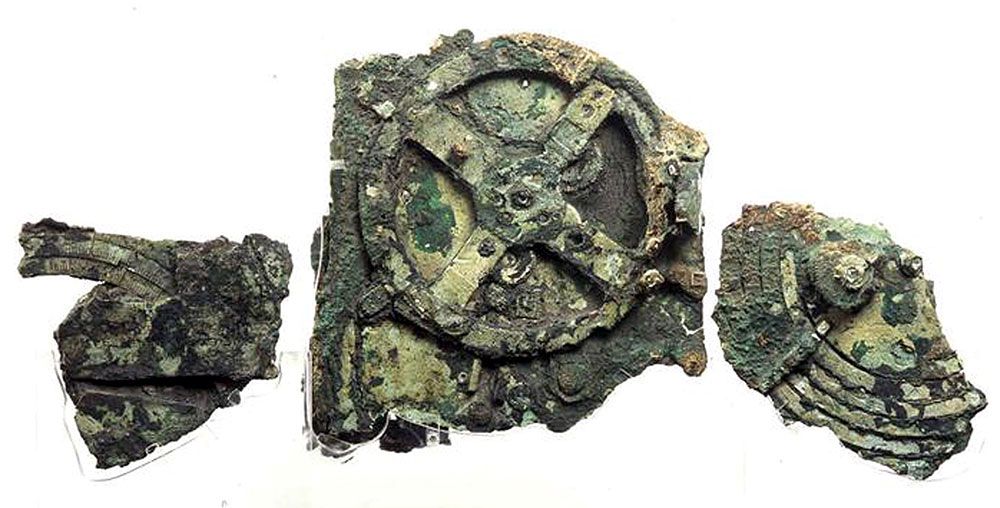
Astronomy was closely linked to calendars, agriculture, navigation, religious ceremonies, and the observation of recurring celestial patterns. Ancient scholars recorded planetary movements and developed increasingly sophisticated ways to predict astronomical events.
Medicine also combined practical observation with theories about the body that differed from modern scientific understanding. Ancient practitioners used herbal preparations, surgery, dietary advice, and other treatments. Some methods provided benefits, while others were ineffective or harmful. Their explanations of disease frequently lacked knowledge of microorganisms, modern anatomy, and the mechanisms of infection.
Ancient science should therefore be evaluated in its historical context. Its achievements were substantial, but ancient thinkers did not possess all the instruments, methods, or theoretical frameworks of modern science. The history of knowledge includes both successful insights and mistaken explanations.
Warfare, empire, and political change
Warfare shaped ancient societies by determining borders, redistributing resources, disrupting economies, and changing political institutions. Armies fought over territory, trade routes, tribute, security, prestige, and control of agricultural land.
Military success depended on more than battlefield tactics. States needed food supplies, weapons, transportation, trained soldiers, and systems for coordinating distant forces. Large armies could place heavy demands on governments and the populations expected to support them.
Empires developed different methods for governing conquered territories. Some relied heavily on local rulers and established elites, while others appointed officials, imposed tribute, stationed garrisons, or relocated populations. Administrative arrangements often changed as rulers responded to local conditions.
Imperial expansion could connect regions that had previously maintained limited contact, encouraging trade and the movement of ideas. However, conquest also brought destruction, forced migration, enslavement, and the loss of political independence.
Empires were rarely as unified as their rulers claimed. Communication across long distances was slow, regional officials possessed their own interests, and local populations could resist imperial demands. Maintaining authority required continuous negotiation as well as military force.
Political collapse also had multiple causes. A state might weaken through civil war, succession disputes, economic disruption, environmental stress, military pressure, or the loss of important trade routes. Several of these factors could reinforce one another.
For example, reduced agricultural production could make it harder for a government to collect revenue and supply its army. Military setbacks could undermine a ruler’s legitimacy, encouraging rebellion. Conflict might then disrupt farming and trade further, creating a cycle of instability.
Historians therefore avoid treating the fall of a civilization as a simple event caused by one invading army or one environmental disaster. Political transformations usually reflect interacting pressures and decisions unfolding over time.
What caused ancient civilizations to decline?
The decline of an ancient city, kingdom, or empire did not necessarily mean the disappearance of its people or culture. Political institutions could collapse while communities continued living in the same region, adapting their economies and preserving elements of their traditions.
Environmental change was one possible source of disruption. Shifts in rainfall, prolonged droughts, changing river courses, soil degradation, and other ecological pressures could affect agricultural production and settlement patterns. Their consequences depended on local geography, available resources, and the ability of communities to adapt.
Political instability could compound environmental difficulties. Governments that depended heavily on agricultural taxes might struggle when harvests failed. Disputes over succession or competing elite interests could prevent coordinated responses to crises.
Trade networks also influenced the stability of ancient societies. A city that relied on imported metals, timber, or food could face serious difficulties if commercial routes were disrupted. Changes in the location of trade could gradually reduce the importance of formerly prosperous centers.
Disease could affect population size, military capacity, and economic activity. However, evidence for particular ancient epidemics is often incomplete, and historians must distinguish well-supported explanations from speculation.
The decline of the Indus Valley’s major urban centers, the transformation of Bronze Age societies in the eastern Mediterranean, and the fragmentation of the western Roman imperial system all involved different combinations of circumstances.
These examples demonstrate why the concept of collapse requires careful definition. A political system may disappear while cultural practices continue. A city may be abandoned while its former inhabitants relocate. A decline in monumental construction may reflect changes in political priorities rather than a complete loss of technical knowledge.
Ancient societies were not simply victims of forces beyond their control. Their leaders and communities made decisions that sometimes improved resilience and sometimes intensified existing problems.
The transition from antiquity to the Middle Ages
The transition from ancient history to the Middle Ages was a prolonged and uneven process. In western Europe, it involved the fragmentation of Roman political authority, the development of new kingdoms, changing economic networks, and the transformation of religious and social institutions.
The Western Roman Empire did not simply vanish overnight in 476 CE. Its institutions had already undergone major changes, and many Roman administrative practices, legal concepts, languages, and cultural traditions survived within the kingdoms that emerged in former imperial territories.
The eastern Roman Empire remained a major political power centered on Constantinople. Its inhabitants continued to identify with Roman political traditions, even as their language, religious institutions, and cultural practices evolved.
In western Europe, Christianity became an increasingly influential institution. Churches and monasteries helped preserve texts, organize communities, provide education, and maintain connections across political boundaries, although access to learning and the preservation of classical works varied considerably by place and period.
Elsewhere, transitions took different forms. In China, the end of the Han dynasty in 220 CE was followed by periods of division and reunification. In South Asia, political and cultural developments followed their own timelines, shaped by changing kingdoms, religious traditions, and commercial networks.
The emergence of the Islamic world in the seventh century CE transformed political, religious, intellectual, and commercial connections across parts of western Asia, North Africa, and beyond. These developments belong to the broader history of the postclassical world, but they also preserved and reinterpreted knowledge inherited from earlier civilizations.
The conventional boundary between antiquity and the Middle Ages is therefore a useful historical framework, not a universal dividing line. Continuity and change occurred together, and their timing depended on the region being studied.
How ancient history influences the modern world
The ancient world continues to influence modern societies through political ideas, legal traditions, languages, religions, architecture, mathematics, literature, and historical memory.
Greek philosophy helped shape later traditions of ethics, logic, political theory, and natural inquiry. Roman legal concepts influenced many legal systems, particularly those shaped by civil-law traditions, although modern laws are not direct copies of ancient Roman rules.
Ancient mathematical and astronomical knowledge contributed to later scholarship through centuries of preservation, criticism, translation, and adaptation. Knowledge moved between cultures, including Greek, Indian, Persian, Arabic-speaking, and European intellectual communities. Scientific progress was therefore a cumulative process involving many societies rather than the achievement of a single civilization.
Religious traditions that originated or developed in antiquity continue to shape the beliefs and institutions of billions of people. Ancient literature, myths, and historical narratives remain influential in art, theater, philosophy, and popular culture.
Architecture also reflects ancient precedents. Columns, arches, domes, monumental public buildings, and certain urban design principles have been adapted repeatedly in different historical settings. Modern uses of these forms often express new political or cultural meanings rather than reproducing ancient practices exactly.
Ancient history also offers insight into recurring social challenges. Governments have long faced questions about taxation, public infrastructure, political legitimacy, inequality, military power, and the management of diverse populations. Ancient societies provide examples of how institutions respond to these pressures, although their experiences cannot be transferred directly to modern conditions.
Studying the past can help identify patterns, challenge assumptions, and explain how institutions developed. It cannot provide simple formulas for solving present-day problems, because historical circumstances differ and the evidence is often incomplete.
Why ancient history still matters
Ancient history helps explain how human societies became increasingly interconnected and how political, economic, religious, and intellectual institutions developed over long periods. It reveals that many features of modern life emerged through gradual experimentation, conflict, cooperation, and cultural exchange.
It also challenges the idea that history follows a single path toward a predetermined destination. Different societies developed distinct systems of government, technology, belief, and social organization. Some influenced one another directly, while others developed complex traditions with little or no sustained contact.
The evidence also reminds us that historical knowledge is continually refined. New archaeological discoveries, improved dating methods, scientific analyses, and reinterpretations of existing sources can change what researchers understand about ancient communities.
Most importantly, ancient history expands our understanding of human experience. It reveals how people adapted to environmental challenges, organized collective life, created systems of meaning, and responded to uncertainty. The ancient world was neither a primitive version of the modern world nor a collection of isolated civilizations. It was a diverse and changing landscape of human societies whose achievements, conflicts, and transformations remain essential to understanding the long history of humanity.