Ancient civilizations were complex human societies that developed organized governments, specialized economies, social institutions, and distinctive cultural traditions. Many built cities, established systems of writing, developed mathematical and astronomical knowledge, constructed monumental architecture, and created laws that helped organize life on a large scale. Their emergence transformed human history by enabling people to coordinate activities across larger populations, preserve knowledge across generations, and develop institutions that influenced societies long after the original civilizations disappeared.
Ancient civilizations did not emerge at a single moment or in one geographic region. They developed independently in several parts of the world as communities adapted to local environments, cultivated crops, domesticated animals, traded resources, and established increasingly complex forms of social organization. Mesopotamia, ancient Egypt, the Indus Valley, and early China produced some of the earliest urban societies, while civilizations in Africa, the Americas, the Mediterranean, and other regions developed their own distinctive traditions.
Understanding ancient civilizations requires looking beyond famous monuments and rulers. Their histories also involve agriculture, technology, trade, religion, political power, environmental change, and the daily lives of ordinary people. Together, these societies reveal how humans built the foundations of many institutions, technologies, and cultural practices that continue to shape the modern world.
How ancient civilizations first emerged
For most of human history, people lived in relatively small, mobile communities that obtained food through hunting, fishing, and gathering wild plants. These communities possessed sophisticated knowledge of their environments and developed tools, languages, social relationships, and cultural traditions. Civilization was not the beginning of human intelligence or culture. Instead, it represented a particular stage in the development of large, interconnected societies.
A major change began when some communities increasingly relied on agriculture and the domestication of animals. This transition occurred at different times in different regions, beginning roughly 12,000 years ago in parts of Southwest Asia and developing independently elsewhere. People cultivated crops, managed herds, and established more permanent settlements.
Agriculture could produce a more predictable food supply under favorable conditions. When communities generated food beyond their immediate needs, they could store it for later use and support people who were not directly engaged in farming. Artisans, builders, merchants, administrators, and religious specialists could devote more time to their particular activities. These specialized roles helped expand the range of goods, services, and institutions within a society.
However, agriculture did not automatically produce cities or states. Farming required substantial labor, and harvests could fail because of drought, flooding, pests, or disease. Early farmers sometimes experienced poorer nutrition and greater exposure to infectious diseases than people who relied on diverse wild foods. The development of civilization was therefore neither a simple march toward progress nor an inevitable outcome of planting crops.
Over time, some settlements grew into towns and cities. Larger populations required ways to manage land, water, food storage, trade, disputes, and collective labor. Political authorities and administrative systems emerged in various forms, including councils, chiefdoms, kingdoms, and city-states. A city-state is an independent political unit centered on a city and its surrounding territory.
Writing, formal recordkeeping, and organized taxation became important in several early urban societies, although their development followed different paths. These systems helped authorities track goods, coordinate workers, manage property, and communicate decisions. The combination of settled populations, economic specialization, political institutions, and cultural complexity made large-scale civilization possible.
Why rivers and fertile landscapes mattered
Many early civilizations developed near rivers or other reliable sources of water. Rivers supplied drinking water, supported agriculture, provided routes for transportation, and sometimes deposited fertile sediment on surrounding land. These advantages helped sustain large populations, particularly in regions where seasonal flooding or irrigation made crop production possible.
Mesopotamia, ancient Egypt, the Indus Valley, and early Chinese civilization are often associated with major river systems. Their environments, however, differed significantly, and each society developed its own ways of managing natural resources.
In Mesopotamia, the Tigris and Euphrates rivers supported settlements across parts of present-day Iraq and neighboring areas. Farmers used irrigation canals to direct water toward fields, helping cultivate crops in an otherwise challenging landscape. Managing irrigation required cooperation, maintenance, and decisions about water distribution. Over time, some settlements developed powerful institutions capable of organizing labor and controlling agricultural resources.
Ancient Egypt depended heavily on the Nile River. Its annual flooding historically replenished agricultural land with nutrient-rich sediment, although the timing and extent of floods varied. The river also formed a natural transportation corridor through much of Egypt. These conditions helped support a relatively integrated kingdom along the Nile Valley, despite periods of political division.
The Indus Valley civilization developed around the Indus River system and associated waterways in parts of present-day Pakistan and northwestern India. Seasonal monsoons, river dynamics, and regional environmental conditions shaped its agricultural economy. Its cities included carefully planned streets, drainage systems, and standardized construction practices.
Early Chinese states developed along the Yellow River and other river systems. The Yellow River’s fertile soils supported agriculture, but floods and shifting channels also created serious challenges. Communities developed methods of cultivation, water management, and political organization suited to their environments.
Rivers were important, but they were not the only foundation of civilization. Trade routes, coastal resources, favorable rainfall, local crops, and connections between ecological regions also mattered. Some complex societies developed in environments where water management, rather than river flooding, played a central role. Civilization emerged through interactions between human ingenuity and particular environmental conditions, not from geography alone.
Mesopotamia and the rise of urban society
Mesopotamia, a historical region between the Tigris and Euphrates rivers, was home to several influential civilizations. Sumerian city-states flourished during the fourth and third millennia BCE, followed by other major political powers, including Akkadian, Babylonian, and Assyrian states. These societies did not form a single continuous empire; they competed, traded, and influenced one another over many centuries.
Sumerian cities such as Uruk developed large populations, specialized crafts, temples, and administrative institutions. Their growth created practical reasons to record economic transactions. One of humanity’s earliest known writing systems emerged in Mesopotamia during the late fourth millennium BCE. Early cuneiform writing used wedge-shaped marks pressed into clay tablets.
Writing initially served many administrative purposes, including tracking grain, livestock, labor, and goods. Over time, it expanded into literature, legal records, royal inscriptions, scholarly texts, and correspondence. Written language made it possible to preserve certain kinds of information beyond the memories of individual people, although literacy remained limited compared with modern standards.
Mesopotamian societies also developed sophisticated mathematical methods. Their use of a sexagesimal, or base-60, numerical system influenced the way later societies divided time and angles. The familiar 60 minutes in an hour and 360 degrees in a circle reflect this long mathematical legacy, transmitted and adapted through later cultures.
Legal traditions were another important development. The Code of Hammurabi, produced under the Babylonian king Hammurabi in the eighteenth century BCE, is among the best-known surviving collections of ancient laws. It addressed matters such as property, trade, family relationships, and penalties for offenses. Its rules distinguished between social groups and imposed unequal punishments, illustrating that ancient law could reinforce existing hierarchies rather than establish equality.
Mesopotamian scholars also observed the sky, tracked celestial movements, and developed calendars and methods for predicting astronomical events. Their records contributed to traditions of mathematical astronomy that later societies further developed.
The region’s legacy includes early urban administration, extensive written records, mathematical practices, and influential literary traditions. The Epic of Gilgamesh, preserved in several versions, explores friendship, kingship, mortality, and the limits of human power. Such works show that ancient urban societies were concerned not only with material survival but also with questions that remain recognizable today.
Ancient Egypt and the power of an organized state
Ancient Egyptian civilization developed along the Nile over thousands of years. The unification of Upper and Lower Egypt around the beginning of the third millennium BCE established a kingdom whose political and cultural traditions endured through numerous dynasties, interruptions, and foreign conquests.
Egypt’s agricultural system depended on the Nile, while the surrounding deserts helped distinguish the river valley from neighboring regions. The river also provided an efficient route for transporting people, food, stone, and other materials. These geographic conditions supported the development of centralized institutions capable of mobilizing labor and resources on a large scale.
The pharaoh occupied a central position in Egyptian government and religion. Royal authority was connected to the idea that the ruler maintained order, often understood through the concept of ma’at, which encompassed truth, balance, justice, and cosmic stability. Priests, administrators, scribes, craftspeople, farmers, and laborers all contributed to the functioning of Egyptian society, although they held very different levels of power and privilege.
Egyptian monumental architecture is among the civilization’s most recognizable achievements. The pyramids were built primarily as royal tombs during the Old Kingdom, especially the third millennium BCE. Their construction required careful planning, surveying, quarrying, transportation, and the organization of large workforces. Archaeological evidence indicates that organized laborers, including skilled workers, played major roles in these projects. The popular image of the pyramids as structures built entirely by enslaved people does not adequately reflect the evidence.
Egyptians developed a writing system that included hieroglyphs, as well as other forms suited to administrative and everyday use. Scribes recorded taxes, agricultural production, religious texts, royal decisions, and personal communications. Papyrus, made from a plant that grew along the Nile, became an important writing material.
Egyptian knowledge also included geometry, practical arithmetic, medicine, and calendar-making. Surveying techniques helped restore field boundaries after floods, while astronomical observations contributed to timekeeping and the development of a 365-day civil calendar. Medical texts preserve descriptions of injuries, symptoms, and treatments, although Egyptian medical practice combined practical observation with religious and magical explanations.
Mummification and elaborate burial practices reflected Egyptian beliefs about death, the body, and the afterlife. These traditions also provide modern researchers with evidence about diet, disease, social status, artistic techniques, and religious life.
Egypt’s influence extended beyond its borders through trade, warfare, diplomacy, and cultural exchange. Its monumental architecture, artistic conventions, religious texts, and administrative traditions remain important sources for understanding how early states organized political power and expressed ideas about life, death, and the natural order.
The Indus Valley civilization and planned cities
The Indus Valley civilization flourished during the third millennium BCE across parts of present-day Pakistan and northwestern India. Its major urban centers included Harappa and Mohenjo-daro. The civilization extended across a broad region and included both large cities and smaller settlements, making it one of the most extensive early urban traditions.
Its cities demonstrate considerable attention to planning and infrastructure. Many featured organized street layouts, substantial brick buildings, drainage channels, wells, and systems for managing wastewater. Standardized brick proportions and measures suggest shared conventions that supported construction and perhaps aspects of trade and administration.
These features indicate that Indus communities could coordinate labor and maintain urban facilities. Their cities were not simply collections of houses but complex environments requiring planning, resource management, and cooperation.
Archaeological evidence also points to long-distance trade. Indus goods and materials reached regions connected to Mesopotamia, while imported resources helped support local crafts. Beads, pottery, metal objects, seals, and other artifacts reveal specialized production and exchange networks. The use of standardized weights suggests that measuring goods was important to economic activity.
One of the greatest challenges in studying the Indus civilization is its writing system. Short inscriptions appear on seals and other objects, but the script has not been reliably deciphered. As a result, researchers cannot confidently reconstruct its political institutions, spoken languages, religious beliefs, or historical events from written records. Interpretations must rely heavily on archaeology and comparisons with other societies, and some questions may remain unresolved.
The civilization’s urban centers declined during the second millennium BCE, but this change was not necessarily a sudden collapse of the entire population. Shifts in settlement patterns, changing river systems, variations in monsoon rainfall, and transformations in trade and agriculture likely contributed. The relative importance of these factors remains debated.
The Indus Valley civilization demonstrates that early urban societies could achieve sophisticated infrastructure and extensive trade without leaving behind a readable written history. It also shows why the absence of deciphered texts should not be mistaken for an absence of intellectual or cultural complexity.
Early China and the development of enduring traditions
Early Chinese civilization developed through multiple regional cultures and political centers rather than emerging from a single isolated settlement. By the second millennium BCE, the Shang dynasty had established a powerful state in parts of northern China. Its rulers presided over fortified centers, craft production, ritual practices, and systems of political authority.
The Shang left behind some of the earliest substantial examples of Chinese writing. Oracle bones, often made from turtle shells or animal shoulder blades, were inscribed with questions posed during divination rituals. The bones were heated, producing cracks that specialists interpreted as answers. Inscriptions recorded royal concerns about warfare, harvests, health, weather, and other matters.
These inscriptions provide direct evidence of Shang political and religious life. They also reveal an early form of Chinese writing that is historically connected to later Chinese script traditions, although the writing system changed considerably over time.
Bronze casting was another major achievement. Shang craftspeople produced elaborate ritual vessels, weapons, and other objects using technically demanding methods. Bronze production required access to raw materials, specialized knowledge, and organized labor, suggesting extensive networks of resource extraction and craft specialization.
The Zhou dynasty succeeded the Shang around the middle of the eleventh century BCE. Zhou rulers developed the concept later known as the Mandate of Heaven, according to which a ruler’s legitimacy depended on maintaining proper order and governing responsibly. Natural disasters, rebellion, or political failure could be interpreted as evidence that a dynasty had lost this mandate. The idea became influential in later Chinese political thought.
During the late Zhou period, political fragmentation encouraged major debates about ethics, government, education, and social order. Confucian traditions emphasized moral cultivation, social responsibility, and appropriate relationships. Daoist traditions explored harmony with the natural course of things and questioned excessive efforts to impose rigid control. Other schools offered competing approaches to law, administration, and state power.
These traditions developed over time and were interpreted differently across Chinese history. Their lasting influence can be seen in education, political philosophy, family ethics, literature, and religious thought. Early Chinese civilization therefore contributed not only technological and administrative achievements but also enduring debates about how people should live and how governments should exercise authority.
Ancient civilizations in the Americas
Complex civilizations developed in the Americas independently of those in Africa and Eurasia. Their emergence involved different crops, environments, technologies, and historical pathways. These societies demonstrate that civilization did not depend on copying a single model or following one universal sequence of development.
In Mesoamerica, the Olmec civilization flourished along parts of the Gulf Coast of present-day Mexico during the second millennium and early first millennium BCE. The Olmec are known for monumental stone sculptures, ceremonial centers, and distinctive artistic traditions. Their cultural influence on later Mesoamerican societies is significant, although the precise relationships between Olmec communities and subsequent civilizations remain subjects of scholarly debate.
The Maya developed complex societies across parts of present-day southern Mexico, Guatemala, Belize, and neighboring regions. Their cities included temples, palaces, plazas, and residential areas. Maya scholars developed sophisticated calendrical systems, recorded historical events in inscriptions, and used a mathematical system that included a symbol for zero. Their writing system could represent language and preserve information about rulers, rituals, warfare, and political relationships.
Maya civilization was not a single empire. It consisted of numerous city-states that sometimes formed alliances and frequently competed with one another. Some major cities experienced political decline or abandonment during periods of environmental stress, warfare, and social disruption, but Maya people did not disappear. Maya communities, languages, and cultural traditions continue today.
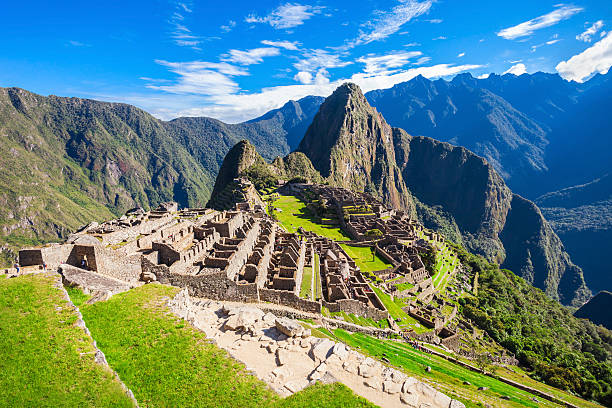
Farther south, the Inca Empire expanded across the Andes during the fifteenth and early sixteenth centuries CE. Although later than many of the civilizations commonly described as ancient, the Inca developed sophisticated methods of governing a vast and geographically difficult territory. Their roads, bridges, storehouses, agricultural terraces, and administrative systems helped connect communities across mountains, valleys, and coastal regions.
The Inca used quipu, systems of knotted cords that encoded numerical and possibly other kinds of information. Their precise range of uses remains incompletely understood. They did not rely on a conventional writing system like those of Mesopotamia or the Maya, yet they managed taxation, labor obligations, redistribution, and communication across a large empire.
Agricultural innovations across the Americas included the cultivation of maize, beans, squash, potatoes, and other crops. These plants supported complex societies and eventually transformed diets and agriculture worldwide after the transatlantic exchange that began in the late fifteenth century.
The civilizations of the Americas show that monumental architecture, mathematics, political administration, and extensive infrastructure could develop through pathways distinct from those of the Old World.
Ancient Greece and the growth of philosophical inquiry
Ancient Greece was not a unified nation-state for most of its history. It consisted of independent city-states and other political communities that shared elements of language, religion, and cultural practice while often competing for power. Greek civilization developed through interactions with neighboring societies, including Egypt and the civilizations of the Near East.
During the first millennium BCE, some Greek communities developed distinctive political institutions. Athens became associated with a form of direct democracy in which eligible male citizens participated in public decision-making. Women, enslaved people, and many residents without citizenship were excluded. Greek political experiments therefore contributed important ideas about civic participation while remaining sharply limited by social inequalities.
Greek thinkers explored questions about nature, knowledge, ethics, politics, and the structure of the universe. Philosophers such as Socrates, Plato, and Aristotle developed influential methods of argument and inquiry. Other Greek scholars investigated mathematics, geometry, medicine, and astronomy.
Greek intellectual life was not separated entirely from practical concerns. Geometry helped address problems of measurement, while astronomical observation supported calendars and models of celestial motion. Hippocratic medical traditions encouraged the explanation of illness through natural causes, although ancient medicine remained limited by incomplete anatomical knowledge and the absence of modern experimental methods.
Greek mathematicians developed rigorous approaches to proof. Euclid’s work organized geometric knowledge into a systematic structure based on definitions, assumptions, and logical deductions. Archimedes investigated geometry, mechanical principles, and the behavior of fluids, producing results that influenced later scientific and mathematical traditions.
Hellenistic civilization emerged after the conquests of Alexander the Great in the fourth century BCE. Greek language and cultural forms spread across a large area, interacting with local traditions from Egypt to Central and South Asia. Centers of learning, including Alexandria in Egypt, brought scholars into contact with mathematical, astronomical, geographical, and medical knowledge from different regions.
The importance of ancient Greece lies not in the claim that science or philosophy began there, but in the influential ways some Greek thinkers organized argument, mathematical proof, and natural explanation. Their work became one part of a much wider history of scientific knowledge, transmitted and transformed by later societies.
Ancient Rome and the organization of a large empire
Rome began as a settlement in Italy and developed into a republic before becoming the center of an extensive empire. At its height, Roman power connected territories across much of Europe, North Africa, and the Near East. Roman institutions combined military expansion with taxation, law, infrastructure, urban administration, and the incorporation of diverse populations.
Roman engineering addressed the practical challenges of governing large territories. Roads enabled the movement of armies, officials, merchants, and information. Aqueducts transported water to cities, while bridges, harbors, drainage systems, and durable buildings supported urban life. Roman builders made extensive use of concrete and developed construction methods that allowed them to create large public structures.
Roman law evolved over centuries through legislation, legal interpretation, and administrative practice. It addressed matters such as property, contracts, citizenship, inheritance, and legal procedure. Roman legal concepts later influenced many legal traditions, especially in continental Europe, although modern legal systems differ substantially from ancient Roman practice.
The empire also relied on an extensive network of trade. Grain, olive oil, wine, metals, textiles, ceramics, and luxury goods moved between regions. Cities became centers of administration, commerce, entertainment, and religious activity. Yet wealth was distributed unevenly, and Roman society depended heavily on slavery, conquest, and the unequal treatment of people according to legal status.
Roman religion changed over time. The early empire incorporated numerous local cults and religious traditions, while Christianity gradually expanded and eventually gained imperial support. Political, economic, military, and religious changes reshaped the empire over many centuries.
The western Roman imperial government ended in the fifth century CE, conventionally dated to 476 CE. This did not mean that Roman civilization vanished everywhere. The eastern Roman Empire, often called the Byzantine Empire by modern historians, continued for nearly another thousand years. Roman law, languages, architectural traditions, religious institutions, and administrative practices persisted in different forms across Europe, North Africa, and the Mediterranean.
Rome’s legacy is therefore both practical and institutional. Its infrastructure, legal traditions, urban planning, and political history influenced later societies, while its reliance on conquest and slavery offers an important reminder that impressive engineering and administrative capacity do not necessarily produce social justice.
How ancient civilizations developed science and technology
Ancient civilizations accumulated knowledge through observation, experimentation, craftsmanship, recordkeeping, and practical problem-solving. Their achievements were rarely the result of isolated geniuses working alone. Instead, they depended on communities that preserved techniques, trained specialists, organized labor, and passed information between generations.
Agriculture was one of the most consequential areas of innovation. Farmers selected seeds from plants with desirable characteristics, gradually changing crops through domestication. They developed techniques suited to local conditions, including irrigation, terracing, crop rotation, and soil management. These practices helped support larger populations, although their success depended on rainfall, soil fertility, labor, and access to water.
Metallurgy transformed toolmaking and warfare. People learned to extract metals from ores, heat them, and shape them into useful objects. Copper, bronze, and iron became important in different regions and periods. Each material required particular knowledge of heating, casting, forging, or alloying. Metal tools could improve farming and construction, but metal weapons also increased the destructive capacity of organized states.
Mathematics developed partly from practical demands. Measuring land, calculating quantities, distributing food, tracking debts, building structures, and predicting seasonal events all required numerical reasoning. Different civilizations developed distinct number systems and mathematical procedures. These systems were not identical to modern mathematics, but some established foundations for later advances.
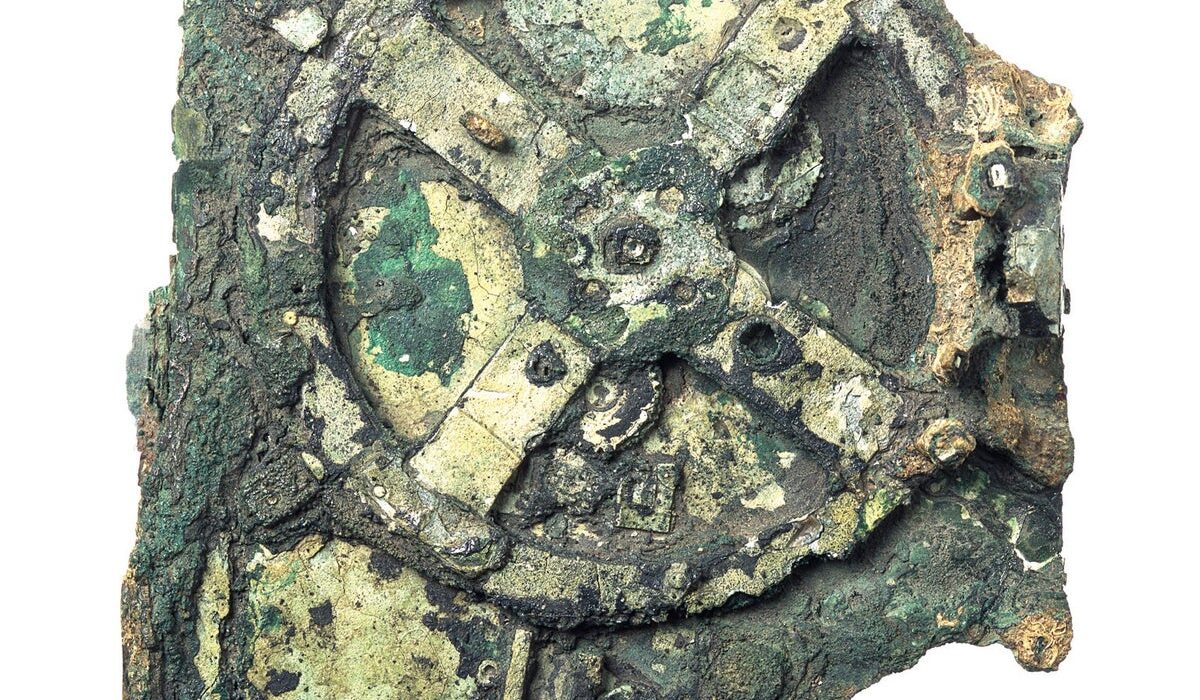
Astronomy grew from sustained observation of the Sun, Moon, planets, and stars. Celestial cycles helped communities organize calendars, anticipate seasonal changes, and establish ritual dates. Some societies developed sophisticated predictions of eclipses or planetary movements. Ancient astronomers often interpreted the sky through religious and philosophical frameworks, yet careful observations could still produce useful and increasingly systematic knowledge.
Medicine combined accumulated experience with explanations shaped by the beliefs of each society. Healers used plants, minerals, surgery, wound care, and other treatments, with effectiveness varying widely. Some ancient medical texts preserve detailed observations of injuries and symptoms, while other treatments lacked reliable evidence or could cause harm. Modern medicine emerged much later through advances in anatomy, microbiology, chemistry, experimental methods, and clinical testing.
Engineering linked knowledge to the physical world. Builders learned how materials responded to weight, weather, and stress. They developed arches, columns, drainage systems, roads, canals, dams, and monumental structures. Although ancient engineers did not possess modern scientific theories in their current form, they often gained reliable practical knowledge through experience and repeated construction.
These achievements show that scientific and technological progress is cumulative. Knowledge becomes more powerful when it can be recorded, tested, taught, corrected, and adapted by people who inherit it.
Trade and cultural exchange connected ancient societies
Ancient civilizations were not isolated islands. They exchanged goods, technologies, artistic styles, religious ideas, and practical knowledge through trade, migration, diplomacy, warfare, and travel. These connections often linked communities separated by deserts, mountains, seas, and vast distances.
Merchants transported materials that were scarce in particular regions, including metals, timber, precious stones, textiles, and spices. Trade encouraged the growth of markets and specialized production, while the movement of goods also carried information about foreign customs and techniques.
Long-distance exchange sometimes depended on multiple intermediaries rather than a single merchant traveling the entire route. Over time, networks linked the Mediterranean with western and central Asia, connected East Asia to neighboring regions, and facilitated exchanges across the Indian Ocean. The networks later known collectively as the Silk Roads developed over many centuries rather than functioning as one fixed road.
The movement of ideas could be as important as the movement of materials. Writing systems were adapted, artistic motifs traveled between regions, and mathematical or astronomical knowledge was translated and expanded. Religious traditions spread through merchants, migrants, missionaries, and political expansion.
Cultural exchange did not always occur peacefully. Conquest could impose new institutions, displace populations, or destroy cultural resources. At the same time, conquered societies often influenced their rulers, and imperial networks could create new opportunities for trade and communication. Cultural change was usually a complex process involving adaptation rather than simple replacement.
These interactions undermine the idea that ancient civilizations developed independently in every respect. Many societies made distinctive contributions, but their histories were also shaped by contact with neighbors and by the gradual movement of people, objects, and knowledge across regions.
Why ancient civilizations declined or transformed
Ancient civilizations did not all end in the same way. Some cities were abandoned, some kingdoms were conquered, some empires fragmented, and some societies transformed gradually into new political or cultural systems. The term collapse can obscure these differences by suggesting that an entire population or culture suddenly disappeared.
Environmental changes could undermine agricultural production. Drought, shifts in rainfall, floods, soil degradation, changing river channels, and deforestation sometimes reduced the reliability of food supplies. When communities depended heavily on particular crops or water systems, environmental disruption could expose weaknesses in their economies.
Political instability could make such problems more difficult to manage. Rival elites, succession disputes, rebellions, and conflicts between states sometimes weakened governments. Warfare could destroy settlements, disrupt trade, and force people to leave their homes. Large empires also faced the challenge of governing distant territories, maintaining armies, and collecting sufficient revenue.
Economic systems could become vulnerable when they depended on narrow trade networks or concentrated resources. Interruptions to transportation or the loss of important trading partners might affect craft production, food distribution, and political authority. Epidemics could also disrupt societies, especially in densely populated settlements where infectious diseases spread readily.
In many cases, several pressures interacted. Environmental stress might reduce harvests, while political conflict prevented effective responses. Warfare could interrupt trade just as food became scarce. These interactions make it difficult to identify a single cause for the decline of a particular civilization, especially when written records are incomplete.
The end of a dynasty or urban center also does not necessarily mark the disappearance of its people. Families may migrate, rural settlements may persist, languages may evolve, and religious or artistic traditions may survive under new governments. The decline of major Indus cities, for example, did not mean that all their inhabitants vanished. Similarly, the end of western Roman imperial rule did not erase Roman cultural and institutional influences.
Archaeologists investigate these changes by studying settlement patterns, building remains, pottery, plant and animal remains, human skeletons, environmental evidence, and written records where available. Each type of evidence provides part of the picture, and interpretations change as new discoveries clarify earlier uncertainties.
What ancient civilizations reveal about human societies
Ancient civilizations demonstrate how humans organized increasingly large communities, managed resources, and created institutions capable of surviving beyond individual lifetimes. They also reveal the trade-offs associated with social complexity.
Cities and states supported specialized work, extensive trade, monumental architecture, and the preservation of knowledge. At the same time, they often produced sharp inequalities. Rulers, landowners, priests, merchants, and other elites could accumulate wealth and influence, while farmers and laborers carried much of the burden of food production and construction. Slavery existed in many ancient societies, though its forms and legal status varied considerably.
Political organization could enable cooperation on a scale difficult for small communities to achieve. Irrigation networks, roads, defensive structures, and public buildings often required coordinated labor and planning. Yet centralized authority could also enforce unequal obligations, extract resources, and wage destructive wars.
Ancient cities also created new public health challenges. Dense populations, inadequate sanitation, contaminated water, and close contact with domesticated animals could increase exposure to infectious diseases. Some communities developed drainage systems and other measures that improved urban conditions, but ancient societies lacked the microbiological knowledge necessary to understand many disease transmission processes.
The surviving historical record is uneven. Monumental buildings and royal inscriptions often tell us more about powerful groups than about ordinary families. Archaeology helps correct this imbalance by revealing housing, food remains, tools, burials, and evidence of daily work. Even so, the lives and perspectives of many people remain difficult to reconstruct.
Studying ancient civilizations therefore requires more than celebrating achievements. It means examining how societies functioned, whose interests they served, how they adapted to change, and what their successes and failures reveal about collective human behavior.
The lasting legacies of ancient civilizations
The influence of ancient civilizations survives through institutions, technologies, languages, artistic traditions, and bodies of knowledge that later societies adapted. These legacies rarely passed unchanged from one generation to the next. They were repeatedly reinterpreted as people encountered new problems and developed new ideas.
Writing remains one of the most important legacies of early urban societies. Ancient systems of recordkeeping helped preserve laws, literature, commercial transactions, religious traditions, and historical accounts. Modern writing systems differ substantially from early cuneiform, hieroglyphic, and other scripts, but the broader principle of preserving information outside the human memory remains fundamental to complex societies.
Mathematical and astronomical traditions also endured through long chains of transmission. Ancient number systems influenced later conventions for measuring time and angles. Greek geometry, Babylonian observations, Indian mathematical developments, and scholarship preserved and expanded in the Islamic world all contributed to the wider history of mathematics and astronomy. No single civilization accounts for the entire development of modern scientific knowledge.
Legal and political traditions likewise reflect a mixture of inheritance and change. Roman law influenced many later legal systems, while Greek political thought shaped debates about citizenship, constitutions, and public life. Chinese political philosophy influenced ideas about education, ethical leadership, and government across East Asia. These influences were substantial but did not determine the development of modern institutions on their own.
Architecture provides another visible connection to the past. Arches, columns, monumental stone construction, urban grids, and water-management techniques continue to inform building design and historical preservation. Modern engineers, however, rely on materials science, structural analysis, and construction technologies unavailable to ancient builders.
Agricultural domestication has had an especially far-reaching impact. Crops developed and refined over thousands of years became central to food systems around the world. Maize, potatoes, rice, wheat, and other domesticated plants helped shape population growth, trade, cuisine, and economic development across different regions.
Ancient civilizations also left a cultural legacy through stories, religious traditions, philosophical arguments, artistic styles, and historical examples. Their literature explores themes such as justice, leadership, mortality, loyalty, and the relationship between humans and the natural world. Their political histories reveal both the possibilities of collective organization and the dangers of concentrated power.
Understanding these legacies requires recognizing the contributions of many societies rather than treating history as the achievement of a few famous empires. Civilizations developed through both independent innovation and sustained exchange. Their accomplishments became part of a shared human history whose outcomes were shaped by countless generations.
Ancient civilizations were not simply distant societies that built impressive monuments. They were diverse experiments in how people could live together, produce food, distribute resources, organize governments, investigate the natural world, and preserve knowledge. Their histories explain how complex societies emerged and changed, while their achievements and failures offer lasting insight into the opportunities and challenges of human civilization.