On a clear, dark night, the sky can appear filled with countless stars scattered randomly across the heavens. To the naked eye, they often seem like isolated points of light separated by vast stretches of darkness. Yet this impression is somewhat misleading. Many stars are not alone. They belong to larger families connected by a powerful force that shapes the entire universe: gravity.
Among the most beautiful and fascinating of these stellar families are star clusters. These remarkable gatherings contain dozens, hundreds, thousands, or even millions of stars that formed together and remain linked through their mutual gravitational attraction. They are cosmic communities, born from the same giant clouds of gas and dust, sharing a common origin story that stretches back millions or billions of years.
Star clusters are among the most important objects in astronomy. They help scientists understand how stars are born, how they evolve, and how galaxies change over time. They serve as natural laboratories where astronomers can study stars of different masses and ages under similar conditions. Some clusters are relatively young, still glowing with the energy of recent star formation. Others are ancient survivors from the earliest chapters of our galaxy’s history.
The Milky Way contains hundreds of known star clusters and likely many more waiting to be discovered. Together, they provide a living record of our galaxy’s past and offer clues about its future.
To understand star clusters is to understand one of the universe’s most beautiful expressions of cosmic family.
What Exactly Is a Star Cluster?
A star cluster is a group of stars that are physically associated with one another through gravity and that usually share a common origin.
Unlike stars that merely appear close together from Earth’s perspective, stars in a true cluster are actually located near one another in space. Most of them formed from the same giant molecular cloud—a vast region of cold gas and dust where star formation takes place.
Because these stars were born from the same cloud, they often have similar ages and chemical compositions. This shared heritage makes star clusters especially valuable to astronomers.
Imagine a family reunion where everyone shares common ancestors. Even though family members may have different personalities, appearances, and life experiences, they remain connected through their origins. In a similar way, stars within a cluster can vary greatly in size, temperature, brightness, and lifespan, yet they remain related through their common birth environment.
Gravity acts as the glue that holds these stellar families together.
Without gravity, the stars would drift apart into the galaxy and lose their identity as a cluster.
The Birthplace of Stars
To understand star clusters, we must first understand where stars come from.
Stars are born inside enormous clouds of gas and dust called molecular clouds. These clouds are among the coldest regions in the galaxy, with temperatures low enough for molecules to exist.
Despite their peaceful appearance, molecular clouds are dynamic environments. Turbulence, shock waves from nearby supernova explosions, and gravitational forces constantly influence their structure.
Eventually, certain regions within a cloud become dense enough for gravity to take over.
As gravity pulls material inward, the region begins collapsing. The collapsing gas becomes hotter and denser until young stars start to form.
But stars rarely form one at a time.
Instead, a single cloud often produces large numbers of stars simultaneously. Entire groups of stars emerge from the same stellar nursery.
This is why star clusters exist.
They are the natural outcome of the star formation process.
Gravity: The Force That Creates Families
Gravity is one of the four fundamental forces of nature, and it plays the central role in the existence of star clusters.
Every star exerts a gravitational pull on every other star in the cluster.
Although the gravitational attraction between individual stars may be relatively weak because of their great separations, the combined gravitational influence of hundreds or thousands of stars creates a stable system.
This mutual attraction prevents the cluster from immediately dispersing into the galaxy.
In many ways, gravity acts like an invisible web connecting every member of the cluster.
Each star moves through space while simultaneously responding to the gravitational influence of its neighbors.
The result is a dynamic, constantly evolving system that can survive for millions or even billions of years.
Why Star Clusters Matter
At first glance, star clusters might seem like merely beautiful collections of stars.
In reality, they are among the most important tools in astronomy.
One reason is that stars within a cluster generally formed at roughly the same time.
This provides astronomers with a unique opportunity.
When scientists study isolated stars, determining their exact ages can be difficult. But in a cluster, researchers know that most stars share a common birth date.
This allows astronomers to compare stars of different masses while holding age relatively constant.
Star clusters therefore function as natural laboratories for studying stellar evolution.
By observing cluster stars, scientists can test theories about how stars live and die.
These observations have helped shape much of modern astrophysics.
The Two Main Types of Star Clusters
Although star clusters come in many forms, astronomers generally divide them into two major categories.
The first category is open clusters.
The second category is globular clusters.
These two groups differ dramatically in age, size, structure, appearance, and history.
Together, they reveal different chapters in the story of the Milky Way.
Open Clusters: Young Families of Stars
Open clusters are relatively loose collections of stars.
They typically contain anywhere from a few dozen to several thousand stars.
Unlike tightly packed globular clusters, open clusters have an irregular appearance. Their stars are spread over larger areas, and the clusters often lack a clearly defined shape.
Most open clusters are young by astronomical standards.
Some are only a few million years old.
Others may survive for several hundred million years before gradually dispersing.
Because they are young, open clusters often contain bright blue stars.
These massive stars burn hot and fast, shining brilliantly but living relatively short lives.
When we observe open clusters, we are often witnessing stellar youth.
The Pleiades: One of the Most Famous Open Clusters
Perhaps the most famous open cluster in the night sky is the Pleiades.
Also known as the Seven Sisters, the Pleiades has been observed by humans for thousands of years.
Visible without a telescope, it appears as a small group of bright stars clustered together.
Ancient cultures around the world incorporated the Pleiades into myths, calendars, and navigation systems.
Modern astronomy reveals that the cluster contains hundreds of stars, although only a handful are easily visible to the naked eye.
The Pleiades formed roughly 100 million years ago, making it relatively young.
It provides a stunning example of an open cluster still holding together despite the forces trying to pull it apart.
The Hyades and Nearby Stellar Neighbors
Another important open cluster is the Hyades.
The Hyades is the closest major open cluster to Earth.
Its stars form a distinctive V-shaped pattern in the constellation Taurus.
Because of its proximity, the Hyades has played a crucial role in astronomical research.
Scientists have used it to improve distance measurements, study stellar evolution, and test theoretical models.
Its relatively close location allows astronomers to examine individual stars with exceptional detail.
Why Open Clusters Eventually Disappear
Despite their beauty, open clusters are usually temporary structures.
Several factors gradually pull them apart.
Stars within the cluster constantly interact gravitationally with one another. These interactions can alter stellar orbits and sometimes eject stars from the cluster entirely.
Passing molecular clouds can also disturb the cluster.
The gravitational influence of the Milky Way itself contributes to the process.
Over time, more and more stars escape.
Eventually, the cluster loses its identity.
Its former members continue orbiting the galaxy independently.
Many stars currently scattered throughout the Milky Way may once have belonged to ancient open clusters that no longer exist.
In fact, our own Sun likely formed within a cluster billions of years ago before becoming separated from its stellar siblings.
Globular Clusters: Ancient Giants
If open clusters are youthful families, globular clusters are ancient dynasties.
Globular clusters are among the oldest structures in the Milky Way.
Many formed more than 10 billion years ago, making them nearly as old as the galaxy itself.
These clusters contain enormous numbers of stars.
Some host hundreds of thousands of stars.
Others contain more than a million.
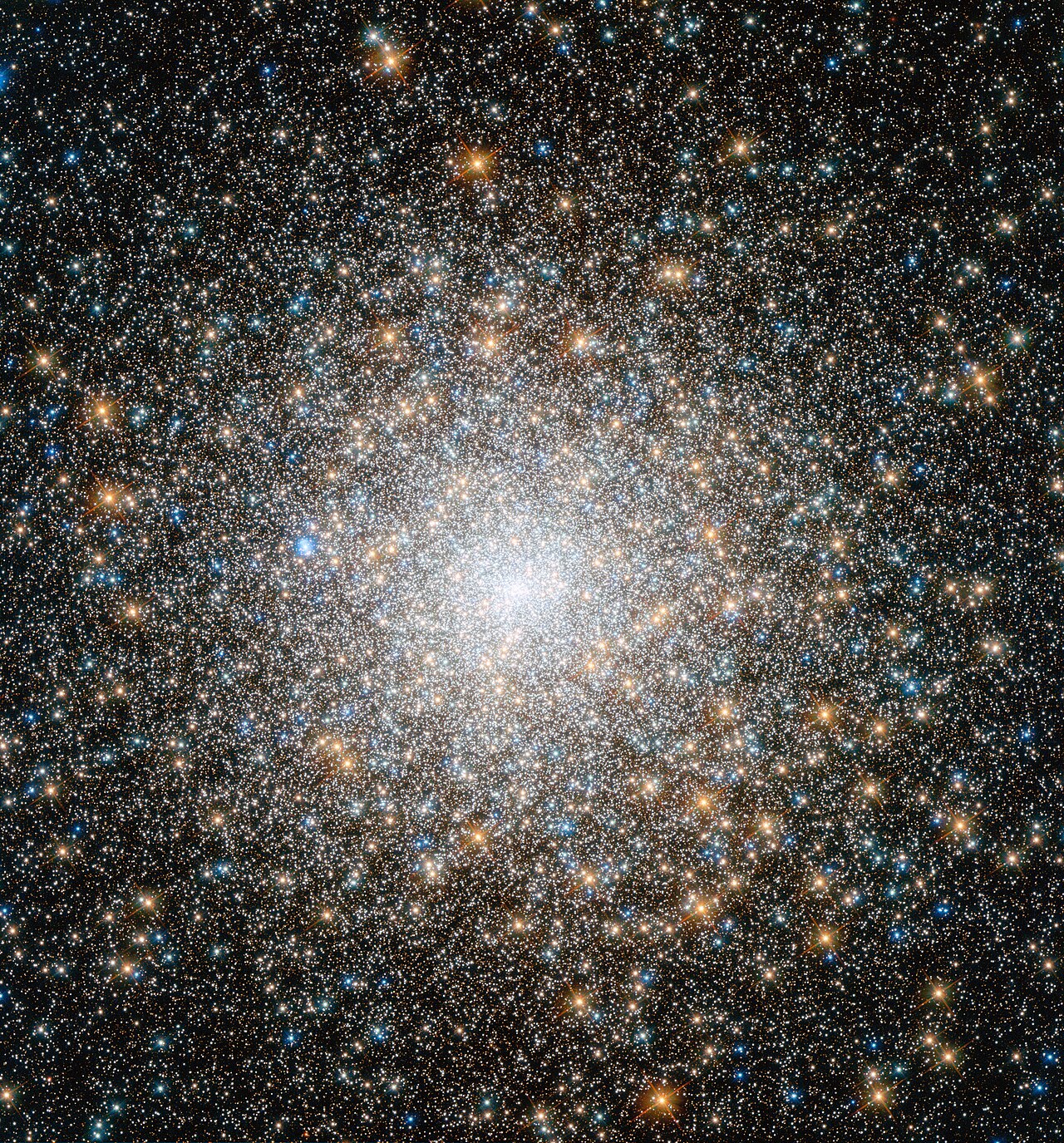
Unlike open clusters, globular clusters are tightly packed and roughly spherical.
Near their centers, stars can be extraordinarily crowded.
The night sky inside a globular cluster would look astonishingly different from what we see on Earth.
Thousands of bright stars would dominate the heavens.
The Great Cluster in Hercules
One of the most famous globular clusters is Messier 13.
Often called the Great Hercules Cluster, it is visible through small telescopes and binoculars.
Located tens of thousands of light-years away, it contains hundreds of thousands of stars packed into a relatively compact volume of space.
Its dazzling appearance has fascinated astronomers for centuries.
When viewed through larger telescopes, individual stars begin to emerge from what initially appears to be a fuzzy ball of light.
Messier 13 offers a glimpse into one of the oldest stellar populations in our galaxy.
Ancient Survivors from the Early Universe
Globular clusters are valuable because they preserve information about the early history of the Milky Way.
Most of their stars formed long before Earth existed.
Many originated when the galaxy itself was still taking shape.
Because these clusters are so old, they contain relatively few heavy elements.
In astronomy, elements heavier than hydrogen and helium are produced inside stars and distributed through space when stars die.
The earliest generations of stars formed before many heavy elements existed.
Globular cluster stars therefore act as fossils from an earlier cosmic era.
Studying them allows scientists to investigate conditions that existed billions of years ago.
Where Star Clusters Live in the Milky Way
Open and globular clusters occupy different regions of the galaxy.
Open clusters are mostly found in the Milky Way’s disk.
This is the flattened region where gas, dust, and ongoing star formation are concentrated.
Their presence there reflects their youthful origins.
Since stars continue forming in the galactic disk, new open clusters constantly appear.
Globular clusters occupy a different environment.
Most reside in the galactic halo, a vast spherical region surrounding the Milky Way.
They orbit far above and below the galactic plane.
This distribution supports the idea that globular clusters formed during the earliest stages of galactic evolution.
Their locations provide important clues about how the Milky Way assembled itself over time.
How Astronomers Identify Cluster Members
One challenge in studying star clusters involves determining which stars truly belong to the cluster.
Not every star seen in the same direction is necessarily a member.
Some stars may simply lie along the same line of sight.
Modern astronomy uses several techniques to solve this problem.
Astronomers measure stellar motions, distances, and chemical compositions.
Stars belonging to the same cluster generally move together through space.
They often share similar chemical fingerprints as well.
Data from missions such as Gaia have revolutionized this process.
Gaia has mapped the positions and motions of billions of stars, allowing researchers to identify cluster members with unprecedented precision.
The Life Cycle of Stars Inside Clusters
One of the greatest advantages of studying clusters is that they reveal different stages of stellar evolution.
Stars are born with varying masses.
Mass determines nearly everything about a star’s future.
Massive stars burn fuel rapidly and die young.
Smaller stars burn fuel slowly and can survive for billions or even trillions of years.
Because cluster stars formed together, differences among them primarily reflect differences in mass rather than age.
This makes clusters ideal for testing theories of stellar evolution.
Astronomers can observe how stars of different masses change over time while knowing they originated from the same environment.
Star Cluster Colors and What They Mean
The colors of cluster stars tell important stories.
Blue stars are typically hot and massive.
White stars are somewhat cooler.
Yellow stars resemble our Sun.
Orange and red stars are cooler still.
A young open cluster often contains many bright blue stars.
These stars have not yet exhausted their nuclear fuel.
Older clusters look different.
Their massive blue stars have already died.
As a result, older clusters are dominated by redder stars.
The overall color of a cluster therefore provides clues about its age.
In some sense, astronomers can estimate a cluster’s age simply by examining the stars that remain alive.
Binary Stars and Stellar Interactions
Many stars exist in pairs.
These systems are called binary stars.
Clusters contain large numbers of binary systems.
In dense environments, especially globular clusters, stars can interact in fascinating ways.
Close encounters may alter stellar orbits.
Binary stars can exchange material.
Rare collisions can occur.
These interactions create unusual objects that are rarely seen elsewhere.
Some stars appear younger than they should.
Others become exceptionally bright.
Clusters therefore serve as natural laboratories for studying complex gravitational dynamics.
The Mystery of Blue Stragglers
Among the strangest cluster stars are blue stragglers.
These stars appear younger than the rest of the cluster.
In an old cluster, massive blue stars should have died long ago.
Yet blue stragglers remain.
Their existence puzzled astronomers for decades.
The most likely explanation involves stellar interactions.
Some blue stragglers may form when two smaller stars merge.
Others may gain mass from a companion star.
By becoming more massive, they effectively receive a second chance at stellar youth.
Blue stragglers remind us that star clusters are not static systems.
They continue evolving long after their formation.
Star Clusters Beyond the Milky Way
Although the Milky Way contains many clusters, it is far from unique.
Other galaxies possess their own stellar families.
Large galaxies often host thousands of globular clusters.
Some dwarf galaxies contain only a few.
Observing clusters in distant galaxies helps astronomers compare galactic histories across the universe.
These observations reveal that star clusters are a common outcome of galaxy formation.
They are not rare exceptions.
They are a fundamental part of the cosmic landscape.
Could Planets Exist in Star Clusters?
A fascinating question concerns planets.
Can planetary systems form within star clusters?
The answer appears to be yes.
Astronomers have discovered planets associated with cluster stars.
However, cluster environments can be challenging.
Nearby stars may gravitationally disturb planetary systems.
Radiation from massive stars can affect young planets.
Despite these obstacles, planets clearly can exist within clusters.
This raises intriguing possibilities.
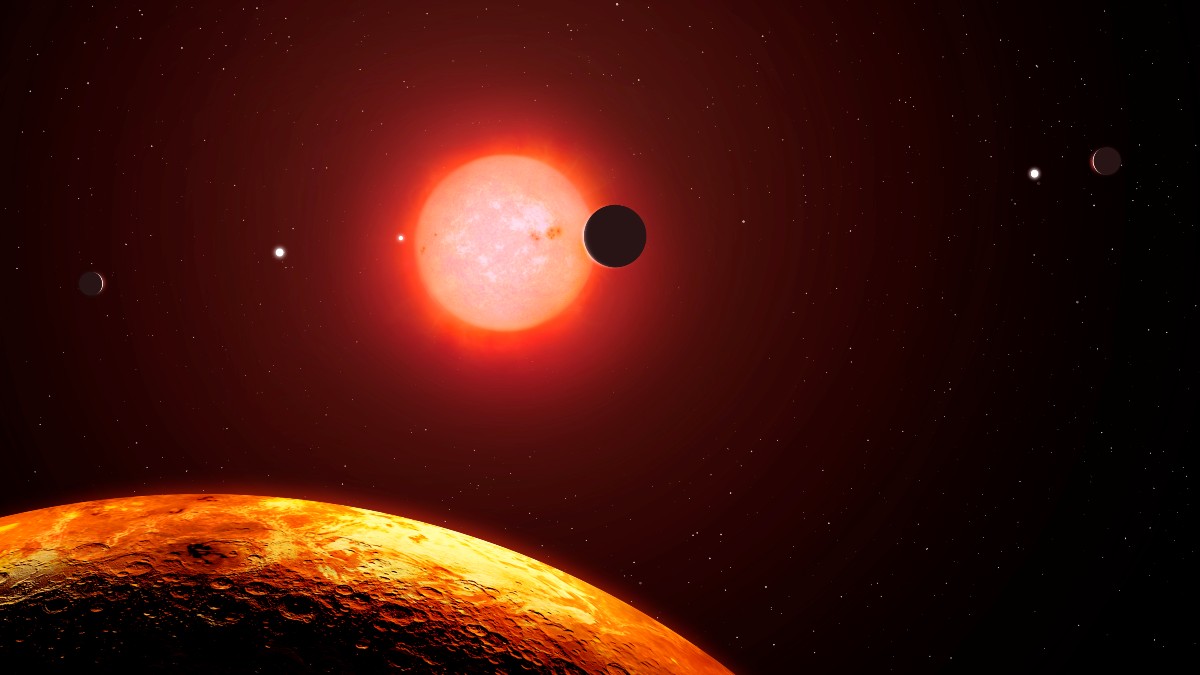
Some worlds may orbit stars surrounded by hundreds or thousands of neighboring suns visible in their skies.
The nightscapes on such planets would be dramatically different from Earth’s.
The Future of the Sun’s Lost Family
Evidence suggests that the Sun formed approximately 4.6 billion years ago inside a cluster.
The original cluster likely contained hundreds or perhaps thousands of stars.
Over time, gravitational interactions dispersed the group throughout the Milky Way.
Today, those stellar siblings are scattered across the galaxy.
Astronomers continue searching for them.
By comparing stellar ages, chemical compositions, and motions, researchers hope to identify stars that shared the Sun’s birthplace.
Finding these siblings would provide valuable insights into our solar system’s origins.
Star Clusters and the Search for Galactic History
Star clusters function as historical records.
Each cluster preserves information about the conditions that existed when it formed.
By studying clusters of different ages, astronomers can reconstruct the Milky Way’s past.
Young clusters reveal current star formation.
Intermediate-age clusters show how stellar populations evolve.
Ancient globular clusters offer glimpses of the galaxy’s earliest epochs.
Together, they form a timeline stretching across billions of years.
Without star clusters, much of the Milky Way’s history would remain hidden.
Modern Telescopes and New Discoveries
Advances in technology continue transforming cluster research.
Powerful telescopes can now resolve individual stars in distant clusters.
Space observatories avoid atmospheric distortions and provide clearer views.
Large surveys generate enormous datasets that reveal previously unknown structures.
Artificial intelligence and advanced computer simulations help astronomers analyze complex stellar systems.
As a result, new clusters are still being discovered.
Old assumptions are being revised.
Questions once thought impossible to answer are gradually yielding to investigation.
The study of star clusters remains one of astronomy’s most active fields.
The Beauty of Cosmic Families
Beyond their scientific importance, star clusters possess extraordinary beauty.
They remind us that stars are not always solitary wanderers.
Many begin life together.
They share origins, environments, and histories.
Some remain bound for billions of years.
Others slowly drift apart, carrying memories of their common birthplace across the galaxy.
When we look at a cluster through a telescope, we are seeing more than a collection of stars.
We are witnessing relationships forged by gravity.
We are observing families on a cosmic scale.
These stellar communities reveal that even in the vast emptiness of space, connection matters.
Conclusion
Star clusters are among the most remarkable structures in the universe. They are groups of stars born from the same cloud of gas and dust and held together by gravity, forming true stellar families within the Milky Way. From the youthful brilliance of open clusters to the ancient grandeur of globular clusters, they showcase the many stages of stellar life and galactic evolution.
For astronomers, star clusters are invaluable laboratories. They provide insights into how stars form, evolve, interact, and die. They preserve records of the Milky Way’s history, helping scientists reconstruct events that occurred billions of years ago. Some clusters contain stars that have existed since the earliest eras of our galaxy, while others are still emerging from their stellar nurseries today.
Yet star clusters offer more than scientific knowledge. They inspire wonder. They reveal that even across unimaginable distances, gravity can bind countless stars into enduring communities. They show that the universe is not merely a collection of isolated objects but a place filled with relationships, histories, and shared origins.
The next time you gaze at the night sky and spot a sparkling cluster of stars, remember that you are looking at a family. Those stars were born together, journey together, and tell a story that stretches across millions or billions of years. In their light, we glimpse not only the workings of gravity but also the deep interconnectedness of the cosmos itself.