On a clear night, the stars above may seem peaceful, eternal, and unchanging. They sparkle gently across the darkness, appearing almost identical to the naked eye. Yet hidden among those countless points of light are some of the most extraordinary objects in the universe—stars so massive, so hot, and so powerful that they completely transform the regions around them.
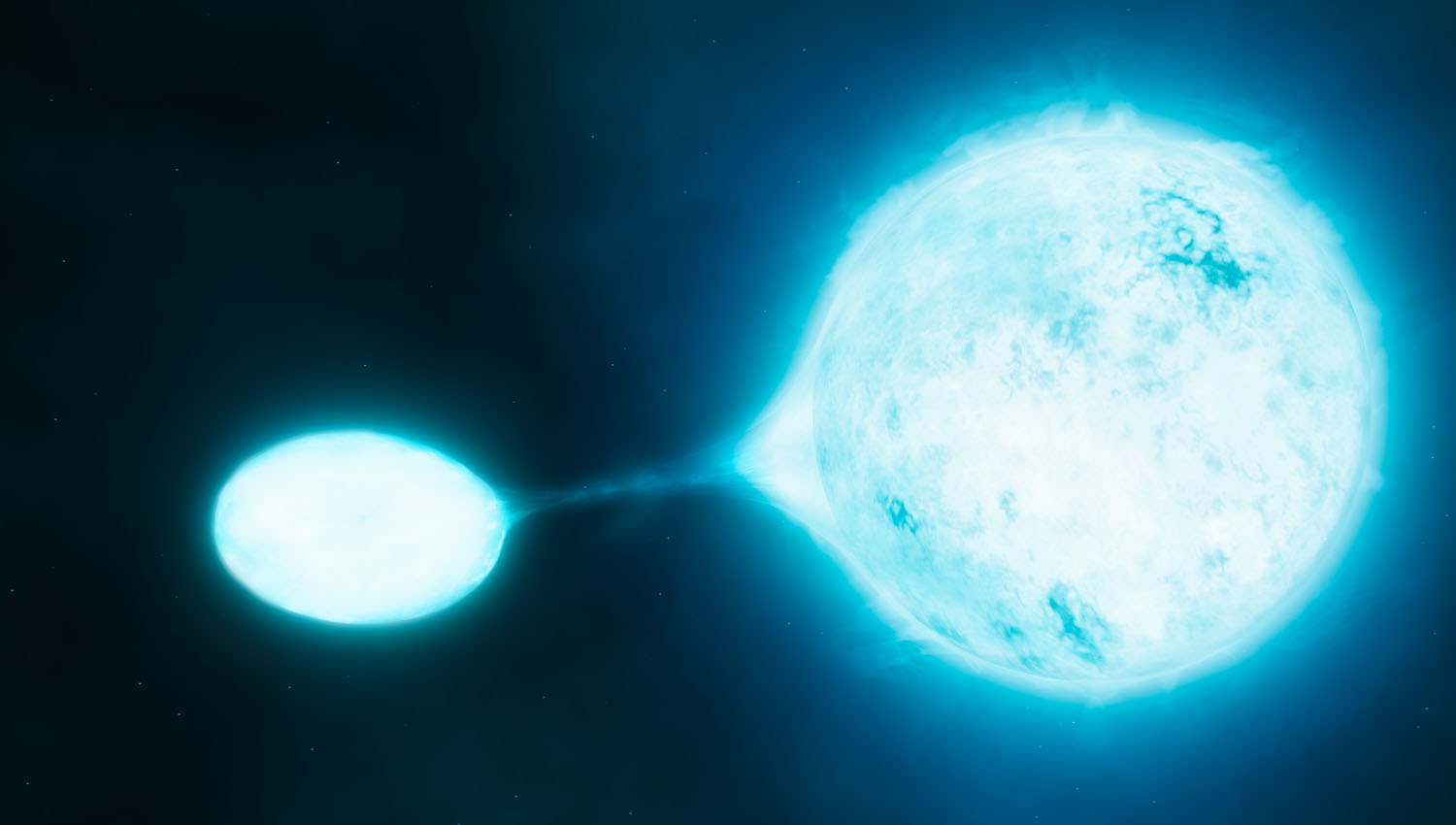
Among these cosmic titans are O-type stars, the rarest and most extreme stars in the universe’s stellar family. They are brilliant blue giants that burn with unimaginable intensity. They shine millions of times brighter than the Sun, unleash fierce stellar winds, and flood space with powerful radiation. Their energy sculpts entire galaxies, triggers the birth of new stars, and influences the evolution of planets.
Yet despite their immense power, O-type stars live surprisingly short lives.
While our Sun will survive for roughly 10 billion years, many O-type stars exhaust their fuel in only a few million years. They live fast, burn bright, and die young in some of the most spectacular explosions the universe can produce.
These stars are the cosmic equivalent of brilliant superstars who blaze across the stage for only a brief moment before making a dramatic exit. Though rare, their influence extends far beyond their short lifetimes. Without them, the universe would look very different—and life itself might never have emerged.
To understand O-type stars is to understand some of the most powerful forces shaping the cosmos.
Understanding Stellar Classification
Before exploring O-type stars specifically, it helps to understand how astronomers classify stars.
Not all stars are the same. They differ in mass, temperature, size, brightness, composition, and age. To organize this incredible diversity, astronomers developed a system known as stellar classification.
Modern stars are grouped according to their surface temperatures and spectral characteristics. The main sequence of stellar types is arranged using the letters O, B, A, F, G, K, and M.
This sequence may seem random, but it reflects the history of astronomy and the gradual refinement of stellar classification systems.
O-type stars occupy the hottest end of this scale.
As we move from O toward M, stars generally become cooler and less massive. O-type stars therefore represent the most energetic ordinary stars found in the universe.
Their position at the very beginning of the sequence is no accident. They are truly the giants of stellar physics.
Why Are O-Type Stars Blue?
One of the most striking characteristics of O-type stars is their color.
Unlike our Sun, which appears yellowish-white, O-type stars shine with an intense blue or blue-white glow.
The reason comes down to temperature.
Every object emits electromagnetic radiation according to its temperature. Cooler objects emit more energy at longer wavelengths, while hotter objects emit more energy at shorter wavelengths.
Since O-type stars possess extraordinarily high surface temperatures, much of their radiation is concentrated toward the blue and ultraviolet portions of the spectrum.
Many O-type stars have surface temperatures exceeding 30,000 Kelvin. Some can reach more than 50,000 Kelvin.
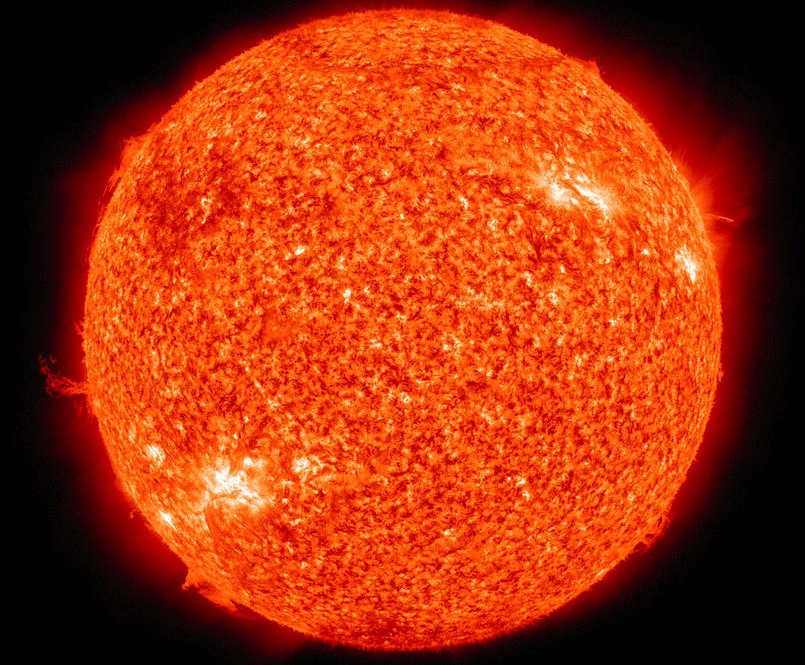
For comparison, the Sun’s surface temperature is about 5,800 Kelvin.
This enormous difference explains why O-type stars appear blue and why they radiate such vast amounts of energy.
Their blue color is essentially a visible sign of their extreme heat.
The Incredible Size of O-Type Stars
O-type stars are not only hot—they are enormous.
While some stars are only slightly larger than planets, O-type stars rank among the most massive stellar objects in existence.
Many contain more than 15 times the mass of the Sun. The most extreme examples may exceed 100 solar masses.
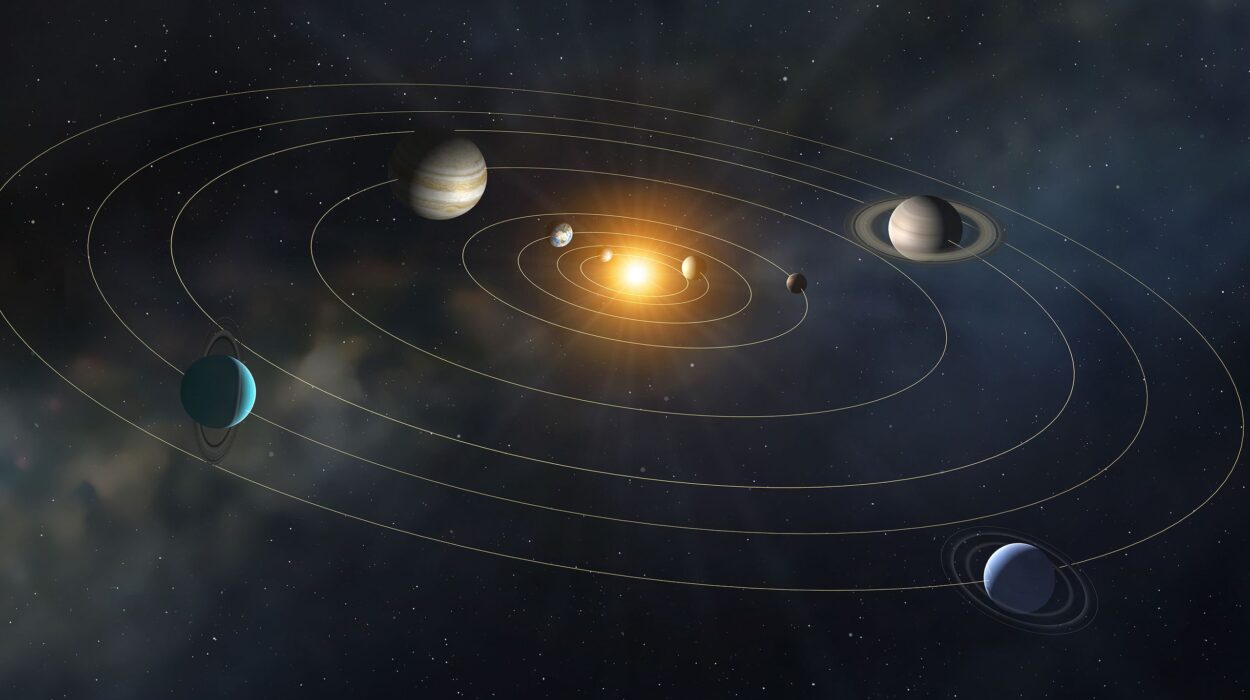
To grasp the scale involved, imagine replacing our Sun with a typical O-type star.
The star would dominate the solar system. Its intense radiation would completely alter planetary environments. Earth would not survive.
Even though stellar size can vary significantly, O-type stars generally possess diameters many times greater than the Sun’s.
Yet their mass is even more impressive than their physical size.
The tremendous weight of so much material creates extraordinary pressures inside their cores, driving nuclear reactions at astonishing rates.
This is the secret behind their brilliance.
How O-Type Stars Are Born
Every star begins inside a cloud of gas and dust.
These vast stellar nurseries, known as molecular clouds, contain the raw ingredients needed for star formation.
Gravity slowly pulls material together, creating dense regions that continue to collapse.
As the collapsing cloud becomes denser, its central temperature rises.
Eventually, the core becomes hot enough for nuclear fusion to begin.
A star is born.
For most stars, this process produces relatively modest objects similar to the Sun or smaller red dwarfs.
Creating an O-type star requires something far more dramatic.
A huge amount of material must accumulate in a single region. Massive clouds collapse rapidly, feeding growing protostars with enormous quantities of gas.
Even among stellar nurseries, the conditions required to create O-type stars are uncommon.
This rarity helps explain why O-type stars are so scarce throughout the galaxy.
Nuclear Fusion at Extreme Levels
The power source of every star is nuclear fusion.
Fusion occurs when atomic nuclei combine to form heavier elements, releasing enormous amounts of energy.
Inside the Sun, hydrogen nuclei fuse into helium.
O-type stars perform the same basic process, but on a vastly larger scale.
Their immense mass generates tremendous gravitational pressure.
This pressure raises core temperatures to tens of millions of degrees.
Under these extreme conditions, fusion proceeds at an extraordinary rate.
Imagine two campfires.
One burns slowly and steadily throughout the night.
The other roars like an inferno, consuming fuel at incredible speed.
The Sun resembles the first fire.
An O-type star resembles the second.
The result is staggering luminosity.
Some O-type stars emit hundreds of thousands or even millions of times more energy than the Sun.
They are among the brightest stars in the universe.
The Brightest Stars in the Galaxy
If O-type stars are so rare, why do astronomers pay so much attention to them?
One reason is their extraordinary brightness.
Even though they represent only a tiny fraction of all stars, they dominate the appearance of many star-forming regions.
Their light can travel enormous distances across space.
Some O-type stars are visible across vast portions of the Milky Way.
When astronomers observe distant galaxies, the brightest stellar objects they often detect are massive blue stars.
Their luminosity is so great that a single O-type star can outshine thousands or even millions of smaller stars.
This brilliance makes them important cosmic landmarks.
By studying their light, astronomers can learn about the composition, motion, and structure of distant regions of the universe.
Why O-Type Stars Are So Rare
The universe produces many more small stars than large ones.
For every massive O-type star that forms, countless lower-mass stars emerge.
This pattern is one of the most important discoveries in stellar astronomy.
The reason relates to how molecular clouds fragment during star formation.
Smaller clumps form more easily than extremely massive ones.
As a result, low-mass stars vastly outnumber high-mass stars.
In the Milky Way, O-type stars account for only a tiny percentage of the total stellar population.
Some estimates suggest that only a few tens of thousands exist in our galaxy at any given time.
That may sound like a large number, but compared with the hundreds of billions of stars in the Milky Way, it makes O-type stars exceptionally rare.
Finding one is like spotting a celebrity in a city filled with ordinary residents.
The Power of Ultraviolet Radiation
O-type stars do more than emit visible light.
They generate enormous amounts of ultraviolet radiation.
This radiation is far more energetic than visible light and has profound effects on surrounding space.
Ultraviolet photons can strip electrons from atoms, creating ionized gas.
As a result, regions around O-type stars often glow brightly.
These glowing clouds, known as H II regions, are among the most beautiful sights in astronomy.
Famous nebulae such as portions of the Orion Nebula owe much of their appearance to nearby massive stars.
The radiation from O-type stars illuminates these clouds, revealing spectacular structures of gas and dust.
Without massive blue stars, many of the universe’s most iconic nebulae would be invisible.
Stellar Winds: Cosmic Hurricanes
Another defining feature of O-type stars is their powerful stellar winds.
The Sun produces a steady flow of charged particles known as the solar wind.
O-type stars generate winds that are vastly stronger.
These outflows can reach speeds of thousands of kilometers per second.
Every second, enormous quantities of material are blasted into space.
The effect resembles a gigantic cosmic hurricane.
These winds shape nearby clouds, carve cavities into interstellar gas, and influence the formation of future generations of stars.
Over time, stellar winds can remove significant amounts of mass from the star itself.
This process plays a crucial role in determining how the star evolves and eventually dies.
Sculptors of Stellar Nurseries
Although O-type stars are born within star-forming regions, they do not simply remain passive residents.
Their radiation and winds dramatically reshape their surroundings.
In some areas, the energy they release compresses nearby clouds, triggering the birth of new stars.
In other regions, their radiation disperses gas, preventing further star formation.
This dual role makes O-type stars cosmic architects.
They simultaneously create and destroy.
Their influence extends across dozens or even hundreds of light-years.
Entire generations of stars may owe their existence to the actions of a few massive blue giants.
Living Fast and Burning Bright
One of the greatest surprises in astronomy is that bigger stars do not live longer.
Common sense might suggest that a larger star contains more fuel and should therefore survive longer.
In reality, the opposite is true.
O-type stars possess huge fuel reserves, but they consume that fuel at astonishing rates.
Their fusion reactions proceed so rapidly that they exhaust their hydrogen supplies in only a few million years.
By astronomical standards, this is incredibly brief.
The Sun will remain stable for approximately 10 billion years.
Some red dwarf stars may survive for trillions of years.
Many O-type stars live for only 3 to 10 million years.
Their lives are cosmic flashes compared with the long existence of smaller stars.
They are born, shine brilliantly, and die before many neighboring stars have fully matured.
What Happens When the Fuel Runs Out?
Eventually, every O-type star reaches a critical point.
The hydrogen in its core becomes depleted.
Without sufficient fusion pressure, gravity begins to gain the upper hand.
The core contracts.
Temperatures rise further.
New fusion reactions begin.
The star starts fusing heavier elements.
Helium becomes carbon.
Carbon becomes heavier elements.
The process continues through increasingly complex stages.
Each new phase occurs faster than the one before.
What took millions of years initially may later take only thousands, years, days, or even hours.
The star enters a race against time.
The Creation of Heavy Elements
One of the most important contributions of O-type stars is the production of heavy elements.
The early universe consisted mostly of hydrogen and helium.
Elements such as carbon, oxygen, silicon, calcium, and iron were created inside stars.
Massive stars are especially efficient at this process.
Within their blazing interiors, nuclear fusion acts like a cosmic forge.
Element after element is built through successive fusion reactions.
The oxygen you breathe.
The calcium in your bones.
The iron in your blood.
All were ultimately forged within ancient stars.
Many of those stars were likely O-type giants.
In a very real sense, these stars helped create the ingredients necessary for life.
The Road to Supernova
As fusion progresses, the star eventually develops an iron-rich core.
Iron presents a problem.
Unlike lighter elements, fusing iron does not release energy.
Instead, it consumes energy.
When the core becomes dominated by iron, the star can no longer maintain equilibrium.
Gravity suddenly wins.
The core collapses in a fraction of a second.
Temperatures soar.
Shock waves erupt outward.
The star explodes.
This event is known as a supernova.
For a brief period, a single exploding star may outshine an entire galaxy.
The explosion releases unimaginable amounts of energy and scatters newly created elements across space.
The Most Spectacular Deaths in the Universe
Supernovae rank among the most dramatic events in nature.
The death of an O-type star is not a quiet ending.
It is a cosmic detonation visible across millions of light-years.
The explosion enriches the interstellar medium with heavy elements.
These materials eventually become part of future stars, planets, and living organisms.
Every supernova helps recycle matter throughout the galaxy.
The death of one generation becomes the beginning of another.
This cycle connects all stars across cosmic time.
Neutron Stars and Black Holes
The fate of an O-type star depends largely on its mass.
Some leave behind neutron stars.
These objects pack more mass than the Sun into a sphere only about 20 kilometers wide.
Their density is almost impossible to imagine.
A teaspoon of neutron-star material would weigh billions of tons on Earth.
The most massive O-type stars may leave behind black holes.
In these regions, gravity becomes so strong that not even light can escape.
Black holes remain among the most mysterious objects in modern astrophysics.
Many originate from the deaths of massive blue stars.
Famous O-Type Stars
Several well-known stars belong to the O-type category.
Among the most famous is Zeta Puppis.
This brilliant blue giant is one of the brightest O-type stars visible from Earth.
Another notable example is Theta1 Orionis C, which plays a major role in illuminating the Orion Nebula.
Some of the most massive stars ever discovered, including members of the cluster R136, belong to the O-type family.
These stars push the limits of what stellar physics can achieve.
O-Type Stars and the Evolution of Galaxies
Although rare, O-type stars exert enormous influence over galactic evolution.
Their radiation shapes interstellar clouds.
Their winds redistribute matter.
Their supernova explosions spread heavy elements.
Their remnants become neutron stars and black holes.
Because they are so powerful, even a small number of O-type stars can affect entire regions of a galaxy.
Astronomers often describe them as cosmic engines driving galactic change.
Without these stars, galaxies would evolve much more slowly.
Could Life Exist Around O-Type Stars?
The prospects for life around O-type stars appear extremely poor.
Their intense ultraviolet radiation would be hazardous to biological molecules.
Their short lifetimes create another problem.
Complex life requires vast spans of time to evolve.
Earth needed billions of years to develop advanced organisms.
O-type stars simply do not live long enough.
Most would explode long before life could achieve significant complexity on nearby worlds.
For this reason, astronomers generally consider O-type stars unlikely hosts for life-bearing planetary systems.
How Astronomers Study O-Type Stars
Modern astronomy employs numerous tools to investigate these stellar giants.
Optical telescopes reveal their brightness and spectra.
Ultraviolet observatories study their energetic radiation.
Space telescopes examine their effects on surrounding gas clouds.
Radio observations trace material expelled through stellar winds.
Computer simulations help scientists model their internal structures and future evolution.
Because O-type stars are rare and often distant, every observation provides valuable information.
Each newly studied star helps improve our understanding of how massive stars live and die.
Why O-Type Stars Matter to Us
At first glance, O-type stars may seem remote and unrelated to everyday life.
After all, they exist far from Earth and survive only briefly.
Yet their importance cannot be overstated.
These stars manufacture many of the heavy elements essential for planets and life.
They influence the structure of galaxies.
They create black holes and neutron stars.
They help drive cosmic evolution.
The atoms that make up your body were forged through processes linked to generations of ancient stars, including massive stars similar to O-type giants.
In a profound sense, their brief lives contributed to our existence.
The Cosmic Legacy of the Blue Giants
O-type stars are among the universe’s greatest paradoxes.
They are incredibly massive yet surprisingly short-lived.
They are extraordinarily rare yet enormously influential.
They destroy their surroundings while simultaneously creating the conditions for future stars and planets.
Their lives represent extremes in every sense.
Extreme heat.
Extreme brightness.
Extreme mass.
Extreme power.
And ultimately, extreme endings.
Though they burn for only a cosmic moment, their impact echoes across billions of years.
Conclusion
O-type stars are the rare blue giants of the cosmos—the hottest, brightest, and most massive ordinary stars known. Their extraordinary temperatures, immense luminosities, and powerful stellar winds make them some of the most influential objects in the universe. Although they account for only a tiny fraction of all stars, they shape entire regions of galaxies through their radiation, their energy, and their spectacular deaths.
Their lives are remarkably brief. Unlike the Sun, which will shine for billions of years, O-type stars consume their fuel at a furious pace and often survive for only a few million years. Yet during that short time, they transform the universe around them, forge heavy elements, trigger star formation, and ultimately explode as supernovae.
The story of O-type stars is one of brilliance and impermanence. They remind us that the brightest lights often burn the fastest. Their existence demonstrates both the power and fragility of cosmic creation. Though they die young, their legacy lives on in the galaxies they shape, the elements they create, and the countless future stars and planets born from their remains.
Long after the blue giants have vanished, the universe continues to carry their fingerprints. In every atom of oxygen, carbon, calcium, and iron scattered across space, there remains a lasting echo of these magnificent stars that lived fast, shone brilliantly, and changed the cosmos forever.