On a clear night, the stars seem close enough to count.
They sparkle overhead like tiny points of light scattered across a dark canvas. To our eyes, they appear to belong to the same celestial ceiling hanging above Earth. The Moon, planets, and stars all seem part of a single distant backdrop, as though they exist within a similar range of distance.
But this impression is one of the greatest illusions in nature.
The truth is almost impossible for the human mind to grasp.
The Moon is about 384,400 kilometers away. The Sun is nearly 150 million kilometers away. The nearest star beyond the Sun is more than 40 trillion kilometers distant. Entire galaxies exist millions or even billions of times farther away.
The universe is so vast that ordinary units of measurement quickly become meaningless. Kilometers and miles, perfectly useful for describing distances on Earth, struggle to convey the scale of the cosmos.
This is why astronomers use a special unit known as a light year.
Despite its name, a light year is not a measure of time. It is a measure of distance—specifically, the distance light travels in one year.
The concept sounds simple enough. Yet behind those two words lies one of the most profound ideas in astronomy. Understanding a light year means understanding just how enormous the universe truly is. It reveals why the night sky is far larger, older, and more mysterious than our everyday experiences can prepare us for.
Why Space Distances Are Difficult to Imagine
Human beings evolved to understand distances that matter in daily life.
We know what a kilometer feels like. We can picture the length of a football field. We understand the distance between cities or countries.
These scales fit comfortably within our experience.
Space does not.
Even the closest objects beyond Earth exist at distances that challenge intuition.
If someone told you a star was 40 trillion kilometers away, the number would be so large that it would lose emotional meaning. Most people cannot genuinely visualize a trillion of anything.
The problem is not intelligence.
The problem is scale.
The universe operates on distances so enormous that the human brain struggles to process them naturally.
Astronomers needed a more useful way to describe cosmic distances. Instead of counting trillions upon trillions of kilometers, they turned to the fastest thing known in nature: light.
What Exactly Is Light?
Before understanding a light year, it helps to understand light itself.
Light is a form of electromagnetic radiation.
It behaves both like a wave and like a particle, making it one of the most fascinating phenomena in physics.
Light carries energy and information across the universe.
Everything we know about distant stars, galaxies, and nebulae comes from light reaching our telescopes.
When you see a sunset, light has traveled from the Sun to your eyes.
When you look at the Moon, you are seeing sunlight reflected from its surface.
When astronomers observe distant galaxies, they are analyzing light that has crossed unimaginable expanses of space.
Light is essentially the universe’s messenger.
Without it, the cosmos would remain hidden from us.
The Speed of Light
One reason light is so useful for measuring cosmic distances is its incredible speed.
In a vacuum, light travels at approximately 299,792 kilometers per second.
For simplicity, scientists often round this figure to 300,000 kilometers per second.
That speed is astonishing.
In one second, light could circle Earth more than seven times.
It could travel from New York to London in a tiny fraction of a second.
Light reaches the Moon in about 1.3 seconds.
It takes roughly eight minutes and twenty seconds to travel from the Sun to Earth.
Nothing known travels faster.
Because light moves so rapidly, it provides a natural way to measure enormous distances.
Defining a Light Year
A light year is the distance that light travels in one Earth year.
Since light moves at nearly 300,000 kilometers every second, the distance it covers in a year is enormous.
A single light year equals approximately 9.46 trillion kilometers.
In miles, this is about 5.88 trillion miles.
These numbers are difficult to comprehend.
That is precisely why astronomers use light years.
Instead of saying a star is 40 trillion kilometers away, it becomes easier to say the star is about 4.2 light years distant.
The number becomes smaller, more manageable, and more meaningful.
A light year transforms unimaginable distances into units better suited to the scale of the universe.
A Common Misunderstanding
One of the most frequent misconceptions in astronomy involves the light year itself.
Many people assume it measures time because the word “year” appears in its name.
In reality, a light year measures distance, not duration.
Think of it like the phrase “a day’s walk.”
A day’s walk is not a measure of time when describing a route. It refers to the distance someone can cover by walking for a day.
Similarly, a light year refers to the distance light covers during a year.
The time component helps define the unit, but the final result is a measurement of space.
Understanding this distinction is essential because light years appear throughout astronomy.
Why Astronomers Use Light Years
Imagine describing the distance to nearby stars using kilometers.
The nearest star system beyond our Sun is approximately 40 trillion kilometers away.
A star 100 light years away would be nearly 946 trillion kilometers distant.
A galaxy millions of light years away would require numbers so large that communication becomes cumbersome.
Light years solve this problem elegantly.
They scale naturally with the universe.
Nearby stars can be described in a few light years.
Regions of our galaxy can be measured in thousands of light years.
Other galaxies can be measured in millions or billions of light years.
The unit provides a convenient bridge between human language and cosmic reality.
The Nearest Star Beyond the Sun
The closest star system to Earth beyond the Sun is the Alpha Centauri system.
Within that system, the nearest star to us is Proxima Centauri.
Proxima Centauri lies about 4.24 light years away.
This means the light reaching Earth today left that star more than four years ago.
If Proxima Centauri suddenly disappeared this instant, we would not know immediately.
Its light would continue traveling toward us.
For more than four years, Earth would still see the star shining in the sky.
This illustrates one of the most fascinating consequences of light years.
Looking into space also means looking into the past.
The Night Sky Is a Time Machine
Every time you look upward, you are seeing history.
Because light takes time to travel, nothing in the universe is seen exactly as it exists right now.
The Moon appears as it was about 1.3 seconds ago.
The Sun appears as it was over eight minutes ago.
Proxima Centauri appears as it was more than four years ago.
A star located 500 light years away appears as it was 500 years in the past.
The farther away an object lies, the further back in time we see it.
This concept transforms astronomy into a kind of cosmic archaeology.
Telescopes do not merely observe distant objects.
They observe ancient moments preserved in light.
Understanding the Scale of the Solar System
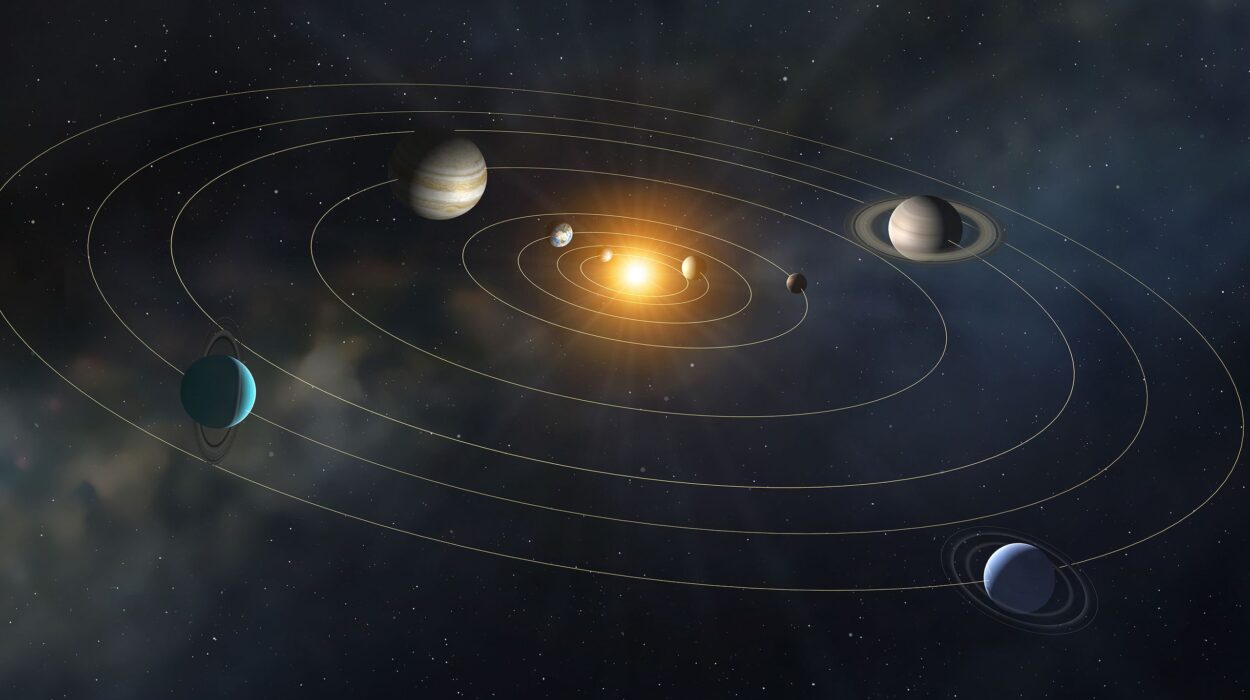
Before venturing to the stars, it helps to appreciate the size of our own solar system.
The Earth and Sun feel far apart by human standards.
Yet compared to interstellar distances, they are remarkably close.
Light reaches Earth from the Sun in just over eight minutes.
Light reaches Jupiter in roughly 43 minutes.
Even distant Neptune receives sunlight after only about four hours.
These travel times may sound significant, but they remain tiny compared with journeys between stars.
The solar system, vast as it seems, occupies only a small corner of our galactic neighborhood.
Once we leave the solar system behind, distances become dramatically larger.
Crossing the Distance to the Stars
Modern spacecraft travel incredibly fast compared with vehicles on Earth.
Yet compared with light, they are painfully slow.
Consider the spacecraft known as Voyager 1.
Launched in 1977, Voyager 1 is the most distant human-made object from Earth.
It travels at roughly 17 kilometers per second.
That speed is impressive.
However, reaching Proxima Centauri at that rate would take tens of thousands of years.
Human technology currently cannot approach the speed of light.
This is one reason interstellar travel remains one of humanity’s greatest challenges.
The immense size of space is not merely a curiosity.
It shapes what is physically possible.
Measuring the Milky Way
Our galaxy, the Milky Way, provides another example of why light years are necessary.
The Milky Way spans roughly 100,000 light years across.
This means light itself requires about 100,000 years to travel from one side of the galaxy to the other.
The Sun occupies a location about 27,000 light years from the galactic center.
Even moving at light speed, crossing these distances would require many human lifetimes.
The sheer scale of our galaxy reveals how small our solar system truly is.
We often imagine ourselves as central to existence.
Yet on the scale of the Milky Way, Earth is a tiny world orbiting an ordinary star in an immense stellar city.
Beyond the Milky Way
As vast as the Milky Way is, it represents only one galaxy among countless others.
The nearest major galaxy to ours is the Andromeda Galaxy.
Andromeda lies approximately 2.5 million light years away.
The light reaching Earth tonight from Andromeda began its journey before modern humans existed.
When that light left Andromeda, early human ancestors were still evolving on Earth.
This realization is staggering.
Looking at Andromeda means seeing a galaxy not as it is now but as it was millions of years ago.
The night sky becomes a record of ancient cosmic events.
Galaxies Billions of Light Years Away
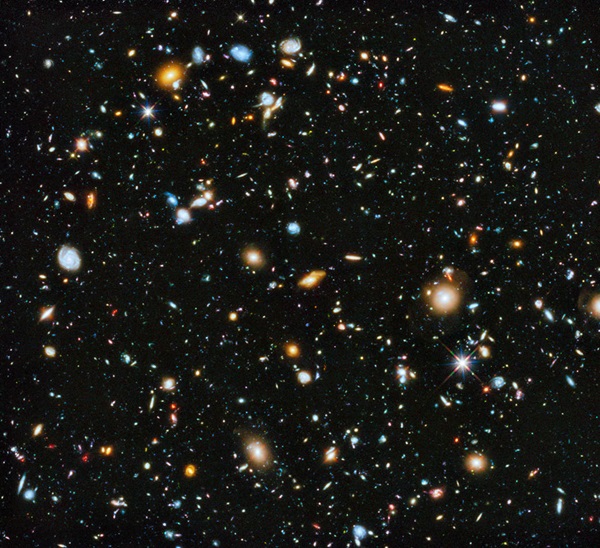
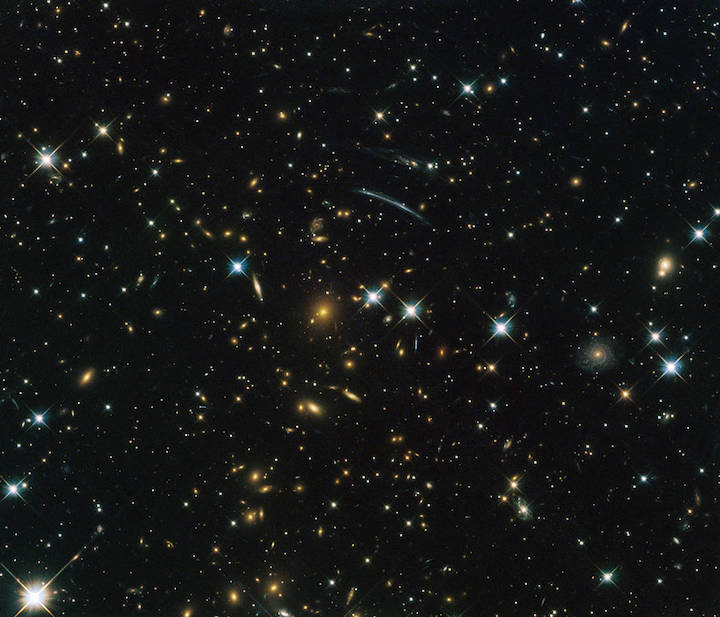
Modern telescopes can detect galaxies billions of light years from Earth.
Some observed galaxies appear as they existed when the universe was only a small fraction of its current age.
Light from these objects has traveled for billions of years before reaching us.
Every photon arriving at a telescope carries information from an extraordinarily distant era.
Astronomers can therefore study cosmic history directly.
Rather than guessing how galaxies evolved, they observe galaxies at different ages throughout the universe.
The deeper we look into space, the further back in time we travel.
The Observable Universe
The observable universe is the portion of the cosmos whose light has had time to reach us since the universe began.
Current estimates place its diameter at roughly 93 billion light years.
This figure often surprises people.
If the universe is about 13.8 billion years old, how can the observable universe be larger than 13.8 billion light years?
The answer involves cosmic expansion.
Space itself has expanded while light traveled through it.
As a result, distant regions now lie much farther away than simple multiplication might suggest.
The universe is not static.
It grows and changes over time.
This expansion makes cosmic distances even more remarkable.
How Scientists Measure Light-Year Distances
Determining distances in space is not easy.
Astronomers cannot stretch measuring tapes between stars.
Instead, they rely on clever techniques.
Nearby stars can be measured using parallax, the apparent shift in position caused by Earth’s motion around the Sun.
More distant objects require other methods, including variable stars and supernova explosions.
For extremely remote galaxies, scientists analyze how the universe’s expansion affects light.
These methods build upon one another like rungs of a ladder.
Together they allow astronomers to estimate distances across billions of light years.
Without these techniques, our understanding of the universe would be dramatically limited.
Light Years and Human Perspective
One reason the concept of a light year feels emotionally powerful is that it forces us to confront our place in the universe.
Human history spans only a few thousand years.
Civilizations rise and fall within centuries.
Individual lives last decades.
Yet a single light year represents nearly ten trillion kilometers.
The Milky Way stretches across one hundred thousand of them.
The observable universe spans tens of billions.
Compared with such scales, human concerns can seem very small.
Yet this realization can be inspiring rather than discouraging.
It reminds us that we are part of something vastly larger than ourselves.
Why Space Defies Human Scale
Human intuition evolved for survival on Earth.
We understand trees, mountains, rivers, and cities.
We do not naturally understand trillions of kilometers.
Space distances exceed ordinary experience so completely that familiar comparisons often fail.
Even when we know the numbers intellectually, emotional comprehension remains difficult.
A light year helps bridge this gap.
It converts abstract numerical enormity into something connected to a fundamental property of nature.
Instead of focusing on impossible numbers, we think about how far light can travel.
The concept gives us a tool for grasping the ungraspable.
The Emotional Reality of Looking at Starlight
There is something deeply moving about realizing that starlight is ancient.
A beam of light leaving a distant star may travel across space for years, centuries, or millennia before reaching your eyes.
That journey occurs without interruption.
The photon crosses vast cosmic darkness, survives encounters with gas and dust, and eventually ends its voyage in a telescope—or in a human eye.
When you gaze upward on a quiet night, you are receiving messages from distant places and distant times.
Some stars may have changed dramatically since their light began traveling.
Some may no longer exist.
Yet their ancient light continues its journey.
The night sky becomes a museum of cosmic history.
Light Years and the Search for Life
Light years also shape humanity’s search for extraterrestrial life.
Thousands of planets have been discovered orbiting distant stars.
Many reside dozens, hundreds, or even thousands of light years away.
Even if intelligent civilizations exist on some of these worlds, communication presents enormous challenges.
A message sent to a civilization 100 light years away would require a century to arrive.
A reply would take another century.
Conversations would unfold over generations rather than minutes.
The vastness represented by light years profoundly affects our ability to connect with other parts of the cosmos.
Can Humans Ever Travel Light Years?
Science fiction often portrays journeys between stars as routine.
Reality is more complicated.
According to modern physics, nothing with mass can accelerate to the speed of light.
Approaching that speed requires enormous amounts of energy.
Future technologies may allow travel at significant fractions of light speed, but such capabilities remain hypothetical.
For now, light years represent distances beyond practical human reach.
Yet history teaches caution when declaring something impossible.
Humanity once considered flight unattainable.
Travel to the Moon seemed unimaginable.
The future may hold surprises.
For the moment, however, light years remind us how much of the universe remains beyond our grasp.
The Universe Through the Lens of Light
Everything astronomers know about the cosmos depends on light.
Stars reveal their temperatures through light.
Galaxies reveal their motions through light.
Black holes reveal their influence through light.
Even invisible dark matter is inferred through its effects on light and gravity.
Because light serves as our primary messenger, measuring its journey becomes essential.
The light year is therefore more than a unit of distance.
It is a symbol of how humans explore the universe.
We understand the cosmos by following the paths traveled by ancient beams of light.
Conclusion
A light year is the distance that light travels in one year—approximately 9.46 trillion kilometers. Though often mistaken for a measure of time, it is actually one of astronomy’s most important units of distance. It allows scientists to describe the vast separations between stars, galaxies, and other cosmic structures without relying on impossibly large numbers.
More importantly, the concept of a light year reveals a profound truth about the universe. Space is so enormous that ordinary human scales lose meaning. The nearest stars are years away at light speed. Galaxies are millions of light years distant. The observable universe spans tens of billions of light years.
Understanding a light year changes the way we see the night sky. Every star becomes a messenger from the past. Every galaxy becomes a chapter in cosmic history. Every beam of starlight becomes evidence of a journey across unimaginable distances.
The next time you look up into the darkness, remember that the stars are not merely points of light. They are distant worlds separated from us by vast oceans of space and time. The light entering your eyes has crossed light years of emptiness to reach you, carrying stories from across the universe. And in that moment, the true scale of the cosmos begins to reveal itself.