Imagine stepping outside tomorrow night and instinctively glancing upward, only to feel a strange unease. The familiar glow that has shaped human nights for all of recorded history is gone. No pale disk rising over rooftops, no silver path across rivers, no gentle guardian of the dark. The Moon has vanished, not gradually, not dramatically exploding, but simply gone. The sky feels emptier than it ever has before. At first, the disappearance might seem like a poetic loss, a blow to romance, myth, and memory. But beneath that emotional shock lies a cascade of scientific consequences so profound that life on Earth itself would be forced into a new and uncertain chapter.
The Moon is so familiar that it often fades into the background of thought. It feels passive, almost decorative, yet its presence quietly shapes Earth’s behavior every second of every day. If the Moon disappeared tomorrow, the effects would ripple outward through oceans, atmosphere, climate, ecosystems, and even the rhythm of human culture. This would not be a single catastrophe, but a slow, unfolding transformation of the planet we call home.
How the Moon Came to Matter So Much
The Moon is not merely a companion orbiting Earth; it is a dynamic partner in a gravitational dance that has lasted billions of years. From a scientific perspective, the Moon’s importance comes from its mass, its distance, and the way gravity works. Gravity weakens with distance, but the Moon is close enough and massive enough to exert a powerful influence on Earth.
Over geological time, this influence has helped stabilize Earth’s rotation, shape its oceans, and possibly even create conditions favorable for complex life. The Moon is unusually large compared to its planet, especially when compared to other moons in the solar system. This large size amplifies its effects, making its disappearance far more significant than losing, say, a small asteroid companion.
Understanding what would happen if the Moon vanished requires recognizing that Earth and the Moon form a system. Remove one part of that system, and the other does not remain unchanged.
The Immediate Gravitational Shock
If the Moon disappeared instantaneously, Earth would experience an abrupt change in its gravitational environment. The Moon’s gravitational pull does not just affect tides; it slightly tugs on the entire planet. Without that pull, Earth would adjust to a new equilibrium.
This adjustment would not shatter the planet or tear it apart, but it would create subtle yet measurable effects. The Earth’s rotation would change very slightly, and stresses within the crust could shift. While this would not trigger global earthquakes or volcanic eruptions overnight, the long-term geological balance of the planet would begin to evolve in a different direction.
The most immediate and dramatic change, however, would be felt in the oceans.
The Death of the Familiar Tides
Tides are one of the Moon’s most visible influences. The rise and fall of sea levels along coastlines are driven primarily by the Moon’s gravity, with the Sun playing a secondary role. Without the Moon, tides would not disappear entirely, but they would become far weaker and less regular.
The Sun would still create solar tides, but these are significantly smaller than lunar tides. Coastal regions that currently experience dramatic tidal changes would see those fluctuations shrink dramatically. The rhythmic breathing of the oceans would slow, becoming a faint echo of what it once was.
This change would disrupt marine ecosystems that depend on tides for survival. Many coastal species rely on tidal cycles for feeding, reproduction, and protection from predators. The disappearance of strong tides would reshape shorelines, alter nutrient distribution, and collapse entire ecological niches that have existed for millions of years.
Oceans Without a Moon: A Different Kind of Sea
Beyond tides, the Moon plays a role in stirring the oceans. Tidal motion helps mix ocean waters, redistributing heat and nutrients. Without this mixing, the oceans would become more stratified, with warm surface waters and colder deep waters interacting less efficiently.
This stratification would affect global climate. Ocean currents, which help regulate Earth’s temperature by moving heat from equatorial regions toward the poles, would gradually weaken or change patterns. Over time, this could lead to more extreme temperature differences between regions.
The oceans would still move due to winds and Earth’s rotation, but the subtle, constant nudging from lunar gravity would be gone. The sea would become quieter in motion but more unstable in balance.
Nights Without Moonlight
One of the most immediate and emotionally striking consequences of the Moon’s disappearance would be the darkness of night. Moonlight has guided humans, animals, and ecosystems for as long as life has existed on land. Without it, nights would become significantly darker, especially in areas far from artificial light.
Many animals rely on moonlight to hunt, navigate, or avoid predators. Predators that use moonlit nights to stalk prey would lose an advantage, while prey species that time their activities based on lunar brightness would be thrown into confusion. The balance between predator and prey would shift in unpredictable ways.
For humans, the psychological impact would be subtle but real. The Moon has been a constant presence in art, religion, and storytelling. Its absence would leave a quiet emotional void, a sense that something fundamental has been lost.
The Slow Unraveling of Earth’s Rotation
Perhaps the most profound long-term consequence of losing the Moon would involve Earth’s rotation. The Moon acts as a stabilizing force on Earth’s axial tilt, the angle at which Earth’s axis is inclined relative to its orbit around the Sun. This tilt is responsible for the seasons.
With the Moon present, Earth’s tilt varies only slightly over long periods. Without the Moon, that stability would weaken. Earth’s axis would begin to wobble more dramatically over millions of years, influenced by gravitational interactions with other planets.
This wobble could lead to extreme climate variations. Regions that are currently temperate could experience drastic shifts, swinging between scorching heat and deep freeze. Seasons could become more intense or less predictable, placing enormous stress on ecosystems and agriculture.
Days That Grow Shorter or Longer
The Moon also affects the length of Earth’s day. Through tidal interactions, the Moon gradually slows Earth’s rotation, making days longer over geological time. This process has been occurring for billions of years.
If the Moon disappeared, this braking effect would cease. Earth’s rotation would stabilize at its current rate, no longer slowing in the same way. While this change would not be noticeable in a human lifetime, it represents a permanent alteration of Earth’s long-term evolution.
In a sense, the disappearance of the Moon would freeze one aspect of Earth’s temporal rhythm, locking in a pattern that would otherwise continue to evolve.
The Fate of the Seasons
As Earth’s axial tilt became less stable over long timescales, the familiar pattern of seasons could change dramatically. Some periods might see little seasonal variation, while others could experience extreme shifts.
These changes would not happen overnight, but their eventual impact could be devastating for life adapted to relatively stable seasonal cycles. Plants and animals have evolved to anticipate certain patterns of light and temperature. Disrupt those patterns too severely, and many species would struggle to survive.
Human civilization, deeply dependent on predictable seasons for agriculture, would face immense challenges. The loss of the Moon would not destroy humanity immediately, but it would make the future far less certain.
A Planet More Vulnerable to Asteroids
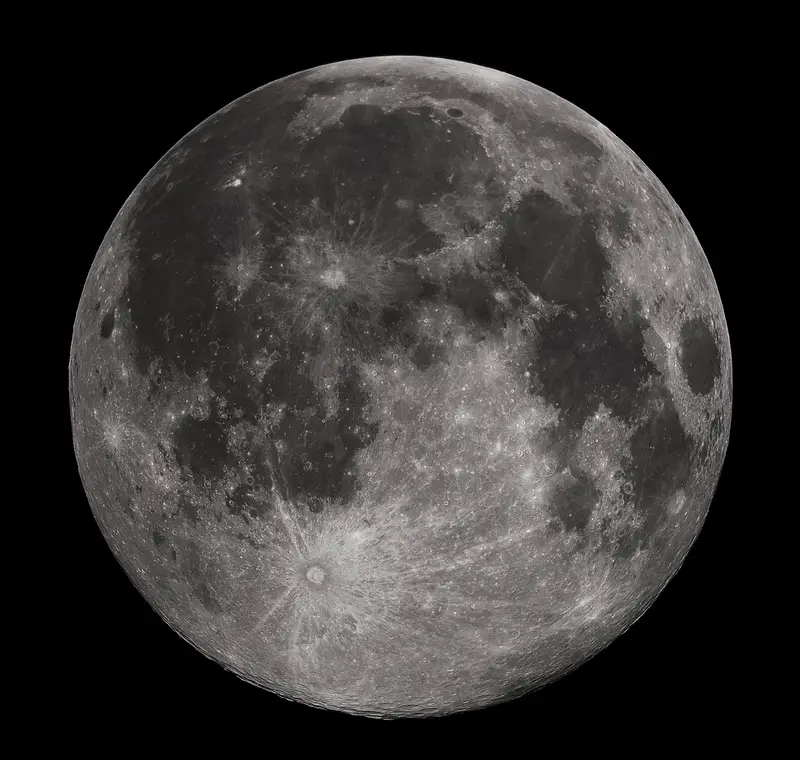
The Moon also acts as a partial shield for Earth. Its gravity attracts some asteroids and comets that might otherwise strike our planet. Over billions of years, the Moon has absorbed countless impacts, its scarred surface bearing silent witness to this role.
Without the Moon, Earth would face a slightly increased risk of impacts from space. While this increase would not be dramatic on short timescales, over millions of years it could contribute to more frequent large impacts, adding another layer of instability to Earth’s environment.
The Moon’s disappearance would not open the floodgates to immediate destruction, but it would remove one line of defense in an already dangerous cosmic neighborhood.
The Loss of a Geological Archive
The Moon is more than a gravitational partner; it is a record keeper. Its surface preserves a history of the early solar system that Earth has long since erased through erosion and tectonic activity. Without the Moon, future scientists would lose access to this invaluable archive.
While this loss might seem abstract, it represents a deeper consequence of the Moon’s disappearance: the erasure of knowledge. The Moon is a window into the past, and its absence would close that window forever.
Life Adapting to a Moonless World
Life on Earth is remarkably resilient. If the Moon disappeared, life would not vanish overnight. Instead, it would adapt, evolve, and find new ways to survive. However, this adaptation would come at a cost.
Species tightly bound to tidal rhythms would face extinction. Others would evolve new behaviors or migrate to more stable environments. Over millions of years, life would adjust to a new normal, one shaped by solar tides, altered climates, and darker nights.
Humans, with technology and foresight, would fare better than most species, but even human societies would be tested. Coastal economies would change, agriculture would need to adapt, and cultural traditions tied to the Moon would become memories rather than living practices.
Cultural and Psychological Consequences
Beyond science, the Moon’s disappearance would affect the human psyche. The Moon has inspired poetry, guided calendars, and symbolized continuity across cultures. Its phases have marked time, rituals, and stories.
A moonless sky would subtly change how humans experience night. The sense of connection to the cosmos might feel diminished, even as stars become more visible. The emotional impact would vary, but the loss of such a universal symbol would leave a quiet ache in human culture.
Science explains how the Moon affects Earth, but it cannot fully capture what the Moon means to humanity. Its disappearance would remind us that our relationship with the universe is not only physical but deeply emotional.
A Different Earth, Not an Empty One
If the Moon disappeared tomorrow, Earth would not become uninhabitable overnight. The Sun would still rise, gravity would still hold us to the ground, and life would continue. But the planet would slowly transform into something unfamiliar.
Oceans would calm and then destabilize. Climates would drift toward extremes. Nights would grow darker. Seasons would become less reliable. Over vast timescales, Earth would become a more chaotic world, less gentle, less predictable.
The Moon’s quiet presence has allowed Earth to be relatively stable for billions of years. Its disappearance would not be a single disaster, but a long goodbye to a kind of balance we have always taken for granted.
The Moon as a Lesson in Cosmic Fragility
Thinking about a moonless Earth reveals how finely tuned our world truly is. Many of the conditions that make life possible are not guaranteed. They are the result of specific cosmic circumstances that could easily have been different.
The Moon is a reminder that stability in the universe is often fragile, maintained by relationships and balances we barely notice. Its disappearance would expose how deeply interconnected Earth is with its surroundings.
This realization does not make the universe feel hostile. Instead, it makes our existence feel precious. The Moon’s steady orbit, its gentle pull, and its silent companionship are part of what makes Earth home.
Looking Up After the Moon Is Gone
If the Moon disappeared tomorrow, humanity would adapt, study, and learn. Scientists would analyze the changes, model the future, and search for ways to mitigate the most severe consequences. Life would persist, as it always has.
Yet every time we looked up at the night sky, we would remember what was missing. The empty space where the Moon once hung would serve as a reminder of how much we relied on something we rarely questioned.
The Moon’s disappearance would teach us a powerful lesson: sometimes the most important forces shaping our lives are the quiet ones, always present, always working, until one day they are gone.