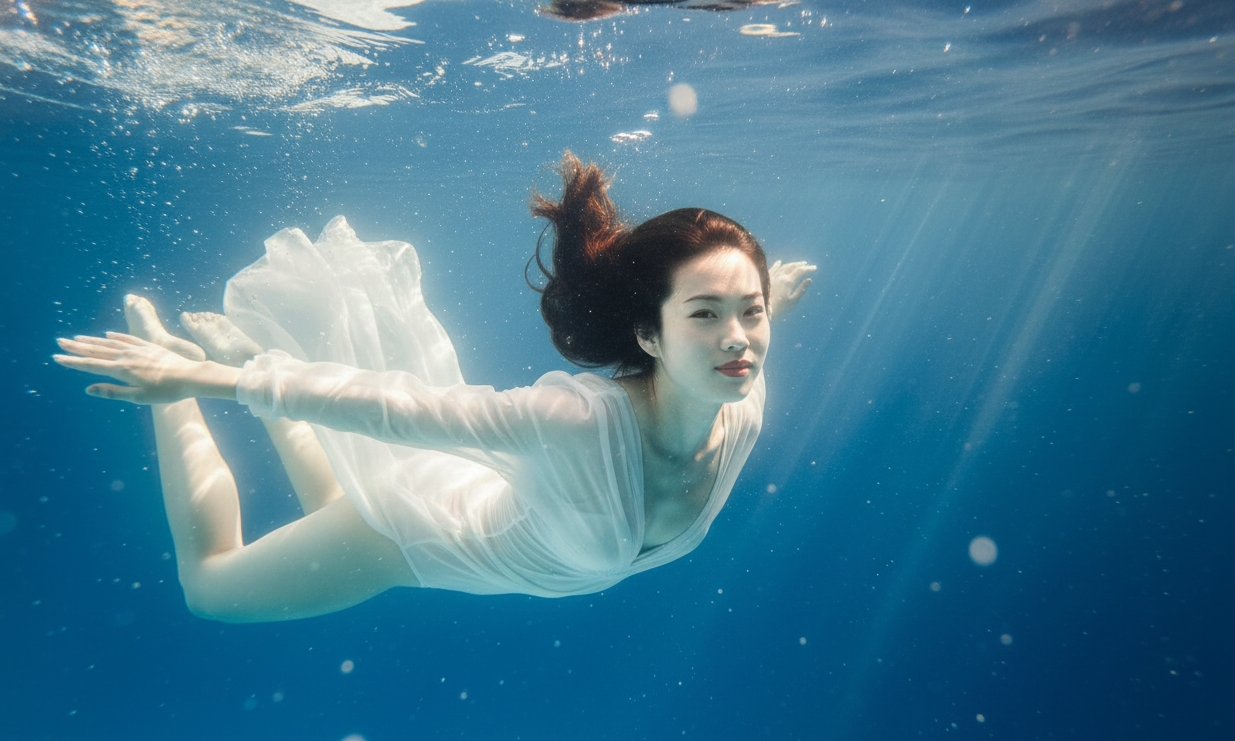
Imagine the moment it happens. A human dives beneath the surface of the ocean, lungs full, heart racing as it always has. But instead of panic, instead of the familiar burn of oxygen deprivation, something extraordinary occurs. The chest relaxes. The instinct to surface fades. Water passes across the mouth and nose, and somehow, impossibly, breath continues. Oxygen flows into the bloodstream not from air, but from the sea itself. In that instant, humanity becomes something new.
The ability to breathe underwater would not be a single biological trick. It would be a transformation so profound that it would rewrite human anatomy, physiology, psychology, culture, and civilization. Breathing is not merely a function; it is the rhythm of life. To change how humans breathe would change how humans live, move, evolve, and understand their place in the natural world.
This is not a fantasy of magic or wishful thinking. To imagine humans breathing underwater is to ask a serious scientific question: what biological shifts would be required, and what consequences would follow? The answers reveal a story that is as awe-inspiring as it is unsettling, a story where evolution reshapes the human body and where the boundary between land and sea dissolves.
The Fundamental Problem of Oxygen
All complex life depends on oxygen. In humans, oxygen enters the body through the lungs, diffuses across thin membranes, binds to hemoglobin in red blood cells, and fuels the chemical reactions that keep cells alive. This system evolved for air, not water. Air contains far more accessible oxygen than water, and oxygen diffuses much faster through air than through liquid.
Water breathing is therefore not simply a matter of opening the mouth underwater. Fish and other aquatic animals rely on gills, structures exquisitely designed to extract dissolved oxygen from water. These structures are large, delicate, and highly vascularized, compensating for the relative scarcity of oxygen in aquatic environments.
For humans to breathe underwater, evolution or engineering would have to overcome this fundamental constraint. The body would need a new way to absorb enough oxygen to support a large, warm-blooded, energy-hungry organism. This challenge alone would reshape nearly every system in the human body.
The Transformation of the Respiratory System
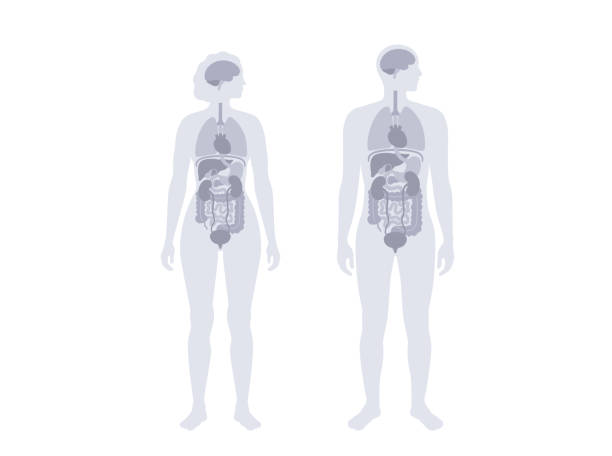
The lungs, as they currently exist, would no longer be sufficient. Lungs are internal organs designed to avoid collapse, infection, and fluid overload in an air-filled environment. Submerging lungs in water creates immense problems, from pressure changes to fluid infiltration. To breathe underwater safely, humans would need a different respiratory architecture.
One possibility would be the development of gill-like structures. These could not be small or superficial. To supply enough oxygen, they would need a massive surface area, likely folded and layered to maximize contact with water. This would require extensive blood flow and extremely thin membranes to allow efficient gas exchange.
Where would such structures be located? The neck, chest, or even along the sides of the torso could evolve openings, protected by bony arches or muscular flaps. These structures would need to remain moist, clean, and free from debris, requiring new protective mechanisms and immune defenses.
The lungs themselves might shrink or disappear over evolutionary time, or they might coexist with gills, allowing humans to breathe both air and water. This dual system would be biologically expensive but incredibly versatile, enabling movement between worlds in a way no current mammal can achieve naturally.
The Challenge of Pressure and Depth
Breathing underwater is not only about oxygen. Pressure increases rapidly with depth, compressing gases and tissues. Human lungs are particularly vulnerable to pressure changes, which is why deep diving without specialized equipment is dangerous.
A water-breathing human would need a body adapted to withstand pressure. Flexible rib cages, reinforced tissues, and pressure-resistant respiratory structures would be essential. Gills, unlike lungs, are not filled with compressible gas, making them more compatible with deep environments.
Blood chemistry would also change. Dissolved gases behave differently under pressure, increasing the risk of conditions like nitrogen narcosis and decompression sickness. A water-breathing human might evolve altered gas solubility in blood, different hemoglobin properties, or entirely new molecular mechanisms to manage dissolved gases safely.
These changes would not only allow survival underwater but could enable exploration of depths far beyond current human limits, transforming the ocean from a hostile frontier into a habitable realm.
Metabolism and Energy Demands
Human metabolism is fast and demanding. Our large brains consume enormous amounts of energy, and maintaining a constant body temperature requires continuous fuel. Water conducts heat far more efficiently than air, meaning heat loss underwater is rapid and severe.
To survive extended periods underwater, humans would need profound metabolic adaptations. One possibility would be a reduction in basal metabolic rate, lowering energy consumption. Another would be the development of insulating layers, such as thicker fat deposits, similar to those found in marine mammals.
Alternatively, humans might evolve enhanced heat production mechanisms, generating more internal warmth to counteract heat loss. This would require greater oxygen intake, placing even more demand on the respiratory system. The balance between energy efficiency and thermal regulation would shape the entire physiology of the water-breathing human.
The Circulatory System Reimagined
Breathing underwater would place new demands on the heart and blood vessels. Extracting oxygen from water is less efficient than from air, meaning circulation would need to be optimized to deliver oxygen rapidly and effectively.
The heart might grow larger or stronger, pumping blood with greater force. Blood vessels could become more numerous and finely branched near respiratory surfaces, increasing oxygen uptake. Hemoglobin itself might evolve a higher affinity for oxygen, allowing red blood cells to capture more oxygen even when concentrations are low.
However, higher oxygen affinity comes with trade-offs. Oxygen must also be released efficiently to tissues. Balancing uptake and delivery would require precise biochemical tuning, potentially leading to entirely new forms of respiratory proteins beyond current human hemoglobin.
Sensory Changes in an Aquatic World
Breathing underwater would inevitably draw humans into a new sensory environment. Sound travels faster and farther in water than in air, altering how hearing works. Vision is distorted by refraction, and light behaves differently with depth and turbidity.
Human eyes might adapt to see more clearly underwater, with changes in lens shape, corneal structure, and retinal sensitivity. Color perception could shift toward wavelengths that penetrate water more effectively. Low-light vision might improve, especially for deeper or murkier environments.
Smell and taste would also change. Chemical signals disperse differently in water, and detecting them requires specialized receptors. Humans might develop enhanced chemosensory abilities, perceiving subtle changes in water chemistry that are currently invisible to us.
Touch would become a dominant sense. Water pressure, temperature gradients, and currents provide constant information. The skin could evolve increased sensitivity, turning the entire body into a sensory organ attuned to movement and flow.
The Brain and the Experience of Breath
Breathing is deeply tied to emotion and consciousness. The sensation of breath influences anxiety, calm, focus, and fear. The inability to breathe triggers one of the most powerful panic responses in the human brain.
If humans could breathe underwater, this psychological landscape would change dramatically. The ocean, once associated with danger and suffocation, would become a place of safety and possibility. Fear responses would recalibrate, altering how humans perceive depth, darkness, and isolation.
The brain itself might adapt to manage longer periods of submersion. Neural circuits involved in breath control, currently semi-automatic and closely linked to carbon dioxide levels, could change their sensitivity. Breath-holding reflexes might weaken or disappear, replaced by new regulatory mechanisms suited to aquatic respiration.
This shift would not be merely physiological. It would transform the emotional meaning of water, reshaping myths, dreams, and cultural symbols that have long associated the sea with mystery and death.
Movement and the Aquatic Body
Breathing underwater would encourage humans to spend far more time submerged, and the body would adapt accordingly. Swimming would become not an occasional activity but a primary mode of movement.
Limbs might become more streamlined. Hands and feet could develop webbing, increasing propulsion efficiency. Muscle distribution might shift, favoring powerful core and leg muscles optimized for undulating motion.
The spine could become more flexible, allowing wave-like movements similar to those used by aquatic animals. Bone density might decrease slightly to improve buoyancy, while overall body shape could become more hydrodynamic.
These changes would blur the line between human and marine mammal, creating a body equally at home in water and on land, though likely specialized toward one environment depending on evolutionary pressures.
Reproduction and Development in a Water-Breathing Species
If breathing underwater became a permanent trait, reproduction would eventually adapt as well. Pregnancy, birth, and early development could shift toward aquatic environments.
Fetuses already develop in fluid-filled wombs, making the transition to water at birth less dramatic than the transition to air. Water-breathing infants might emerge directly into aquatic environments, breathing through gills or specialized structures from the start.
Parental care would change accordingly. Social behaviors surrounding birth and child-rearing would adapt to underwater settings, influencing family structures and cultural practices.
Over generations, these changes would create a new developmental trajectory for humans, one that begins and unfolds in a world of currents rather than gravity-dominated space.
Diet and the Ecology of Human Survival
Breathing underwater would open vast new food sources. Marine ecosystems are rich, diverse, and complex. Humans could hunt, gather, and farm beneath the waves, developing entirely new forms of cuisine and nutrition.
Physiology would adapt to digest marine proteins, fats, and minerals more efficiently. Salt regulation would become critical, as prolonged exposure to seawater challenges the body’s electrolyte balance. Kidneys might evolve greater efficiency in managing salt, similar to adaptations seen in marine birds and mammals.
This dietary shift would also affect agriculture and environmental impact. Humans might rely less on land-based farming, reducing pressure on terrestrial ecosystems while introducing new challenges in marine conservation.
Society Beneath the Surface
With the ability to breathe underwater, human society would expand vertically into the ocean. Settlements could be built beneath the surface, protected from storms and temperature extremes. Architecture would adapt to pressure, currents, and light availability.
Communication methods would evolve. Sound-based communication might become more important, as radio waves travel poorly underwater. Visual signals, bioluminescent markers, and tactile systems could play a role in underwater social interaction.
Time perception might change as well. Without the day-night cycle as experienced on land, underwater communities could develop different rhythms, guided by tides, currents, and biological clocks tuned to subtle environmental cues.
Psychological Identity and the Meaning of Being Human
Breathing underwater would force humanity to confront its identity. Humans have long defined themselves as land animals who venture into the sea temporarily. Becoming amphibious or fully aquatic would challenge this self-image.
New myths and philosophies would emerge, reflecting a dual existence between worlds. The ocean would no longer be an alien realm but a homeland. Concepts of territory, exploration, and freedom would expand into three dimensions.
This shift might deepen humanity’s sense of connection to Earth. Seeing firsthand the fragility and beauty of marine ecosystems could foster stronger environmental ethics, though it could also introduce new forms of exploitation.
Evolutionary Pathways and Timescales
Such profound changes would not happen overnight through natural evolution. They would require immense time and selective pressure, or advanced bioengineering guided by human intention. Each pathway carries different implications.
Natural evolution would likely favor gradual adaptation among coastal or aquatic populations, eventually leading to speciation. Engineered adaptation could accelerate change but raises ethical questions about identity, inequality, and unintended consequences.
Regardless of the pathway, the biological shift would be irreversible at a certain point. A water-breathing human would no longer be simply human as we understand it today, but a new branch on the tree of life.
The Price of a New World
Every adaptation comes with costs. Breathing underwater might reduce efficiency on land, limit endurance in air, or increase vulnerability to certain pathogens. Specialized organs could introduce new diseases or weaknesses.
The immune system would face unfamiliar challenges in water rich with microorganisms. Skin, respiratory surfaces, and sensory organs would require robust defenses to prevent infection and damage.
Balancing these costs would shape the ultimate form of the water-breathing human, ensuring survival but never perfection.
A Future Written in Water
To imagine humans breathing underwater is to imagine a future where the boundaries of life are redrawn. It is a future where biology bends to possibility, where evolution or technology opens doors once thought sealed.
This transformation would not simply add a new ability. It would rewrite the human story, shifting our relationship with the planet and with ourselves. The ocean would no longer be a barrier or a mystery, but a living space woven into daily life.
Breath, the most intimate act of survival, would connect humanity to water as deeply as it once connected us to air. In that connection lies both wonder and responsibility, for to breathe underwater would mean becoming truly part of Earth’s largest and most ancient ecosystem.
In the end, the question is not only whether humans could breathe underwater, but what kind of beings we would become if we did.