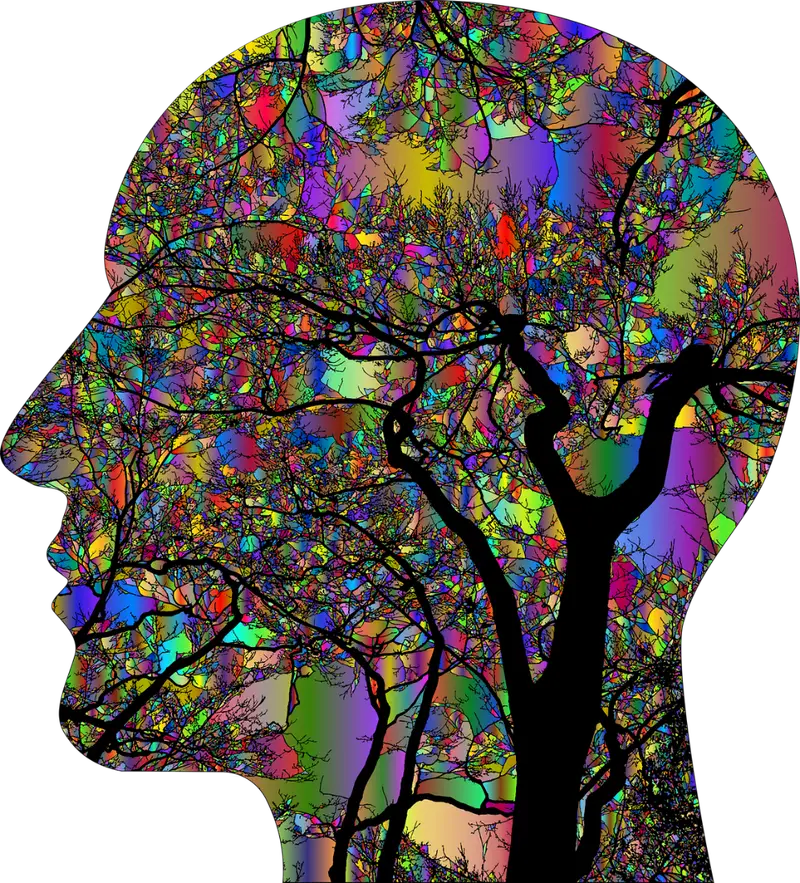
Color is not decoration. It is information. Long before humans had words, color guided survival, emotion, and decision-making. A red berry could mean nourishment or poison. A darkening sky warned of danger. A warm glow signaled safety. Even today, color continues to shape how we think, feel, remember, and behave—often without us realizing it.
The psychology of color is the study of how colors influence perception, emotion, cognition, and behavior. It sits at the crossroads of neuroscience, biology, culture, and personal experience. While color meanings are not universal or magical, they are deeply patterned, shaped by evolution and learning. Colors can calm or agitate, attract or repel, sharpen attention or soften memory.
Below are twelve scientifically grounded facts about how color affects the human mind, explored not as quick trivia, but as a deep journey into how something as simple as light can reach into the most intimate corners of human experience.
1. Color Affects the Brain Before We Are Consciously Aware of It
One of the most fascinating facts about color psychology is that your brain responds to color before you consciously identify it. Visual information travels rapidly from the retina to the visual cortex, but color signals also activate emotional and physiological centers almost instantly. This means that a color can change your mood, arousal level, or sense of comfort before you have time to think about it.
Experiments using brain imaging have shown that certain colors can increase activity in the amygdala, a region involved in emotional processing, even when people are not actively paying attention to color. This is why a room can “feel” stressful or soothing without you being able to explain why.
This unconscious influence is one reason color is so powerful in environments like hospitals, classrooms, restaurants, and workplaces. You may believe you are responding to layout, sound, or temperature, but color is already shaping your emotional baseline beneath awareness.
2. Red Increases Arousal, Alertness, and Emotional Intensity
Red is one of the most studied colors in psychology, and for good reason. It is biologically tied to blood, fire, danger, and vitality. Exposure to red has been shown to increase heart rate, blood pressure, and respiration in subtle but measurable ways. It heightens physiological arousal, which can translate into excitement, urgency, passion, or aggression depending on context.
In performance settings, red can have surprising effects. Some studies suggest that seeing red before a task can impair performance on complex cognitive tasks by increasing anxiety, while potentially improving performance in physically demanding or reaction-based activities. This may explain why red is often used in warning signs, stop signals, and emergency alerts.
Emotionally, red intensifies whatever feeling is already present. Love can feel more passionate, anger more explosive, fear more urgent. Red does not create emotion from nothing—it amplifies what is already there.
3. Blue Has a Calming Effect on the Nervous System
Blue is consistently associated with calmness, trust, and stability, and this association is not merely cultural. Physiologically, exposure to blue light at moderate levels can reduce heart rate and lower perceived stress. Blue environments are often reported as soothing, expansive, and mentally cooling.
From an evolutionary perspective, blue is linked to open skies and clean water—signals of safety and abundance. In modern settings, blue is commonly used in hospitals, offices, and technology branding to promote feelings of reliability and calm focus.
However, blue is not emotionally neutral. While it can promote relaxation and concentration, it can also be associated with sadness, emotional distance, or coldness in certain contexts. The key psychological trait of blue is emotional regulation—it slows things down, for better or worse.
4. Yellow Stimulates Attention but Can Increase Mental Fatigue
Yellow is the most visible color to the human eye in daylight conditions, which is why it is used for caution signs, taxis, and high-visibility clothing. Psychologically, yellow captures attention quickly and stimulates mental activity. It is often associated with optimism, energy, and creativity.
However, prolonged exposure to intense yellow can be mentally exhausting. Studies have found that bright yellow environments can increase agitation, irritability, and cognitive overload, especially in children. This is because yellow demands attention—it activates alertness systems that are not meant to be constantly engaged.
In moderation, yellow can uplift mood and encourage curiosity. In excess, it can overwhelm the nervous system. Its psychological power lies in stimulation rather than comfort.
5. Green Signals Safety, Balance, and Restoration
Green occupies a unique place in color psychology because it sits in the middle of the visible spectrum, requiring minimal adjustment from the eyes. This physical ease translates into psychological comfort. Green environments are consistently associated with reduced stress, improved mood, and faster emotional recovery after anxiety.
Evolutionary biology plays a strong role here. Green landscapes historically signaled fertile land, water sources, and shelter. Even today, exposure to green spaces has been linked to improved attention, lower cortisol levels, and enhanced emotional resilience.
In psychological terms, green represents balance and restoration rather than excitement. It does not demand or seduce; it reassures. This is why green is often used in spaces designed for healing, reflection, and long-term focus.
6. Color Can Change How We Perceive Time
Color does not just influence how we feel—it alters how we experience time. Warm colors like red, orange, and yellow tend to make time feel as though it is passing more slowly, while cool colors like blue and green can make time feel as though it is moving more quickly.
This effect is linked to arousal levels. High-arousal states stretch subjective time because the brain processes more information per moment. Low-arousal states compress time because fewer emotional markers are being recorded.
This phenomenon has real-world implications. Waiting rooms painted in cool colors often feel more tolerable. Restaurants using warm colors may encourage faster turnover because time feels more intense. Color quietly reshapes our temporal reality.
7. Cultural Experience Shapes Color Meaning, But Biology Sets the Foundation
Color meanings are not entirely universal, but they are not arbitrary either. Biology provides a foundation, and culture builds upon it. For example, red is associated with danger and excitement across many cultures due to its biological ties to blood and fire. However, its symbolic meanings—such as luck, love, or mourning—vary widely.
White may represent purity in one culture and death in another. Black can symbolize elegance or grief depending on context. These variations emerge from social learning, tradition, and shared narratives layered on top of basic sensory responses.
What remains consistent is that color meanings are learned early and deeply. By childhood, color-emotion associations are already influencing preferences, judgments, and memories. Culture does not erase biology—it refines it.
8. Color Influences Memory and Learning
Color plays a significant role in how information is encoded and recalled. Research shows that color can enhance memory by increasing emotional engagement and attention. Information presented in color is often remembered better than information presented in grayscale, especially when color is meaningfully related to content.
However, not all color improves learning. Excessive or irrelevant color can distract rather than support memory. The brain uses color as a signal—when too many signals compete, cognitive load increases.
Strategic use of color can support learning by guiding attention, structuring information, and creating emotional anchors. This is why effective educational materials use color sparingly but intentionally.
9. Color Can Influence Appetite and Taste Perception
The psychology of color extends into the realm of taste and appetite. Warm colors such as red, orange, and yellow have been shown to stimulate appetite, while cool colors like blue tend to suppress it. This is partly why fast-food branding favors warm palettes and why blue is rare in natural foods.
Color also alters taste perception. The same beverage can be rated as sweeter, more bitter, or more flavorful depending on its color. The brain integrates visual cues with taste signals, creating a unified sensory experience that feels objective but is heavily influenced by expectation.
In this way, color does not just decorate food—it becomes part of flavor itself.
10. Color Affects Social Judgment and Trust
Color subtly shapes how we judge other people. Clothing color can influence perceived competence, warmth, dominance, and trustworthiness. Dark colors may convey authority and seriousness, while lighter colors can suggest openness and approachability.
Studies have shown that uniforms, logos, and even background colors can influence how credible or persuasive a person appears. This effect operates largely below conscious awareness, which makes it especially powerful.
Importantly, these judgments are not fixed. Context matters deeply. The same color can convey confidence in one situation and threat in another. Color provides emotional framing, not absolute meaning.
11. Individual Differences Change Color Responses
While general patterns exist, color psychology is not one-size-fits-all. Personal experience, personality traits, emotional history, and neurological differences all shape how individuals respond to color.
A color associated with comfort for one person may trigger anxiety in another due to past experiences. Synesthetic individuals may experience color as sound, taste, or emotion in unique ways. Mood disorders can also alter color perception, making the world appear duller or harsher.
This variability does not weaken color psychology—it deepens it. Color is not a command; it is a conversation between stimulus and mind.
12. Color Influences Identity and Emotional Expression
Beyond perception and behavior, color becomes part of how we express who we are. Preferences for certain colors often reflect emotional needs, values, and self-concept. People use color to communicate belonging, rebellion, calmness, or intensity without words.
From childhood drawings to adult clothing choices, color becomes a language of identity. It allows emotional expression when language falls short. This expressive function may be one of color’s most profound psychological roles.
Color does not just affect us—it becomes part of us.
The Deeper Meaning of Color in Human Experience
Color is light shaped by perception, but its psychological impact reaches far beyond physics. It shapes mood before thought, memory before logic, and judgment before awareness. It bridges biology and culture, sensation and meaning.
Understanding the psychology of color does not mean reducing it to formulas or rules. It means recognizing that perception is never neutral. Every shade carries history, emotion, and expectation into the present moment.
When you walk into a room and feel something before you know why, when a color draws you in or pushes you away, you are experiencing the quiet power of color psychology. It is not manipulation—it is resonance.
Color reminds us that the mind is not separate from the world it perceives. Light enters the eye, but meaning is born in the brain. And in that space between sensation and emotion, color continues to shape the human story—softly, constantly, and profoundly.