A galaxy feels eternal. When you look at the night sky, the stars appear fixed, calm, and permanent. Even the Milky Way, stretching faintly across the darkness, seems like something that has always existed and always will. But galaxies are not immortal monuments. They are living cosmic systems—born from gravity, fueled by gas, shaped by collisions, and slowly transformed by time. Like all things in the universe, galaxies evolve. And in a sense that is both scientific and poetic, they can die.
A galaxy’s “death” is not a single explosive moment. It is not like a star collapsing into a supernova or a planet shattering apart. Galactic death is slower, quieter, and far more haunting. It is the gradual fading of creation itself. It is what happens when a galaxy stops making new stars and becomes a silent city of ancient suns, drifting through an expanding universe.
So what does it really mean for a galaxy to die? What triggers that end? And what does a dead galaxy look like when the last sparks of starbirth go out?
To understand the death of a galaxy, we must first understand what keeps a galaxy alive.
What Does It Mean for a Galaxy to Be Alive?
In astronomy, a galaxy is considered “alive” when it is actively forming new stars. Star formation is the defining heartbeat of a galaxy. It is what makes spiral arms glow with blue-white brilliance. It is what fills the galaxy with nebulae, supernova explosions, and swirling clouds of gas and dust. It is what keeps the galaxy changing, renewing itself, and shining with youthful energy.
Galaxies form stars when cold gas—mostly hydrogen—collapses under gravity. That gas fragments into dense clumps, and within those clumps, stars ignite. These newborn stars illuminate their surroundings, carve cavities in gas clouds, and eventually die in dramatic ways, enriching the galaxy with heavier elements.
A galaxy with plenty of cold gas is like a fertile landscape. It can keep producing stars for billions of years.
A galaxy that runs out of cold gas becomes sterile. Its existing stars continue to shine, but no new ones are born. Over time, as the brightest stars die, the galaxy grows dimmer and redder. Its story becomes one of aging rather than renewal.
This transition—from star-forming to starless—is what astronomers mean when they talk about a galaxy dying.
The Life Cycle of a Galaxy: A Story Written in Gravity
Galaxies are born in the early universe when gravity begins pulling matter into clumps. Shortly after the Big Bang, the universe was mostly hydrogen and helium gas, with small fluctuations in density. Gravity amplified these fluctuations, drawing gas and dark matter together into halos.
Dark matter played a critical role. Though invisible, it provides most of the mass in a galaxy’s gravitational structure. It acts like a cosmic skeleton, forming the framework into which gas falls. Once gas accumulates in these dark matter halos, it cools and collapses, igniting star formation. The first galaxies were small and chaotic, filled with violent starbirth and frequent collisions.
Over billions of years, galaxies grew through mergers and accretion, absorbing smaller galaxies and pulling in fresh gas from intergalactic space. Some became elegant spirals like the Milky Way. Others became massive ellipticals, formed through repeated collisions that scrambled their stars into smooth, rounded shapes.
But growth and evolution come with a cost. The same processes that build galaxies also sow the seeds of their decline.
The Slow Death: Star Formation Runs Out
The simplest way for a galaxy to die is to run out of the raw material needed to form stars.
Stars are made from gas. If a galaxy consumes its gas faster than it can replenish it, star formation slows down. Eventually, it stops. The galaxy becomes what astronomers call “quenched.”
This quenching process is one of the most important concepts in galaxy evolution. It explains why the universe contains two major populations of galaxies. Some are blue and actively forming stars. Others are red, quiet, and filled with older stars.
Gas depletion can happen gradually. A galaxy may continue forming stars for billions of years, slowly using up its supply. As the gas thins out, star formation becomes weaker and less frequent. The bright blue stars disappear first, because they live short lives. What remains are longer-lived stars like red dwarfs and aging red giants.
The galaxy doesn’t explode or vanish. It simply fades.
In this sense, galactic death is not dramatic. It is more like a slow exhaustion, a cosmic winter spreading through a once-lively system.
Why Blue Galaxies Turn Red
One of the clearest signs of galactic aging is color.
Young, star-forming galaxies appear blue because they contain many massive, hot stars. These stars burn bright and emit large amounts of blue and ultraviolet light. But massive stars live fast and die young, often exploding as supernovae within a few million years.
If a galaxy stops forming new stars, those blue giants vanish quickly. Within a relatively short cosmic time, the galaxy loses its blue glow. What remains are smaller, cooler stars that emit more red and yellow light.
Over time, the galaxy becomes dominated by red stars. Its appearance shifts dramatically, not because the galaxy itself is changing shape, but because the population of stars within it is aging.
This is why many dead galaxies appear as red ellipticals—massive, smooth galaxies with little gas, little dust, and no obvious regions of new starbirth.
In a way, a galaxy’s color is its biography. Blue means youth and creation. Red means age and silence.
Galactic Death by Starvation: When the Gas Supply Stops
Galaxies do not only rely on the gas they start with. They can draw in gas from their surroundings. The space between galaxies is not empty. It contains thin streams of hydrogen gas, often flowing along vast filaments of the cosmic web. Over time, galaxies can accrete this gas, pulling it inward and replenishing their star-forming reservoirs.
If this external gas supply is cut off, the galaxy begins to starve.
This process is sometimes called “strangulation” or “starvation quenching.” The galaxy still has gas at first, so it continues forming stars for a while. But without fresh inflow, it cannot maintain the process indefinitely. Eventually, the remaining gas is consumed or heated, and star formation shuts down.
Starvation is one of the most common ways galaxies die, especially those that become part of dense clusters where the environment disrupts their ability to pull in new gas.
The galaxy doesn’t die suddenly. It fades slowly, like a fire burning down to embers after the fuel is gone.
Galactic Death by Violence: Collisions and Mergers
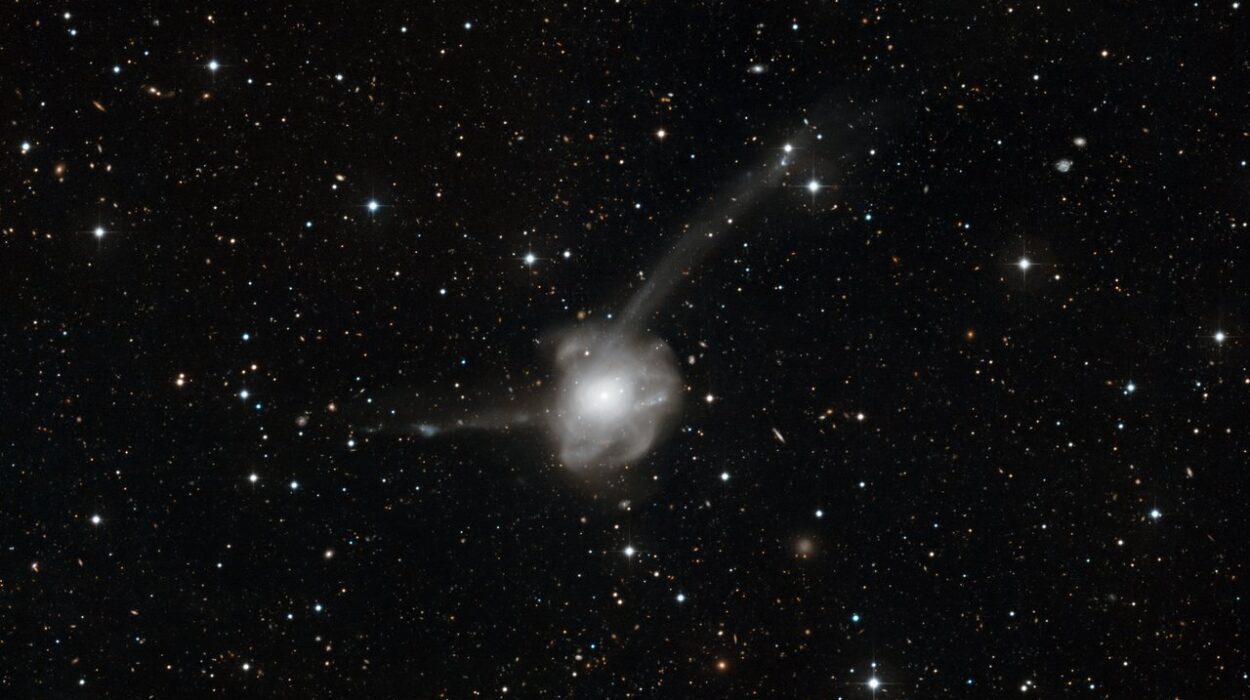
The universe is full of collisions. Galaxies are so large and spread out that individual stars rarely crash into each other during a merger. But the galaxies themselves, as gravitational systems, interact violently. Their shapes distort, their gas clouds collide, and their gravitational fields tear and twist their structures.
When two galaxies collide, something extraordinary happens. Gas clouds compress, triggering intense bursts of star formation. These are called starbursts. For a short time, the merged galaxy may produce stars at a rate dozens or even hundreds of times greater than normal.
This sounds like life, not death. But starbursts are often the beginning of the end.
A starburst consumes gas rapidly, exhausting the galaxy’s star-forming fuel. In addition, the massive stars formed during the burst produce strong winds and supernova explosions, heating and blowing away remaining gas. If enough gas is expelled, the galaxy cannot form new stars afterward.
The merger also tends to destroy spiral structure. Spiral arms are delicate patterns supported by rotating disks of gas and stars. A major merger can scramble this disk, leaving behind a more rounded elliptical galaxy.
So a collision can paradoxically kill a galaxy by forcing it to burn through its resources too quickly, like a creature that consumes all its food in a frantic feast and then starves afterward.
Galactic death can be caused by excess life.
The Role of Supermassive Black Holes: Galactic Self-Destruction
Almost every large galaxy contains a supermassive black hole at its center. These black holes can have masses millions or billions of times that of the Sun. The Milky Way has one called Sagittarius A*, with about four million solar masses.
A black hole itself emits no light. But when gas falls toward it, that gas forms a swirling accretion disk that heats up to extreme temperatures. The disk can shine brighter than the entire galaxy. In some cases, it launches powerful jets of particles traveling near the speed of light.
This is known as an active galactic nucleus, or AGN.
AGN activity can be devastating for star formation. The energy released near the black hole can heat gas throughout the galaxy, preventing it from cooling and collapsing into new stars. The jets can push gas out of the galaxy entirely. This process is called AGN feedback.
In many galaxies, AGN feedback is believed to be one of the main mechanisms that shuts down star formation permanently, especially in massive galaxies. Once the black hole becomes active, it can essentially sterilize its host galaxy, leaving behind a quiet population of aging stars.
It is one of the strangest and most dramatic relationships in astrophysics: the central black hole, which is tiny compared to the galaxy, can control the fate of billions of stars by regulating the gas supply.
A galaxy can die because its own heart becomes too powerful.
Environmental Death: When Galaxies Enter Clusters
Not all galaxies die alone. Many live in crowded environments, orbiting within galaxy clusters containing hundreds or thousands of galaxies. These clusters are filled with hot, thin gas called the intracluster medium, heated to tens of millions of degrees.
When a galaxy moves through this hot medium, it experiences a force similar to wind resistance. This can strip gas out of the galaxy, especially from its outer regions. The process is called ram-pressure stripping.
Imagine a galaxy plunging into a cluster like a swimmer diving into water. The pressure of the intracluster gas can sweep away the galaxy’s own gas, leaving it unable to form stars. Spiral galaxies entering clusters often lose their gas and transform into gas-poor, red galaxies over time.
Clusters are harsh places. They can starve galaxies by cutting off their gas inflow, strip them by force, and disrupt them through repeated gravitational encounters with other galaxies.
In a cluster, galactic death can happen not because the galaxy fails internally, but because the environment is too hostile for life to continue.
The Final Phase: A Galaxy of Old Stars
Once a galaxy is quenched, its fate is sealed. It becomes a galaxy dominated by old, long-lived stars. These stars are stable, but they do not burn brightly like the massive blue stars that once filled the galaxy’s spiral arms.
The galaxy becomes dimmer, redder, and calmer.
The dramatic glowing nebulae disappear. The supernova rate drops. The brilliant ultraviolet radiation fades. Dust clouds settle. The galaxy becomes a smooth, quiet collection of ancient starlight.
From a distance, such a galaxy may look peaceful and elegant. Many elliptical galaxies are visually stunning—large, bright, and spherical, with billions or trillions of stars. But beneath that beauty is a cosmic stillness. No new worlds are being born there. No new stars are igniting.
It is a galaxy that has stopped dreaming.
But even a dead galaxy is not truly lifeless. Stars still orbit. Gravity still binds the structure. Planets may still circle old stars. Some red dwarf stars can shine for trillions of years, meaning that even after a galaxy has stopped forming stars, many of its suns will continue burning long after the current age of the universe.
Death, in cosmic terms, is rarely absolute. It is more like an end of renewal.
What Happens to the Gas and Dust After Star Formation Ends?
In a star-forming galaxy, gas and dust are constantly recycled. Stars form, then die, returning material to space. Supernova explosions enrich the interstellar medium with heavy elements. This recycled material can cool again and form new stars.
In a quenched galaxy, this recycling system weakens. If the galaxy has lost most of its cold gas, the remaining gas may be too hot to collapse. Some of it may remain in a diffuse halo around the galaxy, glowing faintly in X-rays.
Dust may gradually be destroyed by radiation and energetic particles, leaving the galaxy clearer and less obscured. Without dense gas clouds, there are fewer new nebulae. The galaxy’s internal structure becomes simpler.
Over time, the galaxy becomes more dominated by its stellar component and its dark matter halo, while its interstellar medium becomes thin and inactive.
This is one reason dead galaxies often appear smooth and featureless. The dramatic dust lanes and bright star-forming regions have vanished.
Does a Dead Galaxy Still Have Supernovae?
Yes, but far fewer.
In star-forming galaxies, core-collapse supernovae occur frequently because massive stars are constantly being born and dying. These supernovae are short-lived events tied to youthful stellar populations.
In dead galaxies, core-collapse supernovae become rare because no new massive stars exist. However, Type Ia supernovae can still occur because they involve white dwarfs, which come from older stars. These supernovae can happen billions of years after the stars that created the white dwarfs were born.
So even in a dead galaxy, there can still be occasional cosmic explosions. But these are isolated echoes of an earlier era, not signs of ongoing creation.
The galaxy is like an ancient city where fireworks still happen sometimes, but no new buildings are being constructed.
Can a Dead Galaxy Be Revived?
One of the most fascinating questions in astrophysics is whether a dead galaxy can come back to life.
In principle, yes.
If a quenched galaxy somehow acquires fresh cold gas, star formation could restart. This could happen if the galaxy merges with a gas-rich neighbor or captures gas from intergalactic space. Such events might trigger a new wave of starbirth.
However, in many cases, revival is difficult. Massive elliptical galaxies often sit in environments filled with hot gas, and their central black holes can prevent cooling. Even if gas is present, it may remain too hot to collapse into stars. In these galaxies, quenching may be effectively permanent.
Smaller galaxies may have a better chance of revival, especially if they are not in clusters and can still draw gas from the cosmic web.
But overall, the universe trends toward quenching. As cosmic time progresses, gas becomes harder to acquire. The large-scale structure of the universe evolves. Galaxies become more isolated as space expands. The era of intense star formation peaked billions of years ago and has been declining ever since.
The universe itself is slowly shutting down the supply chain of creation.
The Milky Way’s Future: Will Our Galaxy Die?
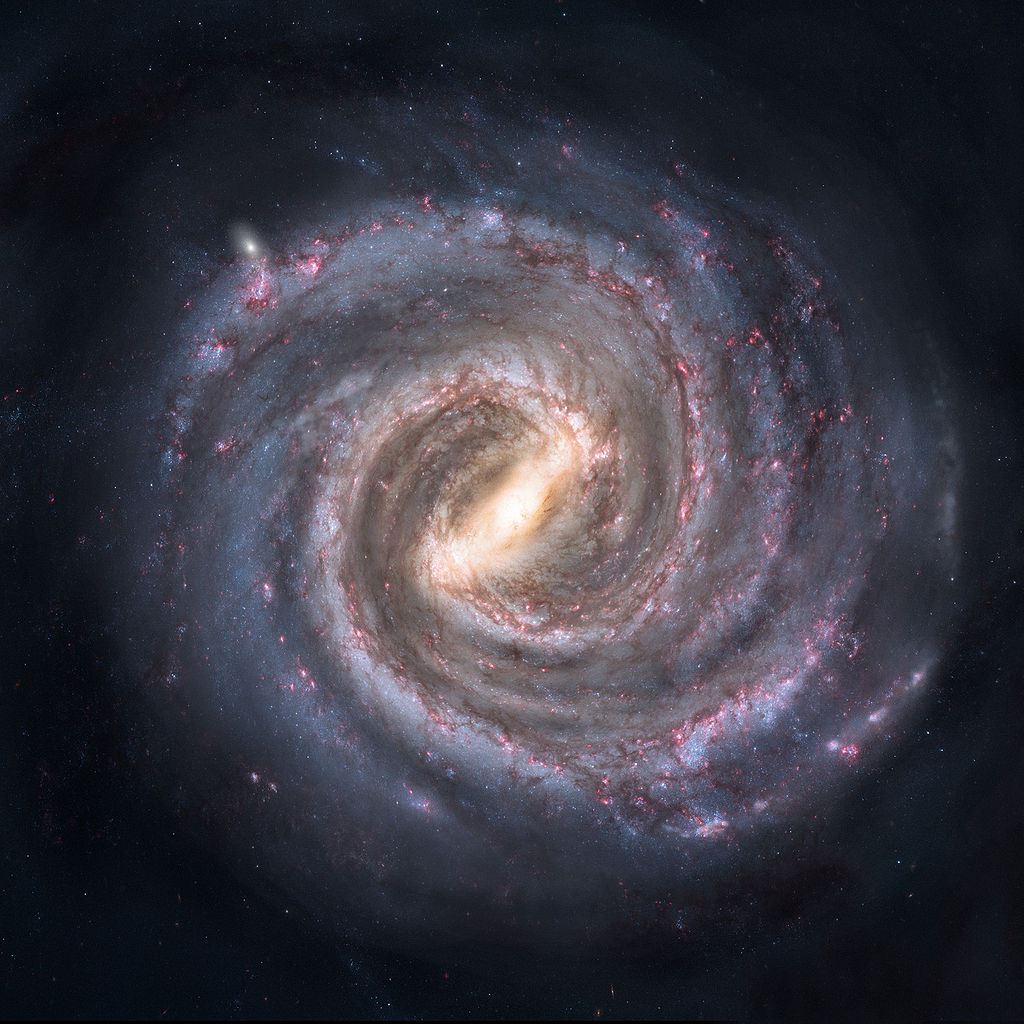
The Milky Way is still alive. It forms new stars at a rate of roughly one to a few solar masses per year. Star-forming regions like the Orion Nebula continue producing new suns, and clouds of hydrogen still drift through our galaxy’s spiral arms.
But the Milky Way will not remain a spiral forever.
In about four to five billion years, the Milky Way is expected to collide and merge with the Andromeda Galaxy. This will be a massive event, a slow-motion collision lasting billions of years. Stars will mostly pass by each other safely, but gas clouds will collide, triggering enormous starbursts.
For a time, the merged galaxy may blaze with new star formation. But the intense activity will likely consume or expel much of the available gas. The central black holes of both galaxies will eventually merge, potentially becoming highly active and blasting energy outward.
The end result will probably be a large elliptical galaxy, sometimes nicknamed “Milkomeda,” filled mostly with older stars and little star formation.
That will be the Milky Way’s death—not a sudden destruction, but a transformation into a quieter, older form.
Even then, the galaxy will not disappear. It will simply become less vibrant.
The Long-Term Fate of Dead Galaxies in an Expanding Universe
Galactic death is only one chapter in a larger cosmic story. The universe itself is expanding, and that expansion is accelerating due to dark energy. Over extremely long timescales, this has profound consequences.
As space expands, galaxies outside our local group will move farther and farther away. Eventually, they will recede so fast that their light will never reach us. They will fade beyond the observable horizon. Future civilizations in the far distant universe may see only their own galaxy and nothing else, as if the cosmos has become empty.
Dead galaxies will continue to drift, gravitationally bound within clusters and groups, but isolated from the rest of the universe.
Inside these galaxies, stars will continue to burn out. Massive stars will die quickly. Sun-like stars will last billions of years. Red dwarfs will last trillions. But eventually, even the longest-lived stars will exhaust their fuel.
Over unimaginable time, galaxies will become filled with stellar remnants: white dwarfs, neutron stars, and black holes. Their light will fade. The galaxy will become darker and colder.
In the far future, a dead galaxy may become not just quenched, but almost invisible—a faint collection of dark objects orbiting in silence.
This is the ultimate meaning of galactic death: not merely the end of star formation, but the gradual fading of light itself.
The Cosmic Graveyard: What Remains After the Lights Go Out
When a galaxy dies, it leaves behind an enormous structure of mass. Even without new stars forming, the galaxy still contains billions or trillions of stars that continue orbiting in stable patterns. It still contains dark matter, which remains the dominant mass component. It may contain hot gas halos and scattered dust.
But its character changes. A living galaxy is dynamic, filled with glowing nurseries and violent explosions. A dead galaxy is calmer, dominated by slow orbits and ancient stars.
If you could travel into such a galaxy, you might find planetary systems still circling old stars. Some of those planets could remain warm if they orbit red dwarfs. Some might even host life, depending on conditions. The death of a galaxy does not necessarily mean the death of all life inside it.
But the long-term prospects diminish. With fewer supernovae and fewer new stars, the chemical enrichment of the galaxy slows. The creation of heavy elements becomes rarer. New planetary systems become less common.
The galaxy becomes a museum of old worlds rather than a factory of new ones.
Does the Universe Have an End Like Galaxies Do?
The death of galaxies is part of a larger decline. The universe has been forming stars for nearly 14 billion years, but star formation peaked around 10 billion years ago. Since then, it has been dropping. Galaxies are gradually using up their gas, and fewer new galaxies are being born.
The universe is entering an era of aging.
If dark energy continues to dominate, the expansion of the universe will keep accelerating, making it harder for galaxies to merge and exchange material. The cosmic web will stretch and thin. Over trillions of years, the universe will become darker, colder, and more isolated.
In that distant future, galaxies will not die one by one as dramatic tragedies. They will fade collectively, like the slow dimming of a cosmic civilization.
This is sometimes called the “heat death” scenario of the universe, where energy becomes evenly spread out and no more useful work can be done.
Galaxies are not separate from that destiny. They are chapters in the universe’s slow cooling.
What Happens When a Galaxy Dies, Really?
So what happens when a galaxy dies?
It stops making new stars. Its bright blue stellar nurseries vanish. Its spiral arms fade. Its gas is consumed, heated, or stripped away. Its central black hole may erupt with energy that sterilizes the remaining star-forming regions. The galaxy’s color shifts from blue to red. The rate of supernova explosions declines. The galaxy becomes quieter, smoother, and more stable, but also more ancient.
A dead galaxy is not destroyed. It is not erased from existence. It is simply transformed into something older, something quieter, something less creative.
And in that transformation, there is a kind of cosmic sadness.
Because galaxies are the universe’s great storytellers. They are where stars are born, where planets form, where heavy elements are forged, and where the conditions for life can emerge. When a galaxy dies, it is as if a great cosmic furnace has gone cold. The universe loses one of its places of creation.
Yet even in death, a galaxy remains magnificent. It still holds billions of stars. It still bends spacetime with its mass. It still carries the memory of ancient starbursts and collisions. It still shines faintly, like embers after a long fire.
A galaxy’s death is not the end of its existence. It is the end of its youth.
And perhaps that is what makes it so haunting. In the universe, even the grandest structures are temporary. Even galaxies, those vast islands of light, eventually run out of fuel and drift into quiet old age.
The universe builds wonders, and then, patiently, it lets them fade.