Whale sharks appear to rely on a far more diverse set of feeding behaviors than previously recognized, switching between multiple ways of capturing prey across different depths and habitats. By combining observations from more than a hundred published studies with over 22 hours of animal-borne video collected from wild sharks, scientists documented 12 distinct feeding behaviors, including six newly described behaviors, revealing a level of behavioral flexibility that may help explain how the world’s largest fish survives in tropical waters where food is often scarce.
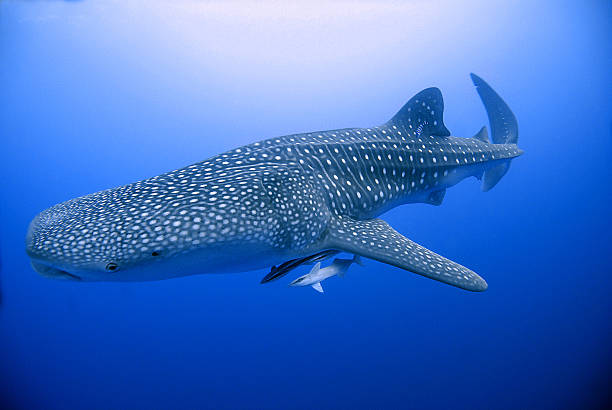
The image most people have of a whale shark is familiar: a gigantic spotted fish gliding slowly across the ocean surface with its mouth open, filtering tiny prey from the water. That picture is accurate—but it tells only part of the story.
Far below the surface, whale sharks appear to employ a surprisingly varied toolkit for finding and capturing food. Rather than relying on a single feeding strategy, they switch between different swimming styles, body orientations and methods of moving water through their mouths, allowing them to exploit prey that may be sparse, patchy or fleeting.
The newly developed behavioral framework suggests this flexibility may be one of the defining characteristics that enables whale sharks (Rhincodon typus) to inhabit oligotrophic tropical seas—regions where nutrients and prey are generally much less abundant than in cooler, more productive oceans.
Looking beyond surface feeding
Much of what scientists previously knew about whale shark feeding came from observations made at the ocean’s surface. Boats, snorkelers and aerial surveys have documented spectacular feeding events in which sharks gather around fish spawning aggregations, dense swarms of plankton or schools of small fishes.
Those observations have provided valuable insights, but they inevitably miss what happens deeper in the water column.
Previous biologging studies had already hinted that whale sharks spend substantial portions of their time feeding below the surface, with active surface feeding accounting for only a small fraction of total foraging time. Yet directly observing these underwater behaviors had remained difficult.
To bridge that gap, the researchers equipped whale sharks at Ningaloo Reef in Western Australia with animal-borne camera tags capable of recording high-definition video alongside depth data.
The project initially involved camera deployments on 10 whale sharks during field seasons in 2017 and 2018. Technical issues and tag performance ultimately limited usable footage to five sharks—three males and two females measuring 4.5 to 7 meters long—but those recordings still yielded 22 hours and 27 minutes of underwater observations spanning 45 video intervals.
Rather than examining the videos in isolation, the researchers paired them with a comprehensive review of the scientific literature. They screened hundreds of publications and identified 106 peer-reviewed articles containing directly observed or instrument-derived whale shark behaviors. Combining those historical observations with the new camera footage allowed them to build the most comprehensive behavioral catalog for the species presented in the paper.
Building the first comprehensive behavioral catalog
The result was an ethogram—a systematic inventory of the known behaviors expressed by a species.
Altogether, the ethogram documented 36 distinct behaviors.
Among these were 12 feeding behaviors, two feeding indicators related to the movement of the gills, three locomotion behaviors and twenty additional behaviors associated with interactions involving other whale sharks, marine animals, tourism activities and vessels.
Perhaps most striking was the discovery of six feeding behaviors that had not previously been described from direct observations. These newly documented behaviors emerged because the cameras traveled with the sharks into parts of the water column that researchers rarely observe directly.
Instead of treating every feeding event as a single category, the researchers also proposed a framework separating three different aspects of feeding.
The first describes the feeding modality—how water enters the shark’s mouth. Whale sharks use both ram filtration, in which forward swimming drives water through the mouth, and suction feeding, where rhythmic expansion of the mouth and throat draws water inward.
The second identifies the specific feeding behavior itself.
The third groups those behaviors into broader feeding categories based largely on movement: slow feeding, active feeding and stationary feeding.
According to the authors, separating these concepts should make future comparisons more consistent because behaviors that may look similar can involve very different swimming mechanics and energetic costs.
Feeding while constantly adapting
One of the strongest themes emerging from the study is that whale sharks appear capable of rapidly changing how they feed in response to changing conditions.
Some behaviors involve slow, steady swimming with the mouth partially open while filtering prey from the water. Others feature vigorous bursts of activity, rapid turns or lunges into concentrated prey. Still others involve nearly vertical body positions in which sharks rely primarily on suction rather than forward motion.
The videos showed that sharks often transitioned between these different behaviors over relatively short periods rather than remaining committed to a single strategy.
Among the newly documented behaviors was water column slow feeding, in which sharks filtered prey while swimming steadily through deeper water away from both the surface and seabed.
Another newly recognized behavior, benthic slow feeding, occurred close to the seafloor, where sharks maintained slow horizontal movement while filtering prey.
The researchers also identified gliding slow feeding, during which sharks descended with little or no tail movement while continuing to feed, as well as ascent slow feeding, in which feeding continued throughout upward swimming.
A more active behavior termed dive feeding involved sharks swimming downward with open gills throughout the descent.
The cameras also documented surface undulation slow feeding, where sharks performed a slow rocking motion near the surface while filtering prey.
Each behavior occupied a different combination of depth, body orientation and movement pattern, suggesting whale sharks are capable of exploiting food resources distributed throughout multiple parts of the water column rather than only at the surface.
Hidden behaviors emerge beneath the surface
The animal-borne cameras revealed that much of a whale shark’s feeding activity occurs outside the dramatic surface events that typically attract human attention.
Among all observed behaviors, surface slow feeding occupied the greatest proportion of time, but it was closely followed by water column slow feeding, demonstrating that filtering prey well below the surface forms an important part of the sharks’ daily routine.
The researchers also found that many of these underwater behaviors lasted only briefly. Individual feeding events generally continued for seconds to a few minutes before the sharks transitioned into another movement pattern or another feeding strategy. Descending behaviors frequently continued until the animals reached the seafloor.
This continual switching suggests whale sharks are not following a rigid feeding program. Instead, they appear to respond dynamically to changing prey distributions as they move through the water column.
One of the most intriguing newly recognized behaviors was gliding slow feeding.
Ordinarily, gliding allows negatively buoyant sharks to sink through the water with minimal muscular effort. During gliding slow feeding, however, the whale sharks continued filtering prey while descending almost passively. Some sharks maintained this behavior from shallow water to depths exceeding 64 meters, with the longest event lasting more than 50 seconds.
A related behavior, ascent slow feeding, occurred while sharks climbed back toward the surface. Rather than closing their mouths during ascent, the sharks continued filtering prey as they swam upward, sometimes throughout the entire ascent phase.
Together, these observations indicate that feeding can continue during both downward and upward travel, allowing sharks to harvest prey almost continuously instead of restricting feeding to level swimming.
A closer look at dive feeding
Another newly described behavior was dive feeding.
Unlike passive gliding, dive feeding involved active swimming throughout the descent. The sharks maintained open gills while descending at steeper body angles, suggesting they continued filtering water during purposeful dives rather than merely traveling toward deeper water.
The study compared several movement characteristics among behaviors, including body pitch, tailbeat frequency, swimming activity and vertical velocity.
Dive feeding produced a steeper downward body angle than gliding behaviors and generally involved faster descent rates.
By distinguishing these similar-looking behaviors, the researchers argue that future biologging studies will be better able to recognize when a shark is actively feeding rather than simply moving through the water.
That distinction matters because energetic costs differ substantially between swimming styles. Misclassifying these movements could lead scientists to overestimate or underestimate how much energy whale sharks expend while searching for food.
Feeding near the seafloor
The cameras also captured behaviors occurring close to the seabed that had rarely, if ever, been directly documented.
During benthic slow feeding, sharks swam horizontally along the bottom while filtering prey. Individual events averaged roughly 37 seconds, although some lasted considerably longer.
Occasionally, the animals appeared to brush against the seabed, creating small clouds of disturbed sediment. The researchers referred to this behavior as sea floor scratching.
Although the cameras could not always show exactly which part of the shark contacted the bottom, the repeated appearance of sediment plumes suggested that physical contact with the seafloor sometimes occurred during these movements.
The observations indicate that whale sharks may exploit prey not only at the surface and in open water but also close to the ocean floor.
Reading feeding through the gills
Because the cameras were attached near the dorsal fin rather than beside the mouth, they could not directly record every opening and closing movement of the jaws.
Instead, the researchers relied on changes in the sharks’ gill openings.
When water flowed through an open mouth during feeding, the gill slits visibly flared. Rhythmic opening and closing of the buccal cavity and gill arches indicated suction feeding, while consistently open gills accompanied ram filtration.
The videos also documented repeated gill clearing events.
Sometimes these produced visible clouds of particles expelled from the gills, while other events occurred without an obvious plume.
Most clearing events occurred during feeding behaviors rather than non-feeding activities, suggesting they may help remove accumulated particles from the filtering apparatus after prey builds up within the gill structures.
The researchers note that this behavior has previously been described as “coughing,” but they favor the term gill clearing because it more accurately reflects what is observed.
Another commonly observed indicator was fluttering gills, which occurred both during feeding and during other activities.
Rather than representing a distinct feeding behavior itself, fluttering served as an indicator that helped researchers interpret what the sharks were doing while underwater.
Following prey wherever it appears
The diversity of feeding behaviors revealed by the study paints a picture of an animal capable of responding to remarkably different feeding opportunities.
Some behaviors are suited to slow, continuous filtering while swimming horizontally.
Others appear designed for rapid exploitation of dense prey concentrations.
Still others allow sharks to feed while nearly stationary or while moving vertically through the water column.
Instead of relying on a single method, whale sharks seem able to combine ram filtration and suction feeding depending on the situation.
According to the researchers, this versatility could be especially valuable in tropical seas, where productive feeding opportunities are often temporary and unevenly distributed.
Rather than waiting for exceptionally dense prey patches, whale sharks may be able to continue collecting food across a much wider range of prey concentrations by adjusting both their movements and their feeding modality.
This flexibility contrasts with the more limited behavioral repertoire currently described for other large filter-feeding sharks and forms one of the study’s central conclusions.
Why flexibility may be the whale shark’s greatest advantage
The researchers argue that the newly documented range of behaviors reflects more than simple variety. Instead, it points to an underlying behavioral plasticity—the ability to modify behavior according to changing environmental conditions—that may be essential for life in nutrient-poor tropical oceans.
Unlike regions where food remains abundant for extended periods, tropical marine environments are often oligotrophic, meaning prey can be sparse, patchily distributed and highly unpredictable. For an animal that can exceed several meters in length and requires substantial energy, locating enough food presents an ongoing challenge.
The ethogram suggests whale sharks overcome this challenge not by specializing in a single feeding technique, but by maintaining an extensive behavioral repertoire that allows them to exploit prey wherever it appears.
Slow feeding behaviors permit prolonged filtering while conserving energy. Active feeding behaviors enable rapid responses to dense prey patches. Stationary feeding allows sharks to target concentrated food without continuous forward swimming. Together, these strategies create a remarkably adaptable feeding system.
The study also highlights another layer of flexibility.
Rather than simply choosing between different swimming behaviors, whale sharks can also alter how they collect prey. They switch between ram filtration, in which forward movement forces water through the filtering apparatus, and suction feeding, in which water is actively drawn into the mouth through movements of the jaws and throat.
The authors suggest this combination gives whale sharks an unusually broad range of options for capturing prey under different environmental conditions.
Feeding can continue almost continuously
One of the study’s most notable insights is that feeding does not appear to be restricted to isolated events.
Instead, the videos showed sharks feeding during surface swimming, while traveling through the middle of the water column, during descents, while ascending and even near the seabed.
This continuity challenges the common perception that whale sharks alternate between long periods of swimming and occasional feeding bouts.
Instead, many movements previously interpreted simply as travel may actually represent ongoing foraging.
The observations also demonstrate that transitions between behaviors can occur rapidly.
A shark might begin with surface slow feeding before descending into water column slow feeding, shift into gliding slow feeding during a passive descent, and later return toward the surface while continuing to feed during ascent. Such sequences indicate that feeding is integrated into the sharks’ overall movement rather than occurring as an isolated activity.
Changes in mouth opening may reduce the cost of feeding
The researchers propose that whale sharks may also manage the energetic cost of feeding by varying the size of their mouth opening.
Previous observations included in the study have shown that the sharks do not always keep their mouths opened to the same degree. Depending on the behavior—and even within the same behavior—the gape can vary substantially.
Those differences matter because opening a large mouth while swimming increases drag, making forward movement more energetically expensive.
Evidence from the current study supports this idea.
For example, gliding slow feeding produced slower descent speeds than ordinary gliding, consistent with greater drag while the shark continued filtering water.
According to the authors, adjusting mouth gape could allow whale sharks to balance feeding efficiency against energy expenditure. When prey concentrations are low, maintaining a smaller opening may reduce drag while still allowing food collection. Richer prey patches could justify the additional energetic cost of opening the mouth more widely.
The paper does not directly measure energy use, but the observed differences in movement are consistent with this interpretation.
A standardized language for whale shark behavior
Beyond documenting new behaviors, one of the study’s broader goals was to create a standardized framework that researchers can use worldwide.
Until now, different studies have often described similar observations using different terminology or grouped distinct behaviors into broad categories such as “feeding” or “filter feeding.” That inconsistency makes it difficult to compare findings across locations or monitoring programs.
The new ethogram provides clear definitions for each behavior, along with descriptions of body posture, swimming style, feeding mechanism, observation methods, typical depth and previously reported locations where applicable.
The researchers believe this common vocabulary will improve future ecological and behavioral studies while allowing observations collected using different technologies—including direct observation, drones, accelerometers, magnetometers and animal-borne cameras—to be compared more consistently.
A standardized behavioral framework could also help scientists distinguish subtle differences that may otherwise be overlooked.
For example, two sharks swimming at similar depths might appear to be doing the same thing from the surface, yet one could be actively feeding while the other is simply cruising. Recognizing those differences is essential for accurately interpreting movement data.
Implications for conservation and management
The authors also suggest that distinguishing among these behaviors could improve assessments of how human activities affect whale sharks.
Some behaviors occur at the surface, where sharks are more likely to encounter tourism vessels, swimmers and boats. Others take place much deeper in the water column or near the seabed.
Because the newly defined behaviors differ in movement patterns, swimming effort and body orientation, they may also differ in their vulnerability to disturbance.
The paper notes that previous ecological studies have often treated feeding as a single broad behavioral state, while tourism studies have used various behavioral classifications of their own. A standardized ethogram offers a way to bridge those approaches and evaluate whether particular human activities influence specific behaviors rather than feeding in general.
Such distinctions may become increasingly valuable when comparing whale shark populations across different regions, body sizes and levels of human disturbance.
What remains uncertain
Although the study substantially expands what is known about whale shark behavior, the authors also acknowledge important limitations.
The animal-borne video observations came from only five individual whale sharks at Ningaloo Reef, even though the literature review incorporated observations from many other locations around the world.
As a result, some behaviors may prove more common—or rarer—in other populations.
The cameras also captured only portions of the sharks’ lives. Longer deployments and observations from additional environments may reveal behaviors that have not yet been documented.
Some interpretations remain provisional as well.
For instance, the researchers describe water column vertical feeding based on instrument data from previous work but note that the behavior has not yet been directly observed with video. Likewise, certain functions of newly described behaviors, including aspects of seafloor interactions, will require additional investigation.
The authors emphasize that the ethogram should therefore be viewed as a living framework that can be refined as new observations emerge.
A more complete picture of the world’s largest fish
Taken together, the study transforms the understanding of whale shark feeding from a handful of familiar surface behaviors into a rich behavioral repertoire spanning the entire water column.
By combining an extensive review of previous research with more than 22 hours of animal-borne video, the researchers documented 36 distinct behaviors, including 12 feeding behaviors and six previously undescribed behaviors. The findings reveal a species that continuously adjusts its swimming, body orientation and feeding method as conditions change, rather than relying on a single strategy.
That flexibility may help explain how whale sharks succeed in tropical oceans where food can be difficult to find. At the same time, the standardized ethogram offers researchers a common language for describing whale shark behavior, making future studies easier to compare across locations and technologies.
As additional camera deployments and biologging studies expand this behavioral record, the ethogram proposed in this study provides a foundation for understanding how these enormous filter feeders navigate an environment where survival depends on making the most of every feeding opportunity.
Publication details
Christine Barry et al, An ethogram for the whale shark (Rhincodon typus) with insights into foraging plasticity, Marine Biology (2026). DOI: 10.1007/s00227-026-04900-y