Britain’s response to the powerful May 2024 geomagnetic storm exposed significant vulnerabilities in critical infrastructure despite only limited disruptions, according to experts. The review identifies gaps affecting electricity networks, satellites, aviation, and space weather forecasting, while outlining recommendations designed to improve resilience before a stronger solar storm occurs.
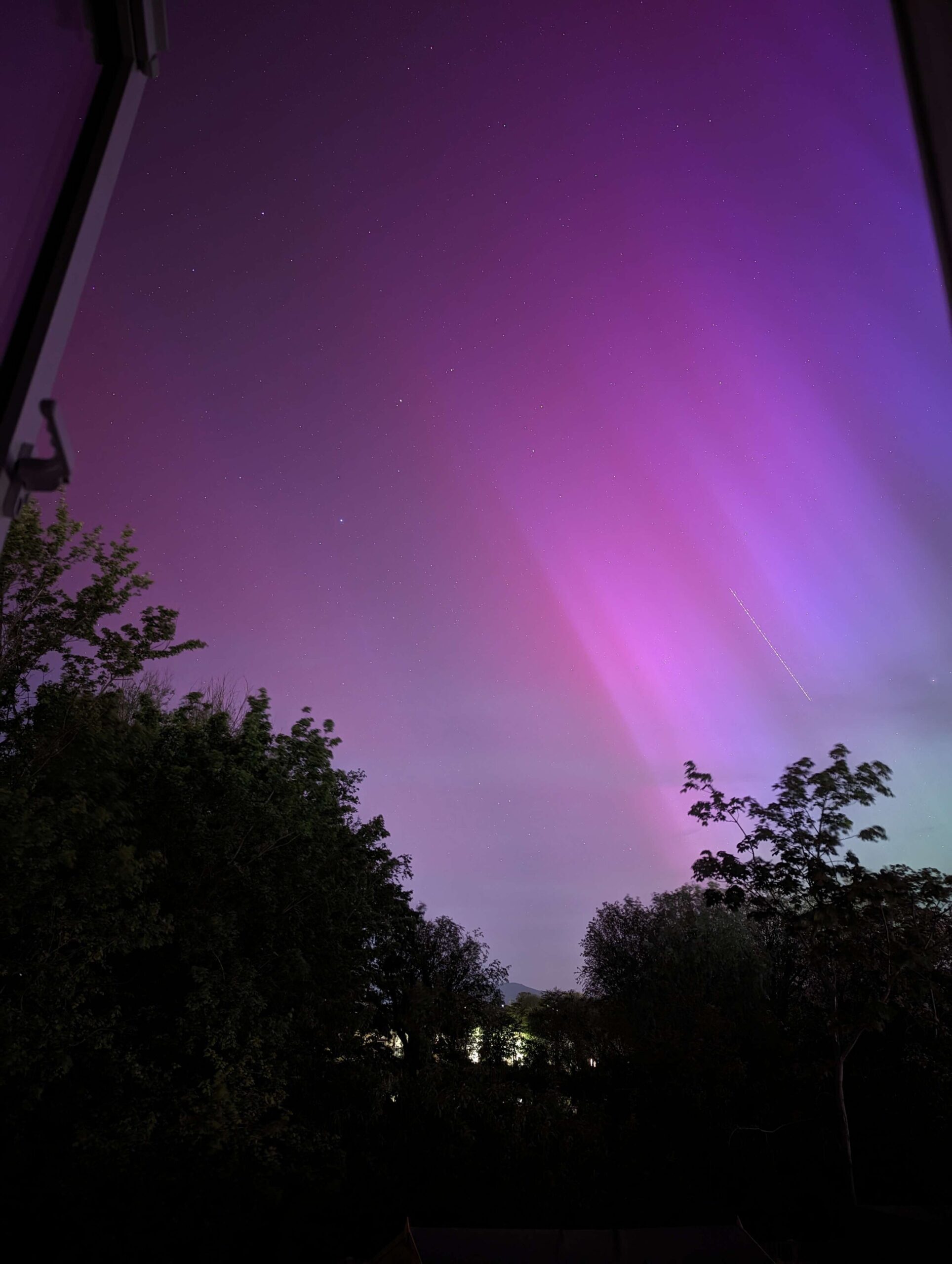
Millions of people across the United Kingdom watched brilliant curtains of green and purple light spread across the night sky in May 2024 as one of the strongest geomagnetic storms in decades triggered an unusually widespread display of the northern lights. But for scientists studying the event, the aurora represented something far more important than a memorable spectacle.
The storm became the largest real-world test of the UK’s ability to withstand severe space weather in a generation. According to researchers from the Space Environment Impacts Expert Group (SEIEG), that test revealed several critical weaknesses in the country’s preparedness.
The group’s assessment, presented at the Royal Astronomical Society’s National Astronomy Meeting in Birmingham by SEIEG chair Professor Richard Horne of the British Antarctic Survey, concludes that while the storm caused only limited disruption, it exposed vulnerabilities that should be addressed before a more severe event occurs.
One of the strongest geomagnetic storms in years
The May 2024 event reached G5, the highest category on the U.S. National Oceanic and Atmospheric Administration’s geomagnetic storm scale. Its exceptional intensity resulted from five successive coronal mass ejections striking Earth over a period of two days.
Although the impacts were relatively modest, scientists say the storm served as a realistic stress test for infrastructure that depends on electricity, satellites, aviation, and reliable communications.
“The northern lights were the most visible sign of the May 2024 storm, but they were only one part of a much broader space weather event that tested the UK’s critical infrastructure,” Horne said.
“The storm highlighted where we need better monitoring, better forecasting and more research so we’re prepared for a more severe event in the future.”
Following its review, the expert group submitted 14 recommendations to the UK government. Those proposals are now under consideration.
Electricity networks remain a major concern
Among the most significant issues identified is the vulnerability of the electricity grid.
During geomagnetic storms, disturbances in Earth’s magnetic field can generate electrical currents that flow through power transmission systems. These geomagnetically induced currents can place transformers under stress and potentially disrupt electricity supplies.
Computer simulations of the May 2024 storm suggested that electrical currents exceeded 50 amps at several substations, reaching a peak of around 68 amps.
However, Horne pointed to a critical limitation in assessing the risk.
“During the May 2024 event, computer models suggested currents exceeded 50 amps at several substations, with a peak of around 68 amps. However, because there are currently no instruments measuring these currents anywhere in England or Wales, those estimates cannot even be checked.”
Without direct measurements, researchers cannot verify model predictions or determine how different transformer designs respond during severe space weather.
To close that gap, the team recommends installing a network of current monitors across England and Wales. Those measurements would help determine how much electrical stress different transformers can safely tolerate during future storms.
The report also notes that New Zealand, which experiences similar space weather conditions because of its comparable geomagnetic latitude in the opposite hemisphere, already monitors more than 80 transformer sites and successfully applied its mitigation plans during the May 2024 event.
Satellite operations also faced increased pressure
The storm’s effects extended beyond Earth’s surface into an increasingly crowded low Earth orbit.
Researchers found that nearly 5,000 satellites carried out orbital maneuvers during the storm, compared with roughly 300 before the event began. At the same time, UK-licensed satellites experienced a 35% increase in collision warnings.
Those figures illustrate how severe space weather can complicate satellite operations by increasing uncertainty in orbital conditions and forcing operators to take additional precautions.
The expert group says more research is needed to understand how powerful geomagnetic storms could raise the likelihood of satellite collisions and potentially trigger cascading debris events, where one collision generates fragments that increase the risk of further impacts.
Better forecasting could provide valuable time to respond
Improving forecasts represents another major priority identified in the review.
The researchers recommend advances in forecasting coronal mass ejections and solar energetic particle events, with the long-term objective of delivering dependable warnings of severe geomagnetic storms two to three hours before they reach Earth.
Such advance notice would give operators of electrical grids, satellites, and aircraft additional time to implement protective measures before the most severe effects develop.
According to the report, stronger forecasting capabilities, combined with improved monitoring, could substantially reduce the risks posed by future space weather events.
Scientists say stronger storms remain a realistic possibility
The May 2024 storm is estimated to have been roughly a 1-in-13-year event, but researchers caution that even larger storms remain a realistic future hazard.
The report notes that a Carrington-class event, comparable to the great solar storm of 1859, carries an estimated 1% chance of occurring in any given year.
Because of that ongoing risk, the researchers argue that the relatively modest impacts of the 2024 storm should be viewed as an opportunity rather than reassurance.
“One of the biggest lessons from the May 2024 storm is that we still have important gaps in our monitoring and understanding of how severe space weather could affect UK infrastructure,” Horne said.
“We were fortunate that this was not a one-in-100-year event. We now have an opportunity to strengthen our monitoring, improve our forecasts and make sure the UK is better prepared before a much larger storm occurs.”