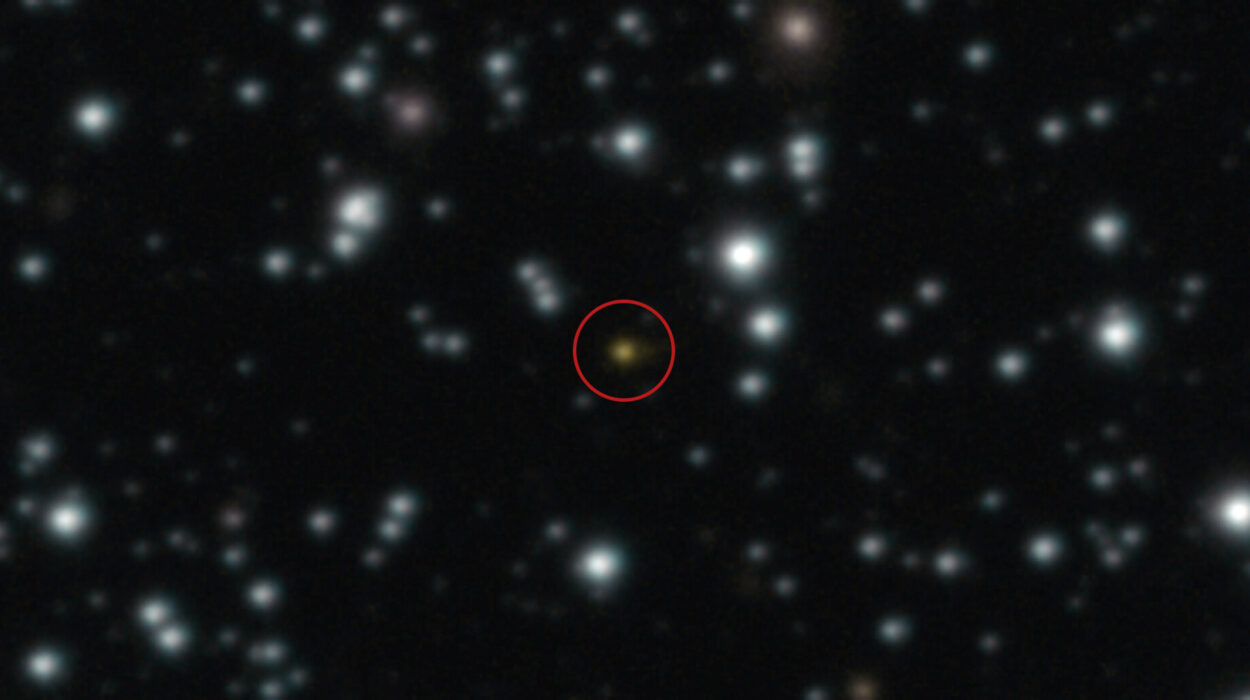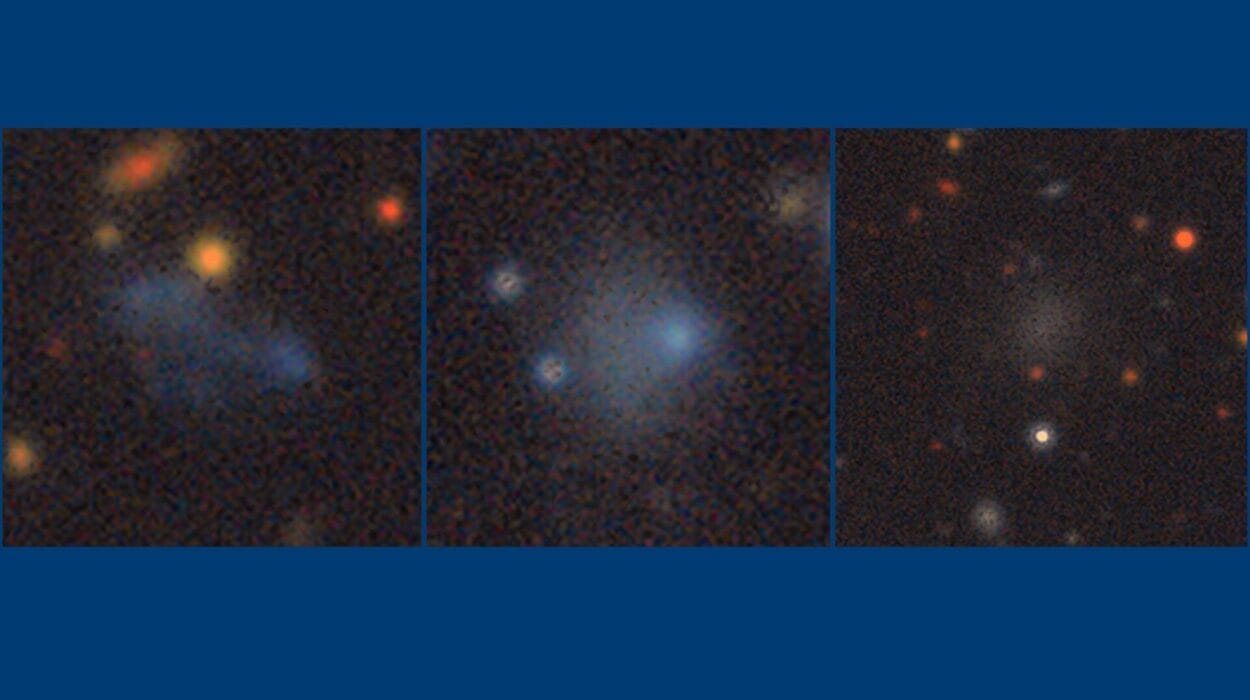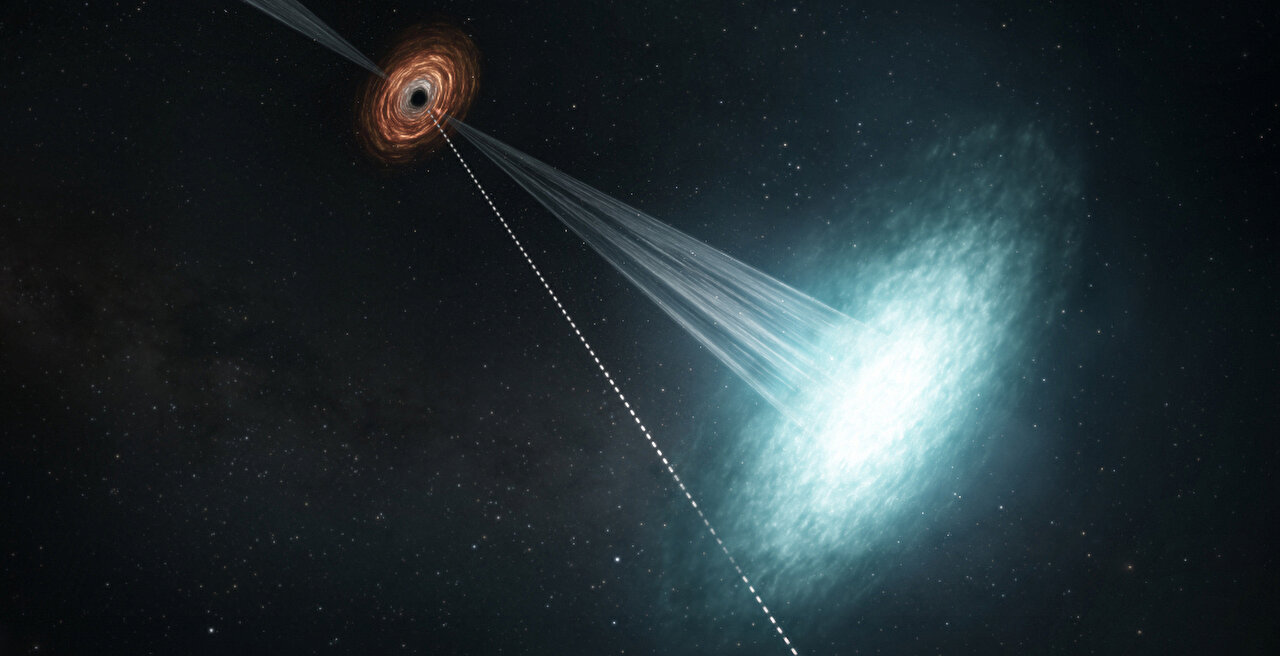
Chinese astronomers have identified an unusual cosmic transient at the center of a dwarf galaxy that combines the rapid brightening of a fast-evolving blue optical transient with radio emission far more powerful than previously seen in similar events. The observations suggest the object could be a rare jetted tidal disruption event involving an intermediate-mass black hole—or potentially an entirely new class of relativistic optical transient.
Astronomers have uncovered an extraordinary cosmic event that defies easy classification, revealing characteristics that bridge several of the universe’s most energetic phenomena. The object, known as AT2019ijn, was detected in the nucleus of a dwarf galaxy and displays an unusual combination of optical and radio behavior that does not fit neatly into any known category of transient event.
The discovery, reported in The Astrophysical Journal Letters, comes from a multi-wavelength analysis led by Hucheng Ding of Anhui Normal University in China. By examining the transient across optical and radio wavelengths, the researchers found evidence that points toward an energetic central engine powering the event.
An unusual member of one of astronomy’s rarest transient classes
Fast-evolving blue optical transients, or FBOTs, are among the rarest astronomical explosions. They typically brighten rapidly, reaching maximum luminosity within about 10 days, display blue colors near their peak brightness, and then fade back toward their pre-event state within roughly a month.
AT2019ijn shares several hallmark traits of these rare objects but also departs from them in important ways.
The transient was first identified on May 31, 2019, by the Zwicky Transient Facility as an optical event located in the center of a dwarf galaxy at a redshift of 0.27. Follow-up observations revealed behavior unlike that of previously known FBOTs.
“In this Letter, we present the discovery and results from the multi-wavelength analysis of AT2019ijn, a peculiar optical transient that occurred in the center of a dwarf galaxy,” the researchers wrote.
A rapid rise followed by an unusually slow fade
The optical observations showed that AT2019ijn reached an impressive peak luminosity of −21.05 magnitudes in just 5.26 days, matching the rapid rise expected for luminous FBOTs.
Instead of fading quickly, however, the object declined much more gradually, remaining bright for more than a month while maintaining a persistently blue color.
This slower decline distinguishes the event from typical FBOTs. According to the researchers, its fading behavior more closely resembles that seen in superluminous supernovae (SLSNe) or tidal disruption events (TDEs), even though its rapid initial brightening aligns with the FBOT population.
The combination creates a hybrid set of characteristics that makes the transient difficult to classify using existing categories.
Radio observations revealed an even bigger surprise
The most striking discovery emerged from radio observations.
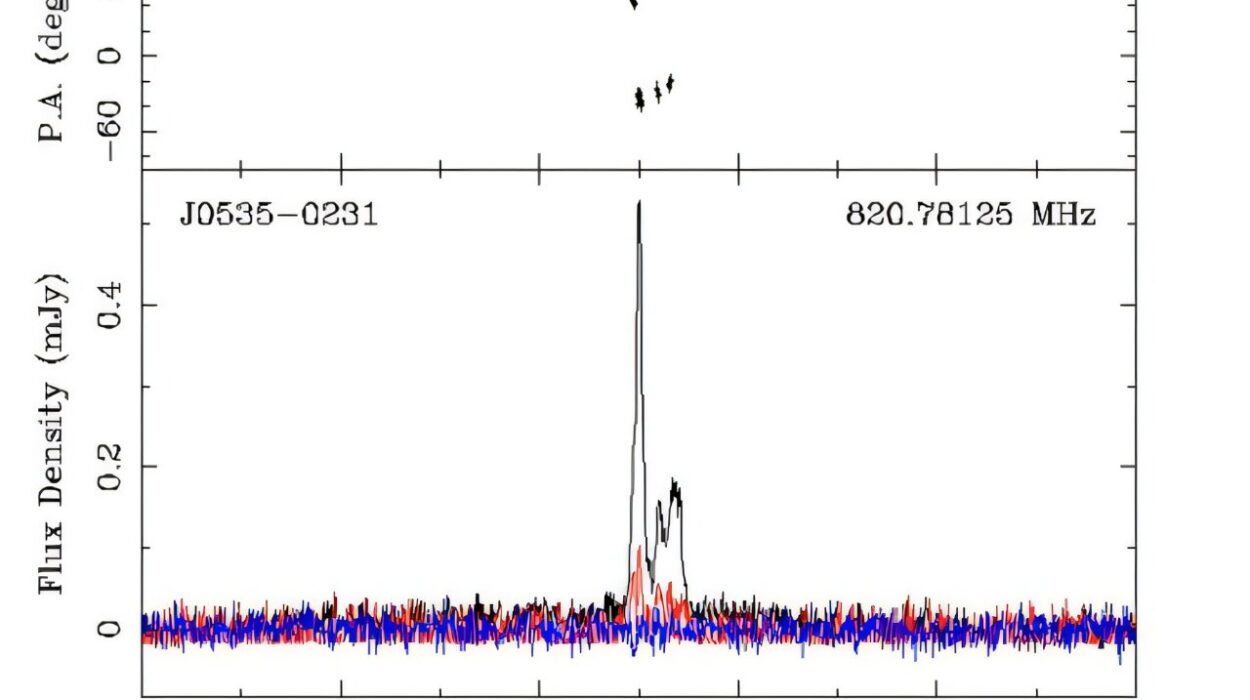
Rather than fading away, the radio emission from AT2019ijn continued to strengthen long after the optical flare had peaked. It eventually reached maximum brightness 641 days after the initial optical discovery.
Its peak radio luminosity exceeded that of every previously known luminous FBOT or superluminous supernova by more than an order of magnitude. At the same time, its radio brightness was comparable to that observed in jetted tidal disruption events, a different class of powerful cosmic phenomenon.
This unusually bright and long-lasting radio signal became one of the strongest clues to the event’s underlying nature.
Evidence points to a powerful jet
The researchers propose that the radio observations can be explained by an off-axis relativistic jet.
In this scenario, the jet initially points away from Earth. As it expands over time, it gradually spreads into Earth’s line of sight, producing the delayed peak observed in the radio light curve hundreds of days after the optical event.
From their analysis, the team estimated the jet’s kinetic energy at approximately 700 sexdecillion ergs.
Combined with the event’s exceptionally luminous optical emission, this enormous energy suggests that AT2019ijn is powered by an active central engine, rather than being driven solely by the explosion itself.
A tidal disruption event is the leading explanation
After considering the available evidence, the researchers conclude that a tidal disruption event currently offers the most convincing explanation.
Under this interpretation, AT2019ijn would represent a jetted TDE involving an intermediate-mass black hole with an estimated mass of about 132,000 times that of the Sun.
While this scenario best matches the observations, the team emphasizes that it is not the only possibility. They note that they cannot completely rule out the alternative explanation that the transient was powered by a jetted magnetar.
Because neither interpretation fully accounts for every observed property, the object’s true nature remains an open question.
A possible new category of optical transient
Perhaps the most significant implication of the study is that AT2019ijn may not simply be an unusual example of an existing class of objects.
Instead, its blend of rapid optical brightening, prolonged fading, persistent blue color, and extraordinarily luminous delayed radio emission may indicate that astronomers have encountered a previously unrecognized class of relativistic optical transients.
If additional events with similar characteristics are discovered, they could help establish this emerging category and improve understanding of the powerful engines capable of producing such phenomena.
“Our results suggest that AT2019ijn may represent a new class of relativistic optical transients, paving a new way for their statistical studies by combining optical and radio time-domain surveys,” the scientists concluded.