Since the first human steps on the Moon, humanity has set its sights on the stars, imagining a future where we extend our civilization beyond Earth. Mars, with its eerie red landscapes and uncanny similarities to our own planet, has long been considered our most likely next home. Yet, while the dream of settling on Mars has captivated imaginations for decades, the challenge remains immense.
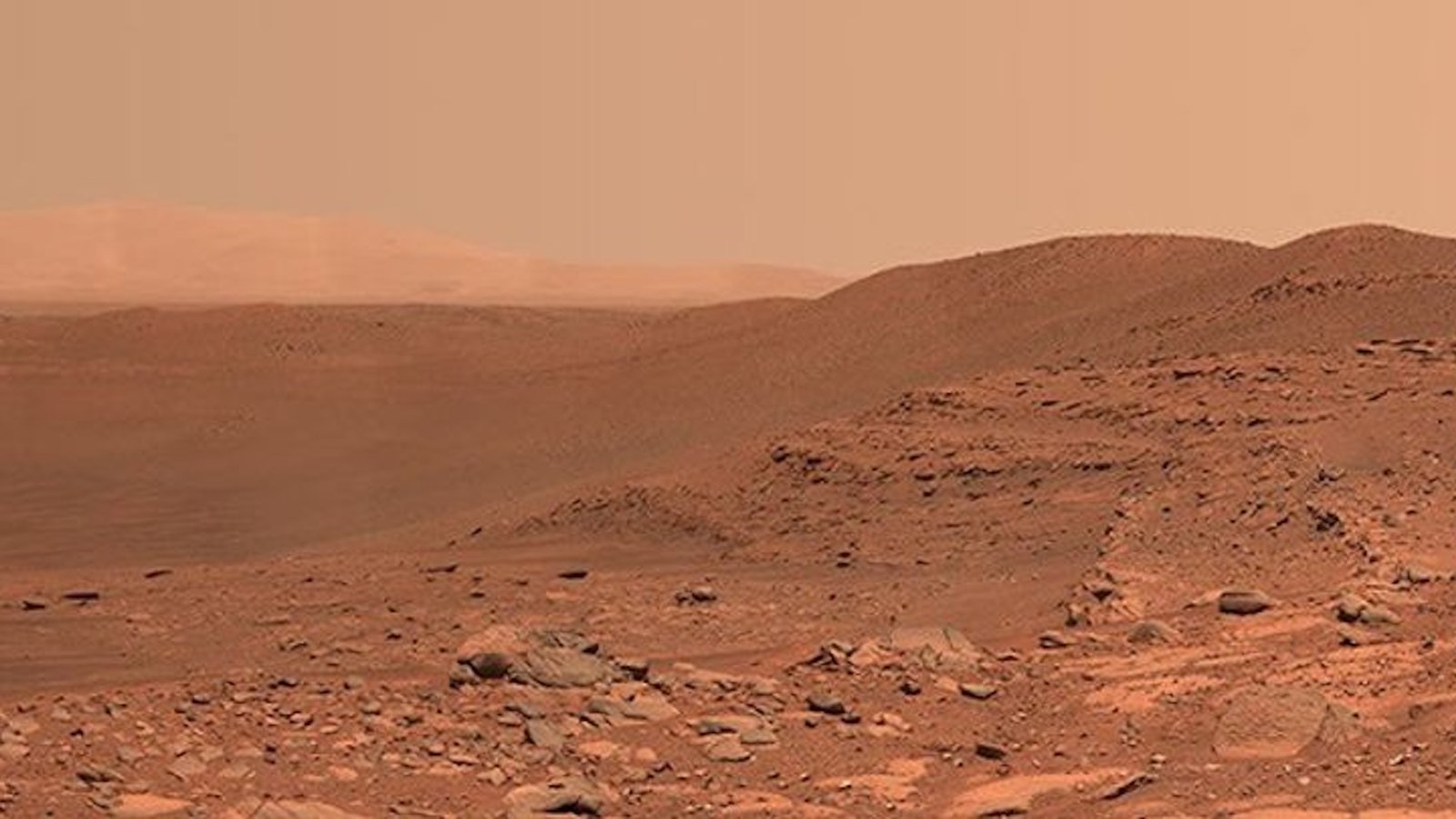
Mars, once a planet with a thick, life-supporting atmosphere, has undergone a dramatic transformation over billions of years. Today, it’s a world far from our own—a barren land where temperatures swing from freezing to mildly temperate, and where cosmic radiation constantly bombards the surface. The air is thin, the pressure less than 1% of Earth’s, and the atmosphere is made almost entirely of carbon dioxide. There is no breathable air. In short, surviving on Mars is not just about building shelter—it’s about creating an environment where life can thrive.
Crafting Shelter from the Red Soil
Transporting materials from Earth to Mars is an expensive and impractical endeavor. The cost of shipping building supplies across the vast expanse of space would make long-term colonization unsustainable. But what if the solution was right under our feet—or rather, in the soil? Researchers are now exploring a fascinating idea: using Mars’s own resources to build the homes of the future. This concept, known as in situ resource utilization (ISRU), could hold the key to a sustainable human presence on Mars.
The soil on Mars, known as regolith, is rich in minerals, but it needs something more to make it useful for construction. What if we could turn that soil into strong, concrete-like material that could withstand the harsh Martian environment? This idea has captivated the attention of scientists, who are now exploring a more unconventional approach: using microorganisms to help build on Mars.
Tiny Builders for a Massive Challenge
Imagine the same tiny creatures that once shaped life on Earth—the microorganisms. These invisible engineers, often bacteria, fungi, and algae, are capable of an extraordinary process called biomineralization. This is when microorganisms produce minerals as part of their metabolism, a process that has shaped Earth’s landscapes for billions of years. Some of these microbes thrive in the most extreme environments on Earth—acidic lakes, volcanic soils, deep caves—and researchers are now considering whether they might be the key to creating materials on Mars.
A research team from several international institutions has set out to explore this very possibility, and their findings are nothing short of fascinating. They are combining the best of nature’s microscopic engineers to see if they can unlock the power of biomineralization for building structures on Mars. At the heart of their research is a partnership between two remarkable bacteria: Sporosarcina pasteurii, a bacterium that produces calcium carbonate (a key ingredient in cement), and Chroococcidiopsis, a resilient cyanobacterium that can survive extreme conditions, including simulated Martian environments.
The magic of their partnership lies in their unique abilities. Chroococcidiopsis is able to produce oxygen, which could create a more habitable microenvironment for Sporosarcina pasteurii. The oxygen helps Sporosarcina thrive, allowing it to secrete calcium carbonate, which strengthens the Martian regolith. Meanwhile, the extracellular polymers that Chroococcidiopsis produces protect Sporosarcina from harmful ultraviolet radiation—something that is abundant on the Martian surface.
Together, these microorganisms could form a kind of biological cement, turning loose Martian soil into a solid, concrete-like material. The researchers envision using this biocement in conjunction with 3D printing technology to construct habitats directly on Mars. It’s a process that could revolutionize how we build on the red planet, reducing the need for transporting massive amounts of materials from Earth.
Beyond Construction: A Vision of Sustainability
But this microbial partnership could do more than just help us build. Chroococcidiopsis is not only a life-supporting bacterium; it could also help sustain astronauts on Mars. The oxygen it produces could support both habitat integrity and the life-support systems required for human survival. In the long term, the ammonia produced as a byproduct of Sporosarcina pasteurii could be used to create closed-loop agricultural systems, helping to grow food for Mars’s settlers and potentially contributing to the terraforming of the planet.
With these natural processes, humanity might not just survive on Mars, but begin to thrive, turning the barren world into a more Earth-like environment, one microbial step at a time.
The Road Ahead
Despite the promise of this research, the path forward is far from straightforward. While international space agencies have set ambitious plans to establish the first human habitat on Mars by the 2040s, the Mars sample return mission, which would allow scientists to bring back samples of Martian soil for study, has been delayed multiple times. This creates a significant challenge for testing the potential of Martian construction technologies, and more research is required to fully understand how these microbial communities interact with the Martian soil and survive under the planet’s extreme conditions.
To tackle this, scientists are turning to laboratory regolith simulants—materials that mimic Martian soil. These simulants offer a pragmatic way to test microbial co-cultures in conditions that simulate the Martian environment. As space agencies prepare for crewed missions to Mars in the coming decade, understanding how these microbial processes will work on the planet will be crucial for developing sustainable construction methods.
In addition to biomineralization, researchers are working on other technologies that will be essential for constructing habitats on Mars, including robotics and 3D printing. Testing these technologies on Earth has been difficult, given that Martian gravity is only about 38% of Earth’s, and replicating those conditions in the lab has proven to be a challenge. Yet, each new experiment and each breakthrough brings us one step closer to the day when Mars will no longer be a distant dream but a new home for humanity.
Why This Research Matters
The concept of building on Mars with the help of microbes is more than just an interesting scientific idea—it could be the key to humanity’s future. As we move towards the possibility of human settlement on Mars, we must learn how to thrive in an environment that is completely alien to us. If we are to build homes and sustain life there, we cannot rely on Earth’s resources alone. Instead, we must learn to utilize Mars itself, turning its regolith into building materials, harnessing the power of microbes to support life, and ultimately transforming the planet into a place where humans can live, work, and grow.
This research into microbial construction could also have broader implications beyond Mars. The lessons learned from harnessing biological processes for building in extreme environments could inform sustainable construction practices here on Earth. By understanding how microorganisms can shape the materials we use, we could unlock new methods of building in harsh conditions, from deserts to disaster zones, providing solutions for communities that need them most.
As humanity moves closer to realizing the dream of living on Mars, this research reminds us that the answers we seek may lie in the smallest of places—tiny microorganisms that could shape the future of our species. It’s a vision of hope, innovation, and resilience, showing us that even on the red sands of Mars, the smallest spark of life can lead to something extraordinary.
More information: From Earth to Mars: A Perspective on Exploiting Biomineralization for Martian Construction, Frontiers in Microbiology (2025). DOI: 10.3389/fmicb.2025.1645014