The classroom lights had dimmed, the students had long since departed, and the quiet hum of a research lab became the soundtrack for Rudy Lerosey-Aubril’s evening. For most, the end of a long day of teaching brings a desire for rest, but for this researcher at Harvard University, the real work was just beginning. He sat before a specimen from the Cambrian period, a small relic of an ancient world encased in stone, delicately scraping away the dust of 500 million years. He expected to find the familiar—the standard anatomy of an early arthropod—but as the rock fell away under his needle, the fossil began to whisper a different story.
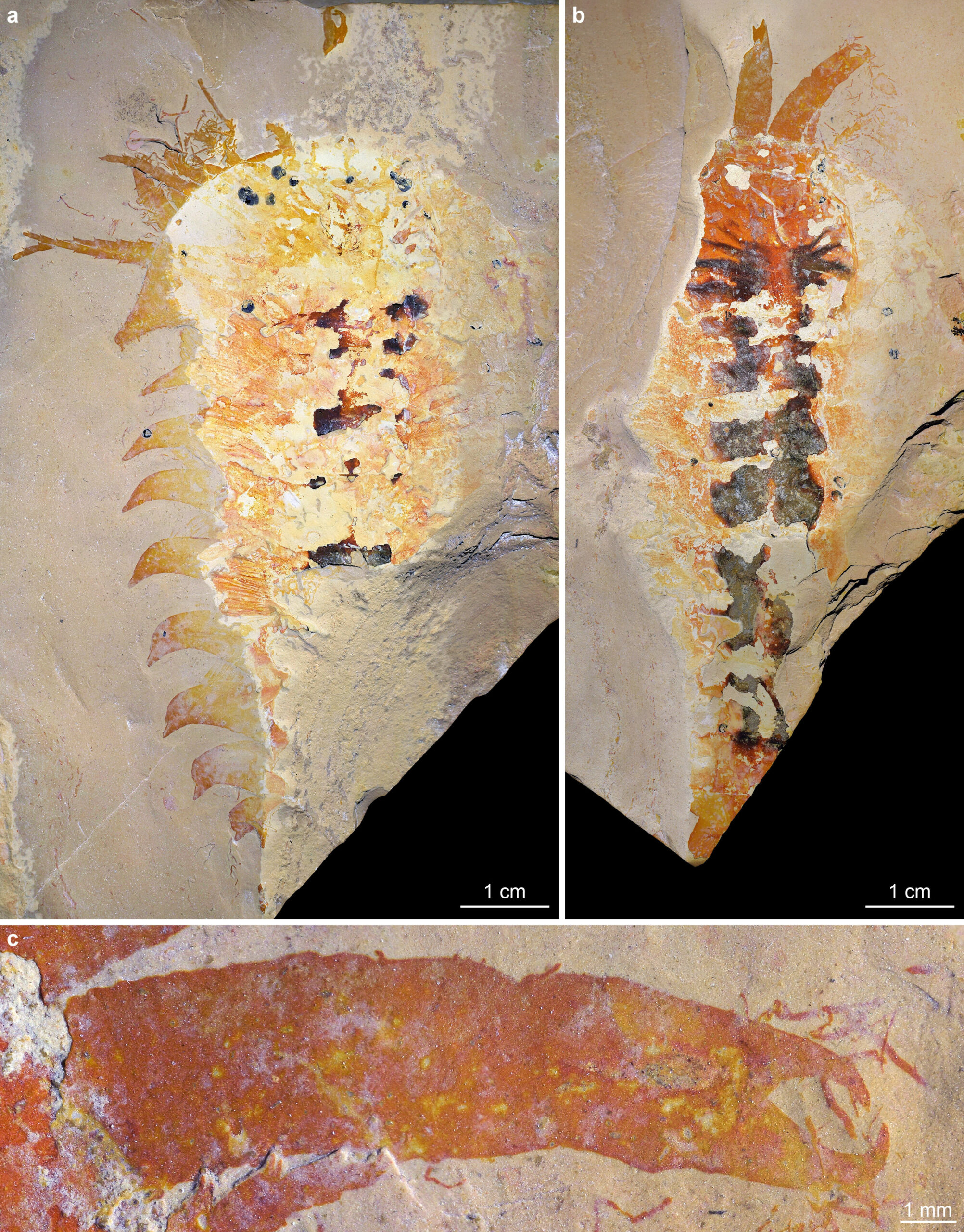
Where there should have been a slender, sensory antenna, Lerosey-Aubril instead saw something sharp and grasping. It was a claw, positioned in a place where claws simply did not belong on a creature of that era. For a few moments, the scientist stared in disbelief. Then, the realization struck: he wasn’t looking at a strange mutation, but at the oldest chelicera ever discovered. This single, tiny appendage was the “smoking gun” of evolutionary history, identifying the creature as the earliest known ancestor of some of the most successful, and often feared, animals on Earth today.
A Pincer Frozen in Time
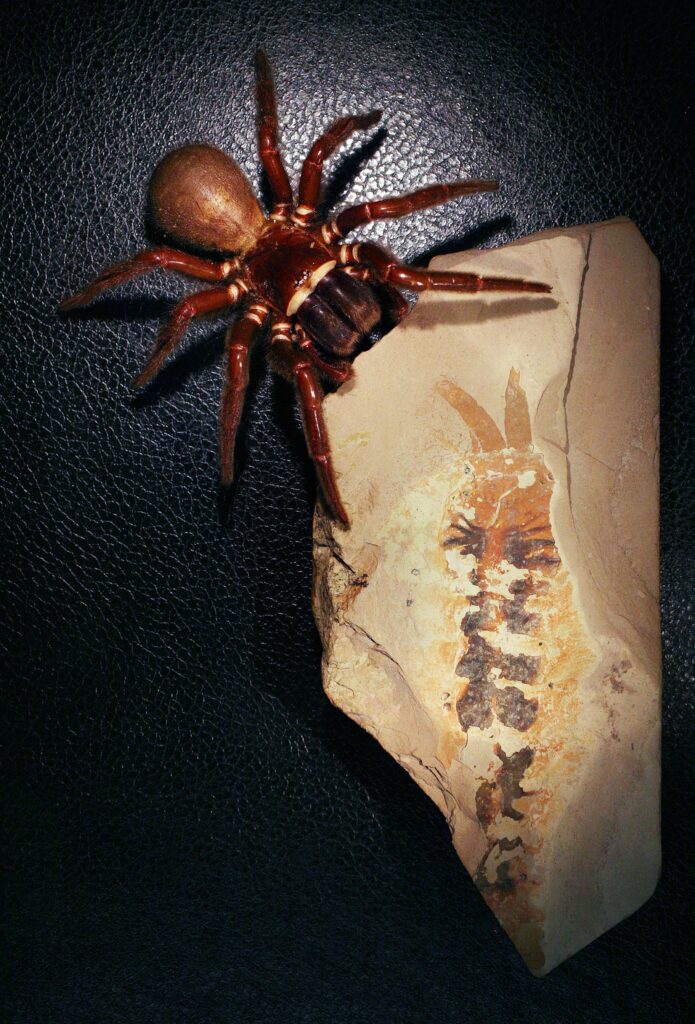
The creature, now officially named Megachelicerax cousteaui, measures just over eight centimeters in length, but its significance is monumental. Found in the West Desert of Utah, this sea predator has effectively rewritten the timeline of life. By identifying this specimen, Lerosey-Aubril and his colleague Javier Ortega-Hernández have pushed the known history of chelicerates—the group containing spiders, scorpions, horseshoe crabs, and sea spiders—back by a staggering 20 million years.
Before this discovery, the evolutionary trail of these pincer-bearing creatures went cold around 480 million years ago in the Fezouata Biota of Morocco. The existence of M. cousteaui at the 500-million-year mark proves that the fundamental anatomical blueprint of a modern spider was already being drafted in the ancient oceans during the mid-Cambrian. It represents a vital transitional species, a bridge between the primitive, generalized arthropods of the early Cambrian and the specialized arachnids and horseshoe crabs that would eventually conquer the land and sea.
To reveal these secrets, Lerosey-Aubril spent more than 50 hours huddled over a microscope. With the precision of a surgeon, he used a fine needle to peel back the matrix, uncovering a dorsal exoskeleton composed of a head shield and nine body segments. This wasn’t just a simple worm-like ancestor; it was a complex organism with six pairs of limbs specialized for the dual tasks of sensing its environment and feeding on its prey.
The Architecture of an Ancient Predator
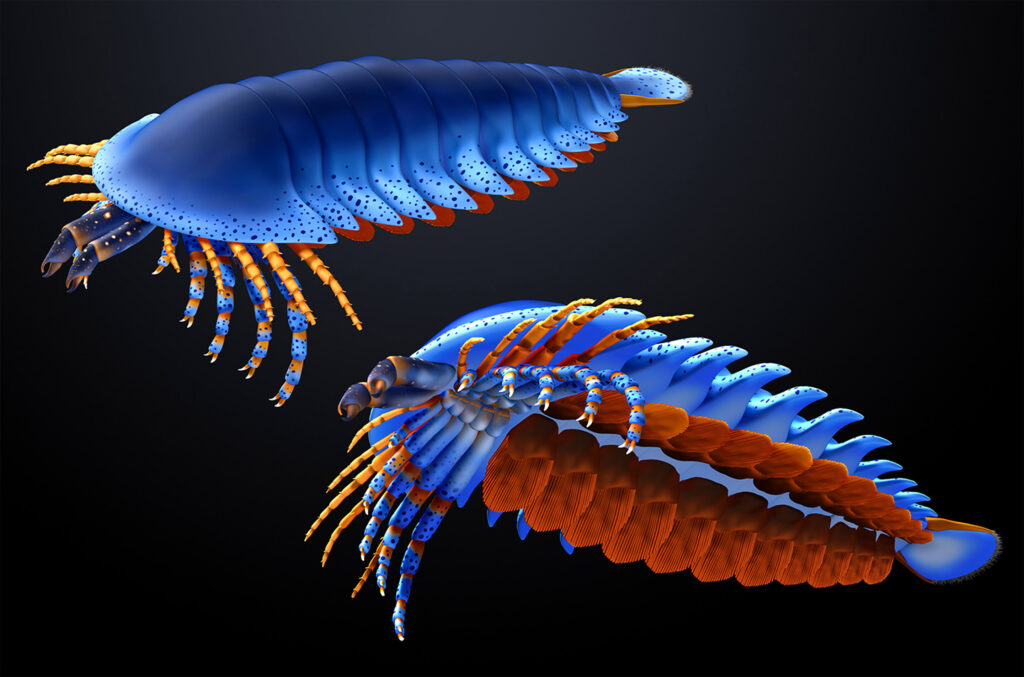
What makes Megachelicerax truly revolutionary is how it manages the transition of body parts. In the world of biology, insects and their kin are defined by their antennae—sensory organs that “feel” the world. But chelicerates are defined by their chelicerae, the pincer-like feeding tools that we recognize today as the fangs of a spider or the claws of a scorpion.
The fossil reveals that these specialized mouthparts evolved while the rest of the creature’s body was still in a state of flux. While modern spiders have legs that are relatively simple in structure, M. cousteaui possessed limbs that still retained “outer branches,” a primitive feature of early arthropods. Furthermore, tucked beneath its body were plate-like respiratory structures. These ancient lungs or gills bear a striking resemblance to the book gills found in modern horseshoe crabs, suggesting that the way these animals breathe today was perfected half a billion years ago.
Ortega-Hernández notes that this fossil reconciles long-standing scientific debates. It shows that the division of the body into two specialized functional regions occurred very early, even before the legs lost their ancestral complexity. It seems that in the grand theater of evolution, the “head” and the “tools” were the first things to be finalized, while the rest of the body took a little longer to catch up to the modern form.
Innovation in the Shadows
The discovery of Megachelicerax cousteaui offers a rare window into the Cambrian Explosion, a period of history defined by a burst of evolutionary innovation. We often imagine evolution as a slow, steady climb, but this fossil suggests that by the mid-Cambrian, the oceans were already teeming with animals whose complexity rivaled what we see in the modern world.
However, the story of the chelicerate is one of patient persistence rather than immediate triumph. Even though M. cousteaui had developed high-tech biological tools like the chelicera, its kind did not immediately take over the world. For millions of years, they lived in the shadows of more dominant groups like the trilobites. They were the “underdogs” of the Paleozoic seas, possessing incredible potential but waiting for the right environmental shift to truly flourish.
This reveals a profound truth about life on Earth: biological innovation does not guarantee immediate success. The timing must be right, and the environment must be receptive. The ancestors of spiders were ready for greatness 500 million years ago, but they had to wait for the world to change before they could become the 120,000 species that inhabit nearly every corner of the globe today.
Why the Deep Past Matters Today
The journey of this fossil from a desert in Utah to a laboratory at Harvard is a testament to the importance of scientific collections. The specimen was originally found in 1981 by Lloyd Gunther, an amateur collector who donated it to the Kansas University Biodiversity Institute. For decades, it sat in a drawer, a “seemingly unremarkable” rock waiting for the right set of eyes and the right questions to unlock its identity.
By naming the creature after the legendary French explorer Jacques-Yves Cousteau, the researchers chose to honor a man who sought to reveal the hidden beauty of the ocean. Much like Cousteau’s voyages, this discovery invites us to look beneath the surface of the present to understand the deep, ancient roots of the world we inhabit.
Understanding the origins of chelicerates is not merely an academic exercise. These animals are woven into the fabric of human life. From the medical contributions of horseshoe crab blood to the agricultural impact of spiders that keep pest populations in check, our lives are deeply influenced by this lineage. By finding the “first” claw, scientists aren’t just looking at a dead predator in a rock; they are looking at the birth of a biological dynasty that has survived five mass extinctions. Megachelicerax cousteaui serves as a reminder that the blueprint for the future is often written in the stones of the past, waiting for someone with enough patience and a fine enough needle to find it.
Study Details
A chelicera-bearing arthropod reveals the Cambrian origin of chelicerates, Nature (2026). DOI: 10.1038/s41586-026-10284-2