Scientists studying fossils from Wisconsin have identified an ancient aquatic arthropod that looked strikingly like a modern myriapod—despite living in the sea 437 million years ago. The newly described species, Waukartus muscularis, had many unbranched limbs, challenging the long-standing assumption that this type of leg evolved specifically as an adaptation for life on land.
A fossil discovery that challenges a core evolutionary assumption
The many-legged body plan of centipedes and millipedes seems perfectly suited for crawling across land. For decades, that connection has shaped how scientists think about the early evolution of myriapods, the arthropod group that includes these familiar creatures.
But fossils uncovered in southeastern Wisconsin are now complicating that story.
Researchers studying specimens from the Silurian Brandon Bridge Formation in Waukesha have identified an ancient arthropod that resembles early myriapods—yet appears to have lived underwater. Even more surprising, it already had the same kind of limb structure often associated with terrestrial movement.
The discovery was described in a new study published in Proceedings of the Royal Society B: Biological Sciences.
Wisconsin’s Waukesha Lagerstätte preserves a rare marine snapshot
The fossils were found in the Silurian Brandon Bridge Formation, a geological site dating to about 437 million years ago. The formation is known as the Waukesha Lagerstätte, a rare fossil deposit recognized for its exceptional preservation of soft-bodied organisms.
According to the researchers, the area’s finely laminated dolomitic mudstones captured a diverse shallow marine ecosystem, including early arthropods. That preservation quality turned out to be crucial, because the newly discovered fossils include rare anatomical details that are often lost over geological time.
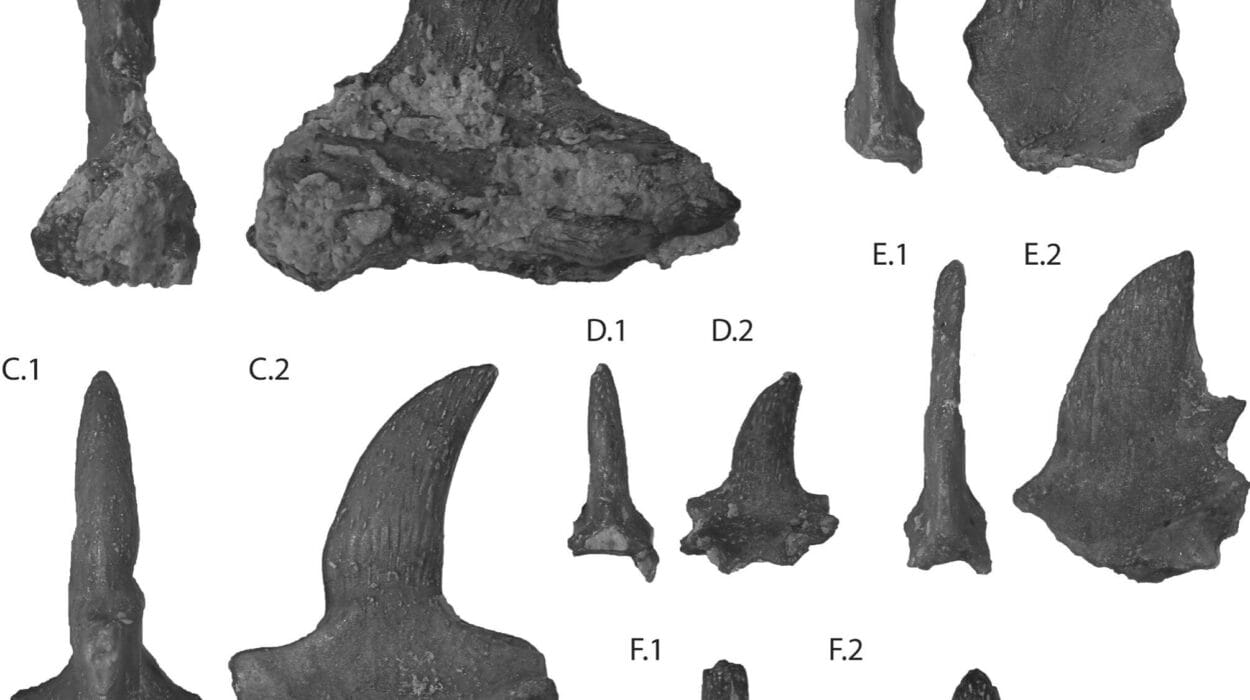
In total, paleontologists recovered 35 fossils of the same myriapod-like creature from this formation.
Meet Waukartus muscularis, a sea-dwelling animal with many legs
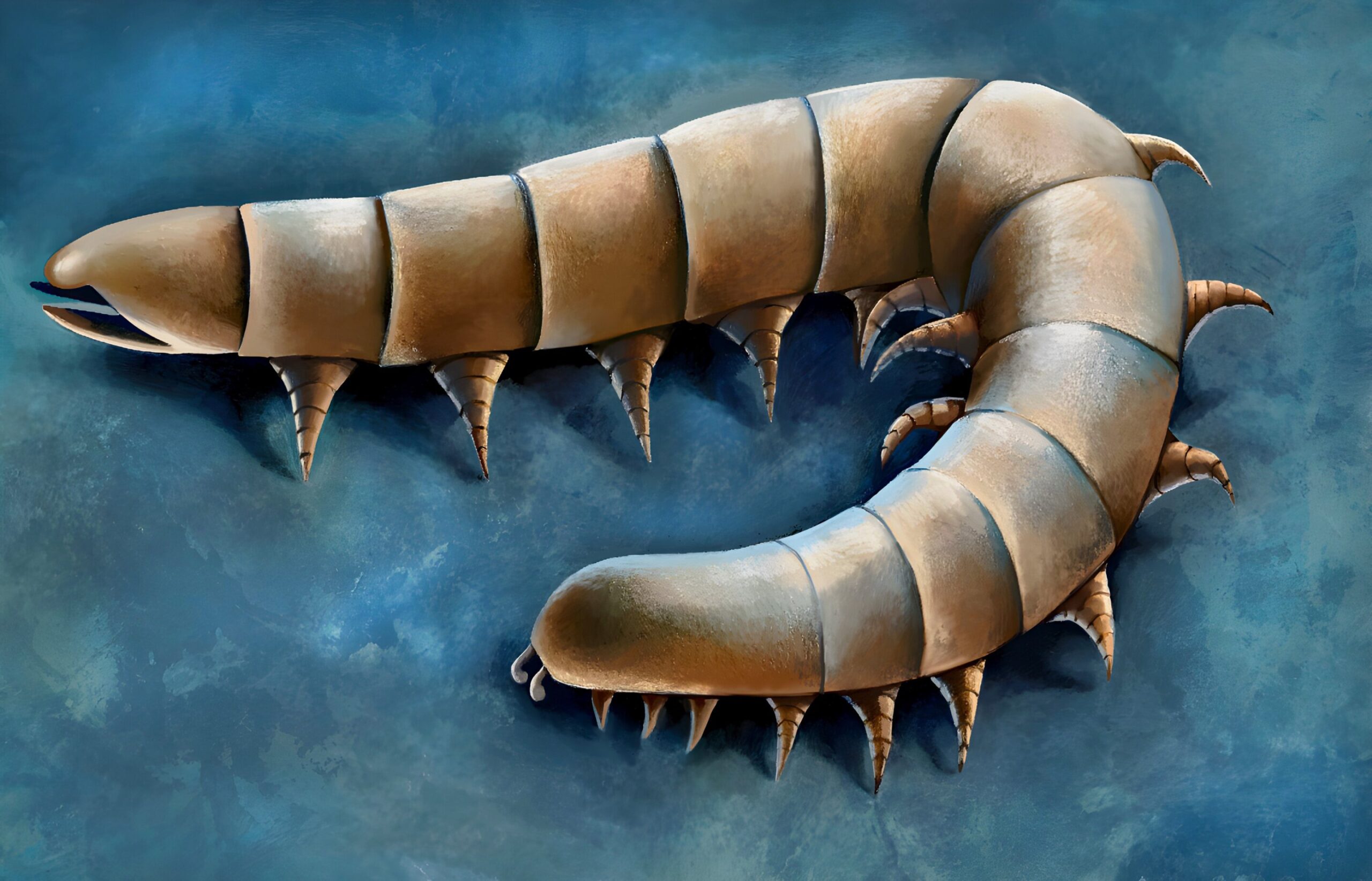
The new species has been named Waukartus muscularis, and it shows a body plan that would look familiar to anyone who has seen a modern centipede or millipede.
The fossils reveal a creature with a distinct head and a long segmented trunk, with many sets of legs running along its body. Some specimens are incomplete, but the researchers report that none of the fossils show fewer than 11 segments, suggesting the animal was consistently long-bodied.
Several fossils were well-preserved enough to show remarkable features, including uniramous limbs, meaning single-branched appendages. The fossils also show evidence of muscle tissue and a cuticular endoskeleton, giving researchers an unusually clear view of its internal and external structure.
The animal also had multiple head appendages that increased in size toward the rear of the head.
What the head appendages may have been used for remains unclear
Although the fossils preserve key traits, the study authors note that fine details of the head appendages are not fully visible.
They report that the head appendages appear similar to those on the trunk, but their shorter length suggests they may not have been used for walking. Instead, they could have served sensory or feeding roles, though the team emphasizes that the feeding method remains unknown.
The researchers also describe the trunk as flexible. Curved fossil specimens and shifting overlap patterns between body segments suggest Waukartus could bend its body rather than remaining rigid.
That flexibility may have been important for movement in its environment, though the study does not identify exactly how it navigated the seafloor.
A key position near the origin of myriapods
To understand where Waukartus fits in arthropod evolution, the team conducted a phylogenetic analysis to determine its relationship to known groups.
Their results place Waukartus muscularis just outside the crown group of myriapods. In evolutionary biology, the crown group refers to the lineage containing all living members of a group and their most recent common ancestor. The researchers note that crown-group myriapods require at least 17 pairs of limbs, placing Waukartus outside that boundary.
The analysis also ties Waukartus closely to euthycarcinoids, a strange group of arthropods previously identified as stem-group myriapods. Euthycarcinoids have been interpreted as aquatic or possibly amphibious animals, and earlier research suggested their presence stretches the myriapod stem lineage back into the Cambrian.
However, the new study reports that Waukartus sits even farther stemward, positioned just outside euthycarcinoids and modern myriapods.
That placement matters because it fills an important gap in the fossil record, offering new evidence about what early myriapod relatives looked like—and where they lived.
The biggest surprise: it had “land-style” legs while living in the sea
Perhaps the most striking conclusion of the study is what Waukartus suggests about the evolution of myriapod limbs.
Many aquatic arthropods have branched appendages that include exopods. But Waukartus appears to have lacked these structures. Instead, its limbs consisted only of an endopod, producing the uniramous form seen in modern myriapods.
This matters because uniramous limbs have often been interpreted as a terrestrial adaptation—an anatomical feature that evolved to support movement on land.
But Waukartus appears to have been marine.
According to the researchers, that means the loss of exopods likely occurred before myriapods became terrestrial. In other words, what scientists assumed was a land adaptation may have emerged under entirely different conditions.
The study authors argue that this trait was not an adaptive response to terrestrial life, but instead existed earlier and was later coopted.
Exaptation, not adaptation, may explain the origin of key myriapod traits
The researchers interpret the limb structure of Waukartus as an example of exaptation—an evolutionary change that evolves under one selective regime and later becomes useful for another purpose.
They explain that the same loss of exopods is also seen in euthycarcinoids and in the aquatic sister group to arachnids. That pattern suggests that certain limb features thought to define terrestrial arthropods may have evolved in aquatic ancestors first.
In the case of Waukartus, the animal seems to have carried an anatomical toolkit that later lineages would use to succeed on land, even though it itself had not yet made that transition.
Why This Matters
This discovery reshapes how scientists interpret one of the defining features of centipedes and millipedes: their many unbranched legs. Fossils of Waukartus muscularis suggest that these limb structures existed in marine environments long before myriapods fully transitioned onto land.
By filling a gap in the early fossil record, Waukartus provides direct evidence that traits long assumed to be “terrestrial innovations” may have appeared earlier and for different reasons. That shift doesn’t just refine the evolutionary story of myriapods—it changes how researchers think about the broader sequence of events that helped arthropods eventually conquer the land.
Study Details
Derek E. G. Briggs et al, A marine stem-myriapod from the Silurian Waukesha Lagerstätte, Wisconsin, USA: terrestrial traits pre-date the transition to land, Proceedings of the Royal Society B: Biological Sciences (2026). DOI: 10.1098/rspb.2026.0131