Researchers analyzing the Ilovik–Paržine 1 shipwreck have identified a sophisticated dual-layered waterproofing system using pine tar and beeswax that preserved ancient pollen for over two millennia. This biological “fingerprint” proves the vessel underwent multiple repairs across different Mediterranean regions, offering a rare look at the maintenance and technological know-how of Roman Republic mariners.
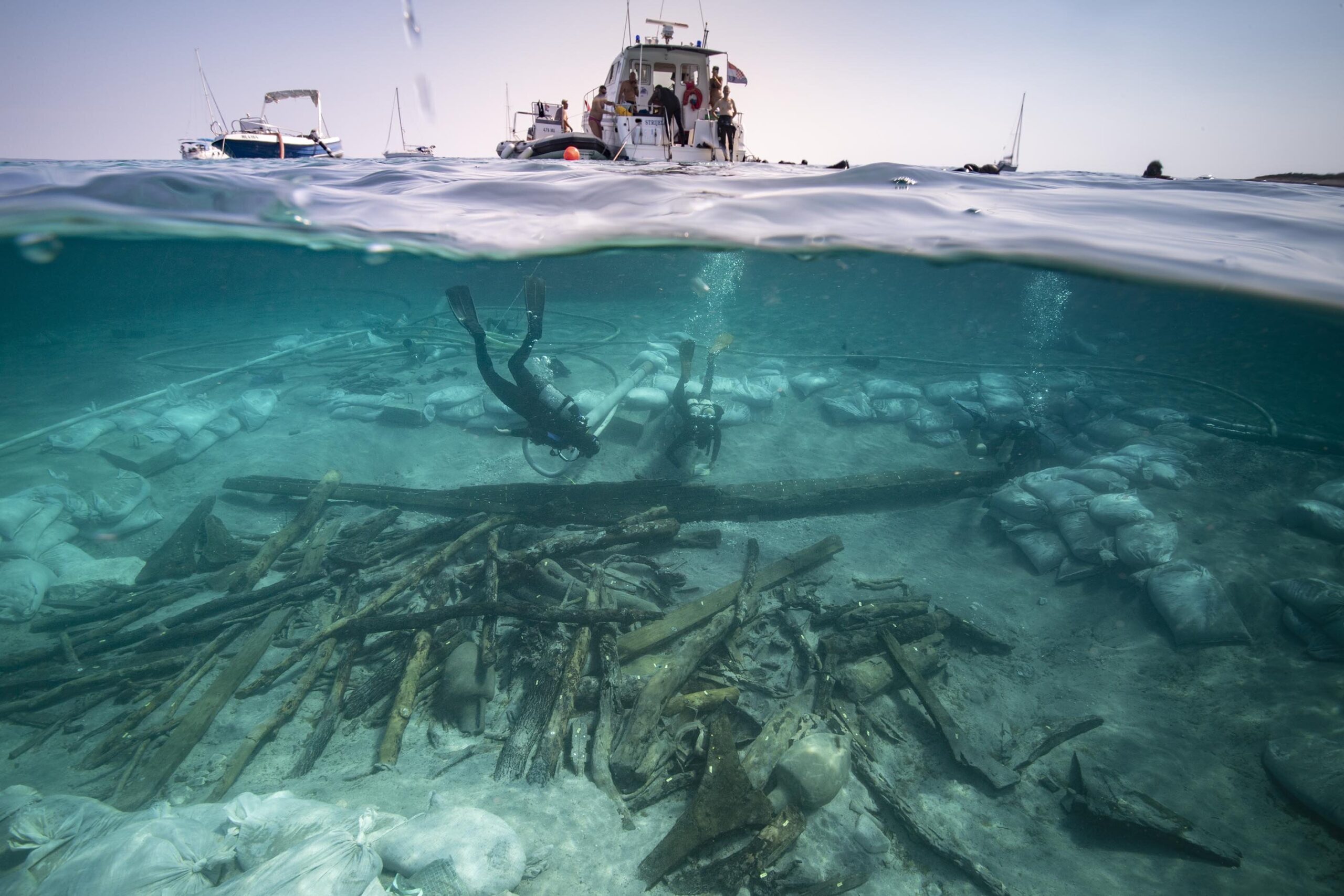
For over two thousand years, the wooden ribs of a Roman Republic vessel lay silent beneath the waves off the coast of modern-day Croatia. While the ship’s cargo of amphorae and ballast stones often take center stage in maritime archaeology, a far more humble substance has recently rewritten the story of this ancient voyager: the sticky, black sealant used to keep the hull watertight. This protective coating acted as a chemical time capsule, trapping microscopic evidence of the very forests the ship sailed past and the ports where it stopped for repairs.
The study of non-wood shipbuilding materials has historically been a blind spot in archaeology. Until the mid-20th century, the organic “glues” and sealants that allowed wooden ships to survive salty seawater and wood-boring microorganisms were largely overlooked. However, a new study published in Frontiers in Materials by a collaborative team from France and Croatia has turned this around, using the Ilovik–Paržine 1 shipwreck to prove that waterproofing was not just a chore, but a sophisticated science of the ancient world.
The Chemistry of Ancient Waterproofing
When the Ilovik–Paržine 1 sank roughly 2,200 years ago, it was encased in a protective barrier designed to withstand the harsh Mediterranean environment. To understand how the Romans achieved this, researchers employed mass spectrometry to conduct a structural and molecular analysis of ten different coating samples. This technique allowed the team to identify the “molecular fingerprint” of the substances, revealing a mastery of natural resins.
The primary component found across all samples was pitch, a substance created by heating coniferous resin. Specifically, the molecular markers pointed to pine tar as the foundational material. However, the analysis revealed that the ancient shipbuilders were not using a one-size-fits-all recipe. In one particular sample, the researchers discovered a mixture of pine tar and beeswax.
This specific blend was known to Greek shipbuilders as zopissa. The addition of wax was a strategic choice rather than a random additive; it increased the adhesive’s flexibility and made the coating significantly easier to apply while hot. This suggests that the mariners of the Roman Republic were drawing on a diverse set of regional traditions to ensure their vessels remained seaworthy during long-haul voyages.
Pollen Trapped in Time
The adhesive nature of pitch provided an unexpected scientific windfall. As the tar was heated and applied to the hull in various ports, it acted like flypaper, trapping pollen from the immediate environment. Because these pollen grains were sealed within the waterproof layers, they remained preserved even after two millennia on the seafloor.
By analyzing the abundance and diversity of these pollen taxa, the research team, led by Dr. Armelle Charrié, was able to reconstruct the landscapes the ship visited. The samples revealed a high diversity of environments, including Mediterranean holly oak and pine forests. The presence of matorral—a specific type of shrubland—indicated that the ship had been in areas where olive and hazel trees were common.
More surprisingly, the pollen also included traces of alder and ash, which typically grow near riverbanks and seashores, as well as fir and beech. These latter two species are characteristic of mountainous regions, specifically the north-eastern coastal regions of the Adriatic Sea, where the mountain ranges of Istria and Dalmatia meet the coast. This biological data allowed researchers to narrow down the geographic history of the vessel with a precision that cargo alone could never provide.
A Life of Constant Repair
One of the most significant revelations of the study is the evidence of the ship’s longevity and maintenance. While it is a logical assumption that ancient ships required upkeep, proving the frequency and location of those repairs is notoriously difficult. The coating analysis of the Ilovik–Paržine 1 provided the smoking gun.
The findings indicate that the vessel likely received four to five distinct batches of protective coatings over its lifespan. Interestingly, the distribution of these coatings was not uniform across the hull. While the stern and the central section of the ship were covered by the same batch of material, the bow featured three distinct layers that differed from one another.
This suggests a “patchwork” approach to maintenance. Previous research into the ship’s ballast had already suggested that it was originally constructed in Brundisium (modern-day Brindisi) on Italy’s southeastern coast. The new pollen data supports this, showing that while some coatings were applied near the ship’s birthplace, other layers were added along the northeastern Adriatic coast near where the wreck was eventually found. The ship was a working vessel, constantly being mended with whatever local materials were available as it traversed the trade routes of the Roman Republic.
Why This Matters
The study of the Ilovik–Paržine 1 coatings represents a major shift in how we understand ancient maritime technology. It moves the focus away from what a ship was carrying and toward how the ship was built and maintained as a high-tech machine of its era. By combining molecular analysis with palynology (the study of pollen), researchers have found a new way to track the movement of people and technology across the ancient world.
These organic materials are “true witnesses” of past naval traditions. They demonstrate that ancient shipbuilders possessed a deep understanding of natural chemistry, knowing exactly how to blend resins and waxes to achieve the perfect balance of durability and flexibility. Furthermore, the ability to use pollen to map out a ship’s repair history provides a new tool for archaeologists to reconstruct ancient trade networks and the “life cycles” of the vessels that built the Mediterranean economy. This research proves that even the most overlooked substances—the sticky tar on a wooden plank—can hold the keys to understanding the vast, interconnected world of the Romans.
Study Details
Adhesive coatings in naval archaeology: molecular and palynological investigations on materials from the Roman Republican wreck Ilovik– Paržine 1 (Croatia), Frontiers in Materials (2026). DOI: 10.3389/fmats.2026.1758862