There is something uniquely unsettling about parasites. Predators may kill quickly, viruses may strike invisibly, and bacteria may overwhelm the body like a wildfire—but parasites are different. They do not simply invade and destroy. They move in, settle down, and begin to live off you, sometimes for years, sometimes for decades. They feed quietly, reproduce silently, and manipulate the human body like a temporary home.
The thought is horrifying because it feels personal. A parasite is not just an illness. It is another organism inside your body, surviving because you are alive. It may drink your blood, steal your nutrients, burrow through your tissues, or nest inside your organs. In some cases, it can even alter the way you think and behave. And what makes them truly terrifying is not only what they do, but how easily they can remain hidden until the damage is already severe.
Parasitic infections are not rare. They affect billions of people worldwide, especially in regions with poor sanitation or limited access to clean water. But parasites are not restricted to developing countries. Global travel, food trade, and climate change are expanding their reach. Even in modern cities with advanced healthcare, parasites still find ways to survive.
Some parasites are merely unpleasant. Others are the stuff of nightmares.
What Exactly Is a Parasite?
A parasite is an organism that lives on or inside another organism—called the host—and benefits at the host’s expense. Unlike predators, parasites usually do not kill their hosts quickly, because the host is their environment, their food supply, and their shelter.
Parasites come in many forms. Some are microscopic protozoa, single-celled organisms capable of invading blood and organs. Others are helminths, worm-like creatures that can grow to shocking sizes. Some parasites are ectoparasites like lice or ticks that live on the skin, but the most terrifying ones are endoparasites, the ones that live inside human tissues.
These organisms have evolved extraordinary survival strategies. They can hide from the immune system, disguise themselves chemically, and manipulate the host’s biology to ensure their own survival. Some can enter the body through food. Some through water. Some through insect bites. Others can penetrate directly through skin.
The human body, despite its defenses, is not an impenetrable fortress. Parasites have been breaking in for millions of years.
Tapeworms: The Living Ribbon Inside the Gut
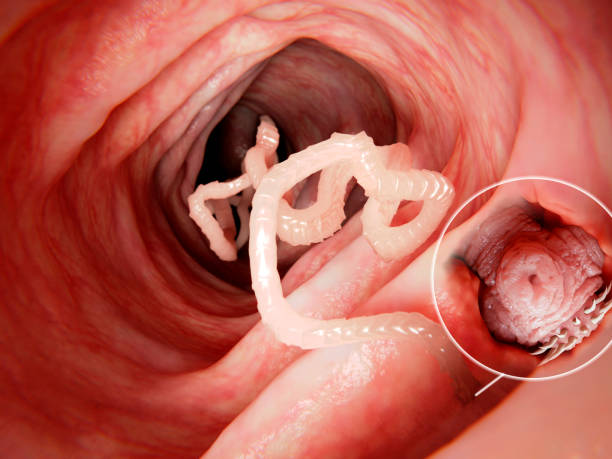
Tapeworms are among the most infamous human parasites, and for good reason. They are long, flat worms that can live inside the intestines, attaching themselves to the intestinal wall with hook-like structures or suction cups.
Humans typically become infected by eating undercooked meat containing tapeworm larvae, especially pork, beef, or fish. Once inside the digestive tract, the larvae mature into adult worms. These worms can grow astonishingly long. Some species can reach several meters, and in extreme cases, more than ten meters.
What makes tapeworms terrifying is how quietly they can live. A person may carry one for years with mild symptoms or none at all. Meanwhile, the parasite is absorbing nutrients directly from the host’s food supply. Over time, this can lead to malnutrition, weakness, abdominal discomfort, and unexplained weight loss.
But the true horror begins when certain tapeworm species do not remain in the intestines. The pork tapeworm, Taenia solium, can cause a far more dangerous condition called cysticercosis. In this case, the tapeworm eggs migrate through the bloodstream and form cysts throughout the body, including the muscles, eyes, and brain.
When cysts form in the brain, it becomes neurocysticercosis, a leading cause of preventable epilepsy in many parts of the world. Seizures, headaches, confusion, and even life-threatening brain swelling can result.
The idea that a parasite can build cysts inside the brain—quietly and invisibly—is one of the most chilling realities in human medicine.
The Brain-Eating Amoeba: Naegleria fowleri
Few parasites inspire as much fear as Naegleria fowleri, often called the “brain-eating amoeba.” This organism is not a worm but a free-living amoeba found in warm freshwater environments such as lakes, hot springs, and poorly maintained swimming pools.
The terrifying part is how infection happens. It does not occur through drinking contaminated water. It occurs when contaminated water enters the nose, usually during swimming or diving. The amoeba then travels up the olfactory nerve into the brain.
Once it reaches brain tissue, it causes primary amoebic meningoencephalitis, an infection so aggressive that it often kills within days. Symptoms begin with headache, fever, nausea, and stiff neck, then rapidly progress to seizures, hallucinations, coma, and death.
The mortality rate is extremely high. Survival is rare, even with treatment, because the disease progresses so quickly.
Fortunately, Naegleria infections are very uncommon. But its existence is a reminder of something deeply disturbing: the natural world contains organisms capable of turning the human brain into food, and they need only a single accident—one noseful of water—to begin.
Malaria: The Parasite That Has Killed More Humans Than Almost Anything
Malaria is not a worm or an amoeba. It is caused by protozoan parasites of the genus Plasmodium, transmitted through the bite of infected Anopheles mosquitoes.
Despite being ancient, malaria remains one of the deadliest parasitic diseases on Earth. It has shaped human history, influenced the outcomes of wars, and killed more people across time than nearly any other infectious disease.
The parasite’s strategy is brutal and efficient. Once introduced into the bloodstream, Plasmodium travels to the liver, where it multiplies silently. Then it bursts into the bloodstream and infects red blood cells. Inside these cells, it reproduces again until the blood cells rupture, releasing more parasites and toxins.
This cycle causes the classic malaria symptoms: intense fevers, chills, sweating, weakness, and anemia. Severe malaria can lead to organ failure, brain swelling, coma, and death.
The most dangerous species, Plasmodium falciparum, can cause cerebral malaria, where infected red blood cells stick to the walls of small blood vessels in the brain, disrupting circulation. This can cause seizures, confusion, and irreversible brain damage.
What makes malaria terrifying is not just its symptoms, but its scale. It has infected hundreds of millions of people and continues to threaten large regions of the world. Unlike many parasites that rely on poor hygiene or contaminated food, malaria uses an airborne hunter: the mosquito.
The parasite does not need you to eat something unsafe. It only needs you to be bitten.
Toxoplasma gondii: The Parasite That Can Influence Behavior
Toxoplasma gondii is one of the most widespread parasites on Earth. It infects a huge portion of the human population, often without causing noticeable illness. Many people carry it for life without ever realizing it.
But its biology is disturbing. Toxoplasma reproduces in cats, which are its definitive hosts. Humans become infected through contact with cat feces, contaminated soil, or undercooked meat containing tissue cysts.
In healthy individuals, the immune system usually controls the infection, forcing the parasite into a dormant state. But “dormant” does not mean gone. Toxoplasma forms cysts that can remain in muscles and brain tissue for decades.
The real fear comes from what research suggests about its effects on the brain. In rodents, Toxoplasma can alter behavior dramatically, reducing their fear of cats. This makes the rodents more likely to be eaten, which helps the parasite return to its cat host and complete its life cycle.
The idea that a parasite can manipulate behavior is not theoretical—it is well documented in animals.
In humans, the evidence is more complex and controversial, but studies have found associations between Toxoplasma infection and subtle behavioral or neurological effects. Some research suggests possible links with increased risk-taking behavior, slower reaction times, and certain mental health disorders, though direct causation is not firmly established.
Even without behavioral manipulation, Toxoplasma is extremely dangerous for pregnant women and immunocompromised individuals. If a fetus becomes infected, the parasite can cause severe birth defects, blindness, or brain damage. In people with weakened immune systems, it can reactivate and cause toxoplasmic encephalitis, a potentially fatal brain infection.
Toxoplasma is terrifying because it is everywhere, it is often invisible, and it can take refuge in the most intimate organ of all: the brain.
Schistosomiasis: The Blood Flukes That Swim Into Your Body
Schistosomiasis is caused by parasitic flatworms called schistosomes, also known as blood flukes. This disease is widespread in parts of Africa, Asia, and South America, affecting millions of people.
The life cycle is as unsettling as it is ingenious. Schistosome larvae live in freshwater snails. When humans enter contaminated water—walking, swimming, washing clothes—the larvae are released and can penetrate directly through human skin.
Once inside, they migrate through blood vessels and mature into adult worms. Male and female worms pair up and live together in the bloodstream, producing eggs. Some eggs leave the body through urine or feces to continue the cycle. But many eggs become trapped in tissues, where they trigger intense immune reactions.
Over time, this can lead to chronic inflammation, organ damage, and scarring. Schistosomiasis can cause liver enlargement, intestinal bleeding, kidney problems, and bladder damage. In some cases, it can increase the risk of bladder cancer.
Even more frightening is when schistosome eggs travel to the brain or spinal cord, causing neurological symptoms such as seizures, paralysis, or cognitive impairment.
Schistosomiasis is terrifying because infection can happen without you swallowing anything. You can simply stand in the wrong river for a few minutes and end up hosting worms in your bloodstream.
Guinea Worm: The Parasite That Crawls Out of the Skin
Guinea worm disease, caused by Dracunculus medinensis, is one of the most horrifying parasitic infections ever known. Though it has been nearly eradicated thanks to global public health efforts, it remains a symbol of how cruel parasitism can be.
Humans become infected by drinking water containing tiny crustaceans that carry Guinea worm larvae. Inside the body, the larvae mature over months. Eventually, the female worm, which can grow up to a meter long, migrates through tissues toward the skin.
When the worm is ready to release its larvae, it causes a painful blister, often on the leg or foot. The blister burns intensely, creating a desperate urge to relieve the pain with water. When the infected person places the limb in water, the worm emerges through the skin and releases thousands of larvae, contaminating the water supply and infecting others.
The worm does not simply exit quickly. It can take days or weeks to remove it, traditionally by slowly winding it around a stick as it gradually pulls out. If the worm breaks, it can cause severe inflammation and infection.
The idea of a living worm slowly pushing its way out of your body is the kind of horror that seems invented. Yet it is real.
Guinea worm disease is not usually fatal, but it causes extreme pain and disability. It turns walking into torture and makes ordinary life nearly impossible.
It is terrifying not because it kills quickly, but because it makes the body feel like a prison.
Hookworms: The Parasites That Drink Human Blood
Hookworms are small parasitic worms that infect the intestines, and they remain a major health problem in many tropical and subtropical regions.
Hookworm larvae live in soil contaminated by human feces. When a barefoot person steps on contaminated ground, the larvae can penetrate the skin, often through the feet. They travel through the bloodstream to the lungs, then migrate up the respiratory tract, are swallowed, and finally reach the intestines.
Once inside, hookworms attach to the intestinal wall using sharp mouthparts. They feed on blood, sometimes in significant amounts. A heavy infection can lead to chronic blood loss, anemia, weakness, and malnutrition.
In children, hookworm infections can stunt growth and impair cognitive development. They do not always cause dramatic symptoms, which makes them particularly insidious. A person can slowly become weaker over time without understanding why.
Hookworms are terrifying because they exploit poverty and lack of sanitation, silently draining life from the body in a way that is difficult to detect without medical testing.
They do not need dramatic violence. They simply take a little blood every day, and over time, the host becomes exhausted.
The Liver Fluke: A Parasite That Can Cause Cancer
Liver flukes are flatworms that infect the bile ducts of the liver. The most notorious species include Clonorchis sinensis and Opisthorchis viverrini, found mainly in parts of Asia and Eastern Europe.
Humans become infected by eating raw or undercooked freshwater fish containing fluke larvae. Once swallowed, the larvae migrate into the bile ducts and mature into adult worms.
At first, infection may cause mild symptoms or none at all. But long-term infection can lead to chronic inflammation, scarring of bile ducts, gallstones, and liver enlargement.
The truly horrifying aspect is that chronic infection with certain liver flukes is strongly linked to cholangiocarcinoma, a deadly cancer of the bile ducts. In areas where these parasites are common, cholangiocarcinoma rates are among the highest in the world.
This means a parasite can live quietly inside a person for years and slowly raise the risk of developing a lethal cancer.
The parasite does not just feed on the host. It changes the host’s biology in a way that can rewrite the future of their cells.
Trichinella: The Worm You Can Eat by Accident
Trichinella spiralis is a parasitic roundworm that causes trichinellosis, a disease contracted by eating undercooked meat, especially pork or wild game such as bear.
Unlike many worms that stay in the intestines, Trichinella has a more invasive and disturbing strategy. After ingestion, the larvae mature in the intestines, reproduce, and release new larvae that travel through the bloodstream into muscles.
There, they form cysts and remain embedded in muscle tissue.
This can cause severe muscle pain, fever, swelling around the eyes, weakness, and fatigue. In heavy infections, the larvae can affect the heart and brain, leading to myocarditis, neurological complications, and death.
The idea of microscopic worms encasing themselves inside your muscles, turning your own flesh into a shelter, is profoundly unsettling. Trichinella does not simply steal nutrients. It colonizes the body.
Even after the infection is controlled, the cysts can remain for years.
Amoebic Dysentery: The Parasite That Dissolves the Intestine
Entamoeba histolytica is a protozoan parasite that causes amoebiasis, a disease that can range from mild diarrhea to severe, bloody dysentery.
People become infected by ingesting cysts in contaminated food or water. Once inside the intestines, the parasite can invade the intestinal lining. In severe cases, it causes ulcers and tissue destruction, leading to intense diarrhea, bleeding, and dehydration.
The name histolytica means “tissue-dissolving,” and it earns that name. The parasite can literally destroy intestinal tissue as it spreads.
Even more terrifying is that it can escape the intestines and travel to other organs, particularly the liver, where it can cause amoebic liver abscesses. These abscesses can grow large and painful, and if they rupture, they can be fatal.
A parasite that can dissolve human tissue and tunnel through organs is not merely a disease—it feels like biological predation happening from within.
The Filarial Worms: Parasites That Block the Lymph System
Filarial worms are thread-like parasites transmitted by insect bites, including mosquitoes and flies. They live in the lymphatic system, the network of vessels responsible for immune function and fluid balance.
One of the most notorious diseases caused by filarial worms is lymphatic filariasis, often called elephantiasis. The worms can block lymph vessels, causing severe swelling of limbs, genitals, or breasts. Over time, the swelling can become massive, disfiguring, and disabling.
The condition is not just physically painful. It carries enormous psychological and social consequences, often leading to stigma and isolation.
Another filarial disease, onchocerciasis or river blindness, is caused by Onchocerca volvulus. This parasite is transmitted by blackflies near rivers. Adult worms form nodules under the skin, while their larvae migrate through tissues, causing intense itching, skin damage, and eventually blindness when they invade the eyes.
These parasites are terrifying because they do not simply cause temporary illness. They can permanently reshape a human body and steal vision, mobility, and dignity.
How Parasites Outsmart the Immune System
The human immune system is one of the most complex defense networks in nature. It can detect foreign invaders, produce specialized antibodies, and deploy cells designed to kill infected tissue. Yet parasites survive inside humans precisely because they have evolved ways to bypass these defenses.
Some parasites coat themselves in proteins that mimic the host, effectively disguising their presence. Some hide inside cells where immune defenses have trouble reaching them. Others actively suppress immune responses by releasing chemical signals that calm inflammation.
Certain parasites even manipulate immune reactions to their advantage, ensuring they can persist without killing the host too quickly.
This is what makes parasitology so chilling. Parasites are not simple organisms blindly infecting bodies. They are evolutionary masterpieces of survival, designed by natural selection to exploit life.
They are not intelligent in the human sense, but they are incredibly well-adapted. In the long war between humans and parasites, parasites have had millions of years to perfect their strategy.
Why Some Parasitic Infections Feel Like Horror Stories
The fear parasites inspire is not irrational. They violate something deep in the human mind: the idea that the body is private, protected, and under our control.
Parasites take that sense of control away.
They turn the human body into a habitat. They treat blood as a river, organs as shelters, nerves as highways. Some can remain silent for years, like hidden tenants. Others cause symptoms so dramatic they seem impossible, like worms emerging from the skin or cysts forming in the brain.
Parasites also blur the line between “self” and “other.” When something lives inside you, feeding on you, using you, reproducing inside you, it creates a primal psychological horror. The body becomes unfamiliar. The person feels invaded.
And perhaps the most disturbing truth is that parasitism is not rare. It is not an anomaly. It is one of the most common survival strategies in nature.
How Humans Can Protect Themselves
Despite how terrifying parasites are, prevention is often straightforward, and modern medicine has powerful treatments for many parasitic diseases.
Clean water, proper sanitation, safe food preparation, and insect control dramatically reduce risk. Cooking meat thoroughly kills many parasites. Washing fruits and vegetables removes infectious cysts. Wearing shoes prevents soil-transmitted worms from entering through the skin. Mosquito nets and repellents reduce exposure to malaria and filarial parasites.
Public health efforts have saved millions of lives by reducing parasitic infections worldwide. The near-eradication of Guinea worm disease is one of the greatest victories in modern medicine.
But the battle is not over. Climate change, urban expansion, global travel, and antibiotic resistance in secondary infections can reshape the landscape of parasitic disease. Parasites are not static enemies. They evolve, adapt, and spread.
The Final Truth: Parasites Are Terrifying, But They Are Part of Nature
It is easy to think of parasites as unnatural monsters, but they are part of Earth’s biology. They are not evil, not malicious, not supernatural. They are simply organisms trying to survive, shaped by evolution into forms that sometimes resemble nightmares.
Their existence is disturbing because it reminds us that humans are not separate from nature. We are part of the food web, part of the ecosystem, and even our bodies can become battlegrounds.
Parasites show that life is not always beautiful in the gentle sense. Sometimes life is brutal, cunning, and relentless.
Yet there is another side to this story. Human beings have learned to fight back. We have microscopes, medicines, sanitation systems, vaccines in development, and global networks of researchers studying these organisms in detail. We can identify parasites that once remained mysterious. We can treat infections that once killed without mercy.
Knowledge is our strongest defense.
And perhaps that is the greatest lesson parasites offer. The universe of living things is vast, strange, and sometimes horrifying. But understanding it gives us power—not only to protect ourselves, but to appreciate the incredible complexity of life on Earth.
Because even in their terrifying forms, parasites are proof that evolution can shape living systems into strategies more creative and more disturbing than any fiction.
And the truth is, nature has always been stranger than imagination.