If you have ever waded into a river in the American West, you have likely encountered the slippery, green film that coats the rocks beneath the surface. This epilithic algae is a staple of the waterway, a familiar and expected part of the landscape. You might have also spotted the telltale signs of toxic blue-green cyanobacteria, a sight that often brings a sense of worry. But lately, a new character has been asserting itself in the narrative of our rivers, creating a visual spectacle that is as confusing as it is voluminous. This newcomer consists of long, green strands known as filamentous algae, and its sudden, massive presence is forcing scientists to rethink the very rules of nature.
A Tangled Mystery in the Current
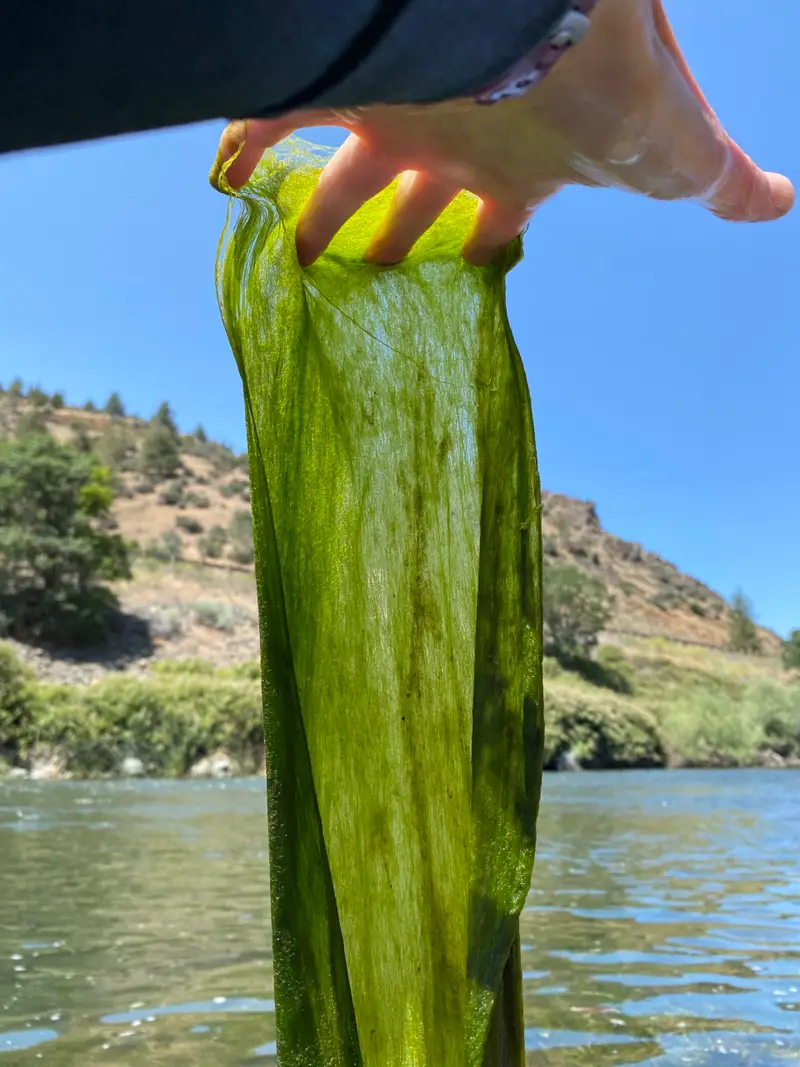
In the Provo, Jordan, and Bear Rivers of Utah, and throughout the wider western United States, something is changing. These waterways are increasingly being draped in heavy, rope-like greenery that can grow several meters long. Alice Carter, a river ecologist and statistician at Utah State University, has been watching this transformation with a keen eye. These filamentous algae blooms, or FABs, are not just a minor addition to the riverbed; they create a staggering amount of biomass that physically alters the environment.
While these long strands aren’t toxic like their blue-green cousins, they are far from harmless. For the person trying to cast a fishing line or paddle a kayak, the algae acts as a thick, frustrating barrier. It chokes the paths of recreationalists, but the impact goes much deeper than human inconvenience. Despite the massive amount of green life visible to the eye, these blooms are essentially a food web dead end. They do not support the macroinvertebrate communities that keep a river healthy, nor do they provide the necessary foundation for thriving fisheries. They are a wall of biomass that seems to lead nowhere.
The Secret Workers Beneath the Canopy
To understand what was happening beneath the surface, Carter teamed up with colleagues from the University of Montana and Woods Hole Oceanographic Institution. They turned their attention to the Upper Clark Fork River in western Montana, a place where these plant-like organisms have taken a firm hold. What they discovered challenged the fundamental ways ecologists look at the world.
In most environments on land, such as a forest, the physical structure of the ecosystem tells you exactly how it is functioning. If you see a dense, towering forest with massive trees, you are looking at a highly productive engine of carbon and energy. Conversely, a sparse patch of vegetation usually signals a less productive environment. In these terrestrial systems, structure and function are tightly linked. However, as the team studied the FABs, they realized that rivers might be operating under a different set of laws.
“While FABs are creating a significant shift in the ecosystem structure, we’re seeing minimal change in the river’s ecosystem metabolism and function,” Carter says. It turns out that the massive, sprawling blooms are not the ones doing the hard work. Instead, the “heavy lifting” of producing a healthy ecosystem and driving the food web is being done by the much smaller, fast-cycling epilithic algae—the very same slippery film on the rocks that has always been there. Even though the FABs occupy a massive amount of space and create tons of biomass, they are producing roughly the same amount of carbon as the tiny algae that take up a much smaller footprint.
When Nature Breaks Its Own Rules
This discovery suggests a strange decoupling of how a river looks and how it actually breathes. “This implies rivers might be an exception to our theory surrounding ecosystem ecology,” Carter explains. “In terrestrial ecosystems, structure and function are tightly linked. If you have a dense forest with tons of trees and biomass, it’s also a productive forest. Whereas, if you have a small amount of vegetation, it will typically be a less productive environment.”
Because rivers appear to be “not playing by the rules,” the implications for how we manage them are profound. Usually, when a waterway is overtaken by massive blooms, the immediate assumption is that there is an overabundance of nutrients like nitrogen or phosphorus acting as fertilizer. But if the river’s core function and its inputs remain similar regardless of whether these giant plants are choking the water, then nutrients might not be the primary culprit.
“If we’re not seeing a large shift in function with big structural changes caused by FABs, then the inputs should be similar whether we have these big plants choking our waterways or not,” says Carter. This suggests that something else entirely has tipped the scales, pushing the river into a state where these nuisance blooms can explode in size without actually contributing to the productivity of the ecosystem.
Searching for the Tipping Point
The search is now on to find that specific tipping point. If scientists can identify the exact mechanism that allows FABs to take over without changing the river’s underlying metabolism, it could revolutionize how we care for our water. Traditionally, cleaning up a river involves massive, expensive, and difficult campaigns to reduce nutrient runoff from the surrounding land. If nutrients aren’t the main driver, those campaigns might not be the only way to fix the problem.
“We might discover an easier-than-expected management solution,” Carter notes. “That might be overly optimistic, but it would be exciting to find out.” By understanding the unique way rivers decouple structure from function, land managers might find a way to nudge these ecosystems back into a healthier state—one where the food web can thrive again and the “dead ends” of filamentous algae are no longer the dominant feature of the landscape.
Why This Research Matters
This research is vital because it challenges the “one-size-fits-all” approach to ecology and environmental management. By proving that rivers do not follow the same rules as terrestrial forests, Alice Carter and her team are opening a new door for conservation. Understanding that huge biomass does not always equal high productivity helps scientists realize that these blooms are a structural nuisance that disrupts recreation and ignores the food web, rather than a functional shift in the river’s chemistry. If we can find the hidden “tipping point” that triggers these blooms, we may be able to restore the health and accessibility of American rivers more efficiently than ever before, ensuring these waterways remain productive for fish, wildlife, and people alike.
More information: Alice M. Carter et al, Algal assemblage drives patterns in ecosystem structure but not metabolism in a productive river, Ecology (2025). DOI: 10.1002/ecy.70262