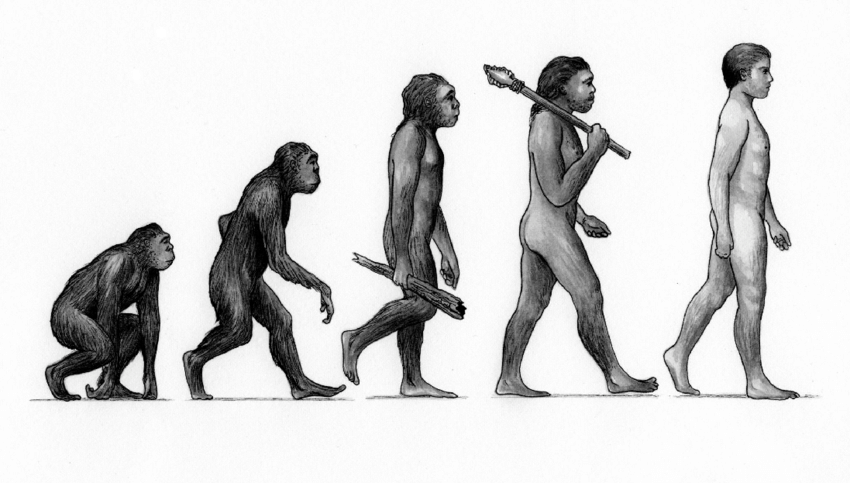
Long-held ideas about a sudden “Human Revolution” that transformed our species around 50,000 years ago may be oversimplifying a far more complicated story. A new review of fossil, genetic, and archaeological evidence suggests that both human anatomy and behavior evolved gradually, unevenly, and across different regions rather than through a single dramatic breakthrough.
For decades, one of the most influential ideas in paleoarchaeology has been that modern humans experienced a sudden leap forward—a moment when new cognitive abilities emerged and sparked the spread of Homo sapiens across the globe. It is a compelling narrative, simple to understand and easy to tell.
But according to archaeologist Huw S. Groucutt, that story may owe more to human psychology and scientific bias than to the evidence itself.
In a study published in Quaternary Science Reviews, Groucutt argues that the concepts of “modernity” and a sudden “Human Revolution” are increasingly difficult to support when the full body of archaeological, fossil, and genetic data is examined. Instead, the evidence points to a much slower and more regionally diverse process in which modern human traits emerged over long periods of time.
The Appeal of a Simple Origin Story
The idea of an abrupt transformation has deep roots in archaeology. Often referred to as the Upper Paleolithic Revolution, the hypothesis proposes that a major cognitive or genetic change occurred roughly 50,000 years ago, triggering the development of art, advanced tools, complex social structures, and the successful expansion of modern humans beyond Africa.
Initially, researchers focused on Europe as the center of this transformation. Later, as discoveries accumulated, the proposed origin shifted to Africa.
Yet growing amounts of evidence have steadily challenged the notion of a single revolutionary event.
Research from across Africa has revealed that many behaviors traditionally considered “modern” appeared at different times and in different places. Rather than emerging all at once, these traits seem to have developed gradually and unevenly across populations.
Groucutt argues that despite these findings, the attraction of a revolutionary narrative remains strong because it provides a straightforward explanation for a complex process.
He notes that the search for a dramatic “Eureka moment” may reflect what archaeologists want to find rather than what the evidence actually shows.
Dating the Human Journey Is Far From Simple
One major challenge in reconstructing human history is determining when key events occurred.
Groucutt highlights the substantial uncertainties that can accompany dating methods used in archaeology. These uncertainties can significantly affect interpretations of when humans dispersed out of Africa and how quickly they spread across other regions.
One example comes from Misliya Cave in Israel, where a maxilla, or upper jaw fragment, was identified as belonging to Homo sapiens. Some researchers interpreted the fossil as evidence that modern humans were present outside Africa between 180,000 and 190,000 years ago.
However, Groucutt points out that the dating evidence is more complicated than it may initially appear.
Different dating methods produced different age estimates. The oldest estimate depended heavily on the dating of burned stone tools found in the same sediment layer rather than directly on the fossil itself. Meanwhile, other approaches suggested substantially different age ranges.
According to Groucutt, the issue is not that age estimates are inherently unreliable. Rather, researchers need to carefully evaluate how dates relate to the materials being studied and how uncertainties are incorporated into interpretations.
The lesson, he argues, is that no single dating method should be treated as definitive without careful scrutiny.
Modern Behavior Appeared in Fits and Starts
The traditional revolution model assumes that once modern behavior emerged, it became consistently expressed across human populations.
The archaeological record tells a different story.
Groucutt notes that behaviors often associated with modern humans—including the use of shell beads, structured hearths, and bone tools—appeared intermittently. These innovations sometimes emerged, disappeared, and then reappeared later.
Such patterns suggest experimentation and gradual development rather than a sudden, permanent transformation.
Evidence from Africa has also shown that many behaviors commonly associated with the European Upper Paleolithic appeared tens of thousands of years earlier elsewhere. Even within Africa, important behavioral transitions occurred at different times across different regions, separated by spans of many thousands of years.
Rather than a clear threshold separating archaic humans from modern ones, the record reveals a patchwork of innovations emerging under varying circumstances.
The Anatomy of Modern Humans Was Also a Mosaic
The debate extends beyond behavior to physical appearance.
Groucutt argues that the label “anatomically modern humans” can be surprisingly ambiguous because traits considered modern did not appear simultaneously.
He points to fossils from Jebel Irhoud in the Maghreb region that display features regarded as modern and are believed to be more than 300,000 years old. Yet some researchers maintain that fully modern anatomy did not become widespread until roughly 50,000 years ago.
Adding to the complexity, certain physical traits typically associated with much older human populations persisted long after modern features had become common.
One example cited by Groucutt involves a long braincase shape linked to older fossils that appeared as recently as 16,000 to 12,000 years ago.
These findings suggest that human anatomy evolved through a gradual mixing and reshaping of traits rather than through a sudden transition from one form to another.
Genetics Also Challenges the Revolution Model
The idea that a single genetic mutation suddenly produced the modern human mind once attracted considerable attention. However, Groucutt notes that this hypothesis has largely faded due to a lack of supporting evidence.
Instead, genetic studies increasingly portray the evolution of Homo sapiens as a prolonged process involving multiple interconnected populations.
This emerging picture aligns with archaeological and fossil evidence showing gradual change rather than a sharp dividing line between archaic and modern humans.
While genetic changes undoubtedly played important roles in shaping cognition and behavior, Groucutt argues that there is currently no evidence for a sudden cognitive breakthrough that transformed humanity overnight.
Looking at the Bigger Picture
One of Groucutt’s central arguments is that different types of evidence often tell different stories.
Archaeological discoveries, fossil remains, and genetic data each provide valuable insights, but none offers a complete picture on its own. Focusing too heavily on one line of evidence can lead researchers toward misleading conclusions.
Instead of selecting only the findings that support a preferred narrative, he argues that scientists should confront contradictions directly and integrate evidence from multiple disciplines.
The result is a view of human evolution that is less tidy but potentially far closer to reality.
Why This Matters
Understanding how modern humans emerged is one of science’s most fundamental questions. If Groucutt’s assessment is correct, the origins of our species were not shaped by a single revolutionary event but by a long, uneven process unfolding across different populations and regions.
That perspective changes how researchers interpret fossils, artifacts, and genetic data. It also challenges the idea that humanity’s defining traits appeared all at once. Instead, the evidence increasingly suggests that what we call “modern” humanity was assembled piece by piece over hundreds of thousands of years—a complex story that may resist simple explanations but better reflects the richness of our evolutionary past.
Study Details
Huw S. Groucutt, Revolution, modernity, and the dispersal of Homo sapiens beyond Africa, Quaternary Science Reviews (2026). DOI: 10.1016/j.quascirev.2026.109981