More than three miles beneath the surface of the Southern Ocean, the seafloor keeps a quiet archive of Earth’s past. In 2001, researchers recovered a long sediment core from the Pacific sector of this ocean, a cylindrical slice of mud that had settled grain by grain over hundreds of thousands of years. At first glance, it looked unremarkable. But inside it lay a story that would upend a basic assumption about how the planet breathes.
For decades, scientists have known that iron acts like a fertilizer for marine algae. In the nutrient-poor waters around Antarctica, iron is often the one ingredient algae lack. Add more of it, and algae bloom. As they grow, these microscopic organisms draw carbon dioxide out of the atmosphere and lock it into the ocean, cooling the planet. This idea has been so reliable that it became a cornerstone of how researchers think about the Southern Ocean’s role in regulating climate.
So when a new study published in Nature Geoscience examined that deep-sea core, the expectation was straightforward. Periods with more iron should line up neatly with periods of stronger algae growth. Instead, the core told a stranger, more complicated tale.
When Fertilizer Fails to Feed
As the research team analyzed layers of sediment spanning multiple glacial cycles, they tracked two things side by side: signals of marine algae growth and indicators of iron input. The alignment was clear, but not in the way anyone predicted. Changes in the West Antarctic Ice Sheet, or WAIS, closely tracked changes in algae productivity. Yet even when iron supply was high, algae did not flourish.
“Normally, an increased supply of iron in the Southern Ocean would stimulate algae growth, which increases the oceanic uptake of carbon dioxide,” explains Torben Struve of the University of Oldenburg, the study’s lead author. But in this part of the ocean, that rule appeared to break down.
Struve conducted the research while working as a visiting postdoctoral scientist at the Lamont-Doherty Earth Observatory, part of the Columbia Climate School. Together with his colleagues, he faced a puzzle that demanded a deeper look. If iron was present but algae were not responding, something about that iron must have been different.
Icebergs as Messengers From the Ice Sheet
The answer lay not in how much iron entered the ocean, but in where it came from and what form it took. The sediment core revealed that iron input in this region peaked during warm intervals, not during cold glacial periods. That alone was unexpected. Earlier studies had shown that during glacial times, strong winds carried iron-rich dust from continents into the ocean, fertilizing algae north of the Antarctic Polar Front, the boundary where cold Antarctic waters meet warmer northern waters.
But this core came from south of that front. Here, the size and composition of sediment particles told a different story. The dominant source of iron was not airborne dust. It was icebergs calved from West Antarctica.
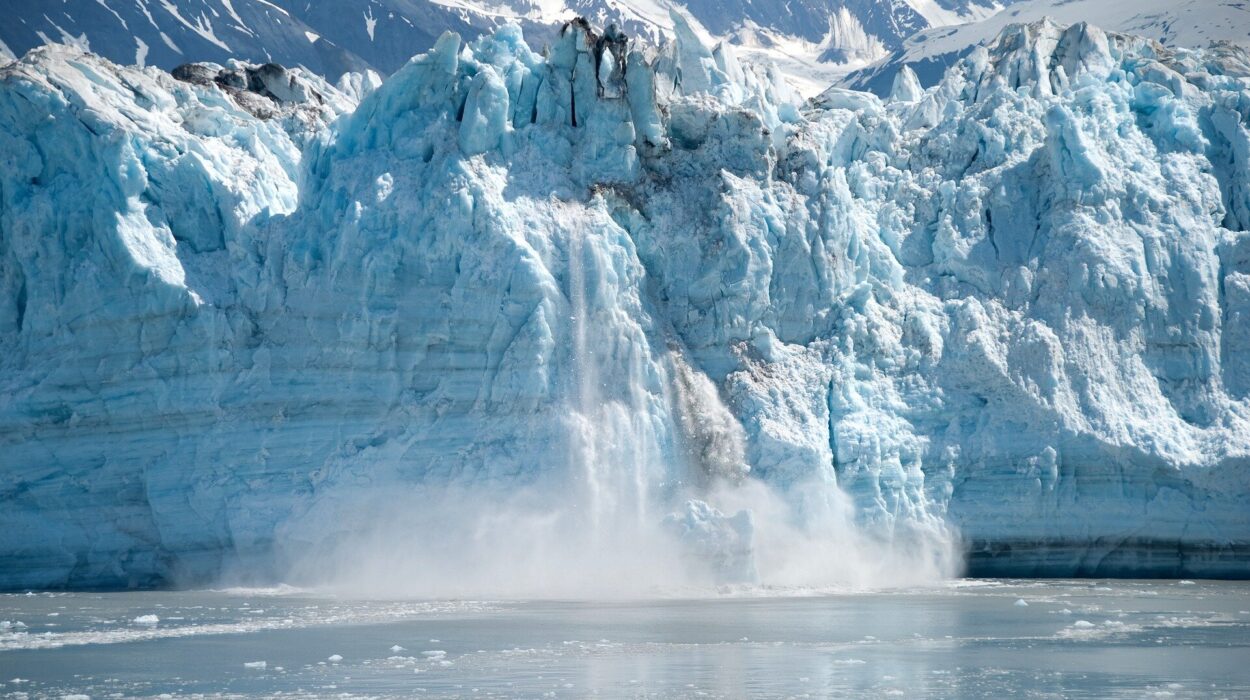
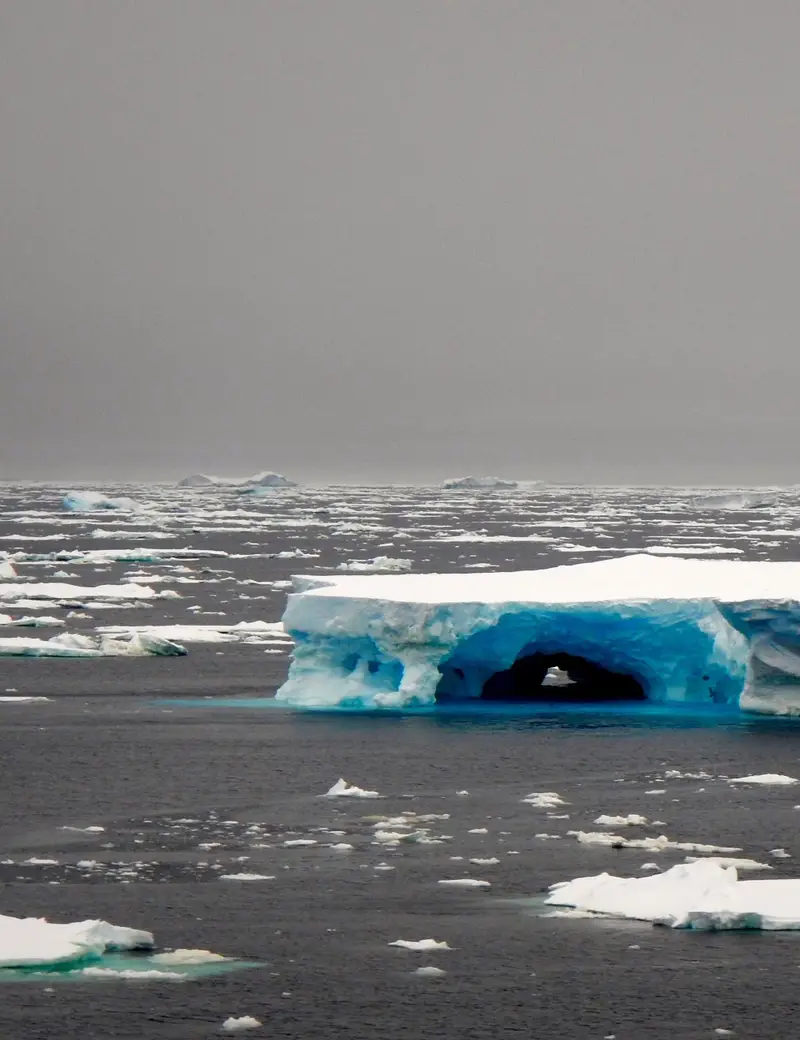
As the West Antarctic Ice Sheet retreated during warmer periods, vast numbers of icebergs broke away and drifted northward. These floating slabs of ice scraped sediment from the bedrock beneath the ice sheet and carried it into the Southern Ocean, releasing it as they melted. The core showed especially high iceberg activity at the ends of glacial periods and during peak interglacial conditions.
On paper, this should have been a feast for algae. Icebergs were delivering large amounts of iron directly into surface waters. Yet the algae barely responded.
The Chemistry That Changed Everything
To understand why, the researchers turned to the chemistry of the sediment itself. Their analyses revealed that the minerals delivered by the icebergs were highly weathered. Over long geological timescales beneath the ice sheet, the rock had been altered in a way that left much of its iron in a less-soluble form.
This detail changed everything. Iron can only fertilize algae if it dissolves into seawater in a form the organisms can use. In this case, although the total amount of iron entering the ocean was high, much of it was effectively locked away, unavailable to fuel growth.
“What matters here is not just how much iron enters the ocean, but the chemical form it takes,” says Gisela Winckler, a co-author of the study and a geochemist at the Lamont-Doherty Earth Observatory. The iceberg-delivered iron, she explains, was far less bioavailable than scientists had previously assumed.
This realization explains the mismatch preserved in the sediment core. Algae growth tracked the waxing and waning of the ice sheet, but it did not surge during periods of intense iceberg activity because the iron arriving with those icebergs could not do its usual job.
Reading the Ice Sheet’s Hidden History
The findings also shed light on the past behavior of the West Antarctic Ice Sheet itself. Several recent studies suggest that this part of Antarctica experienced large-scale retreat during the last interglacial period, around 130,000 years ago, when global temperatures were roughly similar to today.
“Our results also suggest that a lot of ice was lost in West Antarctica at that time,” Struve says.
As the ice sheet disintegrated, in places several miles thick, it exposed and eroded deep layers of ancient rock. Each retreat unleashed fleets of icebergs loaded with weathered minerals. The sediment core acts as a silent witness to these episodes, recording when icebergs were most abundant and revealing the nature of the material they carried.
Beneath the ice sheet, the researchers infer, lies a broad layer of geologically old, heavily weathered rock. Whenever the ice shrank during past warm periods, this material was ground up and exported to the ocean. The result was a paradoxical situation: more iron arriving, but less biological response.
“We were very surprised by this finding because in this area of the Southern Ocean the total amount of iron input was not the controlling factor for algae growth,” Struve says.
An Ocean That Does Not Always Compensate
These insights challenge the comforting idea that the ocean will reliably compensate for rising atmospheric carbon dioxide. The Southern Ocean plays a crucial role in absorbing carbon, and its behavior has often been treated as relatively stable over long timescales.
“This reminds us that the ocean’s ability to absorb carbon isn’t fixed,” Winckler says.
In regions north of the Antarctic Polar Front, iron-bearing dust during glacial periods helped fertilize algae and increase carbon uptake, reinforcing global cooling as ice ages began. South of the front, however, this new study shows a very different mechanism at work, one tightly linked to the dynamics of the West Antarctic Ice Sheet and the chemistry of the rocks beneath it.
The contrast underscores how sensitive Earth’s climate system is to regional details. A nutrient that drives cooling in one place and time can become ineffective in another, depending on its source and form.
Why This Story Matters Now
Looking forward, the sediment core offers a cautionary glimpse into the future. Continued global warming is already thinning parts of the West Antarctic Ice Sheet. While Struve notes that the ice sheet is “not likely to collapse in the near future,” ongoing retreat could mirror conditions seen during the last interglacial period.
As glaciers erode deeper into layers of weathered rock, more icebergs may carry this less-soluble iron into the Pacific sector of the Southern Ocean. If that happens, the region’s ability to absorb carbon dioxide could decline compared with today.
This creates a troubling feedback. Reduced carbon uptake would leave more carbon dioxide in the atmosphere, amplifying warming and potentially driving further ice loss. The study does not predict an imminent catastrophe, but it clearly shows that the relationship between ice, ocean nutrients, and climate is more fragile than once thought.
By revealing how iron chemistry, iceberg transport, and algae growth interacted during past warm periods, this research reframes a fundamental assumption about Earth’s climate machinery. It shows that the planet’s natural buffering systems depend not just on quantities, but on subtle qualities shaped by deep geological history.
In a warming world, those subtleties may matter more than ever.
Study Details
South Pacific carbon uptake controlled by West Antarctic Ice Sheet dynamics, Nature Geoscience (2026). DOI: 10.1038/s41561-025-01911-0