Deep within the rugged landscape of Patagonia, a shepherd tending to his flock stumbled upon a series of weathered stones that would eventually rewrite a chapter of prehistoric history. These were not mere rocks, but the fossilized remains of a creature that roamed the earth 155 million years ago, a time when the world’s landmasses were still stitched together into massive supercontinents. The discovery of this new species, a mid-sized giant with a biological blueprint that defies traditional categories, is providing paleontologists with a rare and vital glimpse into how the iconic long-necked dinosaurs evolved in the Southern Hemisphere.
The Discovery of the Big Animal from Chubut
The story of this find began on a remote farm in the Argentine province of Chubut, within the Cañadón Calcáreo rock formation. Dionide Mesa, a local shepherd, first spotted the remains, leading to an international collaboration between German and Argentine scientists. In recognition of his contribution, the team led by dinosaur expert Oliver Rauhut from the Bavarian State Collections of Natural History named the species Bicharracosaurus dionidei. The genus name stems from the colloquial Spanish term “bicharraco,” which translates roughly to “big animal,” while the species name honors Mesa’s keen eye.
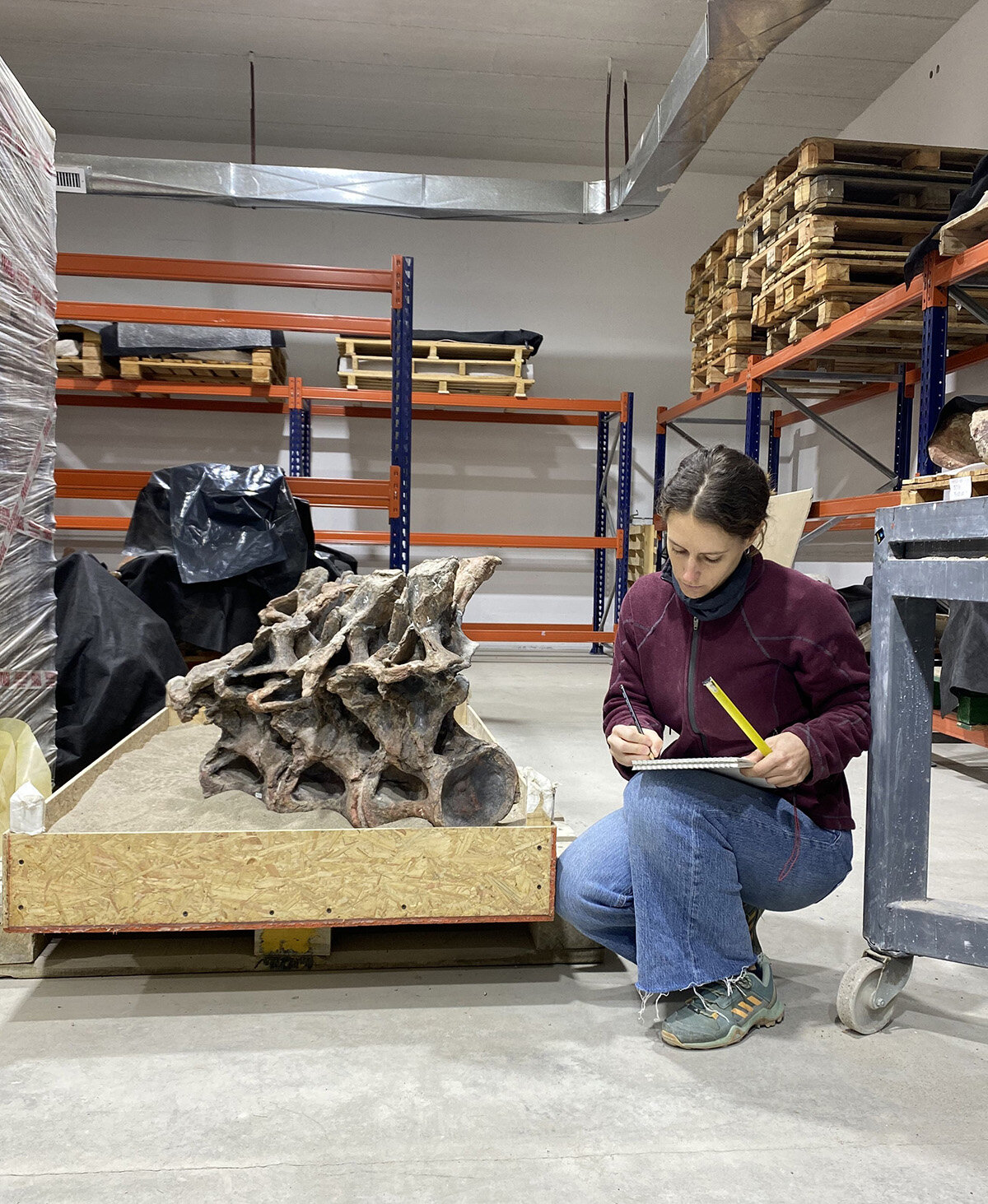
While many of the world’s most famous sauropods—the group of long-necked, small-headed herbivores—hail from North America, finding well-preserved specimens from the Upper Jurassic period in South America is an uncommon event. This skeleton, which includes more than 30 vertebrae spanning the neck, back, and tail, along with several ribs and a pelvic bone fragment, offers a substantial amount of data for researchers. After careful extraction and analysis, the fossils found a permanent home at the Museo Paleontológico Egidio Feruglio in Trelew, Argentina, where they serve as a benchmark for southern sauropod evolution.
A Giant in the Mid-Sized Category
When people envision sauropods, they often think of the record-breaking giants like Diplodocus or Brachiosaurus, which could reach staggering lengths of up to 40 meters. Bicharracosaurus dionidei was somewhat more modest by comparison, though still a massive presence in its ecosystem. Researchers estimate that the adult animal reached a total length of approximately 20 meters.
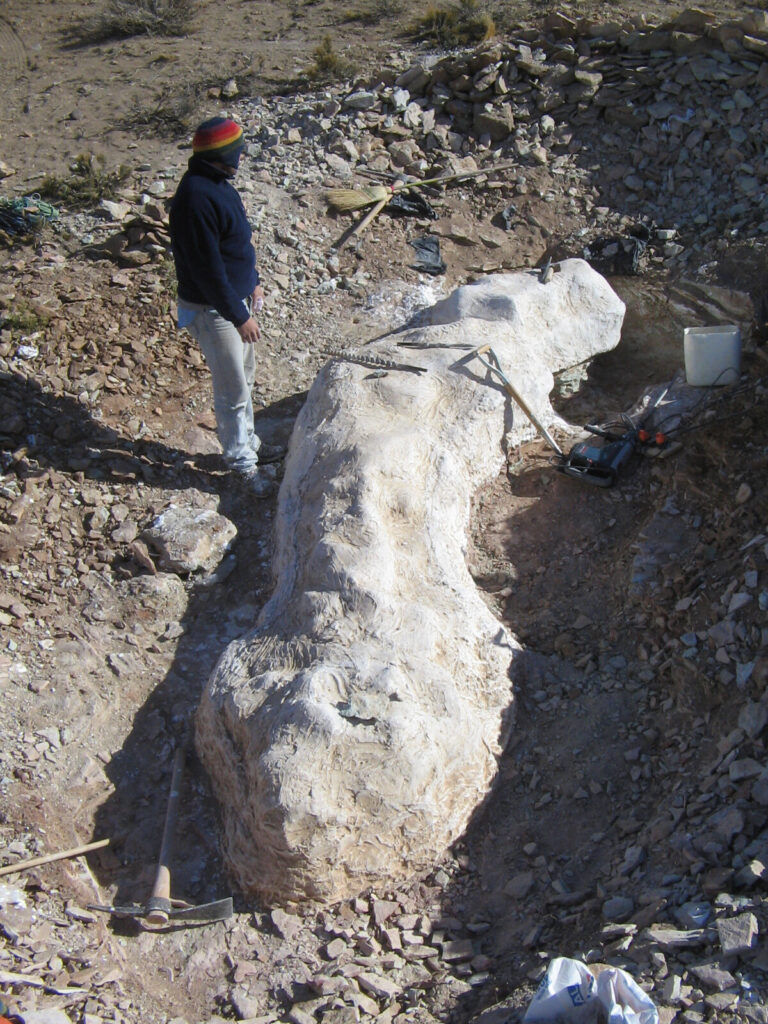
Despite its smaller stature relative to the absolute largest land animals of all time, the structural integrity of the recovered spine confirms that this was a fully grown adult. Living on the southern supercontinent of Gondwana, this herbivore navigated a world that was geographically distinct from the fossil-rich regions of the north. For decades, our understanding of how these animals matured and moved during the Late Jurassic has been heavily skewed toward Northern Hemisphere data. The presence of a confirmed adult specimen in Argentina allows scientists to compare the growth patterns and physical proportions of southern giants against their better-known northern cousins.
Blurring the Lines Between Dinosaur Lineages
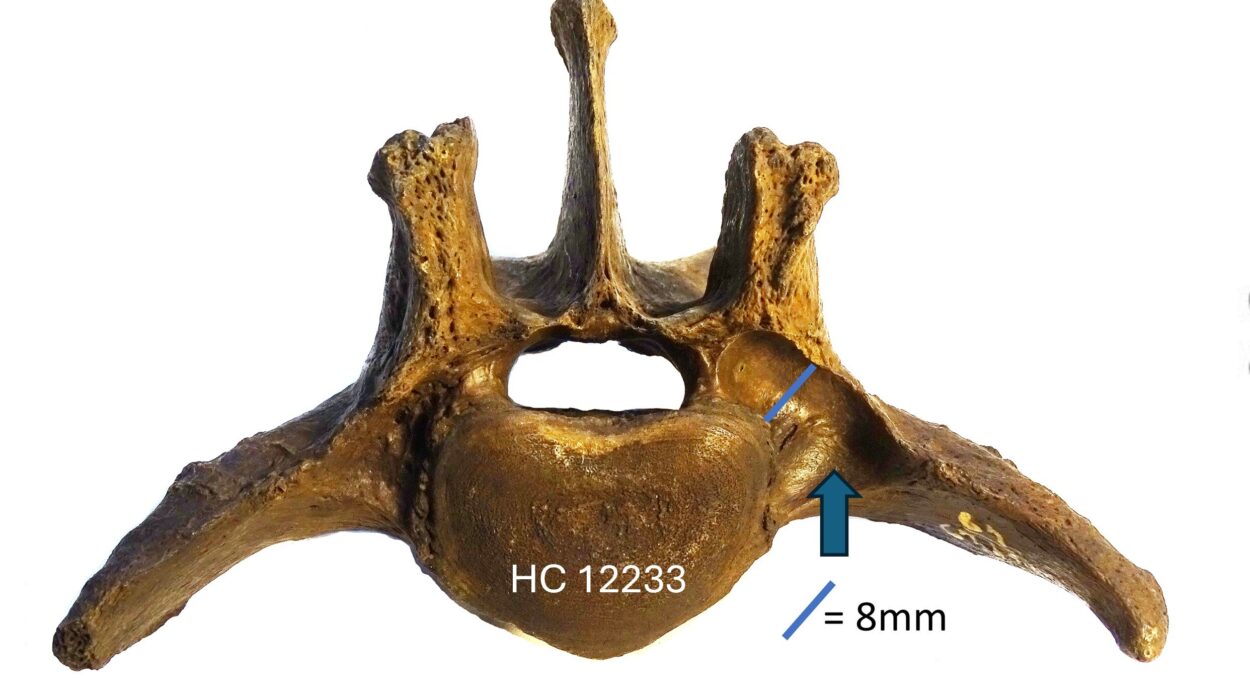
What makes Bicharracosaurus particularly striking to the scientific community is its mosaic of physical traits. Evolution rarely moves in a straight line, and this fossil proves that different dinosaur lineages may have shared more characteristics than previously thought. Upon analyzing the skeletal structure, the team discovered a surprising mix of features that resemble two very different families of dinosaurs: the brachiosaurids and the diplodocids.
Detailed examinations of the bones revealed that certain parts of the skeleton share a striking resemblance to Giraffatitan, a massive brachiosaurid famously discovered in Tanzania. However, the mystery deepened when the team inspected the dorsal, or back, vertebrae. These specific structures look significantly more like those of Diplodocus, the long-slung giant typically associated with North American fossil beds. This blend of northern and southern characteristics suggests a complex evolutionary history where traits were either retained from common ancestors or evolved independently across different continents.
South America’s First Jurassic Brachiosaurid
To resolve where this new animal fits on the family tree, Alexandra Reutter, a doctoral student at Ludwig Maximilian University of Munich and the study’s first author, conducted extensive phylogenetic analyses. Her research, published in the journal PeerJ, concluded that despite its mixed traits, Bicharracosaurus dionidei is most closely related to the Brachiosauridae family.
This classification is a major milestone for South American paleontology. It marks the first time a member of the Brachiosauridae has been formally identified from the Jurassic period on that continent. Previously, much of the knowledge regarding these towering herbivores was centered on a single major site in Tanzania. By identifying a brachiosaurid in Argentina, the researchers have effectively doubled the significant data points for this family in the Southern Hemisphere, proving that these dinosaurs were far more widespread across Gondwana than earlier records suggested.
Why This Matters
The discovery of Bicharracosaurus dionidei is a critical corrective to a long-standing “northern bias” in paleontology. Because the vast majority of Jurassic fossils have historically been found in the Northern Hemisphere, scientific models of dinosaur migration and evolution have often overlooked the unique developments occurring in the south. This find provides the “missing comparative material” needed to test those models.
By filling this geographical gap, the research helps scientists understand how the breakup of ancient landmasses influenced the biology of the world’s largest land animals. It demonstrates that the Southern Hemisphere was not just a peripheral region for dinosaur life, but a vibrant center of evolutionary diversity where familiar lineages took on new forms. As researchers continue to supplement the fossil record with southern finds, they move closer to a truly global understanding of how the age of giants shaped the history of life on Earth.
Study Details
Alexandra Reutter et al, Bicharracosaurus dionidei, gen. et sp. nov., a new macronarian (Dinosauria, Sauropoda) from the Late Jurassic Cañadón Calcáreo Formation of Argentina and the problematic early evolution of macronarians, PeerJ (2026). DOI: 10.7717/peerj.20945