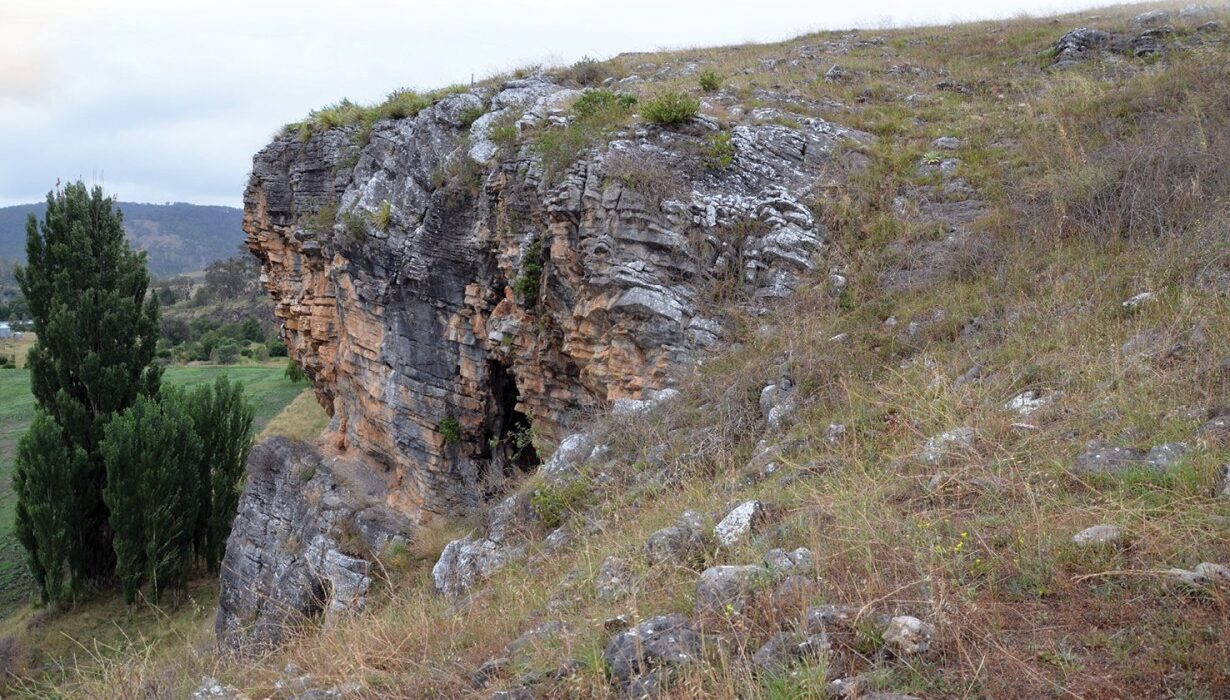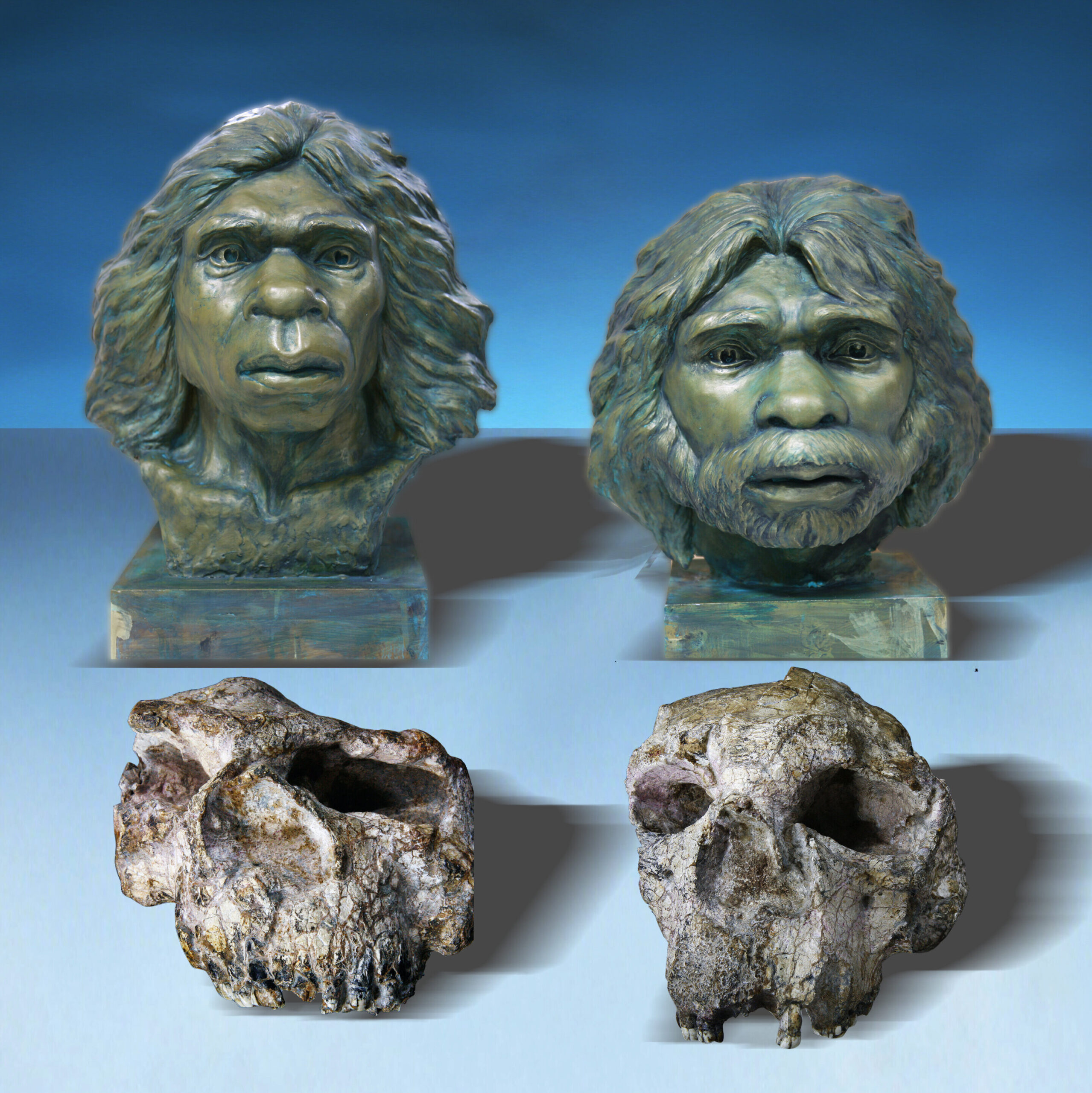
For decades, a set of ancient fossils resting in the earth of Yunxian, China, carried a quiet assumption. They belonged to Homo erectus, a direct ancestor of modern humans, and they were believed to be about 1.1 million years old. That date placed them comfortably within the accepted timeline of early human migration. It felt settled. Understood.
But science has a way of returning to old ground and asking new questions.
What if Homo erectus arrived in China far earlier than anyone imagined? What if the first footsteps of our distant relatives echoed across eastern Asia long before the storybooks said they did?
A new study published in Science Advances suggests exactly that. And in doing so, it gently but firmly reshapes one of the earliest chapters of our human story.
The Ancestor Who Walked Out of Africa
Homo erectus has long held a central place in the human saga. Widely recognized as having originated in Africa, this ancient species eventually dispersed into Eurasia. Yet the precise timing of its arrival in eastern Asia has remained uncertain.
That uncertainty lingered around the fossils from Yunxian. They were important. They were intriguing. But their age, pinned at about 1.1 million years, fit neatly into an existing narrative.
Christopher J. Bae of the University of Hawaiʻi at Mānoa’s Department of Anthropology, along with a team of geoscientists and anthropologists, decided to look again. They weren’t searching for drama. They were searching for accuracy.
Using a powerful combination of fossil evidence and burial dating data, they reconstructed the timeline of these remains with fresh precision.
What they found shifted the ground beneath the story.
The Yunxian fossils are not 1.1 million years old. They are about 1.7 million years old.
That is a difference of 600,000 years.
In the vast scale of geological time, that may seem small. But in the fragile, incomplete timeline of human origins, it is enormous.
Reading Time in Stone and Sediment
How does one tell the age of something buried nearly two million years ago?
Traditional carbon-14 dating cannot help here. It is limited to about 50,000 years. For fossils as ancient as those in Yunxian, another method is required.
The researchers turned to a technique known as aluminum-26 and beryllium-10 burial dating, often shortened to Al-26/Be-10 dating.
Hua Tu, the study’s lead author, describes the process as a kind of cosmic clock.
When cosmic rays strike quartz minerals near the Earth’s surface, they produce isotopes—specifically Al-26 and Be-10. As long as the minerals remain exposed near the surface, these isotopes continue forming. But once the sediment is buried deeply underground, shielded from cosmic radiation, production stops.
From that moment on, a silent countdown begins.
The isotopes start to decay at known rates. By measuring the remaining amounts of aluminum-26 and beryllium-10 in sediment from the same stratigraphic level as the fossils, researchers can determine how long it has been since burial occurred.
It is a delicate calculation, rooted in the predictable laws of radioactive decay. And unlike carbon-14 dating, this method can reach back as far as five million years.
In the sediment surrounding the Yunxian fossils, the isotopic ratios told a clear story.
These remains were buried about 1.7 million years ago.
Rewriting an Early Migration
That single recalculated number changes more than just a date in a database. It alters the narrative of how and when early humans moved across continents.
If Homo erectus was present in Yunxian 1.7 million years ago, then our ancestors spread across Eurasia significantly earlier than previously believed. The journey from Africa into eastern Asia must have begun sooner. The dispersal must have been faster or more successful than assumed.
The image that emerges is of a species not hesitating at geographic boundaries, but pushing outward with resilience and adaptability.
For years, scientists debated the timeline of early human expansion into eastern Asia. The uncertainty left room for speculation. Was the migration gradual and late? Was it sporadic? Did it happen in waves?
The revised age of the Yunxian fossils narrows those uncertainties. It suggests that by 1.7 million years ago, Homo erectus had already reached deep into eastern Asia.
Christopher J. Bae explains that while the species is widely recognized to have originated in Africa before dispersing into Eurasia, the exact timeline of its arrival in eastern Asia had remained unknown. By combining fossil evidence with burial dating data, the team was able to reconstruct a more robust timeline.
That reconstruction pushes back the clock by hundreds of thousands of years.
The Mystery That Still Lingers
Yet science rarely closes a case completely. Every answer sharpens new questions.
If Homo erectus was present in Yunxian 1.7 million years ago, when did it first arrive in the region? And when did it disappear?
The study clarifies one point in time/compiler, but the broader arc remains partially obscured.
Bae notes that the mystery of exactly when Homo erectus first appeared and last appeared in the region is still unresolved. The updated chronology is a critical step, but it is not the final word.
There is also another possibility to consider. If Homo erectus was not the earliest occupant to reach Asia, then perhaps another hominin species arrived even earlier.
The new timeline does not merely extend the presence of Homo erectus. It opens the door to reconsidering who the earliest travelers might have been.
The debate, once constrained by older dates, now has new space to evolve.
A Landscape Nearly Two Million Years Ago
Imagine Yunxian nearly two million years in the past. The sediments that now cradle fossils were once exposed to the sky, struck by cosmic rays. Quartz grains absorbed isotopes as they lay near the surface. Then, at some moment in deep time, the land shifted. Sediment accumulated. The remains of ancient humans were buried and shielded from radiation.
From that burial onward, the isotopic clock ticked quietly beneath the earth.
For 1.7 million years, it counted down.
Today, scientists measure those lingering isotopes and read that count like a timestamp from prehistory.
It is a reminder that the Earth itself keeps records—encoded not in ink or memory, but in atomic ratios and decay rates.
Why This Research Matters
The significance of this study reaches beyond one fossil site in China. It reshapes our understanding of early human dispersal across continents.
By demonstrating that Homo erectus appeared in Yunxian 600,000 years earlier than previously thought, the research challenges long-held assumptions about the timing of migration from Africa into eastern Asia. It suggests that early humans were capable of spreading across vast regions sooner than scientists once believed.
This has profound implications for how we interpret adaptability, survival, and movement in early human history. A species that reached eastern Asia 1.7 million years ago was not tentative or narrowly confined. It was expansive.
At the same time, the findings refine the scientific debate. They provide a more secure chronological anchor, allowing researchers to ask sharper questions about who arrived first, how they lived, and how long they endured.
Most importantly, this research reminds us that the story of humanity is not fixed. It is constantly revised as new methods and new data bring ancient evidence into clearer focus.
In the soil of Yunxian, buried beneath layers of time, a subtle shift in isotopes has rewritten a chapter of our origins. The past has not changed—but our understanding of it has.
And in that difference lies the true power of science.
Study Details
Science Advances (2026). DOI: 10.1126/sciadv.ady2270