The story of Australia’s prehistoric giants is often told through the bones of massive kangaroos and thunderous marsupials, but for over a century, a critical piece of the puzzle sat quietly on a wooden shelf in Melbourne. It was a fragment of a skull, pulled from the darkness of a cave in 1907 by men wielding nothing but hemp ropes and flickering kerosene lamps. For 120 years, this relic remained an anonymous resident of the Museums Victoria paleontology collection, its true identity masked by time until a modern researcher took a closer look.
The Secret Hidden in Plain Sight
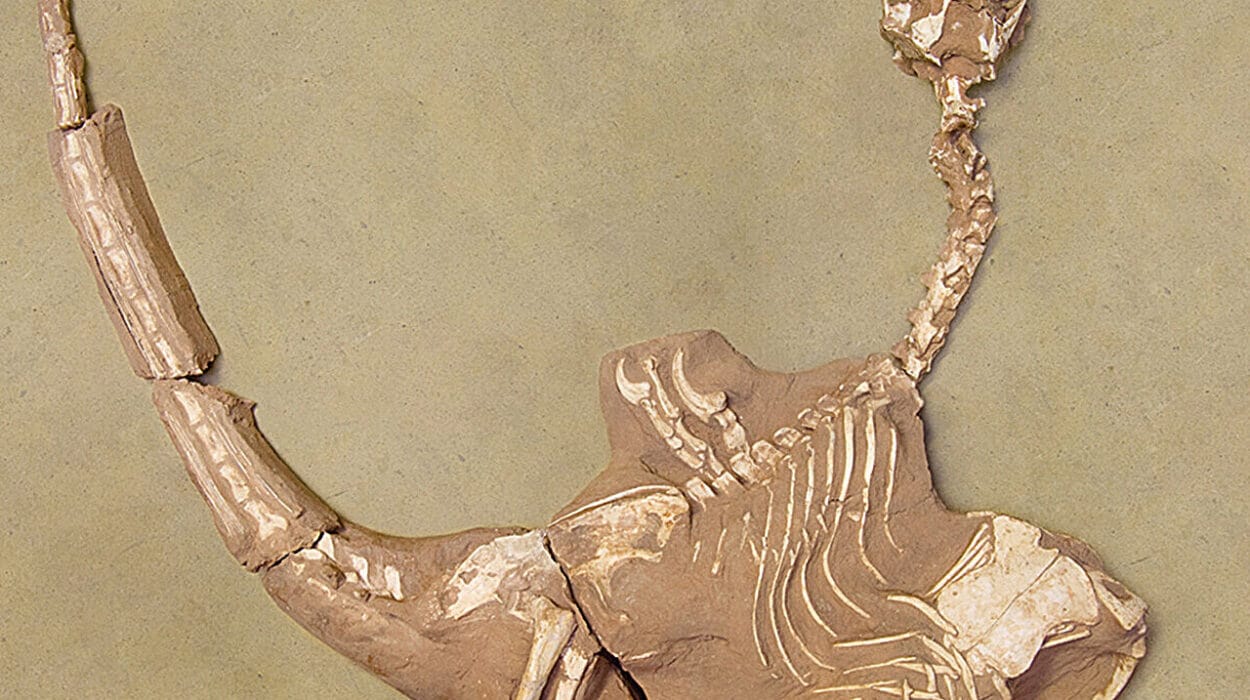
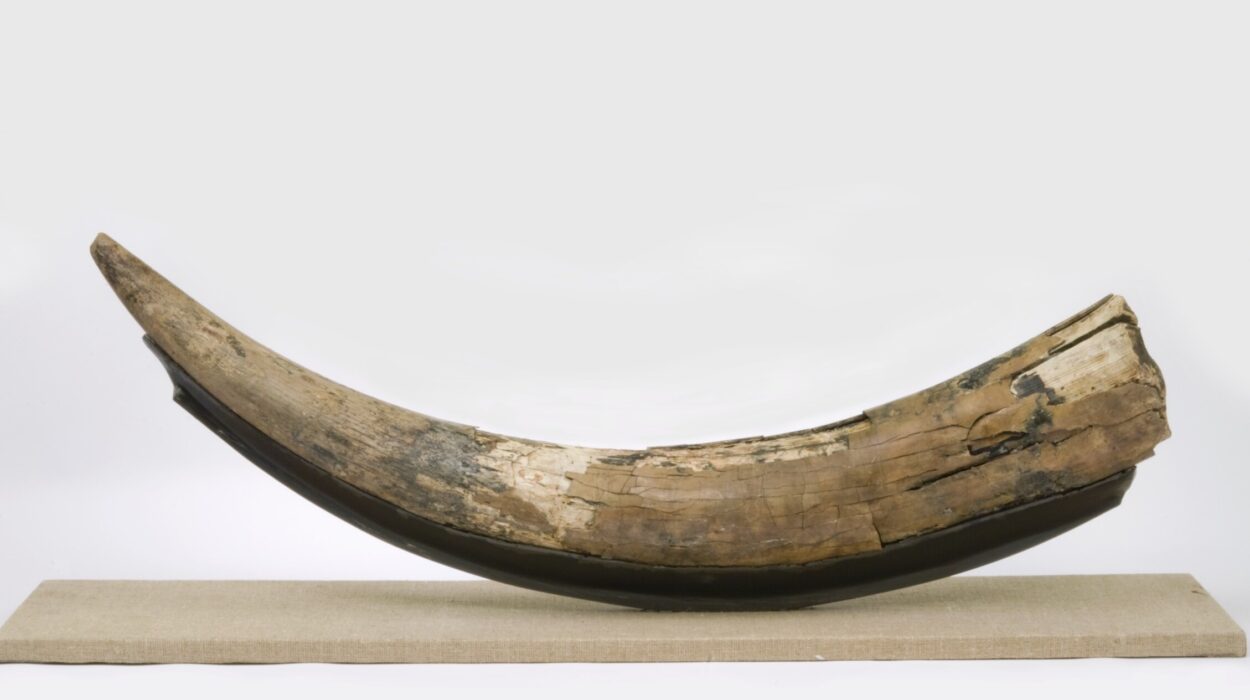
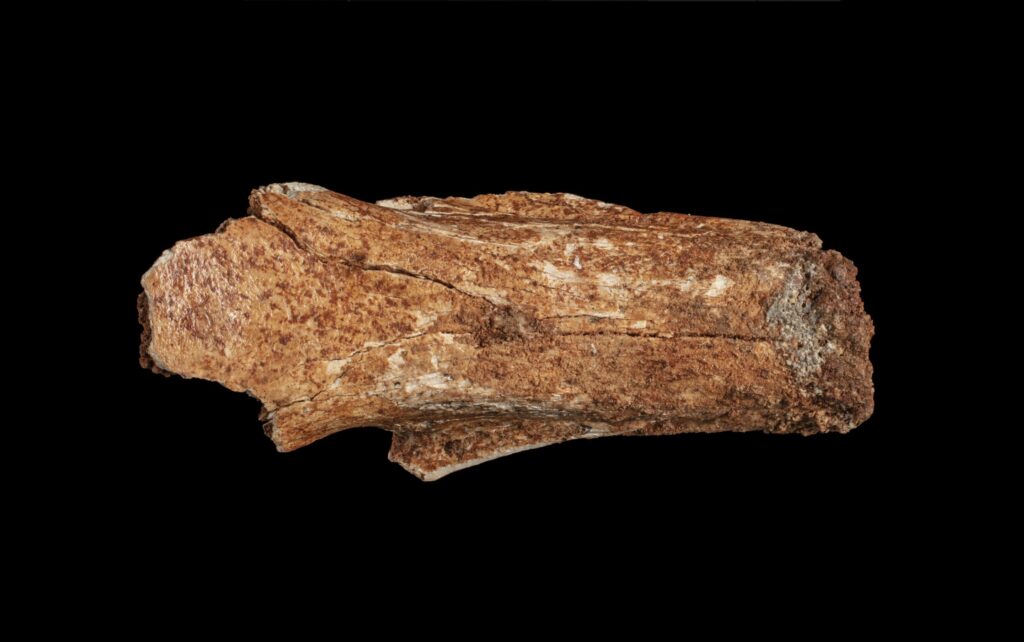
In 2021, Tim Ziegler, the collection manager of vertebrate paleontology at the Museums Victoria Research Institute, was peering into the deep history of the museum’s holdings when he encountered an unusual specimen. It was a fragmentary skull, ancient and worn, with a distinctive, straight-beaked snout. Most researchers looking for new species head into the field with shovels and brushes, but Ziegler realized that a major discovery was already sitting in plain sight.
By diving into historical archives, Ziegler traced the bone back to a pioneering 1907 expedition to Foul Air Cave in Buchan, Victoria. The expedition was led by a naturalist named Frank Spry, who worked alongside locals to explore the treacherous subterranean passages of the region. At the time, they knew they were finding remnants of the Ice Age, but they couldn’t have known that one specific piece of bone would eventually solve a continent-wide mystery.
For decades, paleontologists had been troubled by a “giant-sized” hole in the map of Victoria. They knew that during the Pleistocene Epoch, a massive relative of the modern echidna had wandered across Australia. Fossils of this creature had been unearthed in the rugged landscapes of Western Australia, the forests of Tasmania, and the plains of New South Wales. Yet, despite Victoria having a rich fossil record and the perfect habitat for such a beast, no evidence of it had ever been found there. It was a biological conundrum that suggested the animal had somehow skipped an entire corner of the continent.
The Mighty Wanderer of the Ice Age
To confirm what this mystery bone was, Ziegler teamed up with Jeremy Lockett, an honors student from Deakin University. Together, they began a meticulous process of comparison, measuring and 3D-scanning both modern echidnas and fossilized remains housed in museums across Australia. The data eventually painted a clear picture: the Victorian fossil belonged to the extinct Owen’s giant echidna, known scientifically as Megalibgwilia owenii.
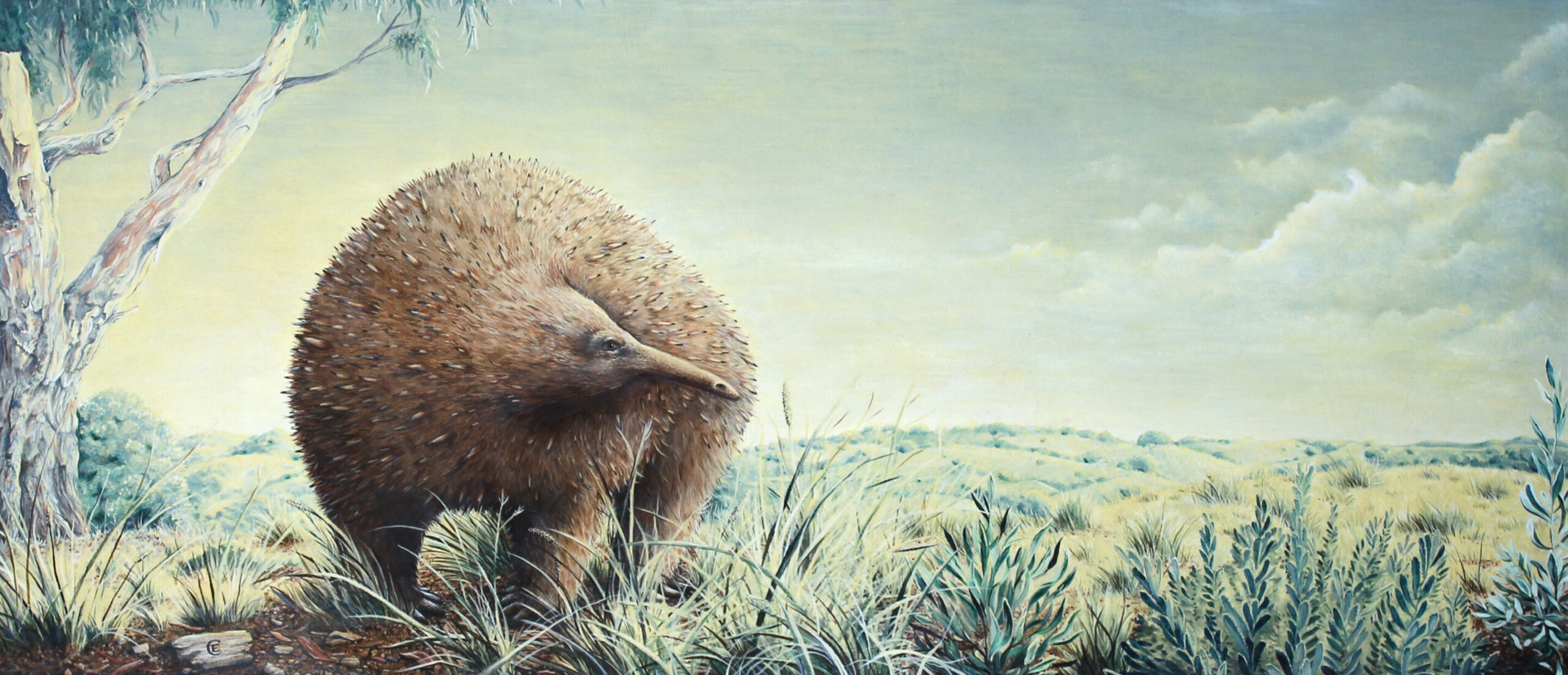
The name itself is a bridge between worlds. It combines the Ancient Greek word “mega,” meaning great or mighty, with the Wemba Wemba word “libgwil,” the traditional name for the echidna. This was no ordinary insect-eater. While the echidnas we see today are small and timid, Megalibgwilia owenii was a true member of the megafauna. It grew to a length of roughly one meter and tipped the scales at 15 kilograms. To visualize its size, scientists compare it to a four-year-old toddler—a heavy, powerful tank of an animal covered in spines.
The most telling feature of the fossil was its snout. Unlike the curved beaks of some of its relatives, this giant possessed a straight-beaked snout. This was a specialized tool, evolved specifically to probe the hard, compacted soils of Ice Age Australia. It was built for power, allowing the creature to dig deep into the earth and crush the large insect prey that sustained its massive frame.
Mapping a Thousand-Kilometer Gap
The identification of this single skull fragment changed everything we knew about the distribution of Australia’s prehistoric life. By placing Megalibgwilia owenii in the Buchan Caves of eastern Victoria, the research filled a massive 1,000-kilometer gap between previous fossil finds. It proved that these giant monotremes weren’t just isolated to the north or west; they were a dominant, widespread part of the southeastern landscape.
The Buchan Caves have long been known as a graveyard for giants. The site has previously yielded the remains of Simosthenurus occidentalis, a strange short-faced kangaroo, and Palorchestes azael, a bizarre giant marsupial. The addition of the giant echidna to this roster completes the picture of a vibrant, lost ecosystem. To ensure the context of the find was fully understood, Ziegler even returned to the original site at Foul Air Cave, collaborating with Parks Victoria and the Victorian Speleological Association to re-examine the cavern where Frank Spry first found the bone over a century ago.
This journey from a kerosene-lit cave to a 3D scanner highlights a unique reality of modern science: some of the most important “fieldwork” happens inside the climate-controlled drawers of a museum. These institutions act as a slow-motion time machine, holding onto secrets until the right technology or the right pair of eyes comes along to unlock them.
Why the Giant Echidna Matters Today
This discovery is more than just a footnote in a dusty ledger; it is a testament to the resilience and diversity of Australian life. Understanding where Megalibgwilia owenii lived and how it functioned helps scientists reconstruct the entire Ice Age environment. It allows us to see how the continent’s unique wildlife responded to the dramatic climate shifts of the Pleistocene, providing a blueprint of how ecosystems thrive—and why they eventually fail.
Furthermore, the find underscores the vital importance of museum collections. Without the foresight of Frank Spry to collect a “broken” bone in 1907, and without the museum’s commitment to preserving it for twelve decades, this knowledge would have been lost forever. It serves as a reminder that our understanding of the natural world is never truly finished. Whether through a new excavation, a digital scan of an old relic, or the keen observation of a citizen scientist, the next great breakthrough in Australian history is likely already waiting to be found, hidden just beneath the surface or deep within a museum’s archives.
Study Details
The first Victorian record of Owen’s Giant Echidna Megalibgwilia owenii from Buchan Caves in East Gippsland, Australia, Alcheringa An Australasian Journal of Palaeontology (2026). DOI: 10.1080/03115518.2026.2643598