Deep within the complex architecture of the human mind, a silent struggle for dominance plays out every second. To navigate a world that is constantly shifting, the brain must decide which thoughts to prioritize and which to silence. For decades, neuroscientists have viewed the brain as a grand orchestra where every instrument plays in harmony, but a groundbreaking new study suggests that this view is missing a vital, aggressive ingredient. By studying the brains of humans, macaques, and mice, a global team of researchers has discovered that the brain’s true power lies not just in how its regions work together, but in how they fight for control.
The Flaw in the Grand Symphony
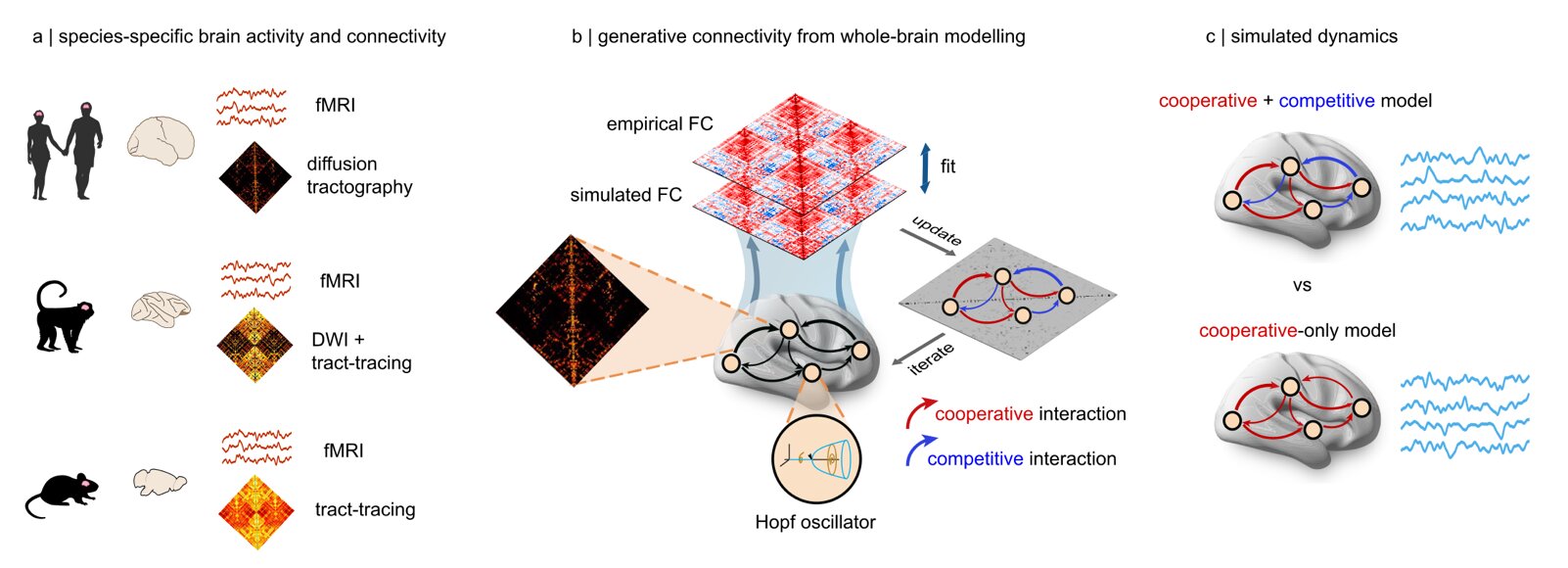
For the last twenty years, the world of macroscale brain simulations has operated under a polite but perhaps misguided assumption. Scientists building these digital replicas assumed that when one part of the brain became active, it naturally encouraged its neighbors to do the same. This is known as cooperative interaction, a “helper” system where signals ripple outward, building momentum. However, these models often ran into a frustrating wall. Instead of mimicking the nuanced, fluid activity of a real living mind, the simulations often spiraled into overly synchronized states. In these digital brains, everything would turn on at once, creating a chaotic hum of activity that rarely, if ever, occurs in a healthy mammal.
The researchers, led by Andrea Luppi, realized that their models were missing a fundamental truth of the “everyday experience.” If you are focusing your attention on a difficult task or suddenly switching between tasks, your brain isn’t just saying “yes” to everything. It is actively choosing. It turns out that the brain has limited resources, and not every region can be the star of the show simultaneously. As the famous physicist Richard Feynman once noted, “what I cannot create, I do not understand.” If scientists couldn’t recreate a brain that knew how to say “no,” they didn’t truly understand how the brain worked.
A Battle for the Driver’s Seat
To test this theory, the team from Oxford, Cambridge, McGill, and other prestigious institutions embarked on a massive modeling project. They didn’t just look at humans; they gathered imaging data to map the brain connections of three different species. Using this structural map, they built two competing versions of a virtual brain. The first was the traditional model, where every interaction was cooperative. The second was a more rebellious version where regions could either excite or suppress each other. In this second model, brain circuits were essentially competing for the right to be active.
The results were immediate and striking across all three species. The models that included these competitive interactions were significantly more realistic than the cooperative-only versions. Instead of the “runaway activity” that plagued previous simulations, the presence of competition acted as a vital stabilizing force. By allowing different brain systems to “take turns,” the digital brain began to exhibit the natural ebbs and flows of a living mind. It was a revelation: the brain isn’t just a choir; it’s a high-stakes debate where the ability to silence an opponent is just as important as the ability to speak.
The Digital Fingerprint of the Mind
One of the most surprising discoveries came when the researchers looked at the differences between individuals. Every human brain has a unique “wiring” that distinguishes it from everyone else—a brain fingerprint. The team found that the models incorporating competitive interactions were much better at capturing these individual nuances. When the digital brain was allowed to compete, it reflected the specific, individual-specific organization of the person it was modeled after.
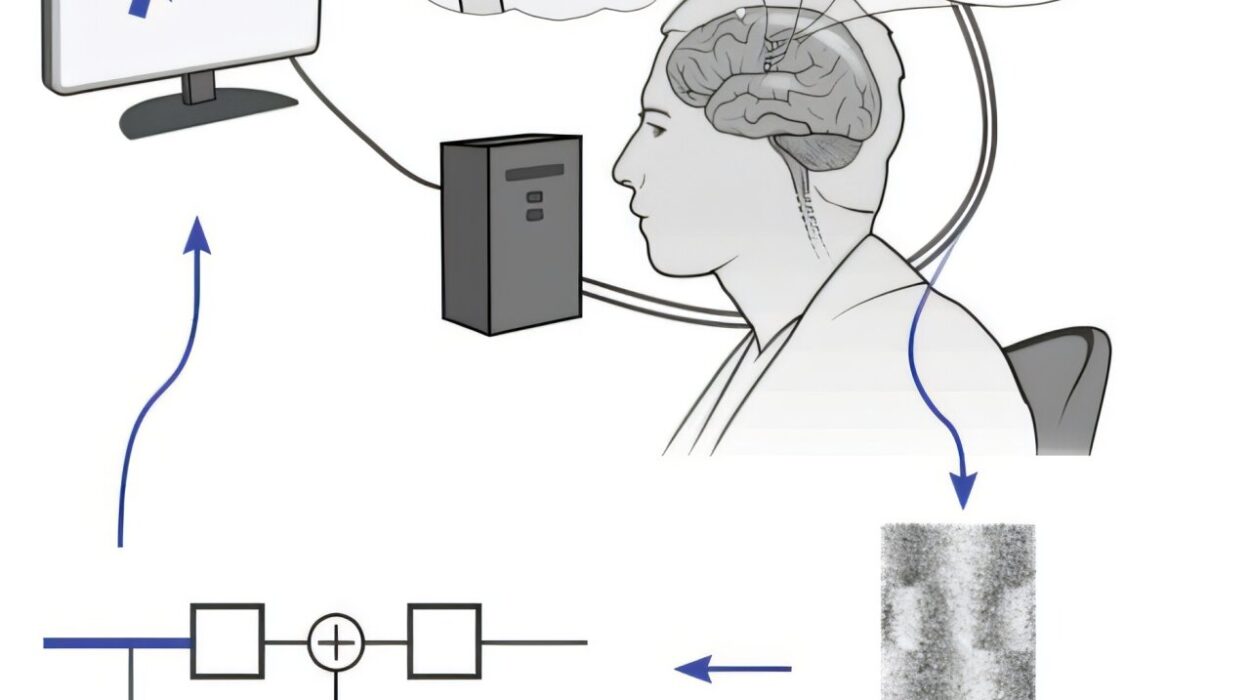
This is a massive leap forward for the field of personalized medicine. Scientists are currently working on digital twins, which are virtual replicas of a patient’s organs used to test how they might respond to a specific drug or surgery. If a digital twin of a brain is too “cooperative” and fails to account for the competitive nature of that specific patient’s neural circuits, its predictions could be misleading or even dangerous. By adding the element of competition, these models become far more accurate virtual replicas, ensuring that a predicted treatment is actually a fit for the real person.
Why This Scientific Breakthrough Matters
The discovery that competitive interactions are a core architectural principle of the mammalian brain changes the trajectory of both medicine and technology. By understanding how the brain balances excitation and suppression, researchers can now build more sophisticated brain-inspired computational models. This doesn’t just help us understand ourselves; it provides a blueprint for the future of artificial intelligence. Today’s AI systems are powerful, but they often lack the fluid, adaptive nature of human thought. By incorporating these “intelligent architectures” that know how to manage limited resources through competition, we can move toward AI systems that are more human-like and efficient.
Furthermore, this research opens the door to a new era of personalized medicine. By using competitive models to predict the effects of treatments, doctors may one day be able to run thousands of simulations on a patient’s digital twin to find the perfect recovery path before a single pill is swallowed. This study proves that the brain’s beauty isn’t just in its harmony, but in the elegant, necessary conflict that keeps our thoughts moving forward.
Study Details
Andrea I. Luppi et al, Competitive interactions shape mammalian brain network dynamics and computation, Nature Neuroscience (2026). DOI: 10.1038/s41593-026-02205-3.