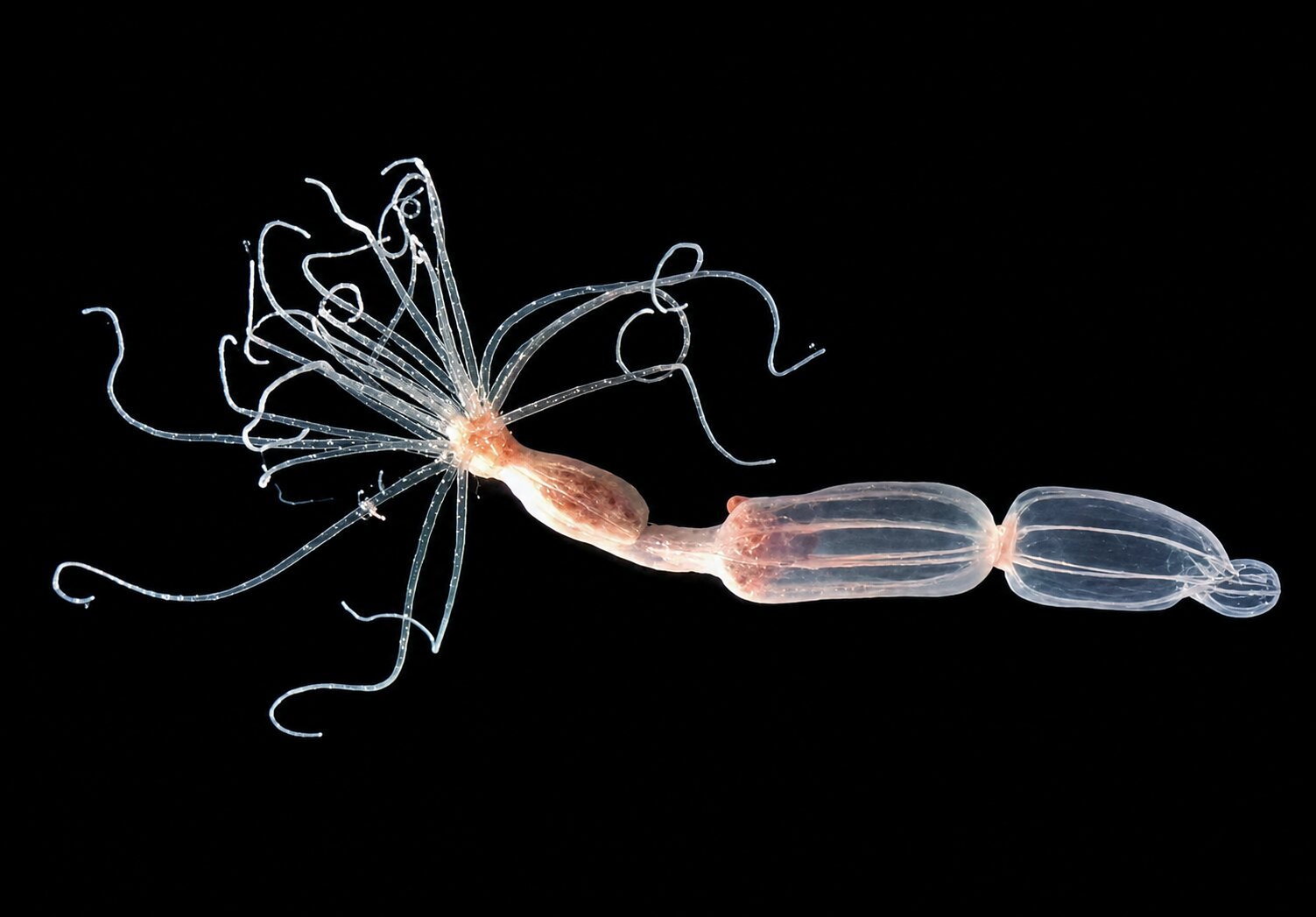
Scientists have uncovered a previously unknown antiviral defense system in sea anemones that turns conventional thinking about immunity on its head. The study reveals that a protein resembling a key component of the human immune system actually suppresses antiviral activity under normal conditions, yet is essential for protecting the animals from viral infections—suggesting evolution produced more than one successful strategy for fighting viruses.
Viruses have challenged living organisms for hundreds of millions of years, but new research suggests there is more than one way for animals to defend themselves. In a surprising discovery, scientists found that sea anemones rely on an antiviral system that behaves in the opposite way from a well-known human immune pathway while remaining crucial for stopping viral infections.
The study, led by Ph.D. candidate Ton Sharoni and Prof. Yehu Moran of the Hebrew University of Jerusalem in collaboration with researchers from the University of North Carolina at Charlotte, was published in Nature Ecology & Evolution. The findings challenge long-standing assumptions about how antiviral immunity evolved and indicate that different animal groups may have developed fundamentally different molecular strategies to combat viruses.
Looking Back in Evolution for Answers
To explore the origins of antiviral immunity, the researchers studied sea anemones, marine animals that split from the evolutionary lineage leading to humans more than 600 million years ago. As close relatives of corals and jellyfish, sea anemones provide an opportunity to investigate how immune systems may have functioned early in animal evolution.
In humans and other vertebrates, antiviral defenses depend on MAVS, a protein that activates immune responses when viruses are detected. Scientists have long wondered how ancient this defense mechanism is and whether similar systems exist in distant animal relatives.
The research team identified a previously unknown protein in sea anemones, naming it CARDIB (CARD Inhibitor Binding protein). At first, CARDIB appeared remarkably similar to MAVS, raising expectations that it represented an ancient version of the same antiviral machinery.
The experiments, however, revealed a completely different story.
“Everything about CARDIB suggested it should function like MAVS,” said Moran, head of the Department of Ecology, Evolution and Behavior at the Hebrew University. “Instead, we discovered that it does the exact opposite. Rather than activating antiviral defenses, CARDIB normally suppresses them.”
A Surprising Role for an Immune Suppressor
The discovery immediately raised an important question. If CARDIB suppresses antiviral defenses, why would sea anemones need it?
To find the answer, the researchers used CRISPR gene-editing technology to remove the CARDIB gene and then exposed the modified sea anemones to viral threats.
The outcome was unexpected.
Instead of becoming better at fighting viruses without the suppressive protein, the genetically modified animals became significantly more vulnerable. Viruses multiplied more easily, antiviral defenses failed to activate properly, and the sea anemones lost much of their ability to resist infection.
According to Sharoni, the findings were the opposite of what the researchers anticipated.
“The results were completely counterintuitive,” Sharoni said. “Although CARDIB acts as a brake on the immune system under normal conditions, that brake turns out to be essential for mounting an effective antiviral response.”
The results indicate that sea anemones use an antiviral pathway that is fundamentally different from the one found in humans, despite employing molecular components that closely resemble those in vertebrate immune systems.
Testing the Discovery Beyond the Laboratory
The researchers wanted to determine whether the newly discovered immune pathway mattered only under controlled laboratory conditions or also helped sea anemones survive in their natural environment.
To answer that question, genetically modified sea anemones were transferred from laboratory aquaria to outdoor marine mesocosms supplied with natural estuarine water in South Carolina. This exposed the animals to the diverse viruses and microorganisms they would normally encounter in nature.
The differences quickly became apparent.
Within days, sea anemones lacking CARDIB and related antiviral genes accumulated substantially more viruses than normal animals. The natural environment also revealed that one immune gene, which appeared only moderately important in laboratory experiments, played a much more significant role when the animals faced real-world viral exposure.
“This demonstrated that the pathway we discovered is not simply a laboratory phenomenon,” Moran said. “It plays a crucial role in helping these animals cope with the viral challenges they face in nature.”
The outdoor experiments strengthened the researchers’ conclusion that this antiviral mechanism functions under natural conditions and is vital for protecting sea anemones from infection.
More Than One Evolutionary Solution
The findings suggest that evolution did not preserve a single universal blueprint for antiviral immunity across the animal kingdom.
Instead, different evolutionary lineages may have developed distinct molecular solutions to the same biological challenge: recognizing viruses and preventing them from spreading.
Although humans and sea anemones both require effective defenses against viral infections, the new study shows those defenses can be organized in fundamentally different ways, even when they involve proteins with striking structural similarities.
The discovery also underscores the scientific value of studying organisms beyond traditional laboratory models. Ancient animals such as sea anemones can preserve evolutionary innovations that remain hidden when research focuses primarily on humans, mice, and other familiar species.
As researchers continue exploring the diversity of life, they are finding that evolution has produced a wider range of biological solutions than previously recognized.
Why This Matters
This discovery reshapes scientists’ understanding of how antiviral immunity evolved. Rather than following a single conserved pathway throughout animal history, the evidence suggests that different animal groups developed their own molecular strategies for defending against viruses.
By revealing that a protein resembling the human immune protein MAVS performs the opposite function while remaining essential for antiviral protection, the study demonstrates that similar biological building blocks can be organized in dramatically different ways. The findings highlight the importance of studying ancient animals to uncover evolutionary innovations that cannot be seen by examining traditional biomedical models alone, offering a broader picture of how life has adapted to one of its oldest and most persistent threats.